Many aspiring manufacturers enter the industrial sector believing that melting plastic and pushing it through a metal die is a straightforward, plug-and-play operation. This is a fatal assumption. The extrusion plastic manufacturing process is a highly volatile, immensely complex thermodynamic system. If your barrel temperatures are off by just a few degrees, or if your screw design does not match the rheology of your polymer, you will not produce sellable goods. You will produce thousands of feet of warped, dimensionally inaccurate scrap material, rapidly draining your capital.
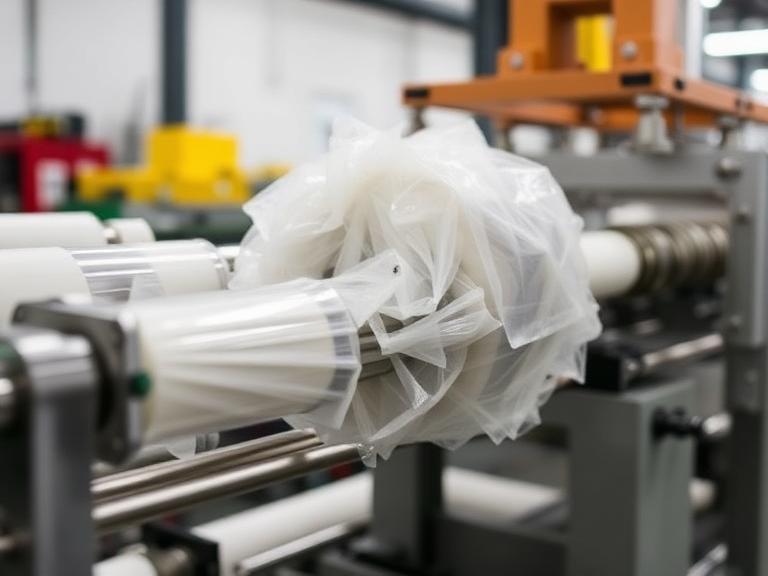
From our experience engineering and auditing production facilities at Xjgmachine, we routinely encounter operators struggling with die swell, melt fracture, and inconsistent wall thickness simply because they do not fundamentally understand the physics occurring inside the barrel of their machine. In most professional situations, the difference between a highly profitable production line and a financial disaster comes down to selecting the correct machinery architecture and rigorously calibrating the downstream cooling and pulling equipment. In this definitive guide, we will strip away the academic theory and provide a brutal, commercially focused breakdown of the extrusion plastic manufacturing process, ensuring you make intelligent, profitable equipment decisions.
The Extrusion plastic manufacturing process is a continuous, high-volume production method where raw thermoplastic material is melted, heavily pressurized by a rotating screw, and forced through a custom-machined steel die to form a continuous profile. It is the absolute industry standard for manufacturing pipes, tubing, weatherstripping, thermal break strips, and fencing. To succeed, commercial users must precisely match their extruder type to their material: single screw extruders are ideal for standard homogenous pellets, while conical twin-screw extruders are strictly required for processing rigid PVC powders. Attempting to cut costs on downstream cooling calibration or haul-off synchronization will guarantee product failure.
If your business model relies on producing items with a fixed cross-sectional profile over an extended length, the extrusion plastic manufacturing process is your only commercially viable option. Unlike injection molding, which creates discrete, three-dimensional closed objects, extrusion is continuous. You feed raw material into one end of the machine, and a continuous profile emerges from the other, limited only by the amount of raw material you can supply. It is the lifeblood of the construction, plumbing, and automotive sealing industries.
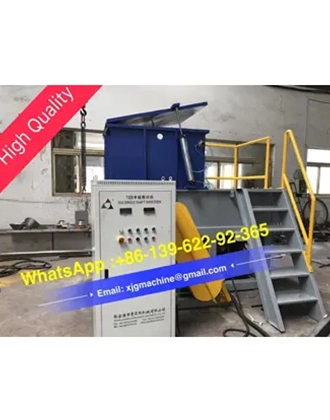
At its core, the extrusion plastic manufacturing process is the application of heat, shear friction, and immense pressure to thermoplastic polymers. Whether you are running polyethylene (PE), polypropylene (PP), polyvinyl chloride (PVC), or specialized engineering plastics like polyamide, the process remains conceptually identical. The machinery required is substantial, typically consisting of an extruder drive system, a heated barrel containing one or two specialized screws, a customized die head, a vacuum sizing and cooling tank, a haul-off (puller) machine, and a cutting or coiling unit.
For specialized applications, such as creating weather seals for automotive and architectural applications, operators will deploy a dedicated Rubber Extrusion Line. Alternatively, manufacturing structural components requires rigid thermoplastic extrusion, demanding entirely different screw geometries and temperature profiles.
Understanding the extrusion plastic manufacturing process requires breaking down the line into distinct operational zones. It is not merely melting plastic; it is managing fluid dynamics.
Raw polymer pellets or powders are loaded into a hopper. Gravimetric or volumetric feeders drop the material into the throat of the extruder barrel. Consistent feeding is mandatory; if the feed surges, the final product dimensions will fluctuate wildly.
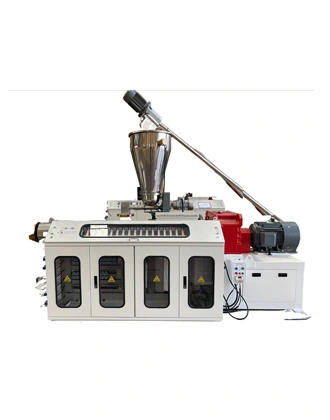
Inside the heated barrel lies the screw. In our testing, the most misunderstood aspect of extrusion is the source of the heat. While the barrel features external heater bands, up to 80% of the thermal energy required to melt the plastic actually comes from internal shear friction generated by the rotating screw violently working the polymer. If you are processing standard pellets, an SJ Single Screw Extruder is highly efficient. However, if you are processing heat-sensitive, high-viscosity materials like rigid PVC powder, the aggressive shear of a single screw will burn the material. In these heavy-duty applications, you absolutely must use an SJSZ Conical Twin Screw Extruder, which gently kneads and pushes the powder forward with lower shear friction and superior pumping efficiency.
The molten plastic (the melt) is forced through a breaker plate and screen pack to filter impurities and build back-pressure. It then enters the die. The die is a highly engineered block of steel machined with a specific cross-sectional orifice. As the plastic exits the die, it undergoes die swell, expanding slightly as the compression forces are relieved.
Immediately after exiting the die, the hot, soft plastic profile must be frozen into its final shape. It enters a vacuum calibration sleeve submerged in a chilled water trough. The vacuum pulls the soft plastic against the sizing sleeve, ensuring strict dimensional tolerances while the cold water rapidly removes the heat, solidifying the polymer.
A caterpillar haul-off machine physically pulls the cooled profile down the line. The speed of this puller must be synchronized perfectly with the output speed of the extruder. If the puller is too fast, it will stretch and thin the profile walls. If it is too slow, the profile will buckle. Finally, a planetary or guillotine saw cuts the continuous product into predetermined lengths. For pipe manufacturing, the final step often involves a PVC Pipe Belling Machine, which heats the end of the cut pipe and expands it to form a socket joint for easy installation.
For commercial users, the extrusion plastic manufacturing process offers unparalleled economies of scale. Because the process is continuous, machinery can run 24 hours a day, 7 days a week with minimal operator intervention. The cost-per-foot of produced material is drastically lower than any other manufacturing method. Furthermore, implementing high-output setups like a PVC Double Pipe Production Line allows manufacturers to double their yield within the same factory footprint, maximizing return on capital expenditure.
We must use practical judgment: extrusion is highly rigid in its application. You cannot manufacture complex, multi-dimensional shapes with enclosed walls using this process. If your product requires varying wall thicknesses along its length or distinct 3D features, you must use injection molding. Additionally, the initial setup costs are high. Custom die heads and calibration sleeves can cost thousands of dollars, making short-run bespoke manufacturing economically unviable.
Industrial manufacturers producing building materials, medical tubing, wiring insulation, and architectural profiles must utilize this technology. If you are entering the booming energy-efficiency market, deploying a PA66 GF25 Polyamide Profile Thermal Break Strip Extrusion Line is one of the most profitable investments you can make, as these thermal barriers are now strictly mandated in modern aluminum window frames globally.
For beginners looking to prototype small parts, or manufacturers producing discrete consumer goods like phone cases, bottle caps, or mechanical gears, extrusion is entirely useless. Your capital should be directed toward 3D printing for prototyping, or injection molding for mass production.
The most catastrophic mistake operators make during the extrusion plastic manufacturing process is ignoring melt temperature and pressure consistency. If your melt pressure fluctuates, you will experience surging, resulting in a wavy, dimensionally unstable product. This is usually caused by using an incorrect screw design (wrong L/D ratio or compression ratio) for the specific polymer.
Another profound error occurs in the cooling bath. If the water temperature is too cold or the cooling length is too short, the outer skin of the profile will freeze while the core remains molten. As the core eventually cools and shrinks, it pulls the rigid outer walls inward, causing severe internal stress, warpage, and vacuum voids. Proper thermodynamic calibration of your PVC Pipe Production Line is not optional; it is mandatory.
When procuring an extrusion line, do not solely evaluate the extruder motor size. You must evaluate the complete integration of the line. Does the machine utilize a robust AC variable frequency drive or a high-precision servo motor? Is the gearbox engineered with heavy-duty thrust bearings to absorb the massive back-pressure of the screw? Furthermore, ensure the manufacturer offers specialized lines for your exact material. Processing polypropylene random copolymer for plumbing requires a dedicated PPR Pipe Production Line with specific tooling; a generic pipe machine will fail to handle the high melt strength of PPR effectively.
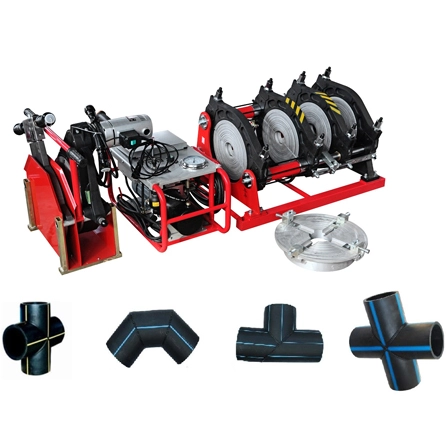
From our experience, attempting to piece together an extrusion line from multiple budget suppliers leads to catastrophic integration failures. The synchronization between the extruder output and the downstream haul-off must be absolute. Xjgmachine offer a comprehensive range of Plastic Processing Equipment that includes cutting-edge technology and high-quality machines. Our equipment is suitable for various plastic processing applications, from compounding to thermoforming, and we prioritize durability, efficiency, and user-friendliness. Our products are designed and manufactured to meet the demands of modern plastic production and to help our customers achieve their production goals with ease.
We highly recommend partnering directly with us to ensure your screw geometry, die tooling, and downstream automation are perfectly calibrated for your specific resin, ensuring maximum uptime and zero-defect output.
| Component | Primary Function | Critical Operation Parameter |
|---|---|---|
| Extruder Screw | Conveys, melts, and pressurizes the polymer. | L/D Ratio and Shear Friction. |
| Die Head | Shapes the molten plastic into the desired profile. | Melt pressure and temperature uniformity. |
| Calibration Tank | Freezes the outer dimensions of the profile. | Vacuum pressure and chilled water flow rate. |
| Haul-Off (Puller) | Pulls the profile through the cooling system. | Exact speed synchronization with extruder output. |
| Feature | Single Screw Extruder | Conical Twin Screw Extruder |
|---|---|---|
| Best Material Application | Thermoplastic Pellets (PE, PP, ABS) | Heat-Sensitive Powders (PVC) |
| Shear Generation | High (Relies on friction to melt) | Low (Relies on mechanical pumping and barrel heat) |
| Pumping Efficiency | Moderate (Pressure dependent) | Excellent (Positive displacement pumping) |
| Capital Cost | Lower | Significantly Higher |
| Pros (Advantages) | Cons (Limitations) |
|---|---|
| Unmatched high-volume, continuous production capabilities. | Strictly limited to linear 2D cross-sectional profiles. |
| Extremely low cost-per-foot operational expenses. | High initial tooling costs for custom die heads and calibration sleeves. |
| Ability to co-extrude multiple materials simultaneously (e.g., hard core, soft outer skin). | Requires significant floor space for long cooling troughs and downstream equipment. |
| Excellent for producing structural pipes, tubing, and architectural profiles. | Highly sensitive to raw material inconsistencies and environmental temperature fluctuations. |
Die swell is a phenomenon where the molten plastic expands in size immediately upon exiting the extrusion die. This occurs because the polymer molecules are tightly compressed and stretched as they are forced through the die opening. Once they exit into open air, the elastic nature of the polymer causes the molecules to recoil and expand. Engineers must calculate and compensate for this swell when machining the exact dimensions of the steel die.
Rigid PVC is formulated as a dry powder blend rather than pre-compounded pellets, and it is highly sensitive to heat and shear. If processed in a standard single-screw extruder, the high frictional shear required to convey the powder will rapidly overheat and degrade (burn) the PVC, releasing corrosive hydrochloric acid gas. A conical twin-screw extruder uses two interlocking screws to gently knead and push the powder forward at lower RPMs, providing massive pumping pressure without generating destructive shear heat.
Melt fracture, often visible as a rough, matte, or scaly surface finish known as "sharkskin," is caused by excessive shear stress at the die wall. When the extrusion speed is too high, or the melt temperature is too low, the outer layer of the plastic stretches and tears as it exits the die. Fixing this requires increasing the die temperature, slowing down the extrusion rate, or adding a processing aid (lubricant) to the polymer mix.
To ensure engineering accuracy and compliance with global manufacturing standards, the technical parameters and thermodynamic principles detailed in this guide reference data from the following authorities:
Plastics Industry Association (PLASTICS) - The leading trade association representing the entire plastics supply chain, providing standards for machinery safety and operational efficiency.
Society of Plastics Engineers (SPE) - The premier global organization for plastics professionals, offering peer-reviewed literature on polymer rheology, screw design, and extrusion troubleshooting.
ASTM International - The organization defining the rigorous testing protocols and dimensional standards (e.g., ASTM D2241 for PVC pressure pipe) required for extruded plastic components used in commercial construction.
 English
 العربية
 русский
 Español
 français
 português
 Deutsch
 italiano
 Türkçe
 한국어
한국어 日本語
日本語