Mastering how to extrude a plastic tube separates profitable manufacturing facilities from those bleeding capital on scrap rates and dimensional inconsistencies. In commercial plastics manufacturing, extrusion is not a dark art; it is a strict thermodynamic and mechanical process. Relying on outdated equipment or generic parameter settings will result in wall thickness variations, melt fracture, and structural failure of your final product. Whether you are producing medical-grade catheters or heavy-duty agricultural hosing, understanding the precise mechanics of the extrusion line is mandatory for commercial success.
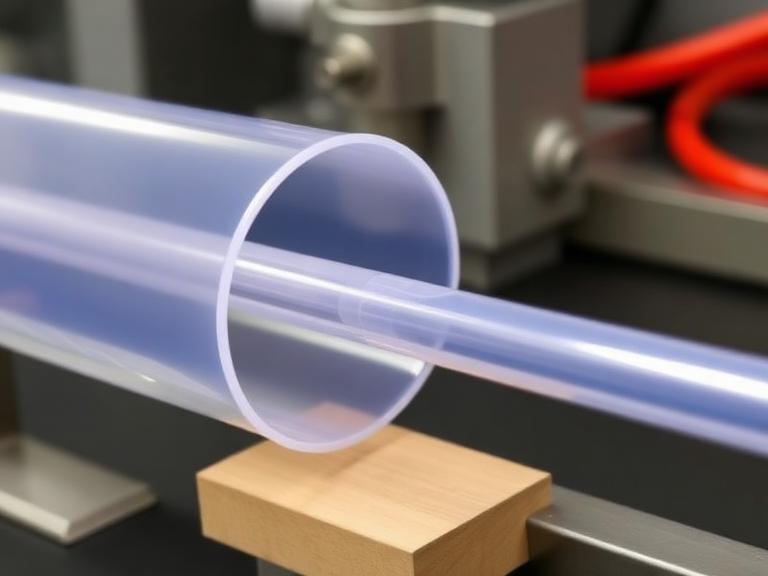
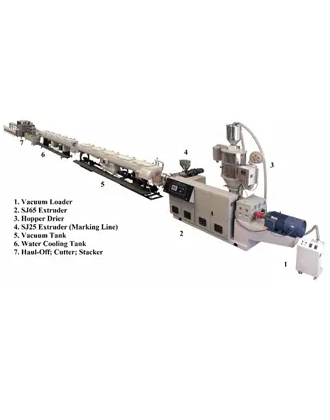
To successfully extrude a plastic tube, you must feed raw thermoplastic resin pellets into the hopper of an extruder. A rotating screw conveys the polymer through a heated barrel, utilizing mechanical shear and thermal energy to melt it into a homogeneous fluid. This melt is forced under high pressure through an annular die, which shapes it into a hollow cylinder. Immediately upon exiting the die, the hot tube enters a vacuum calibration tank where it is rapidly cooled by water while being held to precise dimensional tolerances. Finally, a haul-off caterpillar pulls the solidified tube at a synchronized speed before it is coiled or cut to length.
Plastic tube extrusion is a continuous, high-volume manufacturing process designed to convert solid raw polymer into a continuous hollow profile. While the terms "tube" and "pipe" are often used interchangeably in layman's terms, in industry parlance, tubes are generally flexible and measured by outside diameter, whereas pipes are rigid and measured by nominal internal diameter. The core machinery required for both, however, relies on the exact same fundamental technology: the single or twin-screw extruder.
This process transforms raw materials—ranging from flexible PVC and polyurethane to rigid high-density polyethylene (HDPE)—into usable continuous products. By utilizing a properly configured Plastic Pipe Production Line, operators can achieve exact inner and outer diameters, ensuring the final product meets strict industry tolerances.
Understanding how to extrude a plastic tube requires breaking the process down into five distinct mechanical zones. From our experience, failure in any single zone guarantees the failure of the entire production run.
1. Feeding and Melting (The Extruder)
Raw polymer pellets—often blended with colorants or UV stabilizers—are loaded into a hopper. Gravity feeds them into the feed throat of the extruder barrel. Inside the barrel lies the screw, the beating heart of the operation. The screw is divided into three sections: the feed zone (which moves the solid pellets forward), the compression zone (which compacts the melting plastic and removes trapped air), and the metering zone (which pumps the homogenous melt at a constant pressure). The heat required to melt the plastic comes from external heater bands and the internal mechanical shear friction generated by the screw's rotation.
2. Shaping (The Die Head)
The molten plastic is forced through a screen pack and breaker plate (to filter out impurities and convert rotational flow to linear flow) before entering the die. For tubing, an annular die is used. This features a solid center pin (the mandrel) suspended inside an outer ring. As the plastic flows through this circular gap, it takes the shape of a hollow tube. Air is constantly pumped through the center of the mandrel to prevent the hot tube from collapsing inward.
3. Calibration and Cooling
The hot, pliable tube exits the die and immediately enters a vacuum calibration water tank. The vacuum environment pulls the soft plastic outward against a sizing sleeve, locking in the exact outer diameter. Chilled water sprays rapidly quench the polymer, freezing the molecular structure into a solid state.
4. Pulling (The Haul-Off)
A caterpillar haul-off unit uses gripping belts to continuously pull the cooled tube down the line. The speed of the haul-off relative to the speed of the extruder screw dictates the "drawdown ratio" and ultimately determines the final wall thickness of the tube.
5. Cutting and Coiling
Once the tube reaches the end of the line, it is either sliced into specific lengths by a planetary cutter or wound onto large spools using an automated coiler.
For commercial users, plastic tube extrusion offers unparalleled manufacturing efficiency. The primary benefit is continuous, uninterrupted high-volume production. Once the line is stabilized, it can run 24 hours a day with minimal human intervention, driving the cost-per-foot of tubing down to fractions of a cent.
Furthermore, extrusion allows for immense material versatility. The exact same HDPE Pipe Production Line can often be adjusted to run different polymer grades simply by altering the barrel temperature profile and switching out the die tooling. Co-extrusion technologies even allow manufacturers to lay down multiple layers of different plastics simultaneously, creating tubes with rigid outer shells and chemical-resistant inner linings.
Extrusion is strictly limited to 2D profiles that remain consistent along their entire length. You cannot extrude a tube that tapers, changes shape, or features complex 3D internal geometries. If your product requires variable diameters, you must look toward blow molding or injection molding.
Additionally, the initial capital expenditure for setting up an extrusion line is significant. Die tooling must be precision-machined from hardened steel, and establishing the exact thermal profile for a new polymer blend requires extensive trial and error, resulting in substantial initial material waste during setup.
We recommend continuous tube extrusion for manufacturers supplying the agricultural, medical, plumbing, and automotive sectors. If you are required to produce kilometers of drip irrigation hose, pneumatic airlines, or structural PVC Pipe Production Line materials, extrusion is the only commercially viable methodology.
Prototypers, custom fabricators, and businesses requiring low-volume, highly complex hollow shapes do not need an extrusion line. The setup time and tooling costs will completely oblicate your profit margins on runs of less than a few thousand feet.
In our testing and consulting with struggling facilities, the most common mistake is ignoring resin moisture content. Many polymers are hygroscopic (they absorb moisture from the air). If you fail to dry the pellets before they enter the hopper, the moisture will boil into steam inside the extruder barrel. This results in surface blistering, pitting, and catastrophic loss of mechanical strength in the final tube. Utilizing a proper PE PP Pelletizing/Granulating Line with integrated desiccant dryers is mandatory.
Another profound error is mismatched haul-off speeds. If the puller is running too fast relative to the melt output, the tube's wall thickness will thin out dangerously, creating weak points. If it runs too slowly, the plastic will pool at the die exit, causing irregular lumps and jamming the calibration sleeve. Precision synchronization between the extruder drive and the haul-off motor is non-negotiable.
When purchasing equipment to extrude plastic tubing, you must evaluate the Length to Diameter (L/D) ratio of the extruder screw. A higher L/D ratio (such as 30:1 or 33:1) provides better melt mixing and thermal stability, which is critical for processing tough resins like Polycarbonate or high-density PEEK. For softer, easier-to-melt materials like PVC, a lower L/D ratio may suffice.
You must also decide between single screw and twin-screw extruders. For standard tubing applications using pre-compounded pellets, a robust single screw extruder is the most cost-effective and reliable choice. If you are working with un-compounded PVC powder or Rubber Extrusion Line materials, you will need the aggressive shearing and mixing capabilities of a conical twin-screw machine.
In most professional situations where a manufacturer needs to establish a reliable, high-output tubing line for standard thermoplastics (PE, PP, ABS, flexible PVC), we strongly recommend investing in a high-quality single screw extrusion platform. Do not cut costs on the core drive unit; a poorly machined screw will cause inconsistent melt pressure, leading directly to dimensional drift in your tubing.
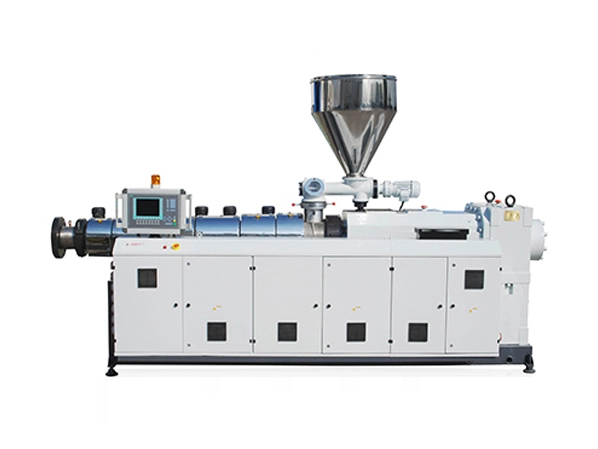
SJ Single Screw Extruder is a highly efficient extrusion machine used in the plastic processing industry for forming and shaping plastic materials. The machine works by melting the plastic material and pushing it through a die to form a specific shape. SJ Single Screw Extruders are utilized for a wide range of applications, including the manufacturing of plastic pipes, films, sheets, and medical tubing. They come in various models and L/D ratios to meet specific production requirements and can process a broad range of thermoplastic materials.
Xjgmachine (QING CHEN YU) is a professional single screw extruder factory in China. If you are looking for a reliable single screw extruder company, our equipment delivers the tight tolerances and continuous output required for modern commercial manufacturing. View the SJ Single Screw Extruder.
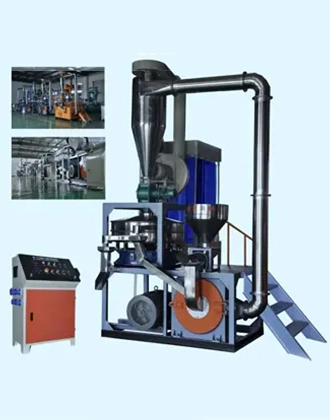
For operations looking to recycle their own scrap tubing back into usable raw material, we also recommend integrating a PVC/WPC Pelletizing Line to close your manufacturing loop and drastically reduce your raw resin expenditures.
| Process Stage | Machinery Component | Primary Function |
|---|---|---|
| 1. Feeding | Hopper & Feed Throat | Introduce raw polymer pellets into the system. |
| 2. Melting | Heated Barrel & Screw | Apply thermal heat and mechanical shear to homogenize the plastic. |
| 3. Shaping | Annular Die & Mandrel | Force the melt into a continuous hollow cylindrical profile. |
| 4. Sizing & Cooling | Vacuum Calibration Tank | Lock in the outer diameter and rapidly quench the plastic with water. |
| 5. Extraction | Caterpillar Haul-off | Pull the tube at a constant speed to maintain precise wall thickness. |
| Feature | Single Screw Extruder | Twin Screw Extruder |
|---|---|---|
| Best Use Case | Pre-compounded pellets (PE, PP, HDPE) | Dry powder blends (Rigid PVC profiles) |
| Mixing Capability | Moderate | Excellent (High shear and compounding) |
| Initial Cost | Lower | Significantly Higher |
| Maintenance Complexity | Straightforward | Complex (Thrust bearings require careful monitoring) |
| Pros (Benefits) | Cons (Limitations) |
|---|---|
| Extremely high-volume output lowers the cost-per-foot dramatically. | Tooling (dies and calibration sleeves) is expensive to machine. |
| Continuous process capable of running 24/7 with minimal labor. | Strictly limited to 2D continuous profiles; no variable shapes. |
| Excellent control over final wall thickness and inner/outer diameters. | Requires significant trial and error to dial in the thermal profile initially. |
| Co-extrusion allows for multi-layer tubing with varied properties. | Moisture in the raw resin will completely ruin the structural integrity. |
Die swell (or extrudate swell) occurs immediately after the molten plastic exits the die. As the polymer is freed from the high-pressure constraints of the die, the molecular chains relax and expand, causing the tube to briefly increase in diameter and thickness. Experienced operators compensate for die swell by sizing the die slightly smaller than the desired final product and controlling the haul-off speed.
Wall thickness is controlled by the balance between the extruder's output rate (screw RPM) and the speed of the haul-off puller. Increasing the haul-off speed pulls the plastic faster, stretching it and reducing the wall thickness. Conversely, slowing the puller down allows more plastic to accumulate, increasing the wall thickness. Minor adjustments can also be made by tweaking the air pressure inside the mandrel.
When the hot plastic exits the die, it is soft and will collapse or lose its perfect circular shape under its own weight. A vacuum calibration tank submerges the tube in cooling water while applying a vacuum to the outside of the tube. This vacuum physically pulls the soft plastic against a precise sizing sleeve, holding it in perfect dimensional tolerance until the water freezes the plastic into a rigid state.
To ensure our manufacturing guidelines align with global engineering standards, we reference data from the following authorities in polymer science and extrusion mechanics:
ASTM International - Setting the global standards for plastic piping and tubing dimensions, pressure ratings, and material specifications.
Plastics Industry Association - Providing comprehensive guidance on extrusion machinery safety, operational best practices, and commercial manufacturing standards.
Plastics Technology - A premier technical resource for deep-dive analysis into screw design, melt thermodynamics, and modern extrusion control systems.
 English
 العربية
 русский
 Español
 français
 português
 Deutsch
 italiano
 Türkçe
 한국어
한국어 日本語
日本語