In modern civil engineering, municipal water distribution, and heavy industrial fluid transport, the integrity of a pipeline is only as reliable as its weakest joint. Historically, engineers relied on mechanical fittings, bell-and-spigot joints, or chemical solvents to connect piping sections. These legacy methods share a fatal flaw: they eventually leak, corrode, or separate under seismic stress. The global adoption of High-Density Polyethylene (HDPE) revolutionized fluid dynamics entirely because it introduced the ability to permanently eliminate mechanical joints. To achieve this, contractors rely on highly specialized, precision-engineered machinery known as HDPE fusion equipment.
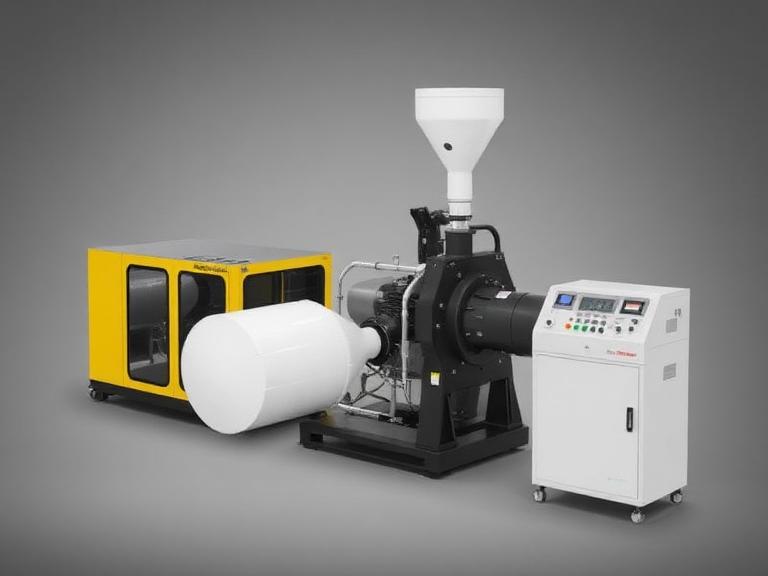
From our experience engineering and deploying advanced thermoplastic welding machinery at Xjgmachine, we routinely see contractors compromise multimillion-dollar infrastructure projects by misunderstanding the thermofusion process. Buying or renting sub-par HDPE fusion equipment guarantees weld failures, pressure test blowouts, and devastating environmental liabilities. In this comprehensive guide, we will aggressively dismantle the myths surrounding pipe fusion, explain the precise mechanics of the equipment, and provide clear, commercial judgment on how to select the exact machinery required for your pipeline projects.
HDPE fusion equipment refers to specialized industrial machinery designed to join High-Density Polyethylene pipes through the application of controlled heat and hydraulic pressure. The equipment works by facing (shaving) the pipe ends to be perfectly flat, heating the ends to a precise melting point using a Teflon-coated heating plate, and then forging the molten ends together under sustained pressure. This process, known as thermofusion, causes the polymer chains to interlock, creating a monolithic joint that is structurally stronger than the pipe itself. The equipment ranges from manual handheld devices for small-diameter plumbing to massive CNC-controlled hydraulic carriages for large-scale municipal pipelines.
HDPE fusion equipment is not a single tool, but rather an entire category of precision machinery built to manipulate the molecular structure of polyethylene. When a contractor procures a HDPE Pipe For Water/Gas Supply, they cannot simply thread or glue the ends together. They must utilize equipment specifically engineered to execute one of four distinct welding methods: butt fusion, socket fusion, saddle fusion, or electrofusion.
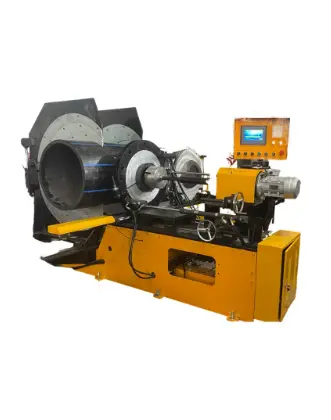
A standard butt fusion machine consists of four primary components. First, the carriage holds the pipe lengths in perfect axial alignment using heavy-duty clamps. Second, the facer acts as an industrial planer, shaving the pipe ends to ensure they are perfectly square and free of oxidation. Third, the heater plate brings the polymer to its exact melting temperature. Finally, the hydraulic power unit (HPU) delivers the immense, mathematically calculated pressure required to forge the two molten ends together. Whether you are welding 2-inch conduit or 48-inch municipal mains coming off an HDPE Pipe Production Line, the fundamental architecture of the equipment remains the same.
The science behind HDPE fusion equipment is rooted in polymer chain entanglement. In most professional situations, successfully joining two pipes requires strict adherence to a formulaic process dictated by industry standards (such as ASTM F2620). Here is how the machinery executes the process:
Preparation and Alignment: The pipes are cut squarely using a DJQ Series HDPE Pipe Band Saw Cutter. They are then loaded into the machine's carriage. The hydraulic clamps grip the pipes, ensuring absolute axial alignment to prevent high-low mismatches.
Facing: The mechanical facer is inserted between the pipe ends. As it spins, the carriage brings the pipes against the blades, shaving off continuous ribbons of plastic. This removes surface oxidation and ensures the ends will mate with zero gaps.
Heating (The Soak Phase): The facer is removed, and a Teflon-coated heating plate (typically set between 400 to 450 degrees Fahrenheit) is inserted. The pipe ends are pressed against the plate. The operator allows the heat to penetrate the pipe wall, creating a precise melt bead.
Fusion: The heating plate is rapidly removed. The hydraulic carriage then slams the two molten ends together at a calculated fusion pressure. The melted polyethylene chains intermix and entangle across the joint boundary.
Cooling: The joint must remain completely undisturbed under sustained hydraulic pressure until the core temperature drops. Rushing this step is disastrous. Once cooled, the joint is fully monolithic.
The primary benefit of utilizing professional HDPE fusion equipment is the creation of a zero-leak pipeline. Because the fused joint shares the identical molecular structure as the pipe body, there is no mechanical seam to degrade over time. In our testing, a properly executed butt fusion joint is actually stronger under tension and pressure than the native pipe itself.
Furthermore, fusion allows for Trenchless Installation methods, such as Horizontal Directional Drilling (HDD). When contractors drag thousands of feet of pipe underground, mechanical joints would pull apart. A fully fused string of HDPE behaves like a single, unbreakable noodle. This flexibility makes it indispensable for seismic zones, marine outfalls equipped with a Plastic Floater/HDPE Pipe Floater, and aggressive industrial chemical transport.
We must apply commercial and practical judgment: HDPE fusion equipment is not without constraints. The primary limitation is the initial capital expenditure. High-quality hydraulic carriages are expensive. Additionally, the process is highly sensitive to environmental contamination. If dirt, moisture, or high winds drop the temperature of the heating plate or contaminate the molten pipe ends, the weld will fail ultrasonic testing.
Another limitation is footprint. Butt fusion machines require significant space in the trench or right-of-way. In hyper-confined urban environments where lowering a heavy carriage into a ditch is impossible, operators must pivot away from butt fusion and utilize electrofusion couplings instead.
For commercial users and heavy-duty applications: Civil engineering firms, municipal water authorities, natural gas distributors, and mining operations absolutely must utilize commercial-grade HDPE fusion equipment. If your operation involves installing pressurized infrastructure designed to last 50 to 100 years, standardizing your fleet with high-quality HDPE Pipe Butt Welding Machine units is a non-negotiable operational requirement.
Who does not need it: For beginners executing temporary, unpressurized agricultural drainage or residential indoor plumbing, purchasing heavy hydraulic fusion equipment is a massive misallocation of capital. Simple mechanical compression fittings or solvent-welded PVC are sufficient for low-stakes, temporary fluid transport.
The most catastrophic mistake we see in the field is operators attempting to bypass the cooling phase to increase daily production rates. Releasing hydraulic pressure before the core of the weld has solidified introduces internal stresses that lead to sudden, catastrophic pipe rupture months after the trench is backfilled.
Another profound error involves inadequate cleaning. Touching the faced pipe ends with bare hands transfers skin oils to the polymer, acting as a barrier that prevents molecular bonding. Operators must also frequently clean the Teflon heating plates; burnt plastic residue from a previous weld will destroy the integrity of the next joint.
When procuring HDPE fusion equipment, prioritize versatility and data integrity. We recommend investing in CNC (Computer Numerical Control) machines or units equipped with advanced data loggers. A data logger records the exact temperature, pressure, and cooling time for every single weld, providing you with irrefutable digital proof of quality for state and federal inspectors. Do not buy manual machines for critical gas lines; human error will cost you the contract. Additionally, evaluate the clamping mechanism—ensure the machine comes with robust reducing inserts so a single carriage can handle a wide variety of pipe diameters.
| Fusion Phase | Action Performed | Critical Objective |
|---|---|---|
| 1. Facing | Shaving pipe ends with rotary blades. | Remove oxidation and ensure parallel mating surfaces. |
| 2. Heating | Applying Teflon-coated heat plate (400-450°F). | Melt the polymer to a specific depth (the bead). |
| 3. Fusing | Pressing molten ends together hydraulically. | Force molecular chain entanglement across the boundary. |
| 4. Cooling | Holding joint under sustained pressure. | Allow polymer to crystallize into a monolithic structure. |
| Equipment Type | Primary Mechanism | Best Use Case |
|---|---|---|
| Butt Fusion Machine | Heats pipe ends and presses them together. | Long straight runs, municipal water mains, HDD pulling. |
| Socket Fusion Machine | Heats the outside of a pipe and inside of a fitting. | Small diameter plumbing, manifolds, complex angles. |
| Saddle Fusion Machine | Melts a branch fitting onto the side of a main pipe. | Adding lateral service taps to existing live or dead mains. |
| Electrofusion Unit | Sends electricity to a coil embedded in a fitting. | Confined trench repairs, tie-ins where machines won't fit. |
| The Pros (Advantages) | The Cons (Disadvantages) |
|---|---|
| Eliminates operator guesswork regarding pressures and times. | Significantly higher initial purchase price. |
| Provides printable digital reports for inspector sign-off. | Requires operators to learn software interfaces. |
| Calculates exact drag pressures for heavy pipe strings automatically. | Electronic components are more sensitive to harsh trench conditions. |
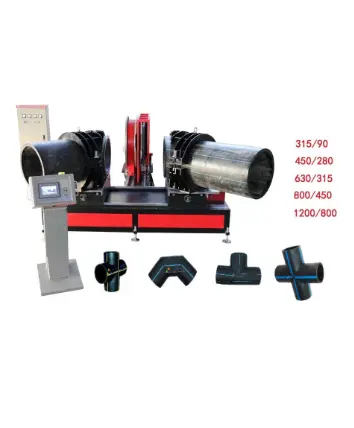
In most professional situations, the ability to rapidly fabricate reliable branch connections separates profitable contractors from those who lose money on labor delays. You cannot rely on manual cutting and gluing when constructing high-pressure distribution manifolds. We recommend integrating specialized equipment specifically designed to eliminate the bottlenecks of custom fabrication.
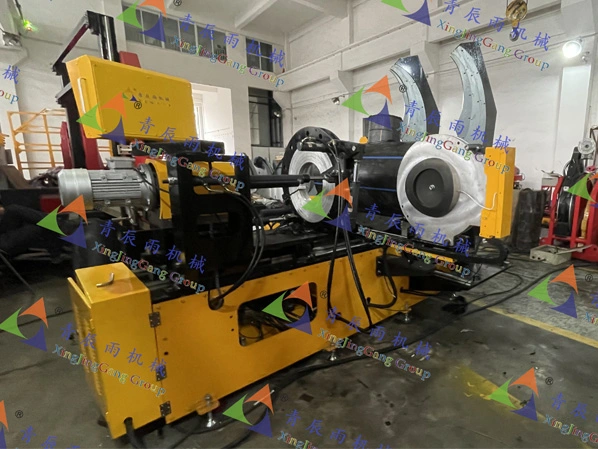
Engineered for relentless commercial fabrication, this machine is suitable for fabricating HDPE reducing tees directly in a workshop environment. The integrated function of welding and taping enables operators to complete the entire fabricating process efficiently and flawlessly.
Equipped with a premium Teflon-coated heating plate for uniform thermal distribution.
Separate two-channel timer accurately records times in both soaking and cooling phases, eliminating operator estimation.
Digital high-accurate pressure meter indicates exact hydraulic readings for perfect fusion validation.
Heavy-duty linear guide ways support both the heating plate and dragging plate for uncompromising stability.
Whether you require a robust Socket Fusion Welding Machine for intricate manifold work or heavy hydraulic carriages for main line transport, standardizing your fleet with Xjgmachine ensures your pipelines outlast the infrastructure around them.
To ensure your pipeline installations meet global engineering and safety benchmarks, we strongly advise consulting the following standards organizations:
ASTM International - Providing the definitive standards (such as ASTM F2620) outlining the exact heat, pressure, and cooling parameters required for safe polyethylene pipe fusion.
Plastics Pipe Institute (PPI) - The premier North American trade association offering extensive technical reports (TR-33) and engineering manuals for HDPE pipeline design and installation.
International Organization for Standardization (ISO) - Governing global manufacturing and installation protocols for thermoplastic piping systems used in critical fluid transport.
 English
 العربية
 русский
 Español
 français
 português
 Deutsch
 italiano
 Türkçe
 한국어
한국어 日本語
日本語