Procuring a pvc pipe extruder machine is a high-stakes capital expenditure. If you choose an underpowered or incorrectly configured line, your operation will bleed cash through relentless material scrap, frequent gear failures, and catastrophic production downtime. From our experience engineering and deploying plastic extrusion lines globally, the market is saturated with entry-level machines that look excellent on paper but fail under continuous 24/7 commercial loads.

In most professional situations, a plastic pipe manufacturer needs equipment that perfectly balances Capital Expenditure (CapEx) with continuous operational reliability. You do not always need a million-dollar European line, but you absolutely cannot afford a sub-standard, lightweight imitation. In this comprehensive guide, we strip away the marketing noise to analyze the 7 best pvc pipe extruder machine options available today, helping you make a profitable buying decision.
If you are looking to make an immediate purchasing decision, here is our commercial verdict:
For heavy-duty applications (Water/Sewer up to 710mm): The Xjgmachine PVC Pipe Extruder Production Line 710mm is the undisputed champion for large-diameter municipal pipe production.
For standard UPVC powder formulations: Always specify a SJSZ Conical Twin Screw Extruder to prevent material burning and ensure perfect plasticization.
For recycled PVC pellets/granules: A high-torque SJ Single Screw Extruder is your most cost-effective and reliable choice.
Do not compromise on downstream equipment. A world-class extruder requires precision vacuum calibration and reliable haul-offs to maintain strict pipe wall tolerances.
A pvc pipe extruder machine is a heavily engineered industrial manufacturing line designed to transform raw polyvinyl chloride (PVC) resin—often mixed with calcium carbonate, titanium dioxide, and various stabilizers—into a continuous, seamless plastic pipe. Unlike injection molding which creates discrete, individual parts, an extrusion machine is designed for continuous, high-volume, uninterrupted production.
Understanding the mechanics is vital before making a buying decision. The process begins at the hopper, where a volumetric or gravimetric feeder doses the PVC mixture into the heated barrel. Inside the barrel, specialized screws (either single or twin) rotate at high torque. The combination of external heater bands and the internal friction generated by the screw sheer causes the PVC to melt and homogenize (plasticization).
This pressurized molten plastic is forced through a steel extrusion die head, forming a hollow tube. However, molten plastic cannot hold its shape. The hot pipe immediately enters a vacuum calibration tank where negative pressure pulls the plastic against a sizing sleeve while cold water freezes the pipe to its exact outer diameter. A caterpillar haul-off unit continuously pulls the cooled pipe downstream, passing it through a high-speed planetary cutter, and finally, a belling machine if socket joints are required.
In our testing and industry analysis, we have categorized the seven best commercial extrusion setups dominating the 2026 manufacturing landscape.
Best Use Cases: Municipal water supply networks, heavy-duty sewer pipes, and large-scale agricultural irrigation.
When producing pipes with a diameter up to 710mm, material sagging and die-head pressure become immense engineering challenges. Xjgmachine has mastered this with a highly specialized SJSZ conical twin-screw configuration that ensures perfect melt uniformity before the plastic reaches the massive die head. For heavy-duty applications, this machine provides the structural rigidity and continuous cooling capacity required to prevent pipe wall collapse.
Best Use Cases: Standard UPVC/CPVC pressure pipes, electrical conduits, and high-calcium formulations.
Unplasticized PVC (UPVC) is notoriously sensitive to heat. If you use a standard single screw, the friction will burn the powder into degraded black lumps. We recommend the Xjgmachine SJSZ series because the conical twin screws provide massive extrusion pressure at low rotational speeds. This gentle, high-sheer action is the industry standard for processing dry PVC powder mixtures directly into pipe.
Best Use Cases: Corporate tier-one manufacturers with unlimited capital expenditure budgets.
We must acknowledge KraussMaffei as a pinnacle of German engineering. Their KMD twin-screw extruders are highly automated and incredibly durable. However, our cost-benefit analysis shows that for 80% of independent pipe manufacturers, the extreme upfront cost and expensive proprietary spare parts drastically increase the payback period. It is an excellent machine, but often an unnecessary over-investment.
Best Use Cases: Producing flexible PVC hoses, or running pre-compounded recycled PVC pellets.
While you should never run raw PVC powder in a single screw, an SJ Single Screw Extruder is highly effective when working with pre-melted, pelletized PVC granules. For commercial users looking to cut costs by utilizing recycled materials—often processed beforehand through a Plastic Crusher and a Plastic Pulverizer Machine—this machine offers incredible output speeds and simple maintenance.
Best Use Cases: High-throughput standard pressure pipes.
Another European giant, the twinEX series features parallel twin screws rather than conical. They are excellent for achieving massive output tonnages per hour. The limitation here is flexibility; parallel twin screws require highly precise formulations and are less forgiving of formulation changes than conical designs. Repairing a parallel gearbox is also notoriously expensive.
Best Use Cases: Non-pressure drainage, sewage, and cost-optimized building pipes.
To reduce raw material costs, modern manufacturers use a co-extrusion setup (usually two or three extruders feeding one die head) to create a pipe with solid inner and outer skins, but a foamed (expanded) PVC middle layer. This significantly reduces the weight and material cost of the pipe while maintaining acceptable ring stiffness for non-pressure applications.
Best Use Cases: Electrical PVC conduits from 16mm to 32mm.
For small diameter pipes, running a large extruder for a single strand is highly inefficient. The best solution is a double-strand (or four-strand) die head that outputs multiple pipes simultaneously from a single twin-screw extruder. This effectively doubles your factory's production capacity without doubling your footprint or energy consumption.
Investing in a modern, purpose-built pvc pipe extruder machine yields immediate commercial benefits. First, modern PID temperature controllers and variable frequency drives (VFDs) reduce electrical consumption by up to 30% compared to legacy machines. Second, high-quality die heads ensure precise wall thickness distribution. If your pipe walls vary in thickness, you are literally giving away free raw material (over-weight pipes). Precision calibration directly impacts your bottom line.
Furthermore, seamless integration with downstream equipment maximizes factory automation. For instance, pairing your line with a Plastic Pipe Laser Printer eliminates the mess of ink-jet systems, and installing a PVC Pipe Bending Machine allows you to produce high-margin electrical sweeps and elbows in-house.
PVC extrusion lines are rigid, continuous manufacturing systems. They take significant time to heat up and stabilize. If your business model involves producing small, custom batches of different pipe sizes every few hours, extrusion is not the answer. The changeover time for die heads and vacuum sizing sleeves takes hours, making short production runs highly unprofitable.
Who should use it: Industrial investors, building material suppliers, agricultural irrigation distributors, and infrastructure contractors looking to vertically integrate their supply chains. If you are buying millions of dollars of PVC pipe annually, manufacturing it yourself using Xjgmachine equipment will drastically increase your profit margins.
Who does not need it: Small plumbing workshops or businesses focused solely on pipe fittings. Fittings (elbows, tees, valves) require injection molding machines, not continuous pipe extruders.
Ignoring Chiller Capacity: Your extrusion line is only as fast as your cooling capacity. If your water temperature rises, your pipe will warp. Always invest in an oversized industrial water chiller.
Skimping on Gearbox Quality: The gearbox takes the immense back-pressure of the molten plastic. Cheap machines use low-grade bearings that shatter under 24/7 commercial loads.
Poor Scrap Management: Generating scrap during startup is inevitable. Failing to implement a Plastic Crusher means you are throwing away raw material instead of regrinding and recycling it back into the hopper.
When evaluating a pvc pipe extruder machine, inspect the specifications with extreme prejudice. Look for a robust Length-to-Diameter (L/D) ratio on the screws. For conical twin screws processing PVC, ensuring the screw core is hollow and equipped with an internal oil-cooling system is mandatory to prevent material burning.
Examine the electrical components. In most professional situations, we demand Siemens or Schneider contactors, ABB or Delta inverters, and Omron temperature controllers. Proprietary or off-brand electronics will leave you stranded when a simple relay fails and replacement parts are unavailable locally.
| Commercial Advantages (Pros) | Operational Challenges (Cons) |
|---|---|
| Massive reduction in per-meter pipe acquisition costs. | High initial Capital Expenditure (CapEx) for equipment and factory space. |
| Total control over raw material formulations (calcium/resin ratios). | Requires skilled operators to monitor temperatures and vacuum levels. |
| Ability to re-use factory scrap via crushing and pulverizing. | Lengthy startup and shutdown procedures; not ideal for short production runs. |
| High-speed continuous production yields rapid ROI. | Heavy reliance on stable, high-capacity electrical and chilled water infrastructure. |
| Machine Type | Ideal Raw Material | Plasticization Method | Primary Application | Initial Cost Tier |
|---|---|---|---|---|
| SJSZ Conical Twin Screw | Dry PVC Powder / Calcium mix | Low speed, high sheer, gentle melt | Rigid UPVC/CPVC pressure pipes | Higher |
| SJ Single Screw | Pre-compounded Pellets/Granules | High speed, friction heating | Flexible hoses, PE/PP pipes, recycled PVC | Lower |
| Parallel Twin Screw | Specific PVC Powder recipes | High output, low residence time | Mass volume, single-recipe runs | Highest |
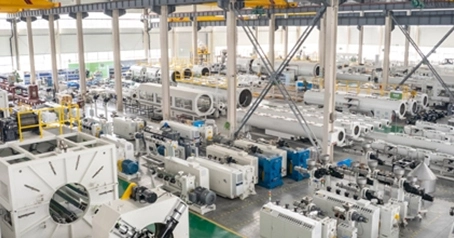
At our state-of-the-art facility, we employ a team of skilled engineers and technicians who ensure the precision and reliability of our machines. Our plastic pipe production lines are designed to optimize efficiency and productivity while maintaining the highest standards of quality. Additionally, our plastic recycling equipment is environmentally friendly, promoting sustainability and waste reduction.
With a strong emphasis on customer satisfaction, we offer comprehensive after-sales support and technical assistance. We strive to establish long-term partnerships with our clients, providing them with customized solutions and continuous improvement. Choose Xjgmachine for your plastic extrusion needs, and experience the excellence of our products and services. For commercial users launching a new facility, we recommend pairing the SJSZ series extruder with our automated downstream hauling and cutting units for a true turnkey solution.
No, not effectively. PVC requires a conical twin-screw setup due to its heat sensitivity, whereas Polyethylene (PE) and Polypropylene (PP) require high-speed single-screw extruders with vastly different L/D ratios and die head designs. Attempting to run PE in a PVC machine will result in poor plasticization and damaged equipment.
Uneven wall thickness is typically caused by a misaligned extrusion die head, uneven cooling in the vacuum calibration tank, or an inconsistent pulling speed from the caterpillar haul-off unit. Proper mechanical calibration by a skilled operator is required to center the die flow.
Consumption varies wildly based on machine size. A standard 63mm pipe line might require a total installed power of around 90kW to 120kW. However, actual running consumption is usually 60% to 70% of installed power once the barrel heater bands reach their target temperatures and begin cycling off.
Plastics Industry Association: Guidelines on manufacturing standards and safe operation of heavy extrusion machinery. www.plasticsindustry.org
ASTM International (F441/F441M): Standard Specification for Chlorinated Poly(Vinyl Chloride) (CPVC) Plastic Pipe, Schedules 40 and 80. www.astm.org
Plastics Technology Magazine: Industry insights on twin-screw compounding, extrusion die-head tooling, and downstream calibration. (https://www.ptonline.com)
 English
 العربية
 русский
 Español
 français
 português
 Deutsch
 italiano
 Türkçe
 한국어
한국어 日本語
日本語