The global infrastructure boom and the stabilization of raw resin prices have created a massive profit opportunity for localized plastic pipe production. However, navigating the machinery procurement landscape is an absolute minefield of misinformation. From our experience at xjgmachine, where we engineer and deploy industrial extrusion systems globally, buyers constantly fall into the trap of purchasing underpowered, poorly calibrated equipment simply because it carried a cheap price tag. You cannot build a profitable, 24/7 manufacturing operation on hardware that breaks down every 72 hours.
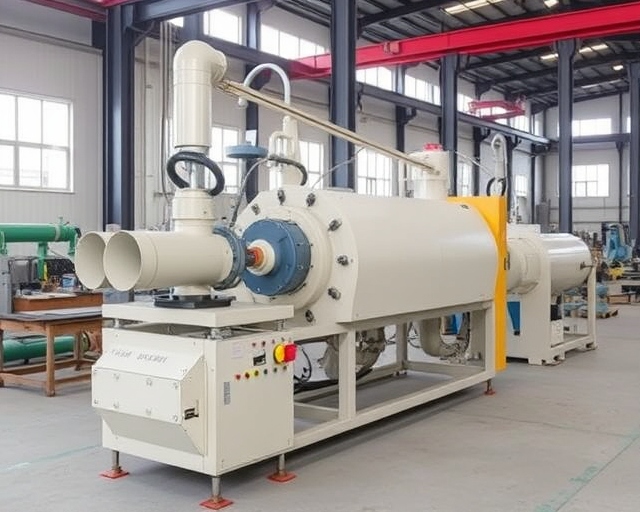
In most professional situations, determining the exact PVC pipe manufacturing machine cost requires a ruthless audit of your target output capacity, the diameter range of the pipes you intend to produce, and the electrical stability of the components driving the extruder. If you are serious about controlling your supply chain and capturing contractor margins, setting up your own extrusion line is the most lucrative investment you can make in 2026. In this comprehensive, opinionated guide, we will break down exactly what dictates the capital expenditure (CapEx) for these machines, explain whether it is actually worth using budget tier equipment, and provide clear decision-making guidance for scaling your factory floor.
The exact PVC pipe manufacturing machine cost varies heavily based on pipe diameter capacity, extruder twin-screw geometry, and the grade of the electrical components (e.g., Siemens, ABB). For 2026, the realistic factory-direct pricing tiers are:
Entry-Level/Small Diameter (16mm - 63mm): $20,000 to $35,000 USD.
Standard Commercial Line (50mm - 250mm): $45,000 to $75,000 USD.
Heavy-Duty/Large Diameter (315mm - 630mm+): $90,000 to $160,000+ USD.
We strongly recommend avoiding any complete line priced below $18,000. These ultra-budget machines universally cut corners on the gearbox and vacuum calibration tanks, leading to catastrophic production bottlenecks and unacceptable pipe wall thickness variations.
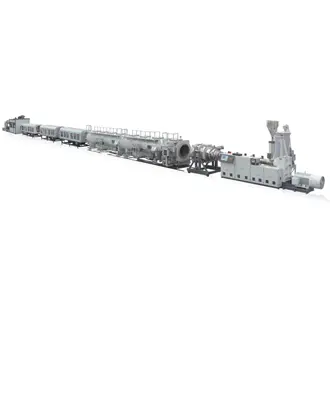
A PVC Pipe Production Line is not a single piece of machinery; it is a synchronized, continuous manufacturing ecosystem. It converts dry PVC resin powder and chemical additives (like calcium carbonate, stabilizers, and lubricants) into rigid, dimensionally perfect plastic piping used for plumbing, electrical conduit, and agricultural drainage.
Unlike polyethylene, which can be processed with a single-screw extruder, PVC powder is highly sensitive to thermal degradation and friction. Therefore, a true PVC pipe manufacturing machine must feature a Conical Twin-Screw Extruder (or parallel twin-screw). The dual screws ensure the raw powder is sheared, mixed, and melted at precise, low-shear temperatures to prevent the plastic from burning before it reaches the die head.
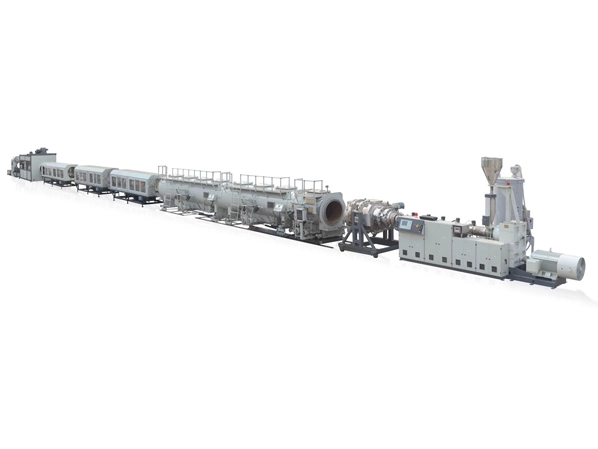
Understanding how the machinery functions is critical to understanding the PVC pipe manufacturing machine cost. A complete turnkey line consists of five to six distinct stations:
Conical Twin-Screw Extruder: The heart of the operation. It melts and pushes the PVC compound forward. Premium extruders utilize Siemens motors and ABB inverters for exact torque control.
Extrusion Die Head: A heated steel mold that shapes the molten plastic into a hollow tube.
Vacuum Calibration Tank: The hot, soft pipe enters a vacuum-sealed water tank. The vacuum pulls the pipe against a brass sizing sleeve to dictate its exact outer diameter, while chilled water freezes the plastic into its rigid state.
Haul-Off Unit (Tractor): A series of rubber caterpillars or belts that pull the pipe through the line at a highly synchronized speed. If this speed fluctuates, the pipe wall thickness will become uneven.
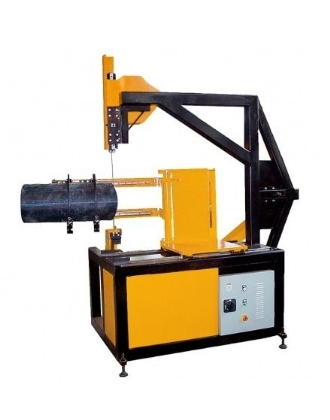
Planetary Cutter: Automatically clamps and saws the moving pipe at pre-programmed lengths, instantly chamfering (beveling) the edge for easy installation.
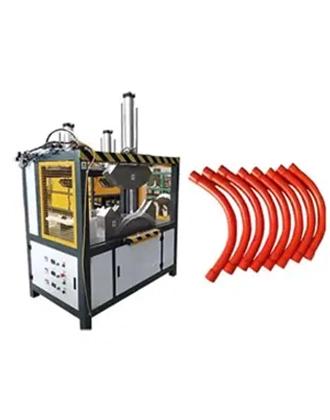
Belling Machine (Optional but recommended): A PVC Pipe Belling Machine takes the cut pipe, heats the end, and expands it into a socket, allowing pipes to slot together in the field without separate coupling joints.
For commercial users currently acting as mid-tier distributors or large-scale civil contractors, the financial math of bringing production in-house is undeniable. When you purchase pipes from a third-party factory, you are paying a 30% to 50% markup, plus astronomical freight costs to ship what is essentially hollow air. By investing in your own machinery, you reduce your cost per meter to the raw price of resin and electricity.
Furthermore, owning the line allows you to pivot instantly. If the local market suddenly demands 110mm drainage pipes instead of 50mm electrical conduits, you simply change the die head and adjust the haul-off speed. You completely insulate your business from supplier delays and port strikes.
We must exercise practical judgment: extrusion manufacturing is not a passive investment. The primary limitation is footprint. A standard PVC pipe manufacturing machine requires a linear floor space of at least 25 to 35 meters. You must also have access to high-voltage industrial three-phase power and a closed-loop water chilling system.
Additionally, you cannot run this machinery with untrained laborers. The startup phase requires operators who understand thermal dynamics; if the extruder temperature drops too low, the solidifying plastic can literally snap the twin screws in half, resulting in a $10,000 repair bill.
For Commercial Users & Regional Distributors: We recommend investing in a full extrusion line if your company purchases more than $200,000 worth of PVC piping annually. Construction material wholesalers, agricultural irrigation suppliers, and municipal infrastructure contractors are the prime candidates to internalize this profit margin. If you want to maximize output for electrical conduits, a PVC Pipe (4-output) Production Line allows you to extrude four small pipes simultaneously from a single extruder, quadrupling your efficiency.
For Beginners & Small Retailers: If you run a local hardware store or a small residential plumbing business, the PVC pipe manufacturing machine cost, space requirements, and resin inventory overhead will bankrupt you. You are better off continuing to buy palletized pipe from regional manufacturers until your volume warrants a factory footprint.
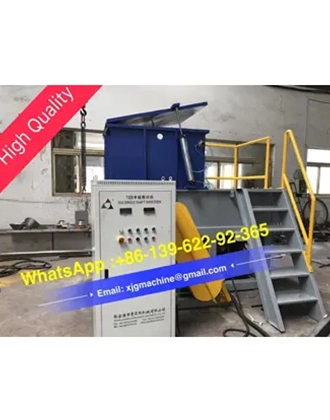
In our testing and decades of consulting, the most catastrophic mistake buyers make is ignoring auxiliary scrap management. During the heating and calibration phases of starting a machine, you will produce dozens of meters of defective "scrap" pipe. If you do not have a robust Plastic Crusher and a Plastic Pulverizer Machine on site, you are throwing away raw material. Proper factories crush the scrap pipe, pulverize it back into powder, and re-feed it into the extruder, achieving zero-waste production.
Another profound error is buying an underpowered water chiller. The vacuum calibration tank relies on frigid water to freeze the hot pipe. If your chiller is too small, the water heats up, the pipe deforms in the haul-off unit, and your entire production run is ruined. Always oversize your industrial chiller by 20%.
When analyzing the PVC pipe manufacturing machine cost, you must look at the Bill of Materials (BOM) of the machine itself. Do not accept generic electrical components. Demand a Siemens or WEG main motor. Demand ABB or Delta variable frequency drives (inverters). Demand Omron or RKC temperature controllers. If a cheap contactor fails in a generic machine, the extruder stops, the plastic burns inside the barrel, and you lose three days of production cleaning it out.
Additionally, modern branding demands traceability. Do not use outdated ink-jet printers that clog constantly; factor in the cost of a Plastic Pipe Laser Printer to permanently engrave your brand name, dimensions, and manufacturing date directly into the pipe wall.
Once you master PVC, the next logical commercial step is expanding into polyethylene for high-pressure municipal water mains and gas lines. Because HDPE utilizes pellets rather than heat-sensitive powder, it requires a completely different single-screw geometry.
| Pipe Diameter Range | Typical Application | Extruder Type Required | Estimated Cost (USD) |
|---|---|---|---|
| 16mm - 63mm | Electrical Conduit, Small Water Lines | SJSZ-51/105 Conical Twin | $20,000 - $35,000 |
| 50mm - 250mm | Sewer, Plumbing, Drainage | SJSZ-65/132 Conical Twin | $45,000 - $75,000 |
| 315mm - 630mm+ | Municipal Infrastructure, Heavy Drainage | SJSZ-80/156 or SJSZ-92/188 | $90,000 - $160,000+ |
| Specification | PVC Pipe Production Line | HDPE / PPR Pipe Production Line |
|---|---|---|
| Raw Material Form | Fine Powder (requires intensive mixing) | Granular Pellets |
| Extruder Geometry | Conical or Parallel Twin-Screw (Low shear) | Single-Screw Extruder (High shear) |
| Thermal Sensitivity | Extremely High (Burns easily if stopped) | Low (Highly stable melt flow) |
| Related Equipment | PVC Twin Pipe Production Line for high output | Socket Fusion Welding Machine for installation |
| Equipment Tier | Pros | Cons |
|---|---|---|
| Budget Tier (<$25k for 160mm) | Low barrier to entry, fast ROI if run strictly at low speeds for simple non-pressure pipes. | Generic electricals fail frequently. Thin-gauge stainless steel vacuum tanks warp over time. Inconsistent pipe wall thickness. |
| Premium Tier (xjgmachine Standard) | Guaranteed 24/7 uptime. Siemens/ABB internals. Highly efficient gearbox reduces electricity costs by 15%. | Higher initial capital expenditure. Requires longer lead times for custom manufacturing and shipping. |
When assessing the PVC pipe manufacturing machine cost, you are not simply buying metal and motors; you are buying production uptime. From our experience, we explicitly advise against purchasing the cheapest machine available on B2B directories. The losses incurred from two days of machine downtime will wipe out the $10,000 you saved on the initial purchase price.
For heavy-duty applications, we recommend outfitting your factory with an xjgmachine SJSZ-65/132 line, integrated with a fully automatic belling machine and laser printer. This configuration provides the absolute best return on investment for the highly lucrative 50mm-250mm market, ensuring your output passes strict municipal pressure testing every single time.
The core drivers of cost are the screw and barrel material (bimetallic treatment for wear resistance), the brand of electrical inverters and motors, and the thickness of the vacuum calibration tank. A machine built with Siemens components and heavy-gauge 304 stainless steel will inherently cost more, but it prevents catastrophic breakdowns and guarantees decades of reliable operation.
No. In most professional situations, this is physically impossible. PVC requires a conical twin-screw extruder because the powder is highly sensitive to friction and heat. HDPE requires a single-screw extruder to properly melt and shear the plastic pellets. You must purchase separate lines for these materials, though you may share downstream water chillers.
A standard single-output line for up to 160mm pipes requires a minimum straight, unobstructed length of 25 to 30 meters. This accounts for the extruder, the 6-meter vacuum tank, the haul-off, the cutter, and the stacking rack. You must also account for raw material storage and scrap management equipment like a Single Shaft Shredder.
You cannot put whole pipes back into the extruder. First, you must process the scrap through a Horizontal Shredder or crusher to break it down into flakes. Then, those flakes must be passed through a Plastic Pulverizer Machine to turn them back into a fine powder, which can then be blended with virgin PVC resin at a controlled ratio.
To ensure our equipment meets the highest levels of global compliance and reliability, xjgmachine aligns with the following international manufacturing standards:
ISO 9001 Quality Management Systems: Ensures consistent manufacturing protocols and rigorous quality control for heavy industrial machinery. Review ISO Certification Guidelines
ASTM International: Strict dimensional and pressure standards for PVC and HDPE pipe manufacturing used in civil infrastructure. Review ASTM Plastic Pipe Standards
Plastics Industry Association: The leading authority on plastic processing, sustainability, and technological advancements in extrusion machinery. Review Plastics Industry Insights
This is the first one.
 English
 العربية
 русский
 Español
 français
 português
 Deutsch
 italiano
 Türkçe
 한국어
한국어 日本語
日本語