English
 العربية
 русский
 Español
 français
 português
 Deutsch
 italiano
 Türkçe
 한국어
 日本語

Choosing PVC sewer pipe is not just about selecting a diameter that fits the trench. Pipe stiffness, wall construction, burial depth, soil conditions, installation method, joint design, and local code requirements all affect whether a sewer line performs reliably over time. The right choice for a residential gravity sewer may be unsuitable for a deep municipal installation or a pressurized wastewater system.
For most conventional gravity sewer projects, solid-wall PVC sewer pipe manufactured to the applicable local standard is a practical starting point because it offers corrosion resistance, a smooth internal surface, and relatively straightforward installation. However, the words “PVC pipe” cover several different products. Schedule-rated pipe, sewer-rated solid-wall pipe, profile-wall pipe, perforated drainage pipe, and pressure-rated PVC pipe are not interchangeable.
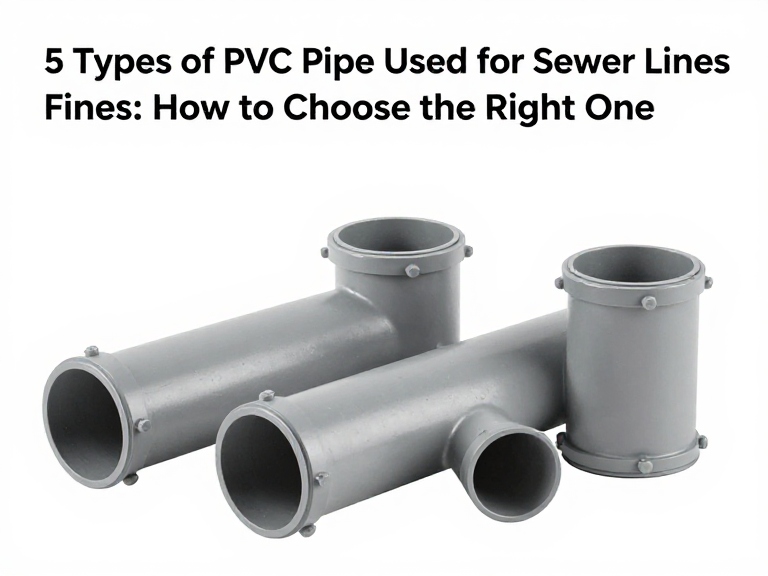
What Types of PVC Pipe Are Used for Sewer Lines?
The five main PVC pipe categories worth understanding are solid-wall sewer pipe, Schedule 40 PVC, Schedule 80 PVC, profile-wall or structured-wall PVC sewer pipe, and perforated PVC drainage pipe. They serve different purposes, and not all are appropriate for carrying sanitary sewage. The final selection must match the project specification and the pipe's approved application.
Quick Answer
Typical gravity sewer: Use solid-wall PVC sewer pipe that meets the applicable sewer-pipe standard and project specification.
Residential building drainage: Schedule 40 PVC may be appropriate where local plumbing codes permit it and the product is approved for the intended use.
Special mechanical or pressure requirements: Schedule 80 PVC may be considered when its pressure, temperature, chemical compatibility, and installation ratings suit the application. It is not automatically the best buried sewer pipe.
Large-diameter gravity sewer: Profile-wall or structured-wall PVC may be suitable where the specific product is approved for the required loads and installation conditions.
Groundwater collection: Perforated PVC is used for drainage and infiltration applications, not as a default pipe for transporting sanitary sewage.
Our recommendation: Specify the sewer application first, then choose a compliant pipe standard, diameter, stiffness class, and joint system. Do not select a pipe based on the “Schedule 40” or “Schedule 80” label alone.
Quick Summary: Five PVC Pipe Types
| Pipe Type | Typical Application | Main Advantage | Important Limitation |
|---|---|---|---|
| 1. Solid-wall PVC sewer pipe | Gravity sanitary sewers and underground wastewater conveyance when approved | Purpose-designed sewer products and established jointing systems | Must match the required standard, stiffness class, and burial conditions |
| 2. Schedule 40 PVC | Building drainage, DWV, and other approved uses | Widely available and familiar to plumbing contractors | Schedule designation alone does not establish suitability for every buried sewer project |
| 3. Schedule 80 PVC | Applications requiring a thicker pipe wall or specific pressure-rated system | Greater wall thickness than Schedule 40 of the same nominal size | Higher material cost and potentially lower flow area; not a universal sewer upgrade |
| 4. Profile-wall or structured-wall PVC | Selected large-diameter gravity sewer and drainage projects | Can provide structural performance with efficient material use | Performance depends on the specific construction, stiffness rating, and installation design |
| 5. Perforated PVC drainage pipe | Subsurface drainage and groundwater collection | Allows surrounding water to enter the pipe through designed openings | Generally inappropriate for conveying sanitary sewage in a watertight sewer system |
These categories are not five interchangeable products. For a sanitary sewer, start with the applicable sewer-pipe standard and the utility or building authority's approved materials list. Treat building DWV, pressure piping, and perforated drainage as separate applications unless the relevant specification explicitly permits their use.
What Is PVC Sewer Pipe?
PVC stands for polyvinyl chloride, a thermoplastic used in a wide range of piping applications. Sewer pipes made from PVC are commonly used to transport wastewater by gravity, although pressure-rated PVC products also exist for applications where the pipe operates under internal pressure.
The pipe's performance depends on more than the resin. Wall thickness, outside diameter, structural design, material formulation, manufacturing quality, joint geometry, gasket selection, and installation conditions all contribute to service performance. A pipe that is appropriate for one application may fail to meet another application's requirements even when both products are made from PVC.
Gravity Sewer Pipe vs. Pressure PVC Pipe
A gravity sewer normally relies on a designed slope and hydraulic conditions to carry wastewater. The pipe must resist external soil and traffic loads, maintain alignment, and limit leakage through the joints. A pressure pipe is designed and rated for internal pressure under specified conditions. These are different engineering requirements.
Some PVC products are manufactured for both particular pressure and non-pressure applications, but the approval must be confirmed for the exact product and use. A pressure rating does not automatically prove that a pipe meets the structural, jointing, or regulatory requirements of a buried gravity sewer.
Why Standards Matter More Than Generic Labels
Terms such as “sewer pipe,” “Schedule 40,” and “heavy-duty PVC” are not complete specifications. Standards define dimensions, material properties, testing, marking, or application requirements for particular product types. Depending on the market and application, relevant documents may include ASTM standards for PVC sewer pipe, building drainage, or pressure pipe, alongside local plumbing codes and utility specifications.
For example, ASTM D3034 covers certain Type PSM PVC sewer pipe and fittings, while ASTM D1785 covers Schedule 40, 80, and 120 PVC plastic pipe. These standards address different product categories. Always confirm the current edition and the applicable requirements with the project engineer or authority having jurisdiction.
Five Types of PVC Pipe Used for Sewer and Drainage
1. Solid-Wall PVC Sewer Pipe: The Standard Starting Point for Gravity Sewers
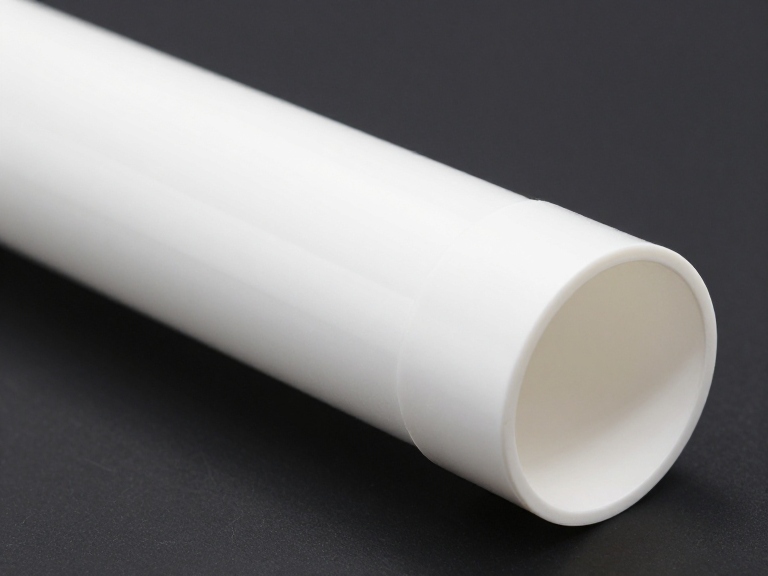
Solid-wall PVC sewer pipe is often the first product category to investigate for underground gravity sewer networks. It is designed for specified sewer applications and is commonly supplied in lengths with gasketed bell-and-spigot joints or other approved joint systems.
Its practical benefits include corrosion resistance in many wastewater environments, a smooth internal bore, relatively low weight compared with many traditional pipe materials, and established installation practices. However, performance still depends on the product standard, stiffness class, trench preparation, bedding, backfill, compaction, and joint installation.
For residential subdivisions, commercial developments, and municipal gravity sewer projects, we recommend specifying the required standard and stiffness class rather than ordering simply “PVC sewer pipe.” Confirm the nominal diameter, outside diameter system, joint compatibility, and required testing with the project documents.
Best for: Approved gravity sanitary sewer installations where the pipe and joint system meet the design requirements.
Not suitable by default for: Every pressure application, high-temperature discharge, or project with special chemical, loading, or regulatory requirements.
2. Schedule 40 PVC: A Common Choice for Approved Building Drainage
Schedule 40 PVC is a dimension-based pipe category commonly used in approved plumbing, drain-waste-vent (DWV), and other specified applications. Contractors often recognize it because it is widely available and has established fittings and installation methods.
For building drainage, Schedule 40 may be a suitable choice when the product carries the required listing or standard and local code allows it. Yet buyers should not assume that every Schedule 40 product is approved for underground municipal sewer service or every type of building sewer. Application approvals and the exact pipe specification matter.
Schedule 40 also should not be confused with a universal strength rating. Its wall thickness varies by nominal pipe size, and the schedule does not by itself describe the pipe's buried-soil structural performance in the same way as a sewer-pipe stiffness classification.
Best for: Building drainage and DWV systems where the pipe is approved for the use.
Buying advice: Check the code requirements, product marking, fittings, solvent-cement compatibility, and whether the installation is above ground, below ground, or within a building structure.
3. Schedule 80 PVC: For Specific Mechanical or Pressure Requirements
Schedule 80 PVC has a thicker wall than Schedule 40 PVC of the same nominal size. This can provide higher pressure capacity under applicable conditions, but pressure ratings vary with pipe size, temperature, product standard, and system design.
It is not automatically the best choice for buried gravity sewer lines. A thicker wall may increase material cost and reduce the internal diameter available for flow compared with another product of the same nominal size. If the project is a conventional gravity sewer, an approved sewer pipe with the correct stiffness and joint system may be more appropriate than upgrading to Schedule 80 without an engineering reason.
Schedule 80 may make sense where a design calls for its particular mechanical or pressure characteristics and the pipe is approved for the intended fluid and installation. For sewer applications involving unusual operating conditions, obtain written confirmation that the selected product meets all applicable requirements.
Best for: Applications where the design specifically requires the relevant Schedule 80 characteristics.
Not recommended as a default upgrade: Ordinary gravity sewer projects where the governing requirement is buried-pipe structural performance rather than internal pressure.
4. Profile-Wall or Structured-Wall PVC Sewer Pipe: For Selected Larger-Diameter Projects
Profile-wall and structured-wall PVC pipes use a designed wall geometry rather than a uniformly solid wall throughout. Depending on the product, the wall structure can provide the required ring stiffness while reducing material use compared with a solid-wall design of equivalent dimensions and performance.
These pipes can be considered for larger-diameter gravity sewer and drainage projects when they meet the applicable product standard and project specification. Their suitability depends on the specific profile, resin, structural design, joining method, stiffness class, and installation requirements. The category should not be treated as one universal pipe construction because products vary by manufacturer and market.
For engineers and contractors, the critical question is whether the pipe system is approved for the required burial depth, soil conditions, live loads, groundwater conditions, and installation method. Correct bedding and compaction remain essential; a structured wall does not remove the need for sound trench design.
Best for: Specified large-diameter gravity sewer or drainage systems where the exact structured-wall product meets the design criteria.
Buying advice: Request the relevant standard, stiffness or structural classification, joint test information, and installation manual before comparing quotations.
5. Perforated PVC Drainage Pipe: For Groundwater, Not Ordinary Sanitary Sewers
Perforated PVC drainage pipe has openings designed to collect water from surrounding soil or distribute water into a designated drainage area. It is commonly associated with subsurface drainage, foundation drainage, and other water-management applications.
Its purpose differs from a watertight sanitary sewer. Openings can allow groundwater to enter the pipe, but they can also allow conveyed water to escape. That is useful in a designed drainage system and usually undesirable in a sanitary sewer intended to prevent infiltration and exfiltration.
For a foundation drainage project, the designer may specify perforations, filter fabric, graded aggregate, and a suitable outlet. For sanitary wastewater, use a pipe and joint system designed and approved for that sewer service instead. Do not select perforated pipe just because it is inexpensive or easy to source.
Best for: Designed groundwater collection and subsurface drainage applications.
Not for: Ordinary sanitary sewer conveyance unless a specific engineered application explicitly requires it and the relevant authority approves the system.
PVC Sewer Pipe Comparison Table: Which Type Should You Choose?
| Selection Factor | Solid-Wall Sewer PVC | Schedule 40 PVC | Schedule 80 PVC | Profile-Wall PVC | Perforated PVC |
|---|---|---|---|---|---|
| Typical role | Gravity sewer conveyance | Approved building drainage or DWV | Specific mechanical or pressure applications | Selected large-diameter gravity sewer and drainage | Subsurface water collection |
| Watertight sewer use | Yes, when the complete system is approved and properly installed | Only where the specific product and code permit it | Only where the specific product and code permit it | When the exact product and joints are approved | Generally no for sanitary sewer conveyance |
| Internal pressure suitability | Depends on product rating and standard | Depends on product rating and standard | Often selected for specified pressure needs; verify ratings | Depends on product design and approval | Not the usual purpose |
| Buried structural design | Must meet required stiffness and installation criteria | Must be checked for the intended buried application | Wall thickness alone does not establish suitability | Must meet required stiffness and installation criteria | Depends on the drainage application and design |
| Main buying priority | Sewer standard, stiffness, joints, and installation | Code approval and DWV suitability | Pressure/mechanical specification and total cost | Structural classification, joint system, and installation | Drainage design, perforation layout, and filtration |
For a conventional gravity sanitary sewer, start by comparing approved solid-wall sewer pipe and any approved structured-wall alternatives allowed by the project specification. Schedule 40 and Schedule 80 should be considered only when their product approvals and performance characteristics suit the actual application. Perforated pipe belongs in a separate drainage discussion.
How to Choose PVC Pipe for Sewer Lines
1. Identify the Type of Wastewater System
First determine whether the pipe carries sanitary sewage, stormwater, building drainage, groundwater, or pressurized wastewater. These applications can have different standards, joint requirements, and hydraulic conditions. A product approved for one use is not automatically approved for another.
For beginners, this is the most important first step. Do not begin by comparing pipe wall thicknesses or asking which type is “strongest.” Start with the use, then confirm the permitted pipe system.
2. Confirm Diameter and Hydraulic Requirements
Pipe diameter must match the design flow, slope, expected peak demand, and local requirements. Too small a pipe can restrict capacity, while oversizing a gravity sewer without considering flow and slope can create undesirable operating conditions. The project engineer should confirm the required diameter and gradient.
When evaluating products, check whether the stated size is nominal, the actual outside diameter, or the inside diameter. These values are not interchangeable across all pipe standards. Fittings, couplings, and connections must be compatible with the exact pipe dimension system.
3. Check Burial Depth, Soil, and Traffic Loading
Buried PVC pipe interacts structurally with the surrounding soil. Bedding material, trench width, side support, backfill quality, compaction, groundwater, burial depth, and traffic loading influence performance. A pipe selected without these conditions being considered may not perform as intended.
For deep installations, roads, or areas with unusual ground conditions, follow the engineer's buried-pipe design and installation specification. Do not assume a thicker pipe wall alone compensates for poor bedding or inadequate compaction.
4. Choose the Right Joint System
Gravity sewer pipes commonly use elastomeric gasketed joints, while other PVC applications may use solvent-cement joints or different approved connections. Joint selection affects installation speed, flexibility, leakage control, and maintenance requirements.
Check the compatibility of the pipe, fitting, gasket, lubricant, and installation procedure. A joint system that is not approved for the application can undermine the performance of an otherwise suitable pipe.
5. Consider Chemical and Temperature Exposure
PVC offers resistance to many substances, but chemical compatibility is not unlimited. Concentrated industrial chemicals, unusual wastewater compositions, elevated temperatures, and cleaning agents may require a specific compatibility review. Temperature can also affect pressure ratings and material behavior.
For industrial wastewater, ask the designer or manufacturer to evaluate the actual chemical exposure, concentration, temperature, and operating conditions. Do not rely on a generic statement that PVC is “corrosion-resistant” as the only design basis.
6. Verify Standards, Markings, and Documentation
Before purchasing, confirm the applicable product standard, pipe classification, size, markings, fitting requirements, and local approvals. Ask for technical datasheets, installation instructions, and relevant test or certification documents.
For projects that require compliance with municipal or building specifications, the pipe must match the approved product category exactly. A cheaper pipe with an unclear specification can lead to rejection, replacement costs, and construction delays.
Installation Factors That Affect PVC Sewer Pipe Performance
Even the right pipe can fail prematurely if it is installed poorly. For buried sewer systems, installation quality is part of the pipe's structural and leakage performance, not an optional finishing detail.
Prepare the Trench and Bedding Properly
Follow the approved trench profile and bedding specification. The pipe barrel should receive consistent support, and the joint area should be prepared according to the manufacturer's instructions. Rocks, hard points, voids, or uneven support can create concentrated loads.
Control Alignment and Slope
Gravity sewers need the designed alignment and gradient. Excessive deviations can affect hydraulic performance and create low points where solids may accumulate. Verify line and grade during installation rather than relying on visual estimation alone.
Assemble Joints Correctly
Clean joint surfaces, inspect gaskets, use only the specified lubricant or joining materials, and follow the manufacturer's insertion-depth and alignment procedures. Avoid forcing joints together when components are misaligned or damaged.
Backfill and Compact in Specified Layers
Use the specified backfill material and compaction process. Uneven or insufficient side support can affect deflection and long-term performance. Heavy equipment should not operate over the pipe until the required cover and construction conditions are satisfied.
Test Before Putting the Line into Service
Carry out the inspection and testing required by the project specification and local authority. Depending on the system, this may include leakage testing, deflection checks, visual inspection, or other acceptance procedures. Use the approved method and documented acceptance limits rather than inventing a generic test pressure or pass criterion.
Pros and Cons of PVC Sewer Pipe
| Pros | Cons and Limitations |
|---|---|
| Resists corrosion in many typical wastewater environments | Compatibility still needs to be checked for unusual chemicals and temperatures |
| Relatively lightweight and easy to handle compared with many traditional pipe materials | Correct handling, bedding, and installation remain essential |
| Smooth internal surface can support efficient wastewater conveyance | Hydraulic performance still depends on diameter, slope, alignment, and design |
| Available in multiple pipe sizes and joint configurations | Different standards and dimensional systems are not automatically interchangeable |
| Gasketed systems can provide effective leakage control when properly installed | Damaged, contaminated, or incorrectly assembled joints can leak |
| Can provide good lifecycle value in suitable applications | Initial price alone does not account for installation, testing, access, and maintenance |
For most approved gravity sewer projects, PVC deserves serious consideration because it combines practical handling with established product standards and installation methods. The value comes from selecting the correct product and installing it correctly, not from assuming every PVC pipe is suitable for underground wastewater service.
PVC Pipe Manufacturing: What Buyers Should Know
For pipe manufacturers, distributors, and project suppliers, product consistency starts on the production line. Pipe diameter, wall thickness, surface quality, material formulation, dimensional stability, and joint geometry must remain within the specified tolerances. A high nominal output rate has limited value if it creates excessive rejects or inconsistent pipe dimensions.
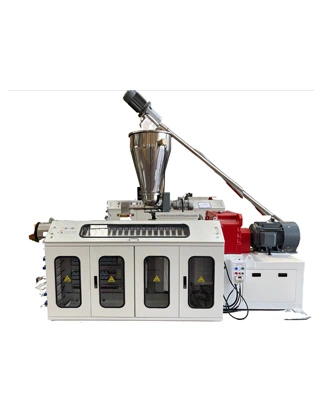
A typical PVC pipe production line includes material feeding and mixing arrangements, an extruder, a pipe die, vacuum calibration, cooling, haul-off, cutting, and, where required, belling or socket-forming equipment. The exact line design depends on pipe diameter, product standard, formulation, wall construction, output target, and whether the plant produces single or multiple pipes simultaneously.
How to Select a PVC Pipe Production Line
XJG's PVC Pipe Production Line is a relevant starting point for manufacturers evaluating equipment for different pipe diameters. The supplied configuration data lists the following diameter ranges and equipment combinations.
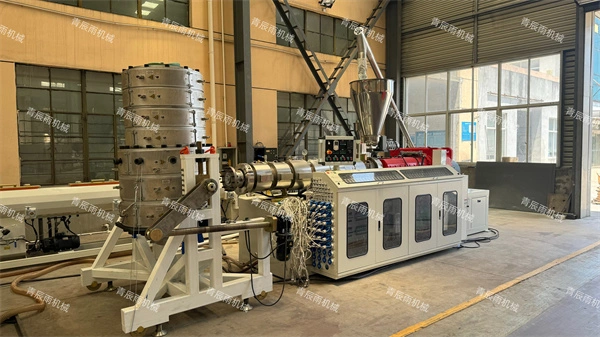
PVC pipe production equipment. Confirm the configuration and output requirements for the target product with the manufacturer.
| Pipe Diameter Range | Extruder Model | Downstream Model | Vacuum Calibration Tank | Spraying Cooling Tank | Hauler | Cutter |
|---|---|---|---|---|---|---|
| 20–110 mm | SJZ-65/132 | GF-110 | 6000 mm | — | 2 caterpillars | Saw cutter |
| 50–160 mm | SJ2-65/132 | GF-160 | 6000 mm | — | 3 caterpillars | Planetary cutter |
| 75–250 mm | SJZ-65/132 or S1Z-80/156 as supplied | GF-250 | 6000 mm | — | 3 caterpillars | Planetary cutter |
| 110–315 mm | SJZ-80/156 | GF-315 | 6000 mm | — | 4 caterpillars | Planetary cutter |
| 160–400 mm | SJZ-80/156 or SJZ-92/188 | GF-400 | 6000 mm | — | 4 caterpillars | Planetary cutter |
| 315–630 mm | SJZ-92/188 or PS-110/28 | GF-630 | 8000 mm | 6000 mm | 6 caterpillars | Planetary cutter |
| 400–800 mm | SJZ-92/188 or PS-135/28 | GF-800 | 8000 mm | 6000 mm | 8 caterpillars | Planetary cutter |
The supplied data includes the model designation “S1Z-80/156” for the 75–250 mm configuration. Confirm the exact model designation and technical details with XJG before using this table as a purchasing specification. The listed diameter ranges overlap because the suitable line depends on the actual product and operating requirements; they should not be treated as a guarantee that one line can produce every listed size without changeover or configuration adjustments.
Choose the Production Line Around the Finished Pipe
Before comparing machine prices, define the target product: nominal diameter, outside diameter, wall thickness or stiffness class, pipe length, joint type, applicable standard, and expected output per shift. Then ask the manufacturer to match the extruder, die, calibration tooling, cooling, haul-off, cutter, and belling equipment to that specification.
For a plant producing several small diameters, a PVC Double Pipe Production Line may be worth evaluating if the product range and process requirements support simultaneous production. For suitable high-volume small-pipe applications, a PVC Pipe 4-Output Production Line may offer another route to higher productivity. Neither option is automatically more economical: verify stable dimensions, tooling requirements, changeover time, operator workload, and reject rates.
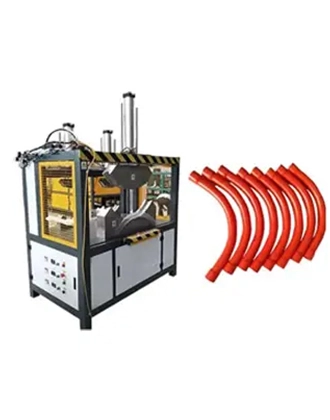
Manufacturers producing socketed sewer pipe should also evaluate a suitable PVC Pipe Belling Machine. The belling process must produce joints that meet the relevant dimensional and performance requirements. A fast extrusion line does not solve a bottleneck at socket forming, inspection, or packaging.
Cost-Benefit Analysis: When Should You Upgrade?
The lowest-priced PVC pipe is not necessarily the lowest-cost solution over the life of a sewer project. Buyers should compare the full installed system, including pipe, fittings, gaskets, transport, trench preparation, bedding, installation labor, inspection, testing, and future access or repair considerations.
Pipe manufacturers face a similar decision. A new production line should be evaluated against actual market demand, product specifications, labor requirements, energy use, tooling costs, changeover frequency, and scrap rate. More outputs per hour only create value when the finished pipe meets specification and can be sold.
For contractors and project owners: Compare compliant pipe systems using installed cost per meter, expected service conditions, and the requirements for inspection and testing.
For manufacturers: Compare annual saleable production and contribution margin against capital costs, operating expenses, maintenance, and product rejection.
When an Upgrade Is Worth Considering
Repeated dimensional defects: Investigate calibration, cooling, die design, haul-off stability, and process control before simply increasing extruder capacity.
Frequent size changeovers: Evaluate tooling availability, changeover procedures, and whether the product mix justifies a dedicated or multi-output line.
Socket quality problems: Review the belling machine, heating control, forming tools, and inspection method.
Increasing demand for larger pipes: Check whether the current extruder, die, cooling capacity, haul-off, cutter, and factory layout can support the target diameter.
High reject rates: Measure the root cause and cost of defects before investing in a larger line. Process stability can be more valuable than additional nominal capacity.
For project owners, do not pay extra for Schedule 80 or another heavier-wall product unless the design, approved application, or operating requirements justify it. For manufacturers, do not invest in a high-output line until tooling, dimensional control, downstream capacity, and confirmed sales demand have been considered together.
Common Mistakes When Choosing PVC Sewer Pipe
Mistake 1: Treating Schedule 40 as the Default Sewer Standard
Schedule 40 is a pipe dimensional category, not a universal approval for all buried sewer applications. Check the specific product standard and the authority's requirements before ordering.
Mistake 2: Assuming Schedule 80 Is Always Better
A thicker wall may be useful for specific requirements, but it does not automatically provide the correct buried-pipe stiffness, joint system, or sewer approval. Select according to engineering criteria, not the idea that thicker always means better.
Mistake 3: Using Perforated Drainage Pipe for Sanitary Sewage
Perforations are intended to let water move through the pipe wall. A sanitary sewer generally requires a suitable watertight system. Keep drainage collection and wastewater conveyance separate unless a project is specifically engineered and approved otherwise.
Mistake 4: Ignoring Bedding and Backfill
Even a correctly specified pipe can be damaged by poor trench preparation, uneven support, unsuitable backfill, or inadequate compaction. Follow the installation design and product instructions.
Mistake 5: Comparing Pipe Products Without Checking Joint Compatibility
Pipe dimensions, fittings, gaskets, and joining methods must match. Mixing components from different product systems without confirming compatibility can compromise alignment and leakage performance.
Mistake 6: Buying Production Equipment Based on Maximum Output Alone
For manufacturers, advertised capacity is only one part of the decision. The complete line must maintain the specified diameter, wall thickness, dimensional stability, and joint quality at the required production rate. Request a production trial or documented acceptance criteria.
Expert Recommendation: Which PVC Pipe Should You Choose?
For most conventional gravity sanitary sewer projects, begin with approved solid-wall PVC sewer pipe that meets the applicable product standard and the project's required stiffness and jointing specifications. Consider approved profile-wall or structured-wall products when the project allows them and their structural performance, dimensions, and installation requirements are verified.
For building drainage, Schedule 40 PVC can be appropriate where local code and product approval permit it. Schedule 80 should be selected when the application requires its specific characteristics, not simply because it has a thicker wall. Perforated PVC belongs primarily to subsurface drainage and groundwater collection, not ordinary sanitary sewer conveyance.
Before placing an order, confirm these six points:
The application: sanitary sewer, building DWV, stormwater, groundwater drainage, or pressure service.
The applicable standard, code, and product approval.
The required diameter, pipe classification, stiffness or pressure rating, and temperature limits.
The burial conditions, soil support, groundwater, and traffic loads.
The compatible fittings, gaskets, joining method, and installation procedure.
The required inspection, testing, and acceptance documentation.
For manufacturers, XJG's PVC Pipe Production Line can be a starting point when evaluating equipment for sewer and drainage pipe production. Define the pipe standard and dimensions first, then ask for a machine configuration, tooling package, and performance criteria tailored to the product. The right decision is the one that produces compliant pipe consistently, not simply the one with the highest stated output.
Frequently Asked Questions About PVC Pipe Used for Sewer Lines
1. What type of PVC pipe is commonly used for sewer lines?
Approved solid-wall PVC sewer pipe is a common choice for gravity sanitary sewer systems. The correct product depends on the applicable standard, diameter, stiffness class, joint design, burial conditions, and local authority requirements.
2. Can Schedule 40 PVC be used for underground sewer lines?
It may be permitted for certain building drainage or sewer applications, but not every Schedule 40 product is approved for every underground sewer installation. Check the specific pipe marking, product standard, local code, and project specification.
3. Is Schedule 80 PVC better than Schedule 40 for sewer lines?
Not automatically. Schedule 80 has a thicker wall than Schedule 40 of the same nominal size, but a gravity sewer's suitability also depends on structural performance, jointing, product approval, and installation conditions. Use Schedule 80 when its specific properties are required by the design.
4. What is the difference between PVC sewer pipe and PVC pressure pipe?
PVC sewer pipe is selected according to the requirements of the sewer application, including structural performance and joints. Pressure pipe is designed and rated for specified internal pressure conditions. One category should not be substituted for the other without confirming the relevant product approvals and design requirements.
5. Can perforated PVC pipe be used for sewage?
Perforated PVC is generally used to collect groundwater or provide subsurface drainage. Its openings are usually inappropriate for a conventional sanitary sewer that needs to limit infiltration and exfiltration. Follow the project's approved design.
6. What factors affect the strength of buried PVC sewer pipe?
Pipe material and construction, stiffness classification, burial depth, soil conditions, bedding, side support, backfill, compaction, groundwater, and traffic loads all affect performance. The engineer should evaluate the pipe and soil system together.
7. Which PVC pipe is best for large-diameter sewer projects?
Approved solid-wall and profile-wall or structured-wall PVC products may be considered, depending on the project specification. Compare the applicable standard, stiffness or structural classification, diameter, joint system, installation requirements, and long-term performance criteria.
8. What standards should I check when buying PVC sewer pipe?
Check the standards specified by the project and the local authority. ASTM D3034 covers certain PVC sewer pipe and fittings, while ASTM D1785 covers Schedule 40, 80, and 120 PVC pipe. These standards address different product categories, so verify the current edition and application suitability.
9. What should a PVC pipe manufacturer consider when selecting a production line?
The manufacturer should define pipe diameter, wall thickness or stiffness class, material formulation, output target, dimensional tolerances, cooling requirements, haul-off capacity, cutting, and socket-forming needs. The line must consistently produce pipe that meets the applicable standard and customer specification.
10. Does a thicker PVC pipe wall always mean a longer service life?
No. Wall thickness is only one design factor. Correct material selection, product approval, installation, joint integrity, loading, chemical exposure, and operating conditions all contribute to service performance. Choose the product that meets the engineering requirements rather than assuming the thickest pipe is always best.
References
ASTM International — ASTM D3034, Standard Specification for Type PSM Poly(Vinyl Chloride) (PVC) Sewer Pipe and Fittings. Consult the current edition and applicable product requirements for the project.
ASTM International — ASTM D1785, Standard Specification for Poly(Vinyl Chloride) (PVC) Plastic Pipe, Schedules 40, 80, and 120. This is a separate product category from sewer-pipe specifications.
Plastics Pipe Institute (PPI). Industry resources on plastic piping materials, design considerations, installation, and application-specific guidance.
Standards and product approvals may change. Verify the current edition, applicable local code, and project-specific specification before purchasing or installing pipe.