English
 العربية
 русский
 Español
 français
 português
 Deutsch
 italiano
 Türkçe
 한국어
한국어 日本語
日本語
In municipal water distribution, natural gas transmission, and industrial dredging, mechanical pipe couplings are a ticking liability. Mechanical joints slip, rubber gaskets dry out, and ground shifts cause catastrophic leaks that cost contractors hundreds of thousands in liquidated damages. High-density polyethylene (HDPE) piping solves this vulnerability through thermal fusion: melting two polyolefin interfaces under calibrated hydraulic pressure to create a homogeneous joint that is physically stronger than the un-welded pipe wall itself. However, deploying the wrong welding machine on-site is the fastest way to compromise that joint integrity.
Choosing among the various machine types of hdpe fusion welder is not a matter of brand preference; it is a calculation governed by pipe diameter, wall thickness (SDR rating), field mobility, trench clearance, and branch tapping requirements. Using an under-powered manual butt fusion rig on 630mm SDR 11 pipe leads to cold joints that burst under hydrostatic testing. Conversely, specifying electrofusion for thousands of linear pipeline joints inflates consumable fitting costs beyond commercial viability. We evaluate the five dominant machine types of hdpe fusion welder used in heavy infrastructure, providing engineering metrics to help procurement teams, project managers, and pipeline contractors choose the right machine for field success.
Quick Answer: Which HDPE Fusion Welder Type Do You Need?
The selection comes down to joint geometry, pipe diameter, and field accessibility. For straight-line cross-country trenching from 90mm up to 1600mm+, the Hydraulic Butt Fusion Welder is the industry standard, delivering low joint costs and high tensile strength. For branch takeoffs, live municipal line taps, and workshop reducing tees, the Saddle Fusion Machine is mandatory. For tight urban excavations, trench repairs, and tie-ins where large clamps cannot enter, Electrofusion Welders provide essential access via electro-resistive wire fittings despite higher consumable expenses. For small plumbing lines under 110mm, Socket Fusion Welders offer portable manual joining. For complex fabrication yards producing segmented elbows, tees, and crosses, Workshop Fitting Multi-Angle Fusion Machines provide the rigid clamping frames necessary for factory-spec assemblies.
Table of Contents
What Is HDPE Fusion Welding and How Does Molecular Interlocking Work?
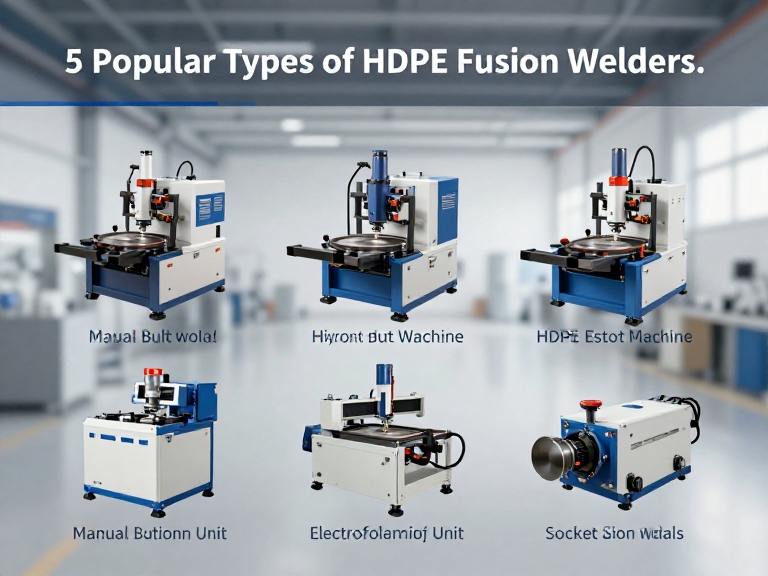
In-Depth Evaluation: 5 Popular Machine Types of HDPE Fusion Welder
Pros and Cons of Hydraulic Field Systems vs. Electrofusion Units
Featured Machine Spotlight: XJG Pipe Saddle Fusion Technology
Costly Mistakes Pipeline Crews Make During HDPE Thermal Fusion
B2B Sourcing Considerations When Selecting a Machinery Manufacturer
What Is HDPE Fusion Welding and How Does Molecular Interlocking Work?
High-density polyethylene is a semi-crystalline thermoplastic polymer. Below its crystalline melting temperature (typically 120°C to 135°C for PE100 resins), its molecular chains are locked in dense, rigid structures. During thermal fusion, a heating plate coated with PTFE (Teflon) brings the prepared pipe ends to an interfacial melt temperature between 200°C and 230°C. This input of thermal energy breaks the crystalline bonds, transitioning the polymer into a viscous, amorphous melt pool.
How it works in practice requires three controlled parameters governed by international standards like ASTM F2620 and ISO 21307: interfacial pressure, heating time, and cooling duration. Once the proper melt bead forms, the heating element is removed rapidly during the changeover phase. The molten pipe ends are forced together under controlled hydraulic pressure. Under this continuous fusion force, the amorphous polymer chains from both pipe ends cross the interface and interweave with one another. As the joint cools slowly under pressure, recrystallization occurs across the weld line, forming a joint with zero physical seam, equal burst strength, and identical chemical resistance to the parent pipe material.
In our testing across utility installations, failing to maintain steady pressure throughout the cooling phase causes internal voids and micro-porosity. An operator cannot rush cooling with water or wet rags; premature quench cooling locks in severe tensile residual stresses that compromise long-term environmental stress crack resistance (ESCR).
Quick Summary: The 5 Popular Types of HDPE Fusion Welder
The table below provides a quick operational reference to the five primary types of hdpe fusion welder used across global infrastructure projects:
| Welder Machine Type | Standard Pipe Diameter Range | Primary Joint Architecture | Automation & Pressure Mechanism | Optimal Operational Application |
|---|---|---|---|---|
| 1. Hydraulic Butt Fusion Machine | 63mm to 1600mm+ (up to 2000mm) | End-to-end collinear butt weld | Hydraulic station with data logging | Long-distance municipal water, gas mainlines, mining slurries |
| 2. Pipe Saddle Fusion Machine | Main 63–630mm / Branch 32–315mm | Convex/concave curved radial branch | Linear guide-way hydraulic or manual clamp | Fabricating reducing tees, live water taps, branch takeoffs |
| 3. Electrofusion Welding Machine | 20mm to 1200mm | Coupler sleeve with embedded coils | Barcoded automated electronic processor | Trench tie-ins, emergency repairs, gas connections, tight pits |
| 4. Socket Fusion Welding Machine | 16mm to 110mm (rarely 125mm) | Male/female socket slip joint | Manual handheld heating tool with shaped dies | Indoor commercial plumbing, geothermal loops, PPR/HDPE lines |
| 5. Workshop Multi-Angle Fitting Welder | 90mm to 1200mm+ | Mitered joints (elbows, tees, crosses) | Heavy structural workshop gantry hydraulic rig | In-plant fabrication of custom elbows, Y-branches, and crosses |
In-Depth Evaluation: 5 Popular Machine Types of HDPE Fusion Welder
1. Hydraulic Butt Fusion Welding Machines (Field & Trench Workhorses)
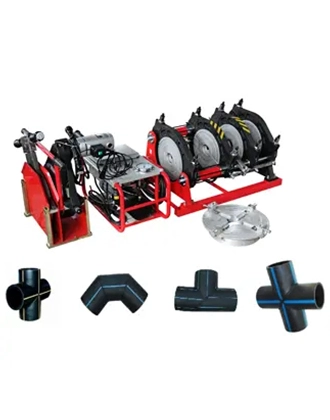
The hydraulic butt fusion machine is the backbone of overland pipeline engineering. These units consist of a rigid four-clamp chassis carriage, an electric hydraulic power pack with digital pressure controls, a motorized facing tool (planer), and an electrically heated PTFE-coated heating plate. The carriage uses heavy hydraulic cylinders to shave pipe ends square, compress the pipes against the heating mirror, and maintain exact interfacial drag pressure throughout the cooling cycle.
In most professional situations, we recommend semi-automatic or fully automatic CNC butt fusion systems over manual hand-pump units. An automatic data-logging system reads ambient temperature, calculates interfacial surface area, sets hydraulic cylinder drag pressures, monitors heat-soak time, and prevents premature clamp release. If you are laying HDPE Pipe For Water/Gas Supply networks where utility inspectors require ISO/ASTM joint reports, a digital hydraulic butt welder is non-negotiable. Explore field configurations in our HDPE Pipe Butt Welding Machine collection.
2. HDPE Pipe Saddle Fusion Machines (Branch & Tapping Specialists)
Joining a perpendicular branch line to an active main or fabricating reducing tees in a workshop requires radial saddle fusion machinery. A standard flat butt fusion plate cannot heat a curved pipe exterior. Saddle fusion machines use precision-curved concave heating shoes matching the main pipe outside diameter (OD) and convex heating faces matching the branch saddle base.
From our experience in workshop fabrication, attempting saddle fusion without a rigid linear guide-way leads to lateral slipping during the critical changeover phase. If the saddle shifts by even two millimeters while clamping onto the main pipe crown, the resulting three-bead melt profile will be uneven, causing branch weld failure under cyclic water-hammer stress. These machines feature integrated mechanical hole-saw drilling units, allowing the operator to fuse the branch saddle and core-drill through the pipe wall in a single aligned operation.
3. Electrofusion Welding Machines (Tight-Space & Tie-In Solvers)
Electrofusion machines bypass hydraulic clamping carriages entirely. The machine itself is a portable computerized electrical power source that connects via terminal pins to an injection-molded polyethylene fitting. Inside the fitting lies an embedded grid of electrical resistance heating wires. The operator scans a 24-digit barcode on the fitting using the machine's optical wand, which automatically programs the required electrical voltage, amperage, and fusion time.
Electrofusion is essential for trench tie-ins, bell-hole repairs, and crowded urban utility corridors where a 500-kilogram butt fusion carriage cannot fit. Because the electrical resistance wire melts the fitting and pipe surface from within, it requires no open heating irons. However, success depends entirely on surface scraping: if an operator fails to peel the outer oxidized layer of the pipe using a mechanical rotational peeler, the joint will look perfect externally but fail catastrophically under shear stress.
4. Socket Fusion Welding Machines (Small-Diameter & Plumbing Tools)
Socket fusion represents the smallest, most portable category of thermal joining equipment. Commonly used for small-diameter gas services, indoor commercial water loops, and geothermal ground heat exchangers under 110mm, these systems use handheld or small benchtop heating plates fitted with cylindrical male and female brass or aluminum socket dies.
The female die melts the outside diameter of the pipe end, while the male die simultaneously melts the inside diameter of the fitting socket. Once the heat-soak timer completes, the technician pulls the components off the dies and pushes the pipe into the fitting socket until it hits an engineered depth stop. While fast and low-cost, socket fusion requires steady operator technique to avoid pushing the pipe too deep, which can create internal melt beads that choke flow diameter. Compare small-bore solutions with our dedicated Socket Fusion Welding Machine.
5. Workshop Multi-Angle Fitting Fusion Machines (Fabrication Yard Gantries)
Standard field butt welders can only join straight pipes end-to-end. When pipeline projects require 45-degree elbows, 90-degree segmented bends (mitered sweeps), equal tees, or crosses, workshop multi-angle fusion machines are required. These large, stationary factory machines feature heavy dual-sided pivoting clamp arcs that swing to specific angular graduations (0° to 45° per clamp).
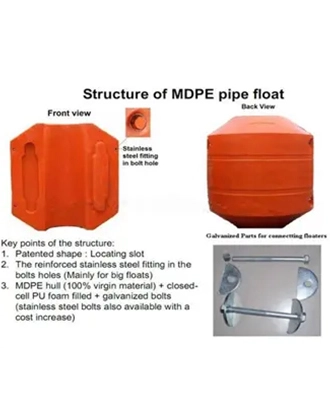
Factory fabrication requires pairing these gantries with dedicated multi-angle cutting machinery. Using a specialized DJQ Series HDPE Pipe Band Saw Cutter or an accurate HDPE Pipe Radius Cutter ensures that the cut faces match the miter angle perfectly with zero gaps before facing. For marine outfall lines and offshore dredging, these workshop machines assemble complete discharge strings and secure pipelines to rugged Plastic Floater/HDPE Pipe Floater arrays.
Comprehensive Machine Comparison Matrix
To help you select the right machine type for your project footprint, compare the mechanical and operational parameters outlined below:
| Evaluation Metric | Hydraulic Butt Welder | Saddle Fusion Machine | Electrofusion Processor | Socket Fusion Tool | Workshop Multi-Angle Welder |
|---|---|---|---|---|---|
| Consumable Fitting Cost | Zero (Bare pipe-to-pipe) | Low to Moderate (Saddle fitting) | High (Embedded coil fittings) | Low (Molded sockets) | Zero (Mitered segments) |
| Operator Skill Dependence | Moderate (Low with CNC logging) | High (Precise radial positioning) | Low (Automated barcode control) | Very High (Manual timing/depth) | High (Angle layout & setup) |
| Trench Clearance Needed | Substantial (Wide pit required) | Moderate (Top clearance needed) | Minimal (Just fitting width) | Minimal (Hands-on space) | N/A (Indoor factory floor only) |
| Capital Machine Cost | Moderate to High ($3,000–$25,000+) | Moderate ($4,000–$12,000) | Low to Moderate ($1,500–$4,500) | Very Low ($200–$1,200) | Very High ($15,000–$60,000+) |
| Primary Failure Mechanism | Misalignment / Cold joint | Radial shift / Incomplete taping | Un-scraped pipe / Contamination | Over-insertion / Air voids | Angular cut gap / Uneven melt |
Pros and Cons of Hydraulic Field Systems vs. Electrofusion Units
The primary decision for field pipeline managers often comes down to balancing high-speed hydraulic butt welding against electrofusion units:
| Equipment System | Operational Advantages (Pros) | Practical Limitations (Cons) |
|---|---|---|
| Hydraulic Butt Fusion Welders (Direct Pipe-to-Pipe Joining) |
|
|
| Electrofusion Processors (Barcoded Resistive Couplers) |
|
|
Who Should Use Field Butt Welders vs. Who Needs Workshop Machinery
In our experience auditing utility contractors, mismatched equipment investments lead to budget overruns. Sourcing must match your operational workspace.
Who Needs Field Hydraulic Butt Welders:
Long-Distance Water & Gas Contractors: Installing cross-country transmission lines of 160mm to 1200mm requires thousands of continuous welds. Butt welding is the only approach that keeps consumable costs manageable.
Mining, Slurry, and Dredging Operations: Industrial lines transporting abrasive tailings require full-bore flow without internal couplers that create turbulence and premature pipe wear.
Pipe Manufacturing Facilities: Extrusion plant quality control departments running a complete HDPE Pipe Production Line need on-site butt fusion machines to weld continuous destructive burst-test coupons.
Who Needs Workshop Fitting Welders & Saddle Machines:
Dedicated Fitting Fabricators: Companies producing pre-fabricated manifolds, valve vaults, pump station headers, and reducing branches for mechanical contractors.
Municipal Water Authorities: Maintenance yards that pre-fabricate replacement tees and mitered elbows before dispatching repair teams to city streets.
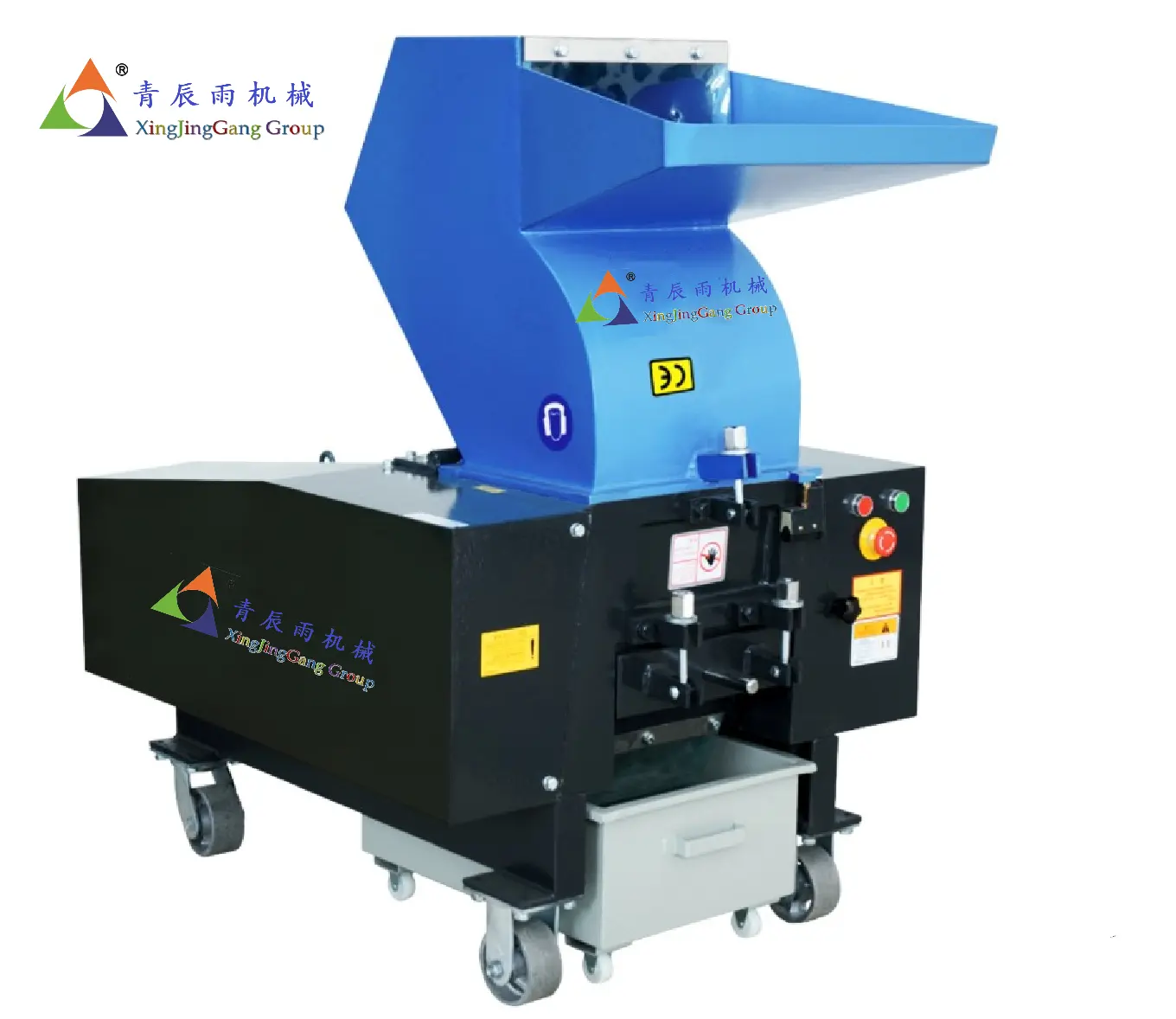
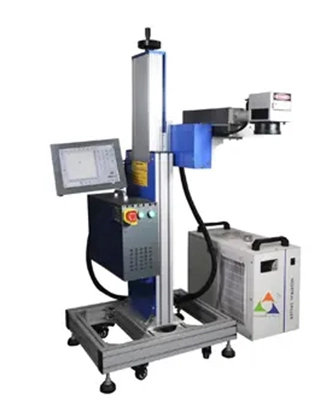
Custom Extrusion Processors: Factories balancing multi-polymer lines, such as running a PVC Double Pipe Production Line or a PVC Pipe (4-output) Production Line alongside specialized processing gear like a PVC Pipe Belling Machine, a PVC Pipe Bending Machine, a high-speed Plastic Pipe Laser Printer, or a recycling-loop Plastic Crusher.
Featured Machine Spotlight: XJG HDPE Pipe Saddle Fusion Machine
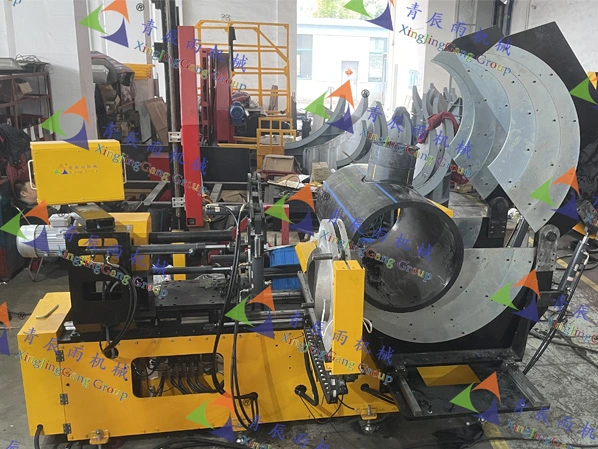
The XJG HDPE Pipe Saddle Fusion Machine is an integrated workshop system engineered for fabricating HDPE reducing tees and custom branch takeoffs. Combining mechanical facing, heating, and integrated tapping in a rigid alignment frame, this machine completes the entire branch fabrication cycle with high dimensional accuracy.
The 9-Step Professional Saddle Fusion Process:
Surface Preparation: Thoroughly clean and mechanically abrade the main pipe crown and saddle fitting face to expose virgin polyethylene free of contaminants and oxidation.
Rigid Clamping: Clamp the main run pipe securely into the machine base and mount the saddle fitting into the upper carriage to eliminate lateral movement.
Marking and Radial Alignment: Accurately scribe the fitting footprint and center line on the main pipe to ensure true 90-degree alignment.
Tool Heating: Heat the matching curved concave/convex Teflon-coated shoes to the validated welding temperature (200°C–230°C).
Controlled Heat Soaking: Apply calibrated contact force until the initial melt bead emerges, then track heat soak times using the dual-channel digital timer.
Rapid Changeover and Pressure Cooling: Remove the heating plate within the specified changeover window, close the carriage, and hold the target fusion force without disturbance throughout the cooling cycle.
Visual Joint Inspection: Examine the finished joint to verify the characteristic uniform "three-bead" melt profile around the saddle rim.
Hydrostatic Testing: Perform hydraulic pressure tests to verify joint integrity and confirm leak-free performance.
Quality Documentation: Record joint parameters, heater temperatures, drag pressures, and cooling times for full traceability.
View complete technical specifications on the HDPE Pipe Saddle Fusion Machine product page.
Costly Mistakes Pipeline Crews Make During HDPE Thermal Fusion
In our field inspections of failed pipeline joints, weld failures rarely stem from resin defects. They occur because crews take procedural shortcuts on-site:
Failing to Measure and Add Drag Pressure: This is the most common error in hydraulic butt welding. Drag pressure is the mechanical resistance caused by the weight of long pipe strings dragging across the soil. If a fusion standard calls for 5 bar of interfacial pressure and the pipe drag requires 3 bar, the hydraulic gauge must read 8 bar total. Omitting drag pressure results in weak joints that fail under hydrostatic testing.
Using Squeeze-Off Tools Without Re-Rounding Clamps: When repairing lines under pressure, crews use hydraulic squeeze-off bars to pinch pipes flat. After completing repairs, they often release the squeeze-off tool without applying mechanical re-rounding clamps. Leaving the pipe out-of-round creates high localized stress risers that crack over time.
Wiping Hot Heated Pipe Ends with Cotton Rags: If an operator notices dust on a pipe face after pulling the heating plate away, they must never wipe it with a rag. Wiping chilled pipe ends traps airborne lint and fibers directly inside the weld, ruining the molecular bond. If contamination occurs, the cycle must be aborted, the pipe faced clean, and the fusion process restarted.
Ignoring Pipe Surface Oxidation Before Electrofusion: Polyethylene oxidizes under solar UV exposure, forming a thin, brittle skin. If this layer is not peeled away using rotational scraping tools, the electrofusion fitting will melt against degraded plastic, creating a joint that slips apart under pressure.
B2B Sourcing Considerations When Selecting a Machinery Manufacturer
Before issuing purchase orders for HDPE fusion equipment, procurement managers should verify these technical manufacturing capabilities:
Guideway Rigidity and Chassis Alignment: Inspect the thickness and chrome plating of the machine's steel guide rods. Lightweight aluminum or thin tubular frames flex under heavy drag loads on large-diameter pipes, resulting in uneven melt beads and misaligned joints.
PTFE Teflon Coating Quality on Heating Plates: Demand industrial-grade Teflon coatings with certified high-temperature adhesion. Cheap, thin PTFE films degrade after a few dozen cycles, causing melted plastic to stick to the heater plate and pulling critical polymer out of the joint during changeover.
Integrated Data-Logging and Cloud Compatibility: Municipal infrastructure owners increasingly require real-time joint documentation. Ensure the machine controller includes digital pressure transducers, temperature sensors, and USB or wireless export capabilities to satisfy engineering oversight.
Availability of Spare Hydraulic Parts: Sourcing machines that use standard, modular hydraulic directional valves, quick-connect couplers, and readily available temperature controllers ensures that maintenance crews can repair equipment locally without waiting on overseas shipments.
Expert Recommendation and Capital Equipment Verdict
In most professional situations, we recommend avoiding single-purpose, manual-clamping butt fusion equipment for mainline commercial contracting. The labor hours lost to operator adjustments and the risk of unrecorded cold joints far outweigh the initial savings on equipment cost.
For municipal utility contractors, we recommend investing in an automated, data-logging Hydraulic Butt Fusion Welder (sized for your core diameter range, such as 90mm to 315mm or 315mm to 630mm) as your primary field workhorse, paired with a reliable Electrofusion Processor for tight tie-ins and emergency repairs. For fabrication yards and pipe extrusion facilities, equipping your shop with a dedicated Saddle Fusion Machine like the XJG integrated unit alongside a Workshop Multi-Angle Welder allows you to manufacture custom branch manifolds, tees, and mitered elbows in-house, capturing higher margins while maintaining strict quality control over every joint.
Frequently Asked Questions (FAQ)
What are the main types of HDPE fusion welders?
The five main types of HDPE fusion welders are: 1) Hydraulic Butt Fusion Machines for collinear end-to-end pipe joining; 2) Pipe Saddle Fusion Machines for branch takeoffs and reducing tees; 3) Electrofusion Welding Machines using barcoded fittings with embedded wire coils; 4) Socket Fusion Machines for small-diameter plumbing loops; and 5) Workshop Multi-Angle Fitting Fusion Machines for building mitered elbows, tees, and crosses.
Is a butt fusion joint as strong as the original HDPE pipe?
Yes. When executed according to standards like ASTM F2620 or ISO 21307, a properly cooled butt fusion joint is as strong as or stronger than the parent pipe. During tensile destructive pull testing, failure occurs within the un-welded pipe wall rather than along the fused weld line.
What is drag pressure in hydraulic HDPE butt welding?
Drag pressure is the hydraulic pressure required to overcome the mechanical friction of the machine carriage and the physical weight of the pipe dragging along the ground. It must be measured on-site before every weld and added to the theoretical fusion interfacial pressure on the hydraulic gauge to ensure the joint receives proper bonding force.
Why does electrofusion require mechanical pipe scraping?
HDPE oxidizes quickly when exposed to ambient air and ultraviolet sunlight, creating a brittle outer layer. If this oxidized skin is not mechanically peeled away before sliding on the electrofusion fitting, the molten plastic cannot form cross-linked molecular bonds, resulting in premature joint failure under working pressure.
Can you accelerate the cooling process of an HDPE fusion joint with water?
No. Never quench a fusion joint with water, wet rags, or compressed air. Rapid external cooling causes thermal shock, uneven crystalline formation, and high internal stresses within the joint, drastically reducing the long-term stress crack resistance of the pipeline.