In the highly competitive world of plastic extrusion, mastering the pvc pipe production process is the strict dividing line between a profitable manufacturing plant and a facility plagued by high scrap rates and constant machine downtime. Modern infrastructure relies heavily on Polyvinyl Chloride (PVC) pipes for water supply, drainage, electrical conduits, and agricultural irrigation. However, transforming raw PVC powder into a rigid, pressure-rated pipe requires absolute precision.
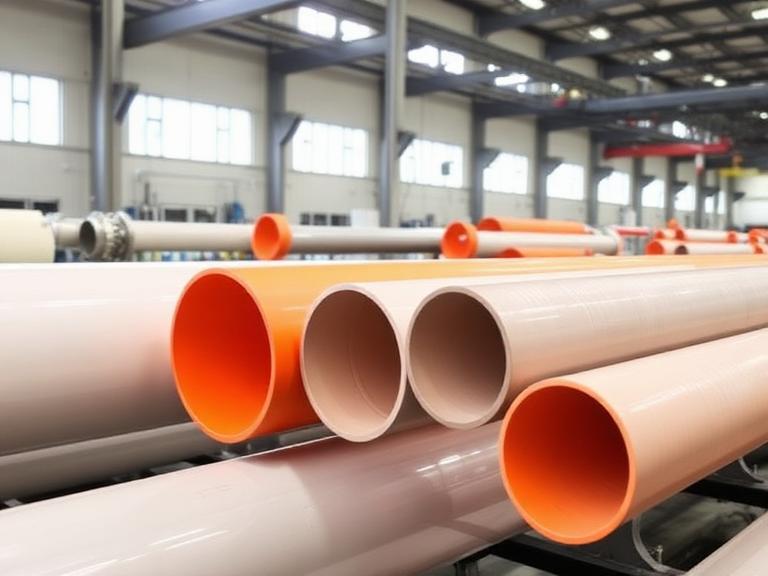
From our experience as an industry solution provider at Xjgmachine, we routinely see commercial users struggle because they treat PVC extrusion like any other plastic. PVC is notoriously heat-sensitive. If your temperatures are too low, the material won't plasticize. If they are slightly too high, the PVC degrades, burns, and ruins the entire extrusion die. You cannot simply buy a cheap single-screw extruder and expect to produce heavy-duty Schedule 40 or Schedule 80 PVC pipes.
In this comprehensive guide, we will break down the entire pvc pipe production process into its five core stages. We will bypass the generic encyclopedia summaries and deliver practical, commercial judgment on what makes an extrusion line actually worth buying, how to avoid catastrophic factory-floor mistakes, and how to optimize your production for maximum profitability.
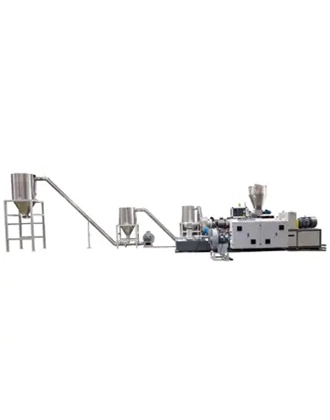
The pvc pipe production process is a continuous manufacturing operation that transforms raw PVC powder into finished pipes through five primary steps: 1) Raw Material Compounding (mixing PVC resin with stabilizers and lubricants); 2) Extrusion (melting and pushing the material through a twin-screw extruder and die head); 3) Vacuum Sizing and Calibration (cooling the molten pipe in a vacuum tank to hold its exact outside diameter); 4) Haul-off / Pulling (using a caterpillar tractor to pull the pipe at a synchronized speed); and 5) Cutting and Belling (slicing the pipe to length and forming socket ends for joint connections). A successful process requires a specialized PVC Pipe Production Line with precise temperature and torque controls.
Unlike Polyethylene (PE) or Polypropylene (PP), raw PVC resin cannot be extruded on its own. It is thermally unstable and highly viscous. The first step in the pvc pipe production process involves intensive mixing. Raw PVC powder must be hot-mixed with heat stabilizers (to prevent burning), lubricants (to reduce friction inside the barrel), impact modifiers, and fillers like Calcium Carbonate (CaCO3).
In most professional situations, this mixture is heated to around 120°C in a high-speed mixer to ensure all additives are absorbed into the PVC particles, then dumped into a cooling mixer to bring it down to 40°C. If a factory wishes to process recycled materials or create specialized compounds before pipe extrusion, they will often utilize a dedicated PVC/WPC Pelletizing Line to create uniform granules, though direct dry-blend powder extrusion is the standard for rigid pipes.
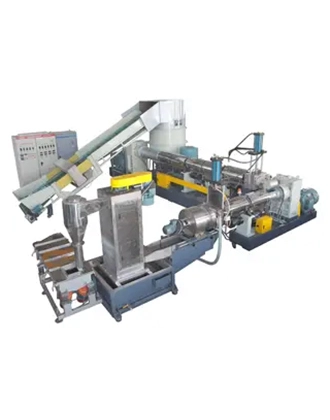
This is the heart of the operation. From our experience, attempting to extrude rigid PVC powder with a single-screw extruder is a costly mistake. Because PVC powder does not flow easily and is prone to heat degradation, it requires a Conical Twin-Screw Extruder.
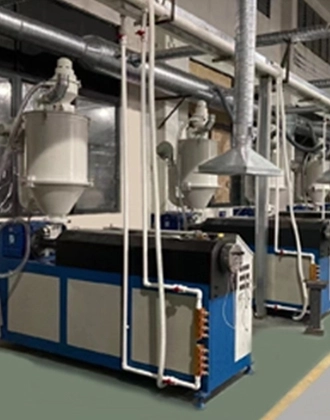
The extrusion and feeding system comprises a hopper, twin screws, and a barrel. As the material moves down the barrel, the twin screws shear and compress the powder, melting it uniformly. The transmission system—driven by a heavy-duty electric motor and gearbox—provides the massive torque required to push this stiff melt forward. Simultaneously, the heating and cooling system strictly regulates the barrel temperature (usually between 170°C and 200°C) to prevent the PVC from burning.
Finally, the molten plastic is forced through an extrusion die head. The die head shapes the solid mass into a hollow tube. The pressure, temperature, and volume must remain absolutely consistent here, managed by an advanced control system.
When the pipe exits the die head, it is a hot, soft, and shapeless mass of plastic. If left alone, it would collapse under its own weight. It must immediately enter the vacuum calibration tank.
The pipe passes through a brass or stainless steel sizing sleeve. A vacuum is applied to the outside of the pipe, pulling the soft plastic tightly against the inner walls of the sizing sleeve. This instantly sets the precise Outside Diameter (OD) of the pipe. While the vacuum holds the shape, high-pressure chilled water is sprayed directly onto the pipe to solidify the plastic. In high-speed lines, such as a PVC Double Pipe Production Line, the cooling capacity of the chiller system must be exceptionally robust to handle the dual output.
The haul-off unit (or caterpillar tractor) is responsible for pulling the cooled pipe through the sizing tank and downstream equipment. This is a critical stage. The speed of the haul-off machine must be perfectly synchronized with the speed of the extruder.
If the haul-off pulls too fast, the pipe wall thickness will become dangerously thin, failing burst pressure tests. If it pulls too slowly, the pipe wall becomes too thick, wasting expensive raw material and reducing your profit margins. For smaller pipes (like electrical conduits), a two-caterpillar haul-off is sufficient. For massive water mains, heavy-duty applications require up to six or eight caterpillars to grip the pipe without crushing it.
Once the continuous pipe reaches the correct length, it must be cut. For rigid PVC, a planetary cutter is the industry standard. It clamps onto the moving pipe, makes a clean, chamfered cut using a rotary saw blade, and retracts without ever stopping the continuous extrusion line.
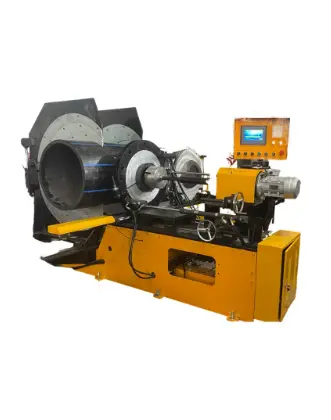
If the pipes are designed to fit into one another (such as plumbing or drainage pipes), they proceed to a belling machine. The belling machine reheats the end of the cut pipe and uses a mechanical mold to expand it into a "socket" or "bell" shape. This allows for easy O-ring or solvent-weld jointing in the field.
Why should commercial users invest in upgrading their pvc pipe production process machinery?
Material Efficiency: Modern Siemens PLC control systems synchronize the extruder and haul-off perfectly, keeping wall thickness at the absolute minimum required by industry standards, saving thousands of dollars in wasted resin monthly.
High Output: Utilizing advanced die head designs, modern machines can push output to maximum limits. Facilities tight on space can deploy a PVC Pipe (4-output) Production Line to produce four electrical conduit pipes simultaneously from a single extruder.
Reduced Scrap: Intelligent temperature control prevents the PVC from degrading, meaning fewer rejected pipes and less downtime for cleaning burnt material out of the die.
In our testing and factory audits, we see the same critical mistakes repeatedly:
Improper Formulation: Using too much Calcium Carbonate (CaCO3) filler to lower costs makes the pipe extremely brittle. It will shatter during impact testing.
Poor Temperature Control: PVC is heat-sensitive. If the cooling fans on the extruder barrel fail, the frictional heat from the screws will burn the PVC, releasing corrosive hydrochloric acid gas that destroys the steel die head.
Misaligned Sizing Sleeves: If the vacuum calibration tank is not perfectly aligned with the die head, the pipe will suffer from uneven wall thickness (thick on one side, thin on the other), leading to immediate quality control failures.
For commercial users: Any facility looking to manufacture rigid pipes for plumbing, sewage, agricultural irrigation, or electrical conduits must adopt this specific twin-screw PVC process. The profit margins in municipal infrastructure supply are highly lucrative if your scrap rate is kept low.
Who does not need it: If your goal is to produce flexible hoses, gas pipes, or high-pressure underground water mains that require high impact resistance in freezing temperatures, PVC is the wrong material. You should transition to a HDPE Pipe Production Line or a PPR Pipe Production Line, which require completely different single-screw extrusion mechanics.
| Feature | PVC Pipe Production Process | HDPE Pipe Production Process |
|---|---|---|
| Extruder Type | Conical Twin-Screw (for powder) | Single-Screw (for granules) |
| Material Prep | Requires complex hot/cold mixing of additives. | Ready-to-use granules; simple drying required. |
| Thermal Sensitivity | High. Prone to burning and degrading quickly. | Low. Highly stable during melting. |
| Pipe Characteristics | Rigid, excellent chemical resistance, cheaper material cost. | Flexible, high impact resistance, easy to coil. |
When selecting machinery for a Plastic Pipe Production Line, consider the following:
| Component | What to Look For | Why It Matters |
|---|---|---|
| Gearbox / Transmission | High-torque, heavy-duty vertical gearbox. | Twin-screw PVC extrusion creates immense backpressure. A cheap gearbox will shatter under the load. |
| Screw Design | Bimetallic treated screws specifically designed for your CaCO3 percentage. | High filler ratios act like sandpaper. Standard screws will wear down in months, reducing output drastically. |
| Control System | Siemens PLC with synchronized haul-off and extruder speed. | Manual synchronization relies on operator skill. Automated PLC ensures perfect wall thickness automatically. |
Our Verdict: Attempting to save money on the primary extruder is a false economy. The core of your profitability lies in continuous, uninterrupted running time. We strongly recommend investing in a turnkey production line from a manufacturer that designs the transmission, heating/cooling, and control systems to operate in perfect harmony. Do not piece together auxiliary equipment from different cheap vendors.
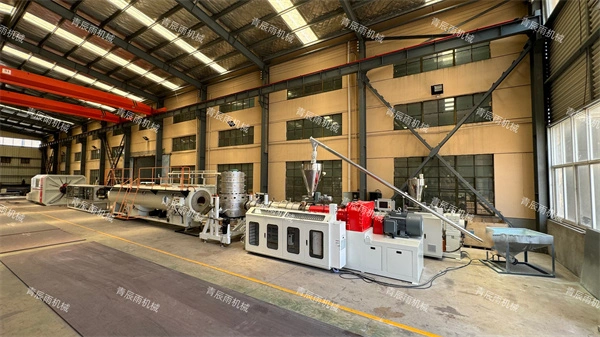
The Xjgmachine PVC pipe extrusion production line consists of the primary machine, auxiliary equipment, and an advanced control system engineered for commercial heavy-duty applications.
Primary Machine: At the heart of the line is a specialized twin-screw extruder featuring an integrated feeding system, robust transmission, precision heating/cooling, and a centralized control system.
Extrusion and Feeding: The hopper, screw, and barrel are optimized to melt the PVC uniformly, generating continuous pressure to push material through the die head consistently.
Transmission System: Comprised of a heavy-duty electric motor and high-torque adjusting device to propel the screw under maximum load.
Heating and Cooling: Ensures the extrusion process operates exactly within the narrow temperature window of PVC, preventing material degradation.
Control System: Features advanced electrical components and actuators to automatically regulate screw speed, barrel temperature, and head pressure.
Explore the technical specifications and request a quote here.
Rigid PVC is processed directly from powder rather than pellets. Twin-screw extruders operate at lower RPMs and provide higher shear and positive displacement, which is strictly required to mix and push the highly viscous PVC powder without overheating and degrading the material.
Burn marks indicate material degradation. This is typically caused by failed cooling fans on the extruder barrel, a worn screw creating excessive friction, or material stagnating inside the die head due to improper flow design.
Wall thickness is controlled by the ratio between the extruder output speed and the haul-off (pulling) speed. If the haul-off pulls faster than the material is extruded, the wall becomes thinner. Precise PLC control systems automatically balance these two speeds.
Plastics Pipe Institute (PPI) - Authoritative industry guidelines on manufacturing standards and best practices for plastic pipe extrusion.
ASTM International - Providing the globally recognized dimensional, pressure, and material testing standards that all commercial PVC pipes must meet.
International Organization for Standardization (ISO) - International standards for plastic extrusion machinery safety, efficiency, and quality management systems.
 English
 العربية
 русский
 Español
 français
 português
 Deutsch
 italiano
 Türkçe
 한국어
한국어 日本語
日本語