In the industrial plastics sector, the pipe extruder is the beating heart of global infrastructure manufacturing. From the subterranean high-density polyethylene (HDPE) water mains that supply our cities to the unplasticized polyvinyl chloride (UPVC) conduits protecting electrical grids, modern civilization relies entirely on the precise mechanical output of these massive machines.
Yet, understanding what a pipe extruder is and how it functions remains a complex subject clouded by generic definitions. We refuse to offer a superficial overview. From our experience designing, deploying, and maintaining commercial extrusion lines, we know that buying the wrong machinery or misunderstanding polymer rheology leads to catastrophic manufacturing failures, unacceptable scrap rates, and destroyed profit margins. When you evaluate a pipe extruder, you are not simply buying a heater and a screw; you are investing in a highly calibrated thermodynamic engine.
In this uncompromising guide, we will break down the exact mechanical architecture of a pipe extruder, detail the step-by-step physical process of polymer extrusion, and provide critical commercial advice to help you decide whether specific extrusion technology is actually worth using, buying, or upgrading for your facility.
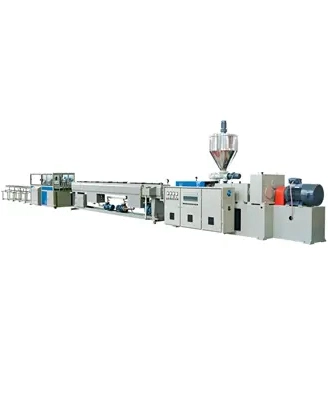
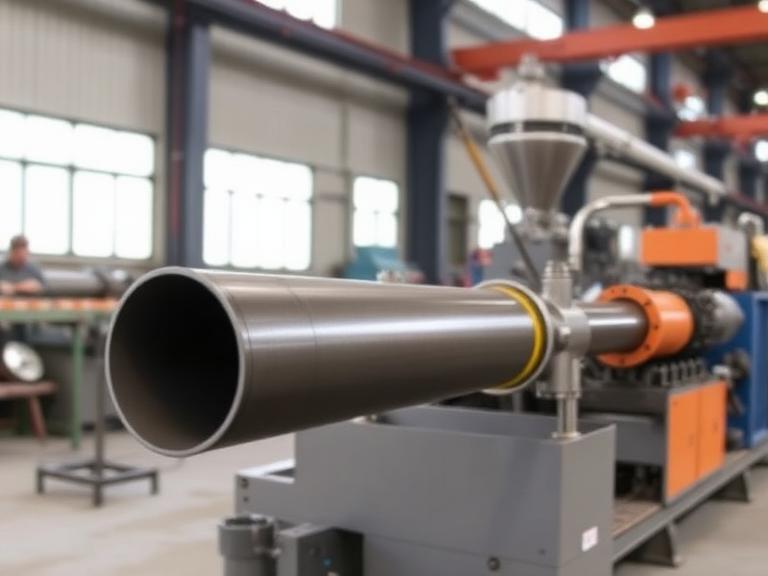
A pipe extruder is a heavy-duty industrial machine that converts solid raw plastic (pellets or powder) into a continuous, uniform tubular profile. It achieves this by utilizing a rotating Archimedean screw housed within a heated barrel. The screw generates immense shear friction and pressure, melting the plastic and forcing it through a precision-engineered die head. In most professional situations, the pipe extruder serves as the primary engine of a larger, synchronized production line that includes vacuum calibration tanks, cooling baths, haul-off tractors, and planetary cutters to finalize the pipe's dimensions.
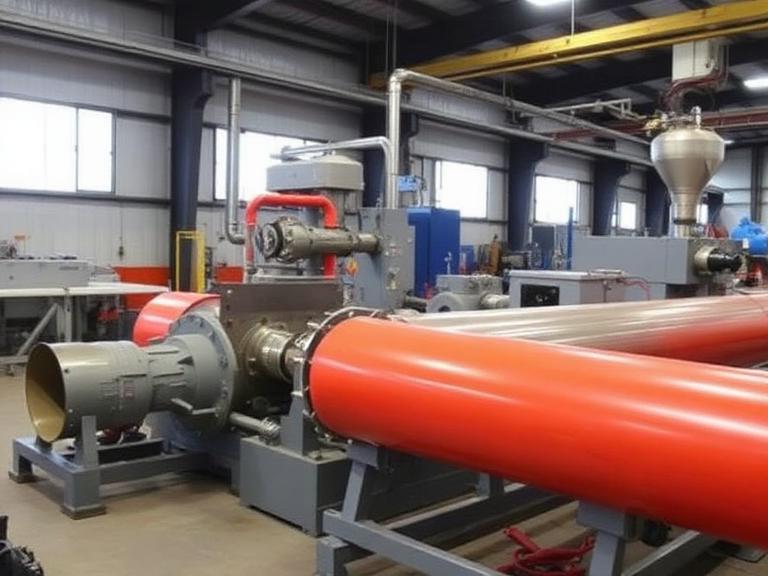
At its core, a pipe extruder is a continuous volume pump for highly viscous, non-Newtonian fluids (melted polymers). The machinery transforms raw thermoplastic materials—such as Polyethylene (PE), Polypropylene (PP), or Polyvinyl Chloride (PVC)—into a structured geometric shape.
However, an extruder running in isolation produces nothing but a hot, formless puddle of plastic. To understand what a pipe extruder truly is, you must view it as the command center of an integrated Plastic Extruder line. The extruder itself consists of a massive AC or servo motor, a heavy-duty reduction gearbox, a thrust bearing assembly, a grooved feed throat, a bimetallic barrel equipped with ceramic heater bands, and a precisely machined steel screw.
The geometry of that screw dictates everything. A screw designed to process HDPE pellets will violently degrade PVC powder. Therefore, commercial manufacturers must match the specific architecture of the pipe extruder to the polymer they intend to process. There is no such thing as a universal pipe extruder for heavy-duty applications.
To grasp how it works, we must follow the polymer's journey from solid raw material to finished pipe. The process relies on thermodynamics, fluid dynamics, and immense mechanical force. In our testing and daily operation of these lines, the process is categorized into distinct mechanical zones:
Raw plastic material is loaded into the hopper. A volumetric or gravimetric dosing system ensures the exact right amount of material drops into the feed throat of the barrel. At this stage, the material is entirely solid. The deep flights (threads) of the screw in the feeding zone act like an auger, conveying the solid pellets forward.
As the plastic moves forward, the depth of the screw flights gradually decreases. This physically compresses the plastic. Simultaneously, the heater bands on the outside of the barrel provide external heat. However, the vast majority of the heat (often 70% to 80%) is generated internally through shear friction—the physical rubbing of the plastic pellets against each other and the barrel wall. This localized frictional heat turns the solid plastic into a highly viscous melt.
The final section of the screw features shallow flights. Its job is not to melt, but to pressurize and homogenize the molten polymer. The metering zone pumps the plastic at an exact, unwavering volume and pressure toward the front of the machine. Any fluctuation in pressure here will cause unacceptable variations in the final pipe wall thickness.
The pressurized melt exits the barrel and enters the die head (often a spiral mandrel or spider die design). The die is a massive block of machined steel that forces the solid mass of liquid plastic into a hollow tube. The die head dictates the outer diameter (OD) and wall thickness (SDR) of the pipe.
Upon exiting the die, the pipe is hot, soft, and formless. It immediately enters a Vacuum Calibration Tank. Here, a vacuum pulls the soft plastic against a brass sizing sleeve, freezing the exact outer diameter in place while high-pressure water sprays cool the material. The pipe then travels through extended cooling baths to solidify completely.
To maintain constant tension, a haul-off machine (equipped with rubber tracks or belts) pulls the pipe through the line at a highly regulated speed. If the haul-off pulls too fast, the pipe wall becomes dangerously thin. Finally, a planetary or band saw cuts the continuous pipe into standardized commercial lengths. For instance, when cutting large diameter HDPE, utilizing a DJQ Series HDPE Pipe Band Saw Cutter ensures clean, perfectly perpendicular cuts necessary for subsequent welding.
| Component | Function in the Extrusion Process | Critical Quality Metric |
|---|---|---|
| Motor & Gearbox | Provides the rotational force (torque) to drive the screw against immense backpressure. | Thrust bearing capacity; AC Servo efficiency. |
| Barrel & Screw | Conveys, melts, compresses, and pumps the polymer. | L/D (Length to Diameter) Ratio; Bimetallic wear resistance. |
| Die Head | Shapes the molten plastic into a tubular profile. | Internal pressure distribution; uniform wall thickness. |
| Vacuum Tank | Freezes the exact outer diameter of the pipe. | Vacuum stability; cooling water volume. |
For commercial users who previously purchased pre-made pipes from third-party vendors, installing an in-house pipe extruder offers massive operational advantages. The primary benefit is absolute control over your supply chain and raw material costs. By operating your own HDPE Pipe Production Line, you dictate the exact resin formulation, UV stabilizer ratios, and wall thickness.
Furthermore, modern pipe extruders are capable of astonishing output rates. A properly calibrated line can run 24 hours a day, 7 days a week, continuously producing thousands of meters of pipe with minimal human intervention. This economy of scale drastically reduces the per-meter cost of infrastructure materials, rapidly amortizing the initial capital expenditure.
We must use practical judgment: operating a pipe extruder is not simple. The limitations are deeply tied to the steep learning curve of polymer science. If ambient humidity is too high, the raw plastic pellets will absorb moisture, causing fatal surface blisters on the finished pipe. If the haul-off speed fluctuates by a fraction of a percent, you will produce miles of out-of-spec scrap material.
Additionally, the utility requirements for heavy-duty applications are immense. You need robust three-phase industrial power and massive industrial water chillers to feed the cooling tanks. A pipe extruder is a major industrial commitment that requires highly trained floor operators to manage the delicate balance of temperatures, pressures, and line speeds.
| Feature | Single Screw Extruder | Conical Twin Screw Extruder |
|---|---|---|
| Target Material | HDPE, LDPE, PP, PPR (Pellets) | UPVC, CPVC (Powder blends) |
| Mechanism | High RPM, relies heavily on shear friction to melt material. | Low RPM, high torque. Positive displacement pumping. |
| Thermal Sensitivity | Excellent for stable plastics. Will burn heat-sensitive PVC. | Prevents thermal degradation. Essential for PVC processing. |
| Best Use Case | Water mains, gas lines, flexible conduits. | Sewer pipes, electrical conduits, rigid profiles. |
| Example Equipment | SJ Single Screw Extruder | SJSZ Conical Twin Screw Extruder |
For commercial users: Municipal infrastructure suppliers, agricultural irrigation manufacturers, telecommunications companies laying fiber optic conduits, and large-scale plumbing suppliers. If your business consumes or sells massive volumes of tubular plastic, investing in a PVC Pipe Production Line is the most direct path to margin expansion and vertical integration.
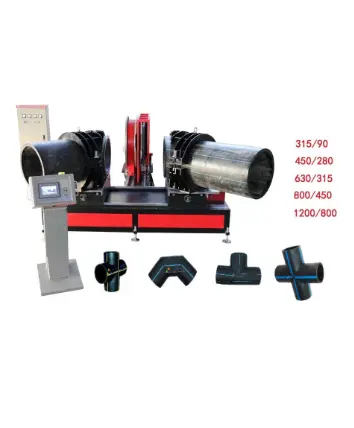
For beginners or low-volume fabricators: If you only require a few hundred meters of pipe per month, or if you are fabricating specialized, low-volume custom assemblies, do not buy a pipe extruder. The startup waste, utility costs, and maintenance will obliterate your budget. You are better served purchasing wholesale pipe and utilizing tools like a RHD Butt Welding Machine or a RHJ Multi-Angle Fitting Elbow Welding Machine to fabricate custom fittings and spools from pre-manufactured stock.
From our experience auditing struggling factories, the most devastating mistake is mismatching the extruder to the polymer. We frequently see operators attempting to run rigid PVC powder through a standard single-screw extruder. Because a single screw relies on high-speed shear friction, it rapidly overheats the PVC, causing it to burn, release corrosive hydrochloric acid gas, and destroy the steel barrel. PVC powder absolutely requires the slow, high-torque positive displacement of a conical twin-screw extruder.
Another common failure occurs downstream. You can have the best extruder in the world, but if your vacuum calibration tank is too short, or your water chillers are undersized, the pipe will warp into an oval shape before it reaches the saw. Extrusion is a holistic process; the downstream equipment is just as critical as the extruder itself.
When you are preparing to purchase a pipe extruder, look past the generic spec sheets. You must interrogate the manufacturer on the specific L/D (Length to Diameter) ratio of the screw. Modern high-efficiency extruders often feature an L/D ratio of 33:1 or 38:1, which provides a longer melt path for better homogenization at lower temperatures.
Furthermore, evaluate the control systems. Archaic relay-based panels are unacceptable. Demand a modern PLC (Programmable Logic Controller) with a touchscreen interface that allows you to save "recipes" for different pipe diameters, synchronizing the extruder motor speed with the haul-off speed automatically.
| Specification | What to Demand | Why It Matters |
|---|---|---|
| Barrel & Screw Material | Bimetallic coating (e.g., SKD11 or Tungsten Carbide). | Prevents rapid wear from abrasive materials or high-calcium fillers, extending lifespan by years. |
| Gearbox Design | Heavy-duty thrust bearing design with external oil cooling. | The screw generates massive backpressure. A weak gearbox will shatter under continuous industrial loads. |
| L/D Ratio | Matched to your polymer (e.g., 33:1 for modern HDPE). | Ensures the plastic is fully melted and mixed before entering the die without burning. |
| Downstream Sync | Siemens or ABB PLC integration. | Ensures the puller speeds up or slows down exactly in sync with the extruder output to maintain wall thickness. |
| Pros (Advantages) | Cons (Disadvantages) |
|---|---|
| Absolute control over production schedules and inventory. | High initial capital expenditure (CapEx) for equipment. |
| Massive reduction in raw material costs vs. buying finished pipe. | Requires massive industrial floor space and three-phase power. |
| Ability to quickly switch die heads for different pipe diameters. | Demands highly skilled, technical operators to prevent scrap. |
| Continuous 24/7 manufacturing capability. | High startup scrap generation while bringing the line to temperature. |
In most professional situations, the reliability of your physical infrastructure dictates the profitability of your factory. Xjgmachine offers a comprehensive range of Plastic Processing Equipment that includes cutting-edge technology and high-quality machines. Our equipment is suitable for various plastic processing applications, from compounding to thermoforming, and we prioritize durability, efficiency, and user-friendliness.
We recommend avoiding piecemeal setups. Do not buy an extruder from one vendor and a vacuum tank from another. The synchronization issues will cripple your output. Instead, invest in a complete, turnkey solution from Xjgmachine. Our products are designed and manufactured to meet the demands of modern plastic production and to help our customers achieve their production goals with ease. Whether you are extruding large-diameter HDPE water mains or high-volume PVC conduits, our synchronized lines guarantee the dimensional stability and continuous uptime that heavy-duty applications demand.
Once your pipe is flawlessly extruded, utilizing our advanced installation tools, such as the Socket Fusion Welding Machine or the HDPE Pipe Saddle Fusion Machine, ensures that the integrity of your manufactured pipe translates directly into leak-proof field installations.
To ensure your manufacturing processes align with global engineering standards, we recommend reviewing the technical frameworks established by the following organizations:
ASTM International: Provides definitive global standards for plastic pipe dimensions, pressure ratings, and material specifications (e.g., ASTM F714 for PVC, ASTM F714 for Polyethylene). Visit ASTM International
International Organization for Standardization (ISO): Establishes rigorous international standards for thermoplastic pipes, fittings, and the mechanical properties required for fluid conveyance (e.g., ISO 4427). Visit ISO
Occupational Safety and Health Administration (OSHA): Outlines the mandatory safety protocols, machine guarding requirements, and thermal hazard mitigation strategies required when operating heavy-duty industrial extrusion equipment. Visit OSHA
```
 English
 العربية
 русский
 Español
 français
 português
 Deutsch
 italiano
 Türkçe
 한국어
한국어 日本語
日本語