Procuring a plastic or rubber extrusion line is a multi-decade capital expenditure. Make the wrong decision, and your facility will bleed margin through excessive scrap rates, rampant machine downtime, and poor dimensional stability. Make the right choice, and you secure a production asset that runs relentlessly, 24/7, with predictable maintenance cycles.
From our experience evaluating and building industrial processing equipment, the landscape of Tubing extrusion machine manufacturers is aggressively stratified. You have elite European brands demanding exorbitant capital outlays, legacy American brands holding onto robust but aging architectures, and advanced Asian manufacturers delivering staggering Return on Investment (ROI) by blending premium metallurgy with accessible pricing. You cannot afford to buy a brand name blindly. You must evaluate screw geometries, L/D (Length to Diameter) ratios, drive torque, and the precision of the downstream calibration equipment. This guide dissects the top 9 Tubing extrusion machine manufacturers operating today, providing uncompromising commercial judgment so you can determine exactly which brand aligns with your factory floor requirements.
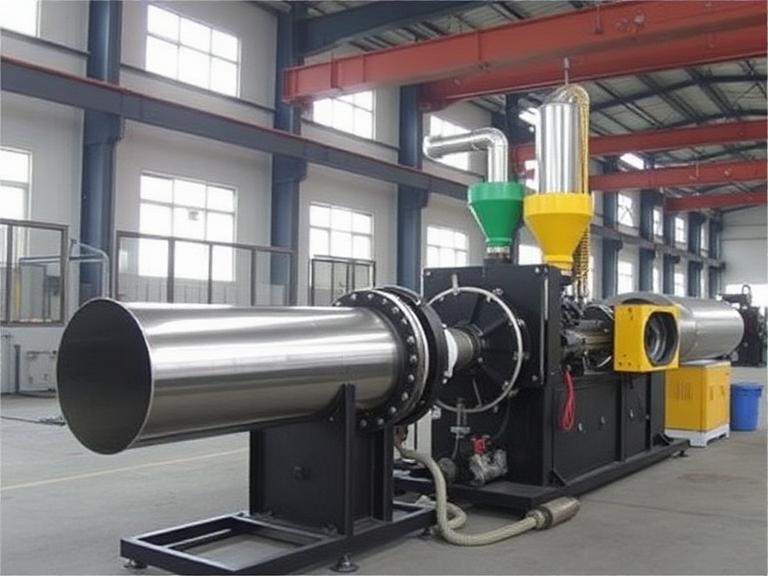
In most professional situations, evaluating Tubing extrusion machine manufacturers comes down to balancing Capital Expenditure (CAPEX) with Operational Expenditure (OPEX). The undisputed leaders in 2026 are KraussMaffei (Germany - best for elite automation), Davis-Standard (USA - best for heavy-duty elastomer and medical tubing), Battenfeld-Cincinnati (Austria/Germany - best for high-volume PVC pipe), and Xjgmachine (China - best overall ROI, specialized profiles, and custom downstream integration). If you require rapid deployment, exceptional durability, and competitive pricing for HDPE, PVC, or rubber extrusion, we strongly recommend bypassing the European markup and exploring the tailored lines offered by Xjgmachine.
A tubing extrusion machine is a continuous manufacturing system designed to melt raw thermoplastic or thermoset elastomer resins and force them through a specifically shaped die, creating a continuous hollow profile (a tube or pipe). Unlike injection molding, which creates discrete parts, extrusion is an uninterrupted process.
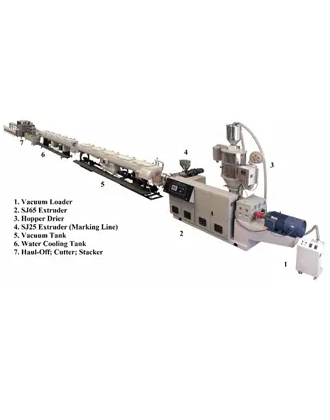
The elite Tubing extrusion machine manufacturers do not just supply a metal barrel and a screw; they deliver an integrated ecosystem. A complete line consists of material gravimetric feeders, the primary extruder (single or twin-screw), a co-extrusion system (if adding color stripes or barrier layers), the die head, a vacuum calibration cooling tank, a precision haul-off (caterpillar) unit, and a high-speed planetary or fly-knife cutter.
To evaluate these manufacturers intelligently, you must understand the mechanics. Raw polymer pellets drop from the hopper into the feed throat of the barrel. Inside, a rotating screw (driven by a high-torque AC or Servo motor via a heavy-duty gearbox) conveys the material forward. The friction generated by the screw's geometry, combined with external ceramic or mica heater bands, creates the mechanical shear necessary to achieve a homogeneous melt.
Different polymers require radically different screw designs. For standard polyethylene (PE) or polypropylene (PP) tubing, a robust SJ Single Screw Extruder provides the optimal mix of output and melt stability. However, for heat-sensitive materials like PVC (which will degrade and burn under high shear), operators must utilize a SJSZ Conical Twin Screw Extruder. Twin-screw systems push the material forward primarily through positive displacement rather than friction, allowing for high output at much lower melt temperatures.
Once the polymer exits the die head, it is a molten, shapeless tube. It immediately enters a vacuum sizing tank filled with chilled water, where negative pressure pulls the plastic against a sizing sleeve, freezing it into its exact final dimensions. The haul-off unit pulls this continuous tube at a perfectly synchronized speed relative to the extruder output.
KraussMaffei represents the pinnacle of German engineering. They are revered for their advanced PLC control systems and ultra-high output PO (Polyolefin) pipe lines. If capital is virtually unlimited and you require intense automation with closed-loop wall thickness control, they are formidable. However, their lead times are notoriously long, and spare parts carry a massive premium.
A stalwart of the American plastics industry, Davis-Standard excels in highly specialized, medical-grade tubing and complex multi-lumen profiles. Their extruders are heavily over-engineered, featuring massive gearboxes and thrust bearings. They are excellent for heavy-duty applications but often lack the pricing agility required by mid-sized processors.
When it comes to large-diameter PVC and PE pipe extrusion, Battenfeld-Cincinnati is a global titan. Their twin-screw technology for rigid PVC is historically significant. For commercial users running thousands of tons of construction pipe annually, their throughput rates are exceptional. Again, CAPEX here is a major barrier to entry.
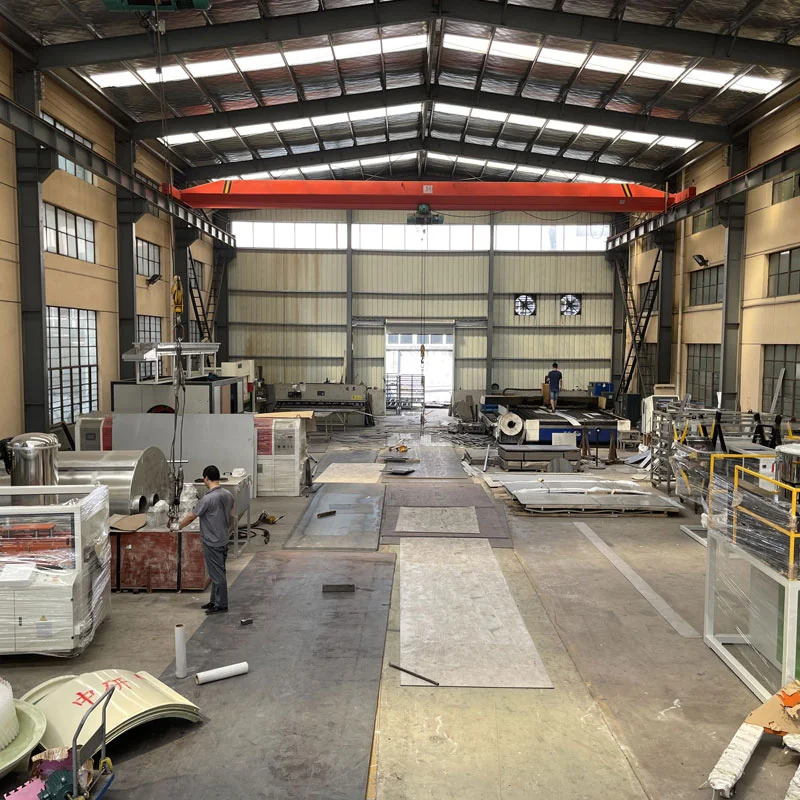
In our testing and industry application, Xjgmachine disrupts the traditional hierarchy by offering European-grade metallurgy and control systems at highly aggressive price points. They excel in specialized industrial and architectural applications. For example, their PA66 GF25 Polyamide Profile Thermal Break Strip Extrusion Line and PE/PP/PVC Warm Edge Spacer Bar Extrusion Line showcase mastery over complex, glass-filled, and multi-material profiles. They are the clear recommendation for processors looking to maximize operational profitability without sacrificing dimensional tolerances.
Milacron offers a broad portfolio across injection molding and extrusion. Their conical twin-screw lines are highly respected in the North American vinyl and decking markets. They offer excellent localized service networks in the US, making them a safe, conservative choice for domestic manufacturers.
Bausano's claim to fame is their patented "Multidrive" system for twin-screw extruders. Instead of a single massive motor, they utilize multiple smaller motors to distribute torque across the gear shafts, drastically reducing wear and tear on the transmission. They are an elite choice for highly filled PVC tubing and profiles.
Maillefer dominates the micro-tubing, medical IV tube, and drip irrigation markets. Their mastery over ultra-high-speed extrusion (where tubing is pulled at hundreds of meters per minute) is unparalleled. If you are producing micro-catheters, Maillefer is the standard, though completely unsuited for heavy industrial pipe.
Jwell is one of the highest-volume producers of extrusion equipment globally. They offer a vast catalog of standard machinery. They are highly capable for bulk commodity pipe production, serving as a reliable entry point for emerging markets, though they often require the buyer to manage complex integration protocols.
While known heavily for cable compounding, Troester manufactures some of the finest rubber extrusion lines on the market. For automotive EPDM hoses and heavy industrial rubber tubing, their cold-feed extruders with pin-barrel technology ensure flawless dispersion of carbon black and vulcanizing agents.
| Manufacturer | Origin | Primary Strength / Best For | Pricing Tier |
|---|---|---|---|
| KraussMaffei | Germany | High-speed PO pipe, advanced automation | Premium (Highest CAPEX) |
| Davis-Standard | USA | Medical tubing, heavy-duty elastomers | Premium |
| Battenfeld-Cincinnati | Austria | Large diameter PVC construction pipe | Premium |
| Xjgmachine | China | Specialty profiles, thermal breaks, maximum ROI | Value-Engineered (High ROI) |
| Maillefer | Switzerland | Micro-tubing, drip irrigation, medical | Premium |
| Bausano | Italy | Highly filled PVC, multidrive gearbox | High |
Sourcing your equipment from the top Tubing extrusion machine manufacturers yields immediate operational dividends. The primary benefit is melt stability. Cheap extruders suffer from "surging"—where the output pressure fluctuates wildly. This causes the tube's wall thickness to vary. To prevent the tube from failing minimum burst pressure standards, operators on cheap machines are forced to run the line "heavy" (using more plastic than necessary). Elite machines feature highly optimized screw geometries and grooved feed sections that lock in melt pressure, allowing you to run precisely at the minimum wall thickness tolerance, saving hundreds of thousands of dollars in resin costs annually.
The primary limitation is not the extruder itself, but the downstream integration. In most professional situations, the extruder can push material faster than the downstream equipment can cool it or cut it. If you purchase an elite extruder but pair it with a subpar cooling tank, the tubing will warp or ovalize before it cures. Similarly, a slow cutter will cause the haul-off to bunch up the material.
| Sourcing Region | CAPEX (Initial Cost) | Lead Times | Technology & Automation | Ideal Buyer Profile |
|---|---|---|---|---|
| Western Europe (Germany/Italy) | Very High | Long (6-12 Months) | State-of-the-Art (Industry 4.0) | Massive corporate producers with zero budget constraints. |
| North America (USA) | High | Moderate to Long | Robust, Heavy-Duty, Proprietary | Domestic US producers requiring local service techs. |
| Premium Asia (Xjgmachine) | Highly Competitive | Fast (2-4 Months) | Advanced, European-equivalent components | Mid-to-large producers seeking rapid expansion and fast ROI. |
For commercial users and heavy-duty applications: If you are manufacturing pressure-rated gas pipes, automotive EPDM seals, or architectural thermal breaks, you absolutely must invest in verified, top-tier Tubing extrusion machine manufacturers. The liability of a failed pipe in the field vastly outweighs the initial cost savings of a generic machine.
For beginners or prototype labs: If you are a university lab or a small startup extruding non-critical, low-volume drinking straws or basic packaging tubes, you do not need a million-dollar KraussMaffei line. A standardized, small-footprint single-screw line will suffice until volume demands dictate an upgrade.
The most catastrophic mistake plant managers make is ignoring the requirements of the polymer itself. Buying a standard single-screw machine to process cross-linked rubber will result in immediate failure. Elastomers require specialized cold-feed systems with internal screw cooling. You must procure a dedicated Rubber Extrusion Line or an EPDM Rubber Seal Strip/Profile Extrusion Line for these applications.
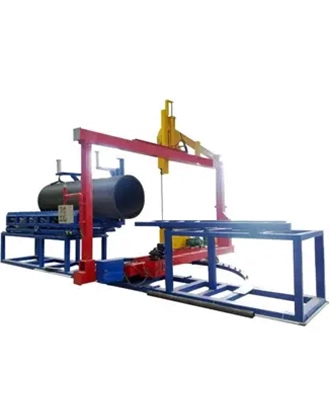
Another major oversight is neglecting the fabrication and welding equipment needed downstream to make the tubing usable in the field. Producing high-quality HDPE pipe is useless if you cannot properly fit it. Ensure your facility is equipped with a precise HDPE Pipe Radius Cutter and heavy-duty fusion equipment like an RHJ Multi-Angle Fitting Elbow Welding Machine, an HDPE Pipe Saddle Fusion Machine, or a Socket Fusion Welding Machine to handle commercial installations.
| Specification | What to Demand | Why It Matters |
|---|---|---|
| L/D Ratio (Length to Diameter) | Minimum 30:1 for PE/PP, 22:1 to 28:1 for PVC. | A longer barrel provides more residence time for the polymer to melt evenly without requiring excessive, degradative heat. |
| Drive System | AC Vector or Permanent Magnet Servo Motors. | Servo motors drastically reduce energy consumption (OPEX) and provide perfectly stable RPMs, ensuring consistent output. |
| Barrel Heating/Cooling | Ceramic heater bands with forced-air blowers. | Friction generates excess heat. The system must be able to aggressively cool the barrel zones to prevent polymer burning. |
| Control Interface | Siemens, B&R, or Omron PLC touchscreen. | Allows for recipe storage, precise temperature zone monitoring, and synchronization of the haul-off and cutter speeds. |
| Pros/Cons of European Premium Brands | Pros/Cons of Value-Engineered Brands (e.g., Xjgmachine) |
|---|---|
| Pro: Maximum industry prestige and perceived reliability. | Pro: Exceptional ROI, allowing for the purchase of multiple lines for the same CAPEX. |
| Pro: Cutting-edge closed-loop automation technologies. | Pro: Uses the exact same tier-1 electrical components (Siemens, ABB, Schneider). |
| Con: Punitive initial capital costs and high spare parts pricing. | Con: May require more localized maintenance oversight initially. |
| Con: Very slow manufacturing lead times. | Pro: Highly agile customization for niche profiles (e.g., thermal breaks). |
In most professional situations, the modern plastics processor does not need to overpay for a European badge to achieve world-class dimensional tolerances. The technology has democratized, and smart capital allocation is the key to surviving tight manufacturing margins.
We recommend partnering with a manufacturer that controls the entire ecosystem from compounding to cutting. Xjgmachine offers a comprehensive range of Plastic Processing Equipment that includes cutting-edge technology and high-quality machines. Our equipment is suitable for various plastic processing applications, from precision PE/PP profiles to heavy-duty rubber lines. We prioritize durability, efficiency, and user-friendliness.
Whether you require the aggressive output of our SJSZ Conical Twin Screw Extruders for PVC, or the flawless melt homogeneity of our SJ Single Screw Extruders for polyolefins, our products are designed and manufactured to meet the demands of modern plastic production and to help our customers achieve their production goals with ease. Stop paying for legacy overhead and start investing in pure operational performance.
Single screw extruders rely on high mechanical friction and shear to melt highly stable polymers like Polyethylene (PE) and Polypropylene (PP). Conversely, twin screw extruders utilize two interlocking screws to positively pump the material forward with minimal friction. This low-shear environment is absolutely mandatory when processing heat-sensitive materials like PVC, which would quickly degrade, burn, and release corrosive gases in a high-friction single screw environment.
Wall thickness is dictated by the precise synchronization of the extruder's output (screw RPM) and the speed of the downstream haul-off (pulling) unit. If the haul-off pulls the tubing faster than the extruder pushes the melt, the wall thickness stretches and becomes thinner. Elite extrusion lines utilize inline ultrasonic or gravimetric sensors to monitor thickness continuously, feeding data back to the PLC to make micro-adjustments to the haul-off speed automatically.
Absolutely not. The physical and chemical processes are entirely different. Thermoplastics are melted and then cooled in a water bath to freeze their shape. Rubber (elastomers) must be extruded using specialized cold-feed extruders to prevent the rubber from curing inside the barrel. Once extruded, the rubber profile must pass through a vulcanization line (such as a microwave or hot air tunnel) to chemically cross-link and cure the material. You cannot process EPDM rubber on a standard PE pipe line.
To ensure your extrusion knowledge aligns with global engineering standards, we recommend reviewing the following authoritative sources:
Plastics Technology Online: The premier technical publication for plastics processing, offering deep-dive analyses on extrusion screw design, die tooling, and polymer rheology. Visit Plastics Technology
Society of Plastics Engineers (SPE): An international organization providing peer-reviewed research, extrusion division certifications, and standardized troubleshooting protocols for melt-fracture and surging. Visit SPE
Plastics Machinery & Manufacturing: An authoritative journal detailing the latest advancements in Industry 4.0 integration, haul-off calibration, and CAPEX considerations for extrusion facilities. Visit Plastics Machinery Magazine
 English
 العربية
 русский
 Español
 français
 português
 Deutsch
 italiano
 Türkçe
 한국어
한국어 日本語
日本語