The industrial polymer landscape is entirely dependent on continuous manufacturing processes. If you are establishing a production line for anything ranging from PVC window frames to microscopic medical tubing, you are relying on extrusion mechanics. However, navigating the machinery market requires distinct technical knowledge. Relying on generalized information to select a Plastic Extruder is a fast track to operational failure. You must understand the precise rheological demands of your chosen polymer and match it strictly to the corresponding extrusion geometry.
From our experience engineering advanced thermoplastic machinery at Xjgmachine, the divide between a profitable facility and a failing one often comes down to equipment specification. Attempting to force a complex multi-layer film through a standard single screw setup, or misapplying cooling calibration tables, destroys material integrity and spikes your scrap rates. In this uncompromising guide, we will break down the 7 primary types of plastic extrusion, dissect how the mechanical process actually works, and provide aggressive, commercial judgment on what machinery you actually need to dominate your sector.
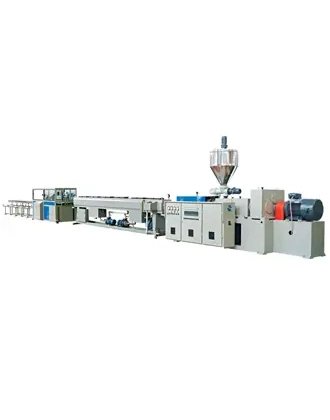
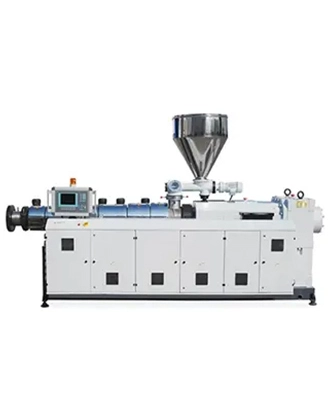
If you are engineering a continuous profile production line, you must select one of the core types of plastic extrusion. The 7 primary types are: 1. Tubing/Pipe Extrusion (for hollow geometries), 2. Profile Extrusion (for complex, non-tubular shapes like window frames), 3. Sheet/Film Extrusion (for flat, solid surfaces), 4. Blown Film Extrusion (for shopping bags and packaging), 5. Coextrusion (combining multiple polymers into one die), 6. Extrusion Coating (applying plastic over paper or foil), and 7. Pelletizing (creating raw material beads). In most professional situations, we recommend pairing standard polymers (PE, PP) with an SJ Single Screw Extruder, while rigid PVC and heavy compounds demand the torque and shear control of an SJSZ Conical Twin Screw Extruder.
Plastic extrusion is a high-volume manufacturing process in which raw plastic is melted and formed into a continuous profile. Unlike injection molding, which creates discrete, singular 3D objects (like a bottle cap), extrusion creates 2D cross-sectional shapes of virtually infinite length (like a garden hose). The core of the operation takes place inside the extruder barrel, where mechanical shear and external heater bands convert solid resin pellets into a homogenous, viscous melt.
The extrusion process is a masterclass in thermodynamics and fluid dynamics. Raw thermoplastic resin (often mixed with colorants and UV stabilizers) is gravity-fed from a top-mounted hopper into the barrel. Inside the barrel, a heavy-duty screw rotates. As the screw turns, it conveys the plastic forward. The mechanical friction generated between the turning screw and the stationary barrel (known as shear heating) provides the majority of the energy required to melt the plastic. External heater bands provide the rest.
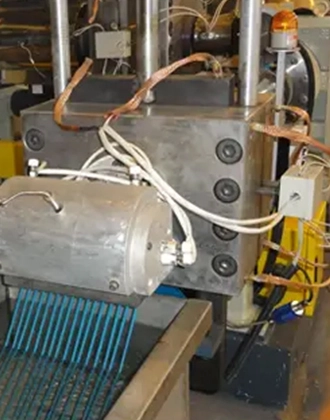
Once the plastic reaches the front of the barrel, it passes through a breaker plate and screen pack to filter out impurities. The molten plastic is then forced under immense pressure through a custom-machined steel die. The die dictates the final shape. Upon exiting the die, the extremely hot plastic must be immediately cooled and calibrated—usually by drawing it through a vacuum sizing tank filled with chilled water—to freeze the dimensions before the plastic sags or warps.
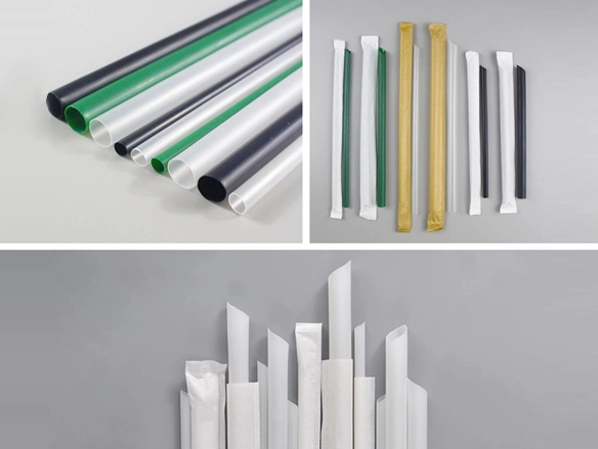
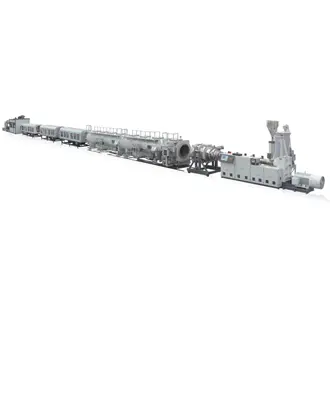
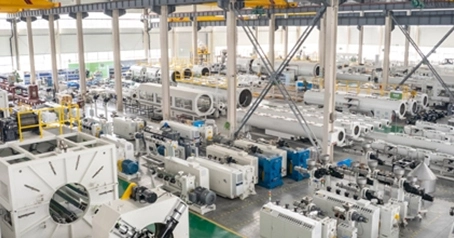
This process manufactures continuous hollow profiles, ranging from massive municipal PVC sewage pipes to tiny medical catheters. To create the hollow center, the die features a central pin (mandrel). As the melt flows around the pin, air is injected through the center to prevent the walls from collapsing inward before they reach the cooling tank. This exact architecture is utilized in smaller, high-speed applications like a PP/PLA Drinking Straw Making Machine.
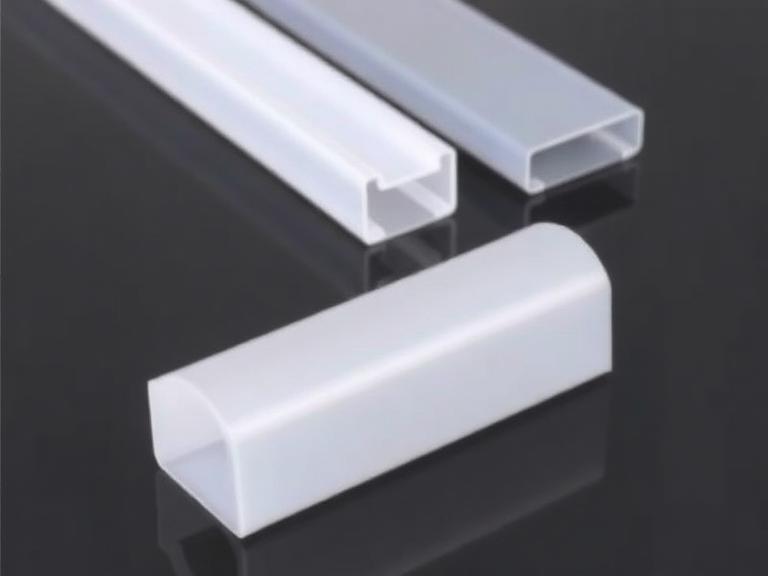
Profile extrusion covers any continuous shape that is not a simple tube or flat sheet. This is the most geometrically complex category. It requires highly engineered calibration dies to maintain tight tolerances on intricate internal webbing. Common applications include vinyl siding, window frames, and thermal breaks. For commercial users entering the fenestration market, deploying a PA66 GF25 Polyamide Profile Thermal Break Strip Extrusion Line or a PE/PP/PVC Warm Edge Spacer Bar Extrusion Line is essential for modern, energy-efficient window construction. Profile extrusion is not limited to rigid plastics; it is also heavily utilized for elastomers, necessitating a dedicated EPDM Rubber Seal Strip/Profile Extrusion Line.
This method forces molten plastic through a flat, slit-like die (often called a T-die or coat-hanger die). As the wide sheet exits the die, it is immediately fed through a series of massive, highly polished, water-chilled calendering rolls. These rolls dictate the final thickness and surface finish of the sheet. The output is typically wound into giant rolls for thermoforming applications (like plastic cups and clamshell packaging) or cut into flat boards.
If you have ever used a plastic grocery bag or agricultural greenhouse film, you have handled blown film. The molten plastic is extruded upward through a circular die, creating a thick tube. Air is immediately blown into the center of the tube, expanding it into a massive, thin-walled bubble (like a balloon). Cooling air rings freeze the bubble as it is pulled upward by nip rollers. The expansion ratio dictates the final thickness of the film.
Coextrusion is the simultaneous extrusion of multiple layers of material. Two or more separate extruders melt different polymers and feed them into a single, highly complex feedblock and die assembly. The layers merge flawlessly before cooling. In most professional situations, coextrusion is mandatory for food packaging, where one layer provides oxygen barrier properties (like EVOH), another provides UV resistance, and the innermost layer is food-safe polyethylene.
In this specialized process, a flat sheet of molten plastic is extruded directly onto a moving substrate, such as paper, cardboard, or aluminum foil. The layers are pressed together between heavy chill rolls, creating a waterproof, laminated material. This is the exact process used to manufacture the liquid-proof cartons used for milk and juice.
Before plastic can be molded or extruded into end-products, it must be formulated. Pelletizing lines mix raw resins with additives, fillers, and colorants, extruding them into long spaghetti-like strands. These strands are cooled in a water bath and chopped into uniform pellets. For heavy-duty applications involving recycling, deploying a PE PP Pelletizing/Granulating Line or a PVC/WPC Pelletizing Line transforms raw waste back into highly profitable, usable raw materials.
| Extrusion Type | Die Geometry | Primary Output / Use Case |
|---|---|---|
| Tubing & Pipe | Annular (Circular with Pin) | PVC pipes, medical tubes, straws |
| Profile | Custom Complex Shapes | Window frames, weather stripping |
| Sheet & Film | Flat T-Die | Thermoforming sheets, thick films |
| Blown Film | Annular (Upward Expansion) | Shopping bags, shrink wrap |
| Coextrusion | Multi-manifold Feedblock | Multi-layer barrier packaging |
| Coating | Flat Die over Substrate | Liquid cartons, waterproof paper |
| Pelletizing | Strand Die (Multi-hole) | Raw material pellets, recycling |
The foremost benefit of plastic extrusion is absolute volume scaling. Once an extrusion line is tuned and running, it operates continuously, 24/7. This results in the lowest possible cost-per-part in the entire plastics industry. Furthermore, extrusion offers exceptional post-die manipulation. You can pull the hot plastic over formers to adjust thickness on the fly, or cut it to any required length without changing the tooling.
We must use commercial and practical judgment: extrusion has severe geometric limitations. It can only produce items with a constant, two-dimensional cross-section. You cannot extrude a shape that widens and narrows along its length. Furthermore, die design is highly complex due to "die swell" (the tendency of molten plastic to expand as it exits the pressure of the die). Creating a perfectly square profile often requires machining a die with slightly concave sides to account for the physical swelling of the polymer.
| Feature | Plastic Extrusion | Injection Molding |
|---|---|---|
| Process Type | Continuous (Unbroken lengths) | Cyclical (Discrete, single parts) |
| Geometry Limits | Constant 2D cross-section only | Complex 3D shapes and varying walls |
| Tooling Cost | Moderate (Relatively simple dies) | Extremely High (Complex 3D molds) |
| Production Speed | Extremely High (Meters per minute) | High (Seconds per cycle) |
For commercial users: If you are manufacturing raw construction materials (pipes, decking), packaging films, or automotive weather seals, establishing an in-house extrusion line is the only viable path to profitability. The continuous throughput guarantees rapid ROI.
Who does not need it: For beginners looking to prototype complex 3D parts, or manufacturers producing individual consumer goods (like plastic toys, appliance housings, or gears), extrusion is useless. You must invest your capital in 3D printing for prototyping, and Injection Molding for mass production.
The most devastating mistake in the industry is misapplying screw geometry. In our testing, attempting to run rigid PVC (a highly heat-sensitive polymer) through a standard high-shear single screw extruder will result in severe material degradation and burning. Rigid PVC demands the low-shear, positive pumping action of a conical twin-screw extruder. Conversely, running simple, highly stable polymers like PE or PP through an expensive twin-screw setup is a gross misallocation of capital and energy.
Another frequent error is neglecting upstream material preparation. Feeding wet, un-dried hygroscopic resins (like Nylon/PA66) into the barrel causes water to boil inside the melt, resulting in surface bubbles and catastrophic structural failure of the profile.
| Consideration | What to Demand | Why It Matters |
|---|---|---|
| Screw L/D Ratio | Length-to-Diameter ratio matched to material (e.g., 30:1 or 33:1 for polyolefins). | A longer barrel allows for better mixing, more uniform melting, and higher output stability for difficult resins. |
| Downstream Cooling | Extended vacuum calibration tanks with precise temperature zones. | If your cooling tank is too short, the center of the thick plastic profile will remain molten and warp after exiting the tank. |
| Control Systems | PLC/HMI touchscreens with PID temperature control. | Extrusion requires holding barrel temperatures within 1-2 degrees. Outdated relay controls cause temperature fluctuations that ruin profiles. |
| Pros of Plastic Extrusion | Cons of Plastic Extrusion |
|---|---|
| Lowest cost-per-pound manufacturing method. | Requires massive floor space for long cooling and hauling lines. |
| Continuous 24/7 operation with minimal manual intervention. | Strictly limited to linear, constant cross-section geometries. |
| Tooling (dies) is highly affordable compared to injection molds. | High setup and changeover times resulting in initial scrap waste. |
| Allows for rapid integration of recycled regrind materials. | Requires highly skilled operators to dial in temperatures and haul-off speeds. |
In most professional situations, the operational success of your factory floor relies on procuring machinery that is over-engineered for the task at hand. You cannot scale a global manufacturing business on undersized gearboxes or inadequate cooling tanks.
Xjgmachine offers a comprehensive range of Plastic Processing Equipment that includes cutting-edge technology and high-quality machines. Our equipment is suitable for various plastic processing applications, from compounding to thermoforming, and we prioritize durability, efficiency, and user-friendliness. Our products are designed and manufactured to meet the demands of modern plastic production and to help our customers achieve their production goals with ease.
Whether you are establishing a heavy-duty recycling loop and require robust wash systems, or you are entering the high-margin building materials sector, we engineer the solution. We recommend starting with our high-torque SJSZ Conical Twin Screw Extruders for complex PVC applications to ensure flawless melt flow without degradation.
A single screw extruder is the workhorse of the industry, ideal for processing stable, uniform polymers like Polyethylene (PE) and Polypropylene (PP). It relies heavily on friction and shear heating to melt the plastic. A twin-screw extruder utilizes two intermeshing screws to physically pump, knead, and mix the plastic. Twin screws are strictly mandatory for heat-sensitive materials like rigid PVC and heavily filled compounds (WPC), as they operate at lower RPMs, provide positive displacement, and generate significantly less destructive friction.
Yes, absolutely. Pelletizing (or compounding) is a specialized type of extrusion dedicated to recycling. Post-consumer scrap or factory off-cuts are shredded in a Double Shaft Shredder, washed in a LDPE BOPP Film Recycling and Washing Line, and fed into an extruder. The extruder melts the scrap, forces it through a heavy-duty screen changer to remove non-melting contaminants, and extrudes it into thin strands that are chopped into fresh, reusable pellets.
Die swell (or the Barus effect) occurs because long-chain polymer molecules are violently compressed and stretched under extreme pressure inside the extrusion die. The moment the plastic exits the die into the open atmosphere, those molecules "relax" and instantly expand outward. This expansion means that the hole in the steel die cannot be the exact dimensional size of the final product. The die must be custom-engineered and undercut to mathematically account for the specific expansion rate of the chosen polymer.
To ensure your manufacturing processes align with global engineering and safety benchmarks, we advise consulting the standards established by the following authorities:
ASTM International: Recognized authority for establishing testing protocols for extruded plastics, including ASTM D3641 for the preparation of plastic specimens and extrusion dimensional tolerances. Review ASTM Standards
ISO (International Organization for Standardization): Providing rigorous global frameworks, such as ISO 1133 for determining the melt mass-flow rate (MFR) and melt volume-flow rate (MVR) of thermoplastics. Explore ISO Plastics Standards
Plastics Industry Association (PIA): The premier organization representing the entire plastics supply chain, offering extensive literature on extrusion safety, environmental recycling protocols, and machinery best practices. Access PIA Guidelines
 English
 العربية
 русский
 Español
 français
 português
 Deutsch
 italiano
 Türkçe
 한국어
한국어 日本語
日本語