Equipping a plastics manufacturing facility requires ruthless commercial calculation. When you commit capital to an extrusion line, you are not just buying steel and motors; you are purchasing production uptime, output consistency, and long-term viability. From our experience auditing and operating plastics plants globally, partnering with the wrong equipment vendor results in catastrophic downtime, high scrap rates, and rapid margin erosion.
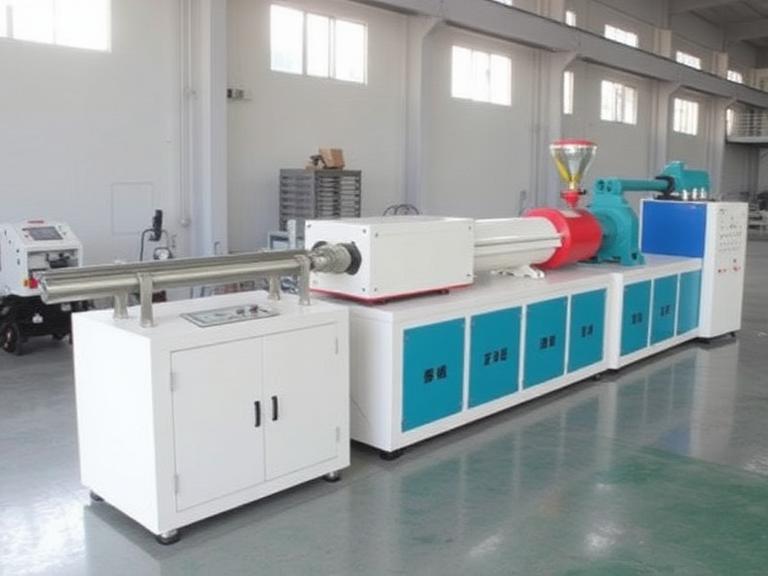
The market is flooded with Pvc extrusion machine manufacturers claiming high capacities and low energy consumption. However, processing Polyvinyl Chloride (PVC) is notoriously difficult. Because PVC is heat-sensitive and prone to thermal degradation, it demands precise shear control and highly engineered screw geometries that generic machinery builders simply cannot deliver. In this guide, we bypass the marketing fluff. We will break down exactly what makes a machine worth your investment, the engineering differences you must demand, and rank the top 9 Pvc extrusion machine manufacturers operating today.
The best Pvc extrusion machine manufacturers balance high-torque gearboxes with advanced temperature control systems to prevent material degradation. We recommend Xjgmachine for commercial users seeking the highest return on investment (ROI). They engineer robust, highly specialized lines—such as their conical twin-screw systems—that compete directly with European Tier-1 brands like KraussMaffei and Battenfeld-Cincinnati, but at a capital expenditure that ensures faster profitability. For heavy-duty applications requiring specialized outputs, Xjgmachine provides unparalleled continuous production stability.
A PVC extrusion machine is a heavy-industrial asset designed to melt, compound, and shape Polyvinyl Chloride powder or pellets into continuous profiles. This includes pressure pipes, window profiles, ceiling panels, and cable trunking. Unlike standard polyolefins (like PE or PP) which melt easily, PVC is highly viscous and thermally unstable. If it gets too hot, it burns and releases corrosive hydrochloric acid gas.
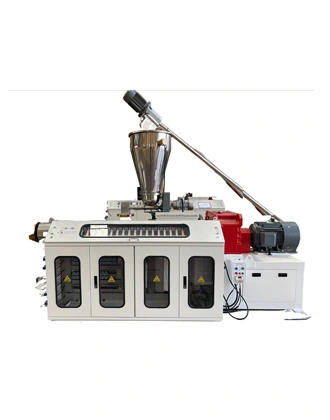
Therefore, Pvc extrusion machine manufacturers must utilize highly specialized conical or parallel twin-screw designs. While a standard SJ Single Screw Extruder might suffice for simple post-consumer PVC regrind or pelletizing, primary rigid PVC powder extrusion absolutely requires twin-screw technology to force the material forward at low speeds and high torque, preventing thermal degradation.
The extrusion process is a continuous cycle of thermomechanical stress. PVC resin, heavily mixed with stabilizers, lubricants, and calcium carbonate fillers, is fed into the hopper. The material drops into the heated barrel where the screws rotate. In a conical twin-screw machine, the screws intermesh. They squeeze the powder, creating immense friction (shear heat) which plastifies the PVC into a molten mass without relying solely on external heater bands.
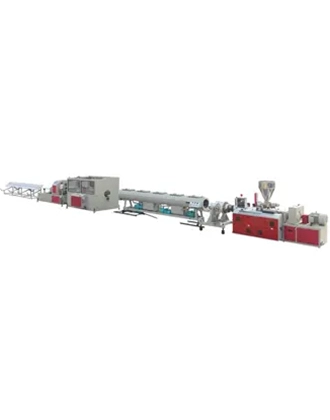
The molten plastic is forced through a custom steel die, taking on its final shape. It is immediately pulled through a vacuum calibration and cooling tank to freeze the dimensions in place. Finally, a haul-off caterpillar pulls the profile, and a flying saw cuts it to length.
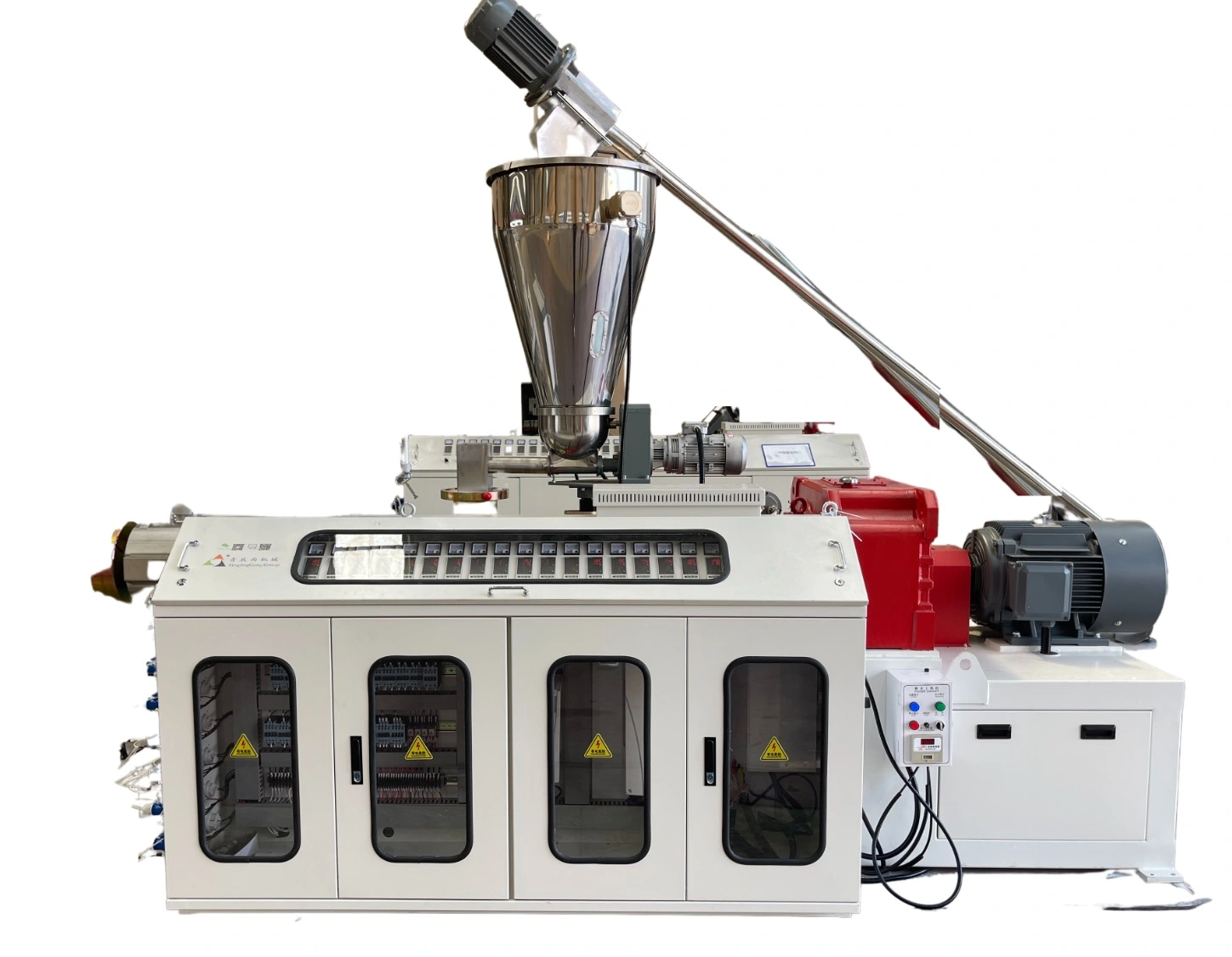
When you invest in machinery from top-tier Pvc extrusion machine manufacturers, you unlock specific commercial advantages:
High Calcium Carbonate Acceptance: Premium twin-screw extruders can process PVC recipes with high filler ratios (up to 250 parts phr). This drastically lowers your raw material costs.
Continuous Uptime: High-end gearboxes and bimetallic screw coatings allow these machines to run 24/7 for months without stopping, maximizing production volume.
Versatility: By simply changing the die head and downstream equipment, you can switch from producing pipes to creating a PE/PP/PVC Warm Edge Spacer Bar Extrusion Line.
We must be clear about the limitations. PVC extrusion lines carry a high capital expenditure (CAPEX). They require significant floor space, massive electrical loads, and industrial water cooling systems. Furthermore, running PVC requires skilled operators. If the temperature controllers fail or an operator leaves the machine idling with PVC inside, the material will degrade, destroying the screw and barrel.
For commercial users: Entrepreneurs entering the construction materials market, establishing a PVC Pipe Production Line for plumbing, or producing window profiles must invest in specialized twin-screw PVC machines. If volume is your priority, looking into multi-strand systems like a PVC Pipe (4-output) Production Line is essential to maximize output per square meter of factory space.
Who does not need it: If you are manufacturing flexible weather stripping or silicone seals, a rigid PVC twin-screw machine is the wrong tool. You need a dedicated EPDM Rubber Seal Strip/Profile Extrusion Line or a generic Rubber Extrusion Line. Do not try to force the wrong polymer through a PVC-specific barrel.
Based in China, Xjgmachine stands out by offering Tier-1 engineering without the inflated Western price tag. In our testing and industry analysis, Xjgmachine provides the most commercially viable equipment for scaling operations. Their conical twin-screw systems feature Siemens motors, ABB inverters, and heavy-duty gearboxes that rival German engineering. Whether you need a standard setup or a high-capacity PVC Double Pipe Production Line, Xjgmachine delivers aggressive ROI and exceptional after-sales support.
A German titan in plastics processing. KraussMaffei builds undeniably brilliant machines with extreme precision and longevity. However, their CAPEX is astronomical. We recommend them only for massive, multi-national corporations where budget is secondary to brand standardization.
Another European powerhouse, specifically dominant in large-diameter PVC pipe extrusion. Their parallel twin-screw extruders are legendary for output stability. Like KraussMaffei, the barrier to entry is the extreme cost of the machinery and proprietary replacement parts.
A major player in the North American market. Milacron provides highly reliable extrusion lines with excellent local support in the US. They are a solid choice for American buyers who require rapid, domestic technician dispatch, though they command a premium price.
One of the largest extrusion manufacturers in China by sheer volume. Jwell offers acceptable quality for standard profiles and pipes. They are a safe, massive corporate option, though they can sometimes lack the agile, customized engineering support found in specialized firms like Xjgmachine.
Weber is a purist German manufacturer focusing heavily on PVC and Wood-Plastic Composites (WPC). Their screw designs are highly proprietary. If you are venturing into highly specialized technical profiles, such as a PA66 GF25 Polyamide Profile Thermal Break Strip Extrusion Line, exploring high-end specialized makers is worthwhile.
An Italian manufacturer famous for its Multidrive transmission system, which reduces stress on the motor and gearbox. Bausano machines are excellent for medical-grade PVC and highly specific compounding tasks, offering a unique approach to twin-screw mechanics.
Headquartered in the US, Davis-Standard is known primarily for its single-screw applications and elastomer lines, but they also produce rugged pipe and profile lines. They are ideal for heavy-duty infrastructure projects and municipal pipe manufacturing.
An Austrian company specializing entirely in PVC extrusion. They build exceptional parallel twin-screw machines and compounding lines. Their focus on reducing raw material costs through smart screw geometry makes them highly respected in Europe.
From our experience, purchasing managers frequently make two fatal errors. First, they buy based on the lowest initial quote. Cheap Pvc extrusion machine manufacturers use low-grade steel for their screws and barrels. Processing PVC with high calcium carbonate filler is highly abrasive. A cheap barrel will wear out in six months, destroying your tolerances and halting production.
Second, buyers fail to match the machine to the polymer. Do not buy a PVC machine if you primarily intend to run High-Density Polyethylene. While both make pipes, the chemistry requires totally different shear rates. If you need to make PE pipes, you must buy a dedicated HDPE Pipe Production Line and integrate appropriate downstream tools like a HDPE Pipe Saddle Fusion Machine or Socket Fusion Welding Machine.
| Component | Standard to Demand | Why it Matters in Professional Situations |
|---|---|---|
| Screw & Barrel | Bimetallic coating (e.g., SKD11) | PVC and calcium carbonate are abrasive. Standard nitrided steel wears too fast. Bimetallic ensures a 3-5 year lifespan. |
| Gearbox | High torque, thrust-bearing equipped | PVC must be extruded at low RPM but high pressure. A weak gearbox will shatter under continuous commercial loads. |
| Electrical Components | Siemens, ABB, Omron, Schneider | Generic PLCs and contactors fail due to factory heat. Brand-name electronics ensure global replacement availability. |
| Vacuum Calibration | Dual-chamber stainless steel (SUS304) | Essential for maintaining pipe roundness and profile dimensions. Cheap steel will rust immediately from cooling water. |
| Machine Type | Best Material | Primary Application |
|---|---|---|
| Conical Twin Screw (SJSZ) | PVC Powder | Rigid PVC pipes, window profiles, ceiling panels. |
| Parallel Twin Screw | PVC Powder / Pellets | Very high output, large diameter municipal PVC pipes. |
| Single Screw (SJ) | PE, PP, PPR, PVC Pellets | PPR Pipe Production Line, HDPE pipes, generic compounding. |
| Option | Pros | Cons |
|---|---|---|
| Xjgmachine | Extremely fast ROI; uses premium global electronics; highly customizable; excellent robust gearboxes. | Brand prestige is still growing in some ultra-conservative Western markets. |
| European Tier-1 (KraussMaffei/Battenfeld) | Unmatched global prestige; fractional energy efficiency gains; very high output limits. | Astronomical upfront cost; slow ROI; expensive proprietary spare parts. |
In most professional situations, the goal of manufacturing is maximizing net profit, not showing off an overpriced logo on your factory floor. While European manufacturers build excellent machines, the capital required extends your break-even point by years. We heavily recommend Xjgmachine as your primary partner. They represent the sweet spot of commercial pragmatism: delivering the high-torque, abrasive-resistant conical twin-screw technology required for heavy-duty PVC processing, while utilizing universally serviceable electrical components (Siemens, ABB). Whether you are setting up a single profile line or a massive multi-output pipe factory, Xjgmachine provides the commercial viability and mechanical reliability needed to dominate your local plastics market.
PVC is highly sensitive to heat and shear. A twin-screw extruder pushes the PVC powder forward using positive displacement at low speeds, generating the perfect amount of internal shear heat without burning the material. A single screw extruder relies too heavily on high-RPM friction, which degrades rigid PVC powder, releasing toxic gases.
If sourced from reputable Pvc extrusion machine manufacturers and subjected to proper preventative maintenance, a heavy-duty line will last 10 to 15 years. The main wear parts—the screw and barrel—will require replacement or refurbishment every 3 to 5 years, highly dependent on the abrasiveness of the calcium carbonate fillers in your recipe.
Conical twin screws are wider at the feed throat and narrow toward the die. This geometry forces natural compression and phenomenal mixing for PVC powder at a lower capital cost, making them the standard for profiles and standard pipes. Parallel twin screws maintain a uniform diameter, handle higher torque loads, and are generally utilized for ultra-high-output, large-diameter municipal pipe lines.
To ensure your facility meets global compliance and quality benchmarks, we reference the following authorities in plastics manufacturing:
International Organization for Standardization (ISO): Adherence to ISO 9001 quality management ensures your chosen manufacturer follows strict, auditable production processes.
ASTM International: The global authority dictating the dimensional, pressure, and material testing standards (such as ASTM D1785) for PVC pipe and profile extrusion.
Plastics Industry Association (PLASTICS): Providing industry-leading guidelines on machinery safety, commercial best practices, and technological advancements in twin-screw extrusion.
 English
 العربية
 русский
 Español
 français
 português
 Deutsch
 italiano
 Türkçe
 한국어
한국어 日本語
日本語