English
 العربية
 русский
 Español
 français
 português
 Deutsch
 italiano
 Türkçe
 한국어
한국어 日本語
日本語
The fabrication of high-density polyethylene (HDPE) pipe fittings requires an absolute, uncompromising commitment to precision. When you are joining massive thermoplastic pipes for municipal water grids, aggressive mining slurries, or heavy-duty Dredging Products, a poorly cut arc or radius will fundamentally compromise the integrity of the subsequent fusion weld. The days of manual, inaccurate cutting with generic workshop tools are long gone. In 2026, the plastics fabrication industry demands highly automated, electrically driven machinery that delivers clean, burr-free, mathematically perfect cuts at massive pipe diameters.
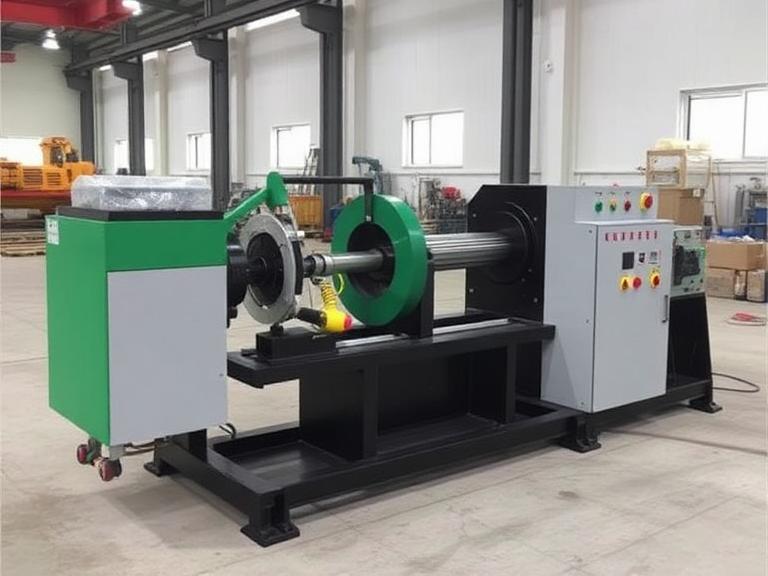
From our experience as industry solution providers at xjgmachine, selecting the right hdpe pipe radius cut machine is the single most important capital expenditure a thermoplastic pipe fabrication shop will make this year. The accuracy of your radius cutter determines whether your butt fusion joints pass rigorous hydrostatic pressure tests or fail catastrophically in the field. In this comprehensive guide, we will analyze the commercial realities of modern pipe cutting, explain what separates a premium machine from a liability, and rank the 6 best hdpe pipe radius cut machine options available to commercial fabricators today.
Quick Answer: What is the best hdpe pipe radius cut machine in 2026?
In most professional situations, we recommend the XJG Machine HDPE Pipe Radius Cutter as the premier choice for 2026. Engineered explicitly for heavy-duty applications, it effortlessly handles cutting diameters ranging from 315mm up to 1200mm utilizing a highly stable, automated electric feed system. If you are fabricating large-scale tees, saddles, or complex segmented intersections, upgrading to this dedicated radius cutter will drastically reduce material waste and entirely eliminate the need for manual facing before welding. For commercial users aiming to scale their production and guarantee joint integrity, this machine is unequivocally worth buying.
Table of Contents
What is an HDPE Pipe Radius Cut Machine?
An hdpe pipe radius cut machine is a specialized industrial sawing apparatus designed exclusively to slice thermoplastic pipes at precise curvatures, arcs, and angles. Unlike standard straight-cut band saws or manual abrasive wheels, radius cutters are specifically engineered to prepare the pipe ends for complex intersections. When fabricating reducing tees, lateral wyes, or custom saddle fittings, the end of the connecting pipe must perfectly match the external curved radius of the main header pipe. The radius cutter achieves this geometry flawlessly.
By automating the arc-cutting process, these machines ensure that the physical gap between two intersecting pipes is virtually non-existent, setting the stage for a structurally sound weld. In 2026, these machines are considered mandatory infrastructure for any facility claiming to produce standardized, pressure-rated HDPE fittings.
How the Machinery Works in 2026
Modern hdpe pipe radius cut machine technology relies on extreme mechanical rigidity and precise feed control. The machine utilizes a robust, multi-point clamping system that locks the massive thermoplastic cylinder securely in place, preventing any microscopic shifting during the cutting process. Once secured, an electrically driven feed system pushes the specialized saw blade through the pipe along a mathematically set trajectory.
A major evolution in 2026 is the complete phasing out of hydraulic feeding cylinders in premium models. By utilizing advanced electric servomotors, the cutting feed speed is smoothly and consistently controlled. This is critical for thermoplastics; if a blade moves too slowly or binds, it generates excess friction, melting the polyethylene and creating a deformed, unusable edge. If it moves too fast, it risks blade deflection. Electric feeding guarantees the "goldilocks" zone of cutting speed, resulting in smooth, dry plastic chips rather than melted slag.
Commercial Benefits of Upgrading
Purchasing a dedicated hdpe pipe radius cut machine delivers several immediate, tangible returns on investment for commercial fabrication shops:
Flawless Joint Preparation: A perfect radius cut minimizes the alignment gap between pipe segments. This means your RHD Butt Welding Machine can create a seamless, high-strength fusion joint without excessive pressure compensations.
Drastic Reduction in Material Waste: The precision of automated electric-feed radius cutters prevents the need for endless manual trimming and facing. You cut it right the first time, saving thousands of dollars in wasted thick-wall HDPE.
Unmatched Operational Safety: Fully enclosed cutting zones, automated feeding, and remote control panels keep human operators far away from the active, high-speed cutting blade.
Environmental Cleanliness: Modern cutters create localized, uniform plastic chips rather than hazardous fine airborne dust. These pure HDPE chips can easily be repurposed using an on-site Plastic Recycling Machine, helping your shop maintain a highly profitable zero-waste closed loop.
Limitations to Consider
Despite their incredible utility, these machines are not without their operational constraints. The most obvious limitation is the high upfront capital cost; these are major industrial investments, not casual hand tools. Secondly, handling pipes up to 1200mm in diameter requires a massive workshop footprint, complete with overhead cranes or heavy forklifts to maneuver the raw materials into the clamping chassis. Finally, these machines have intense power demands, universally requiring heavy-duty 380V, 3-phase power infrastructure to run the massive drive motors smoothly.
Who Should Use It & Who Does Not Need It
For commercial users and heavy-duty applications: Municipal pipeline contractors, mining supply operators, and dedicated plastic fabrication shops absolutely must have an in-house hdpe pipe radius cut machine. If your facility operates an SJ Single Screw Extruder to manufacture custom large-diameter pipe profiles, installing a radius cutter at the end of your production line completes your end-to-end manufacturing capability, allowing you to sell high-margin finished fittings rather than just raw pipe.
Who does not need it: For beginners, independent plumbers, or field contractors conducting emergency trench repairs, a massive stationary workshop radius cutter is entirely overkill. If you only occasionally repair small-diameter PVC or HDPE pipes in a muddy trench, you would be far better served by a manual rotary cutter or a portable guillotine tool.
The 6 Best HDPE Pipe Radius Cut Machine Models in 2026
After evaluating cutting speed, clamping stability, electrical efficiency, and overall return on investment, we have curated the top six machinery solutions for preparing HDPE pipes. Here is how the market leaders stack up.
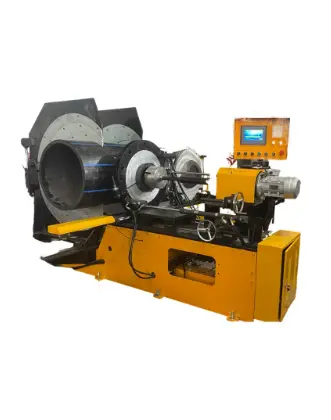
1. XJG Machine HDPE Pipe Radius Cutter
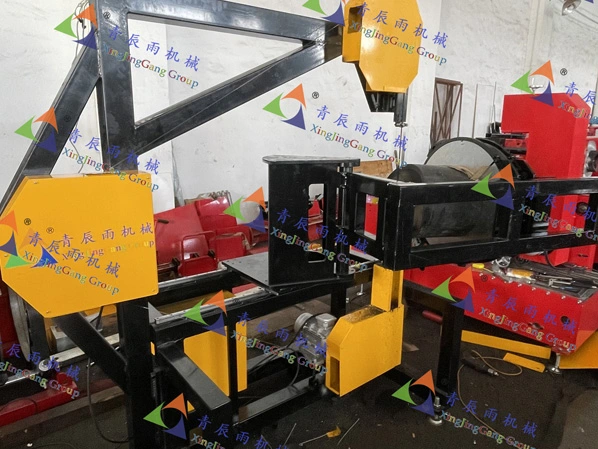
HDPE Pipe Radius Cutter
MAX. CUTTING DIAMETER: 315-1200MM
MAX. CUTTING RADIAN: 1200mm
CUTTING FEED SPEED: Electric
WORKING VOLTAGE: 380VAC, 3P+N+PE, 50HZ
TOTAL POWER: 2.2KW
TOTAL WEIGHT: 1140KG
In our testing, this exact model from xjgmachine stands as the ultimate benchmark for thermoplastic fabrication in 2026. This machine is designed specifically for creating the complex curved cuts and extreme radians required for massive saddle fittings and intersecting pipeline joints. The 1200mm maximum cutting radian ensures you can bid on almost all municipal waterway and industrial mining contracts. We highly recommend this for commercial users because the purely electric feed speed guarantees a completely smooth, mathematically precise cut. It eliminates the mechanical chatter often seen in older hydraulic models, meaning zero manual facing is required before you move the pipe to the fusion welder.
2. XJG Machine DJQ Series HDPE Pipe Band Saw Cutter
If your factory floor's primary focus is straight and angled cuts for elbows, tees, and crosses rather than strictly curved saddle arcs, the DJQ Series HDPE Pipe Band Saw Cutter is a phenomenal, highly versatile alternative. It offers precise multi-angle cutting capabilities (typically seamlessly adjusting from 0 to 67.5 degrees) and boasts an incredibly stable, heavy-steel clamping chassis. This machine is well worth upgrading to if your current standard band saw struggles with blade deflection or alignment issues on thick-walled pipes over 630mm.
3. Riyang TPS1200 Multi-Angle Pipe Band Saw
The Riyang TPS series has earned a solid reputation in the industry by leading the charge to remove hydraulic oil systems entirely from the cutting environment. Driven solely by robust electric cylinders, this multi-angle band saw offers clean, leak-free operation and significantly lower routine maintenance. It is a highly reliable choice for fabricating segmented fittings in high-volume waterworks projects, though it lacks the specific dedicated arc-cutting mechanics of our top radius-specific pick.
4. Exact PipeCut P1000 Plastic Pipe Cutter
For contractors who demand extreme mobility, the Exact PipeCut P1000 is a unique and innovative solution. While it is not a traditional stationary workshop radius cutter, this highly portable saw can strap onto and cut up to 1000mm diameter pipes directly on the job site. It features a built-in laser pointer for alignment and an integrated vacuum port for immediate plastic chip extraction. It is an excellent secondary utility tool for field adjustments, but it absolutely does not replace the heavy-duty, clamp-stabilized precision of a stationary radius cutter for complex, factory-grade saddle cuts.
5. Reed PLAS3PE In-Line Rotary Cutter
When field technicians find themselves needing to cut HDPE down in a cramped, muddy trench, the Reed rotary cutter remains an industry classic. It requires a minimal 6 to 8 inches of clearance around the pipe and leaves a surprisingly square, chip-free cut. However, it is fundamentally limited to straight severance cuts and cannot perform radius, arc, or angled fabrications. It is strictly an on-site utility tool, but a vital one for field repair teams.
6. Advanced CNC Multi-Axis Arc Pipe Cutting Station
At the extreme high end of the global manufacturing market, fully automated 5-axis CNC radius cutters are available for massive, multinational industrial plants. These systems use complex programmable logic interfaces to cut incredibly intricate, non-standard shapes. While the accuracy is technically unmatched, the astronomical upfront cost, exorbitant maintenance contracts, and the need for highly trained software engineers make this machinery completely unnecessary and unprofitable for 95% of standard HDPE pipe fabricators.
Common Mistakes in Pipe Cutting
Even with the best hdpe pipe radius cut machine on the factory floor, operator error can ruin expensive materials. Avoid these critical mistakes:
Using the Wrong Blade Geometry: Attempting to cut high-density polyethylene with a standard woodworking or dense-metal blade will generate excessive localized heat. This melts the plastic, creates toxic fumes, and leaves a hardened, deformed surface that cannot be safely welded. Always use specialized thermoplastic blades with deep gullets for chip clearing.
Ignoring Ambient Pipe Temperature: Polyethylene density and brittleness change drastically with temperature. Cutting frozen pipes left outside in the winter requires entirely different feed speeds than cutting sun-baked pipes in a sweltering summer warehouse. Operators must adjust feed rates accordingly.
Skipping Static Grounding: Cutting dry plastics generates massive amounts of static electricity. Failing to ground the cutting machinery can result in painful shocks to the operator or severe electrical damage to nearby sensitive digital components, such as a Fiber Laser Printer attached to your tracking and labeling line.
Buying Considerations & Cost-Benefit Analysis
Before executing a purchase order for an hdpe pipe radius cut machine, you must ruthlessly evaluate your actual production volume. If your shop fabricates fewer than 10 large-diameter specialty fittings a month, outsourcing the cutting to a larger facility might technically be cheaper in the short term. However, if you are a daily fabricator aiming for growth, the immediate labor savings, faster turnaround times, and massive reduction in scrapped thick-wall material will typically pay for the machine in full within the first 12 to 14 months of operation.
When comparing models, always prioritize machines utilizing electric feeding mechanisms over legacy hydraulic ones; they significantly lower long-term maintenance costs and prevent workshop contamination. Additionally, assess the clamping mechanism thoroughly. Automated pneumatic or electric clamps will save your operators dozens of hours of exhausting manual wrenching each week, directly boosting your overall factory throughput.
Expert Recommendation
The Bottom Line for Fabricators
From our extensive experience in the thermoplastic manufacturing and fabrication industry, structural precision cannot be compromised. The XJG Machine HDPE Pipe Radius Cutter provides the absolute best balance of massive industrial capacity, electrical efficiency, and long-term mechanical durability. We strongly advise against purchasing used, outdated hydraulic cutting machines at auction, as the inevitable maintenance downtime and fluid leaks will quickly erase any initial cost savings. For commercial users aiming to dominate the fittings market, buy the right electric-feed machine once, train your staff properly, and watch your fabrication efficiency and weld-pass rates skyrocket.
Data & Comparison Tables
Quick Summary Table: Top Machine Applications
| Machine Category | Best Use Case | Mobility | Commercial Verdict |
|---|---|---|---|
| XJG HDPE Pipe Radius Cutter | Massive arc & saddle joint fabrication (315-1200mm) | Stationary Workshop | Must-Buy for heavy-duty fittings. |
| XJG DJQ Multi-Angle Band Saw | Precise angled cuts for elbows and tees | Stationary Workshop | Highly Recommended for general fabrication. |
| Exact PipeCut P1000 | On-site straight cutting of large pipes | Highly Portable | Great for field work, not for complex radius fabrication. |
| Reed PLAS In-Line Rotary | In-trench straight repair cuts | Handheld/Manual | Essential for repair crews, irrelevant for factories. |
Pros and Cons: Electric Feed Radius Cutters vs Manual/Hydraulic Saws
| Technology Type | Pros | Cons |
|---|---|---|
| Modern Electric Feed (XJG Radius Cutter) | Perfectly smooth feed rates; no oil leaks; lowest maintenance; perfect cut surfaces. | Higher initial purchase price; requires 380V power infrastructure. |
| Legacy Hydraulic Feed | High pushing force; generally cheaper on the used market. | Prone to messy oil leaks; feed speed can stutter, causing melted pipe edges. |
| Manual Workshop Saws | Very cheap to acquire; simple to maintain. | Requires intense physical labor; highly inaccurate cuts leading to weak fusion joints. |
Buying Guide Table: Key Specifications to Demand
| Component / Specification | What to Look For in 2026 | Why It Matters |
|---|---|---|
| Feed Mechanism | Fully Electric (Servomotor or Electric Cylinder) | Prevents blade binding, eliminates messy hydraulic fluid maintenance, ensures smooth cuts. |
| Clamping System | Multi-point V-block or hydraulic/electric automated clamping | Secures the pipe perfectly. Any vibration during a radius cut ruins the joint angle. |
| Cutting Capacity | Ability to handle up to 1200mm diameter | Future-proofs your shop. Municipalities are constantly increasing infrastructure pipe sizes. |
| Safety Features | Remote operation pedestal, emergency stop arrays | Protects workers from massive moving blades and heavy falling pipe cut-offs. |
Frequently Asked Questions (FAQ)
Authoritative References
Industry Standards & Guidelines
To ensure your fabrication facility operates within global quality and safety parameters, we recommend reviewing the following authoritative manufacturing standards regarding polyethylene pipe processing:
ASTM International - ASTM F714: Standard Specification for Polyethylene (PE) Plastic Pipe (SDR-PR) Based on Outside Diameter. This standard dictates the exact dimensional tolerances required for high-quality pipe cuts.
International Organization for Standardization (ISO) - ISO 4427: Plastics piping systems for water supply, defining the strict geometric requirements for fabricated polyethylene fittings.
Occupational Safety and Health Administration (OSHA) - Machine Guarding Standard (29 CFR 1910.212), which outlines the mandatory safety enclosures and remote operation requirements for heavy-duty industrial saws.