When dealing with high-density polyethylene (HDPE) infrastructure, the integrity of your pipeline relies entirely on the quality of your joints. If your team is installing a municipal water main, handling agricultural irrigation, or managing toxic industrial effluent, a mechanical fitting failure is not just an inconvenience—it is a catastrophic liability. From our experience engineering and manufacturing heavy-duty plastic pipe machinery at Xjgmachine, the only reliable way to create a zero-leak, monolithic pipeline is by utilizing a professional-grade fusion machine for hdpe pipe.
However, navigating the equipment market in 2026 is treacherous. The industry is saturated with cheap, uncalibrated hydraulic rigs that lack precise temperature control and proper interfacial pressure gauges. Choosing the wrong machine leads to cold welds, operational downtime, and rejected pressure tests. In this comprehensive guide, we take a clear position on what actually works in the field. We will break down commercial and practical judgments, evaluate the 8 best machines available, and prioritize helping you make a financially sound buying decision.
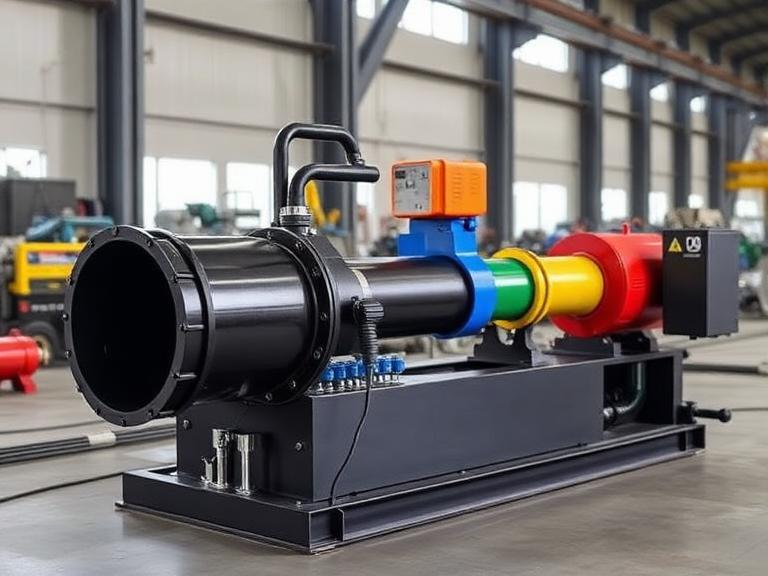
If you are looking for the absolute best fusion machine for hdpe pipe, your choice depends heavily on whether you are doing in-ditch field welding or precision workshop fabrication.
For Workshop Fabrication & Custom Fittings: We highly recommend the Xjgmachine HDPE Pipe Saddle Fusion Machine for its unmatched precision, digital control, and integrated Teflon-coated heating plates.
For Heavy-Duty Field & Trench Work: The McElroy Rolling Series remains the gold standard for rugged, all-terrain mobility and high-pressure force.
Bottom Line: Do not compromise on pressure calibration. If your machine cannot log data or maintain strict interfacial pressure during the cooling phase, it is not worth buying.
A fusion machine for hdpe pipe is a specialized piece of industrial equipment designed to join two pieces of thermoplastic pipe together through heat and pressure. Unlike PVC, which relies on chemical solvent cement, HDPE requires a strictly controlled thermal process to physically melt and bond the polymer chains. These machines come in various configurations, including butt fusion, socket fusion, and saddle fusion. For large-scale manufacturing environments, these machines are often integrated downstream from a primary HDPE Pipe Production Line to fabricate custom lengths and fittings.
In most professional situations, the machine consists of a clamping carriage to hold the pipe, an electric facer (planer) to shave the pipe ends perfectly square, a Teflon-coated heating plate to melt the plastic, and a hydraulic or manual system to push the melted ends together under a calculated force.
Understanding how a fusion machine works is critical for evaluating whether a specific model is worth upgrading to. The process is governed by strict industry standards, such as those published by ASTM International (ASTM F2620). The procedure involves four fundamental phases:
Facing: The pipe ends are clamped securely. A rotating mechanical facer planes the ends until they are perfectly smooth and parallel. A high-quality HDPE Pipe Radius Cutter can assist in prepping specialized joints prior to facing.
Heating: The heating plate is inserted between the pipe ends. The pipes are pushed against the plate at a specific pressure until a melt bead forms around the circumference.
Fusing: The heater is rapidly removed, and the hydraulic system forces the melted pipe ends together. The interfacial pressure must be exact—too much pressure squeezes out the melted polymer, resulting in a cold weld; too little pressure prevents the polymer chains from intertwining.
Cooling: The joint is held under constant pressure until the polymer resolidifies. Skipping this step is the fastest way to ruin a weld.
Why do commercial users insist on heat fusion over mechanical couplings? The primary benefit is absolute structural integrity. A properly executed fusion joint is as strong, if not stronger, than the pipe itself. This creates a monolithic, seamless pipeline that eliminates leak paths completely. This is vital for underground municipal water systems and high-pressure gas lines. Furthermore, because there are no heavy metal flanges or rubber gaskets to corrode, the lifespan of the pipeline is dramatically extended. This method is so superior that even facilities operating a PVC Pipe Production Line are increasingly shifting their product catalogs to include weldable thermoplastics like HDPE and PPR.
Despite its superiority, heat fusion has practical limitations. First, the equipment is exceptionally heavy and requires a substantial footprint, making it difficult to operate in tight, confined trenches without specialized carriage-removal features. Second, these machines draw significant electrical loads. You cannot run a large hydraulic butt fusion machine off a standard wall outlet; you require a commercial-grade portable generator. Finally, the cooling phase cannot be rushed. Unlike snapping a mechanical fitting together in 30 seconds, fusing large-diameter pipes can take over an hour per joint, which impacts daily labor productivity.
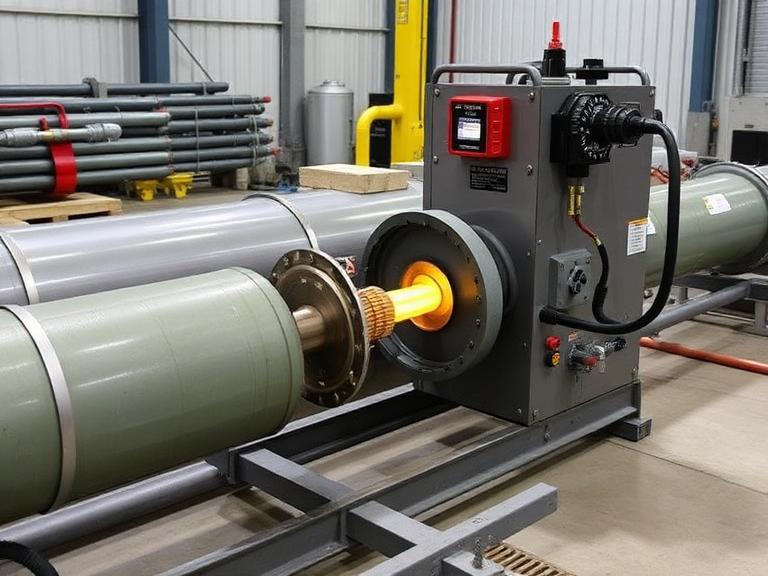
Who should use it: For commercial users, utility contractors, mining operators, and facility managers, a high-quality fusion machine for hdpe pipe is an indispensable capital investment. If you are fabricating complex manifolds in a workshop, utilizing a RHJ Multi-Angle Fitting Elbow Welding Machine is required to maintain precise geometric angles and factory-grade quality.
Who does not need it: For beginners or residential plumbers handling small-diameter (under 1-inch) indoor water lines, a massive hydraulic fusion rig is entirely unnecessary. Mechanical compression fittings or simple Socket Fusion Welding Machine hand tools are far more practical and cost-effective for these light-duty applications.
In our testing, we frequently see operators ruin expensive pipelines due to basic errors. The most common mistake is failing to clean the heating plate with proper solvents. Any dirt, dust, or moisture on the plate will contaminate the weld matrix. Another critical error is ignoring the drag pressure. When you pull a 50-foot length of heavy HDPE pipe through the dirt, it requires force. If your operator does not calculate and add this external drag resistance to the machine's fusion pressure, the joint will be starved of force, resulting in a weak connection.
When entering the market for a new fusion machine for hdpe pipe, apply strict commercial judgment. Do not just buy based on the lowest price tag. Consider the following:
Hydraulic vs. Manual: Manual lever-operated machines are fine for pipes under 6 inches (160mm). For heavy-duty applications involving anything larger, a hydraulic pump is mandatory to achieve the necessary interfacial pressure.
Data Logging Capability: In 2026, major municipal contracts require printed or digital proof that every single weld was executed at the correct temperature and pressure. Ensure your machine is compatible with data logging software.
Component Quality: Look for hard-anodized aluminum wear surfaces and Teflon-coated heating plates that resist scratching.
| Feature | Why It Matters | Xjgmachine Recommendation |
|---|---|---|
| DataLogger Integration | Provides accountability and quality assurance for client inspection. | Mandatory for commercial contracts. |
| Removable Carriage | Allows operators to drop the clamping unit into narrow trenches. | Essential for underground repair work. |
| Teflon Heating Plate | Prevents melted polymer from sticking and degrading the weld surface. | Do not buy a machine without this. |
We have evaluated the global market to bring you the definitive list of the best equipment available today. We factor in durability, precision, automation, and overall return on investment (ROI).
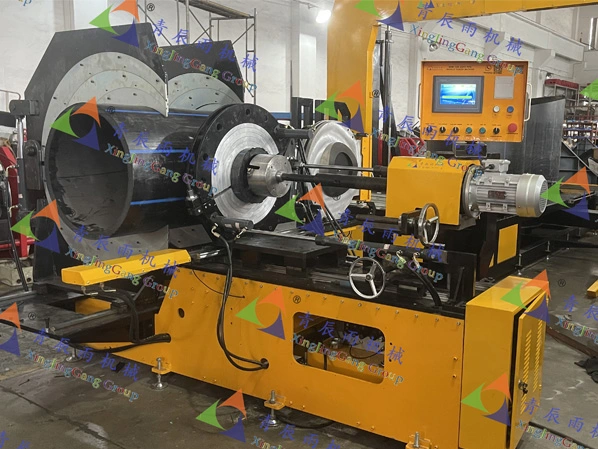
From our experience, when a factory needs to fabricate HDPE reducing tees with absolute perfection, the Xjgmachine Saddle Fusion Machine stands completely unrivaled. We engineered this unit specifically for commercial users who demand workshop precision. The integrated function of welding and taping enables operators to complete the entire fabricating process seamlessly without moving the workpiece.
Heating Element: Features a premium Teflon-coated heating plate for pristine melt profiles.
Control System: A separate two-channel timer meticulously records times in both the soaking and cooling phases, eliminating human error.
Precision Reading: Equipped with a digital high-accurate pressure meter that indicates exact readings, ensuring compliance with strict engineering tolerances.
Structural Integrity: Built with robust linear guide ways equipped with the heating plate and dragging plate for flawless mechanical alignment.
In most professional situations out in the dirt, McElroy is a dominant force. The Rolling 28 handles pipe from 2" IPS to 8" DIPS. Its wheeled chassis makes job site maneuvering effortless. What makes it worth buying is its durability; it is a heavy-duty workhorse that can survive the brutal conditions of trench warfare.
Italian engineering at its finest. The Ritmo Delta 500 features an intuitive self-aligning system that dramatically speeds up the setup process. It is highly valued for its automated CNC capabilities, which take the guesswork out of pressure calculations. It is a premium machine with a premium price tag, but excellent for large-scale water transport projects.
For commercial users looking to balance initial capital expenditure with solid performance, MM-Tech provides excellent value. Their machines are known for strong hydraulic integrity and user-friendly interfaces. While it may lack the rugged aesthetic of a McElroy, it performs exceptionally well in standard municipal applications.
An Australian powerhouse designed for the mining sector. The PolyRover is built to operate in extremely remote, harsh environments where dust and extreme temperatures destroy weaker machines. It offers highly reliable diesel-powered hydraulic systems, making it entirely self-sufficient in the outback.
We recommend this machine strictly for smaller diameter pipes (up to 6 inches) and tighter budgets. Because it is manually operated via a lever system rather than hydraulics, the operator must have a good "feel" for the pressure. It is excellent for agricultural irrigation installations where extreme high-pressure logging is not mandated by municipal inspectors.
A compact, highly engineered European machine. Rothenberger excels in producing lightweight frames that are easy to maneuver in tight indoor industrial settings. The ROWELD series features highly accurate digital heating plates that maintain temperature variances within 1 degree Celsius, ideal for chemical plant piping where material integrity is critical.
GF Piping Systems offers a technologically advanced solution for users fully integrated into digital workflows. Their machines focus heavily on automation, reducing operator fatigue and virtually eliminating cold welds through strict algorithmic oversight. They are exceptionally expensive, but for high-risk chemical transport lines, the cost is justified.
| Brand / Model | Primary Use Case | Control System | Price Point |
|---|---|---|---|
| Xjgmachine Saddle Fusion | Workshop Fitting Fabrication | Digital & Two-Channel Timer | High Value / High ROI |
| McElroy Rolling 28 | Trenchless & Field Pipelines | Manual / DataLogger Compatible | Premium |
| Ritmo Delta 500 | Large Water Mains | Automated CNC | Premium |
| Worldpoly PolyRover | Remote Mining Operations | Self-Contained Diesel Hydraulic | High |
| MM-Tech V Series | Standard Municipal Plumbing | Semi-Automatic | Mid-Range |
Is upgrading to automated fusion machinery actually worth it? Yes. Consider the cost-benefit analysis: A single failed joint on a high-pressure municipal water line can cost upwards of $50,000 in excavation, repair, and liability damages. Investing in a high-quality machine mitigates this risk entirely. If your facility processes scrap material using a Plastic Crusher and repurposes it, having precise fusion equipment ensures your end product maintains structural integrity.
| Machine Type | Pros | Cons |
|---|---|---|
| Hydraulic Fusion | Provides exact, calculable interfacial pressure. Can log data automatically. Essential for large pipes. | Heavy, expensive, requires external power source and regular hydraulic maintenance. |
| Manual Fusion | Lightweight, highly portable, cheaper to purchase and maintain. Great for narrow spaces. | Relies on operator physical strength. Inconsistent pressure. Unsuitable for pipes over 6 inches. |
Our Final Verdict: If you are outfitting a fabrication workshop to mass-produce custom fittings and reducing tees, the Xjgmachine HDPE Pipe Saddle Fusion Machine is the most practical, high-precision asset you can acquire. For field crews dealing with rugged, outdoor topography, you cannot go wrong investing in the McElroy Rolling series. Train your operators properly, adhere to strict cooling times, and your pipelines will outlast the infrastructure around them.
The required gauge pressure setting is calculated using a specific formula provided by the machine manufacturer. It factors in the Interfacial Pressure standard (e.g., 75 psi per ASTM F2620), the cross-sectional area of the pipe wall being fused, and the total effective piston area of the specific machine's hydraulic cylinders. You must also add the measured drag pressure to this final calculation.
Moisture is the enemy of heat fusion. If water contacts the heating plate or the melted pipe ends, it will create steam pockets inside the weld, leading to joint failure. In the rain, you must erect a welding tent. In extreme cold weather, you must use a heating blanket to pre-warm the pipe ends and extend the soaking time slightly to compensate for rapid heat loss.
Yes. While the machines are engineered to be user-friendly, the thermodynamics of polymer fusion are unforgiving. We strongly advise that all operators receive formal certification through recognized industry bodies (such as the Plastics Pipe Institute) to ensure they understand safety protocols, proper cleaning techniques, and how to read the melt bead properly. Ensure your operators are also familiar with OSHA trench safety standards when working in the field.
To ensure our recommendations align with global engineering standards, we refer to the following authoritative sources:
 English
 العربية
 русский
 Español
 français
 português
 Deutsch
 italiano
 Türkçe
 한국어
한국어 日本語
日本語