The desktop manufacturing revolution has an undeniable waste problem. Every year, thousands of tons of PLA, ABS, and PETG end up in landfills, originating from failed prints, support structures, purge towers, and empty spools. To build a sustainable, closed-loop workflow, makerspaces and commercial print farms are increasingly turning to in-house recycling. From our experience, the absolute critical first step in this process is acquiring reliable plastic shredder machines for 3d printing. You cannot simply feed large, irregular chunks of plastic into a filament extruder; the material must be uniformly reduced to 3mm to 6mm flakes to ensure consistent melting and extrusion.
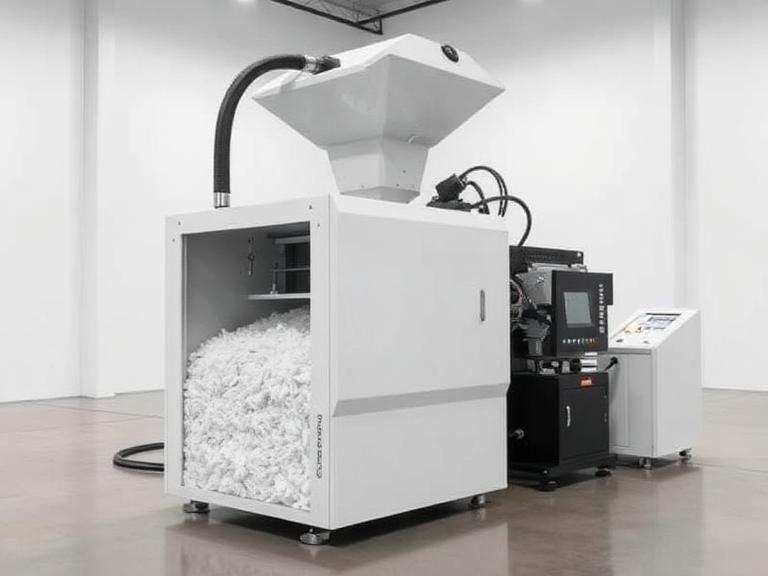
However, processing solid thermoplastic requires immense torque and specialized blade profiles. A standard kitchen blender or cheap wood chipper will either jam immediately or shatter dangerously when introduced to high-infill polycarbonate or tough PETG. We recommend investing exclusively in purpose-built plastic shredder machines for 3d printing. In this comprehensive guide, we will evaluate the top hardware available in 2026, breaking down their processing capacity, safety features, and industrial viability, so you can transform your scrap bins into valuable raw material.
Converting a failed 3D print back into usable filament is a precise science. The quality of your extruded filament is entirely dependent on the consistency of your input material. If your flakes are too large, the extruder auger will jam. If your flakes are reduced to microscopic dust, the material can burn and degrade inside the heating barrel. The best plastic shredder machines for 3d printing utilize a two-stage cutting process—often combining shredding and granulating—to force the plastic through a sizing screen. This guarantees that only flakes of the exact optimal size exit the machine.
Furthermore, safety is a paramount concern. High-torque shredding can eject sharp plastic shards at dangerous velocities. Industrial-grade plastic shredder machines for 3d printing feature heavy-duty hoppers, automatic jam-reversal systems, and interlock switches that immediately cut power if the machine is opened. Attempting to DIY a shredder without these safeguards is a severe liability.
Based on motor torque, blade durability, particle consistency, and overall value, we have compiled the definitive list of the best plastic shredder machines for 3d printing available on the market today.
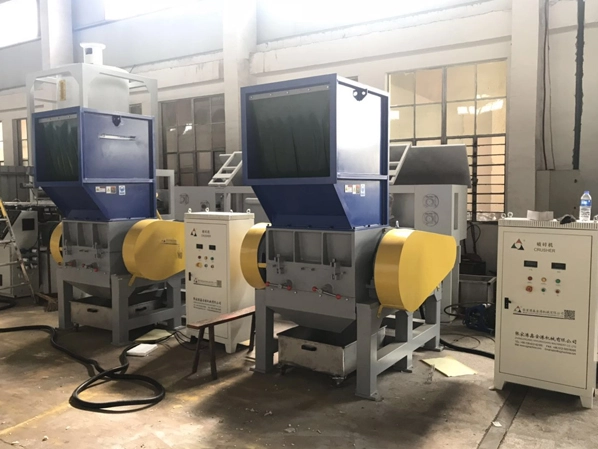
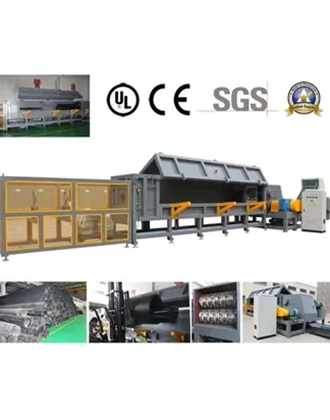
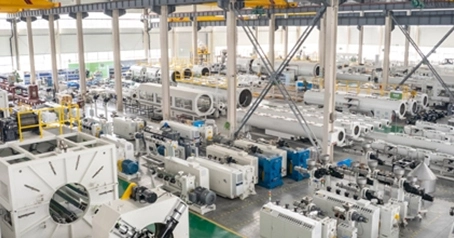
When you transition from a hobbyist setup to a commercial print farm, desktop units quickly become a bottleneck. We highly recommend the Xjgmachine plastic shredder for operations that require uncompromising reliability and continuous throughput.
The 3devo GP20 is a staple in university laboratories and R&D environments. It is one of the most sophisticated plastic shredder machines for 3d printing, combining a shredder and granulator into a single workflow. Operating with a dual-motor configuration delivering 1500 watts of power, it features sensor-based control that automatically adapts the feeding speed based on material resistance, effectively eliminating jams while producing flawless flakes.
For makers looking for cutting-edge technology, the Polystruder GR PRO is the only machine on this list featuring machine learning capabilities. Its proprietary "ShredAI" algorithm reads data from internal sensors to detect material hardness, automatically adjusting the 300W brushless DC motor's speed and torque in real-time. With 19 double-sided stainless steel blades, it operates remarkably quietly (under 75 dBA) and processes up to 5kg per hour.
Felfil has built a strong reputation in the desktop recycling space with their Italian-designed equipment. The Felfil Shredder+ is incredibly compact and features "Intellishred" technology to prevent motor burnouts. Utilizing 12 replaceable stainless steel blade profiles, it provides an accessible entry point for home users, capable of processing up to 4kg of material per hour with a single-button interface.
Recently launched alongside their M1 Filament Maker, the Creality Shredder R1 is bringing closed-loop recycling to the mainstream desktop market. As one of the most highly anticipated plastic shredder machines for 3d printing, the R1 is designed to reduce waste into uniform particles of ≤4 mm. While still relatively new, its integration into the broader Creality ecosystem makes it a highly attractive option for brand loyalists.
If you need a reliable workhorse for a mid-sized makerspace, the Energycle Mini hits the sweet spot between price and performance. It is designed specifically to chew through 3D printing waste and bottle caps, outputting a consistent 3mm to 6mm regrind at a rate of 1 to 5 kg/h. It lacks the advanced AI of the Polystruder, but its raw mechanical simplicity makes it highly durable.
Filabot is a pioneer in the desktop filament recycling industry. Their Reclaimer unit is built like a tank, designed to break down dense PLA and ABS prints without hesitation. It is a heavier, more industrial-leaning desktop unit that has stood the test of time, proving itself as one of the most reliable plastic shredder machines for 3d printing available over the last decade.
The SHR3D IT takes a heavy-duty approach by integrating both a shredder and a granulator. By forcing the plastic through a two-stage reduction process, it guarantees that no oversized chunks make it into your filament extruder. It is a premium option, favored by businesses that cannot afford any downtime caused by inconsistent flake sizes.
We believe in recognizing the grassroots maker community. The ExtrudeX is a fully open-source, 3D-printable DIY filament recycling machine. While you will need to source your own motor, shaft, and laser-cut metal blades, this project represents the most cost-effective way to acquire a functional shredder. It requires significant technical skill to assemble safely, but it is an incredible educational tool.
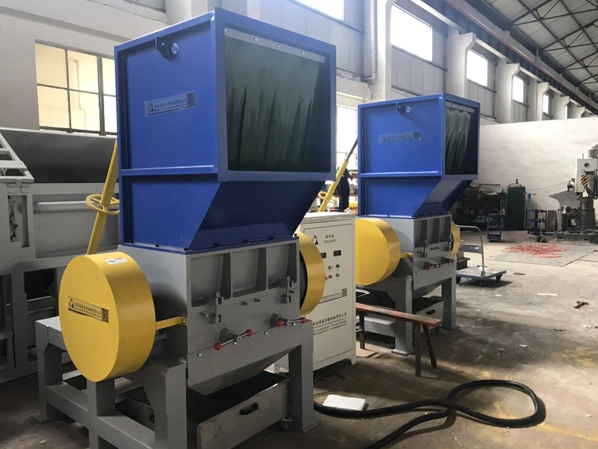
From our experience, once a business realizes the financial benefits of recycling their scrap plastic, they rapidly outgrow desktop equipment. The leap from processing 2kg an hour to 50kg an hour requires serious infrastructure. When upgrading your facility, you might transition from desktop plastic shredder machines for 3d printing to a fully automated Plastic Recycling Machine. For manufacturers dealing with diverse extrusion needs, pairing your high-capacity shredder with a professional Plastic Extruder ensures your reclaimed flakes become perfect, high-tolerance filament.
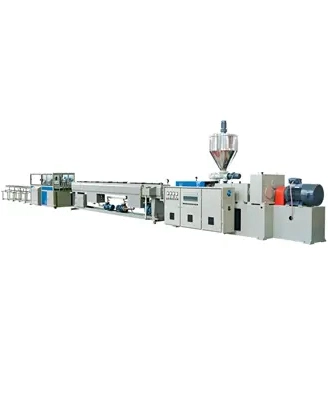
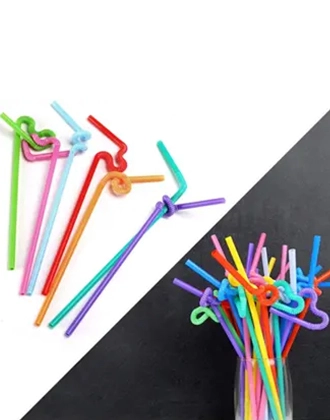
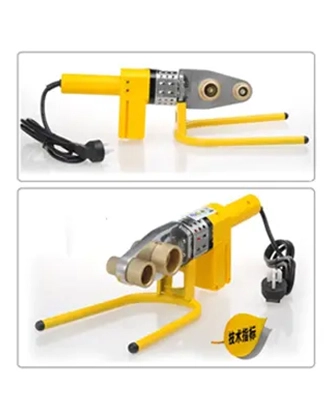
At Xjgmachine, we understand industrial scaling. We do not just build shredders; our engineering expertise spans across heavy-duty equipment like the HDPE Pipe Butt Welding Machine and comprehensive Plastic Pipe Production Line systems. We also engineer specialty machinery, from the precision Fiber Laser Printer used for part marking, to the Plastic Straw Making Machine, high-output Rubber Extrusion Line equipment, and even massive Dredging Products. This extensive industrial pedigree guarantees that when you purchase our plastic shredder machines for 3d printing, you are acquiring hardware built to withstand relentless commercial punishment.
| Machine Model | Ideal Use Case | Key Feature | Throughput / Capacity |
|---|---|---|---|
| Xjgmachine Plastic Shredder | Commercial Print Farms & Industry | Soundproof, Hydraulic Station, Rotor Lock | High-Volume / Industrial |
| 3devo GP20 | Laboratories & R&D Teams | Dual 750W Motors, Automated Feed | Mid-Volume |
| Polystruder GR PRO | Advanced Makerspaces | ShredAI Machine Learning, 19 Blades | Up to 5 kg/h |
| Felfil Shredder+ | Home Offices & Desktop Users | Compact footprint, Intellishred tech | Up to 4 kg/h |
| Creality Shredder R1 | Hobbyists inside Creality Ecosystem | Integrated with M1 Filament Maker | Entry-Level Volume |
| Energycle Mini | Workbenches & Small Studios | Reliable 3-6mm regrind output | 1 to 5 kg/h |
Absolutely not. From our experience, consumer paper shredders and kitchen blenders lack the hardened steel blades and necessary motor torque to shear thick thermoplastics like PETG or ABS. Attempting to use them will result in burnt-out motors, shattered plastic shrapnel, and highly inconsistent flake sizes that will jam your filament extruder.
Yes, meticulous sorting is mandatory. You must separate your waste by polymer type (PLA, ABS, PETG, TPU). Mixing different plastics in your shredder will create a contaminated regrind batch. Because different polymers have vastly different melting temperatures, extruding mixed flakes will result in brittle, unusable filament that will immediately clog your 3D printer's hotend.
We recommend ensuring your plastic shredder machines for 3d printing are equipped with a sizing screen that outputs flakes between 3mm and 6mm. Flakes larger than 6mm struggle to feed smoothly into desktop extruder augers, causing inconsistent extrusion diameters. Conversely, microscopic dust can scorch easily and degrade the polymer chains during heating.
ScienceDirect: "Distributed recycling of 3D printing waste" - An academic evaluation of the mechanical properties of recycled PLA and the necessity of uniform shredding processes in distributed manufacturing.
All3DP: "The Best Filament Recyclers & Extruders" - Comprehensive industry journalism covering the latest advancements in desktop plastic shredding and closed-loop material extrusion technology.
 English
 العربية
 русский
 Español
 français
 português
 Deutsch
 italiano
 Türkçe
 한국어
한국어 日本語
日本語