Operating a polymer extrusion line is a delicate balancing act of thermodynamics, fluid mechanics, and mechanical engineering. When the balance is lost, your production floor becomes a graveyard of scrapped material and lost revenue. If you are reading this, you are likely standing next to a machine that is surging, overheating, or producing dimensionally unstable profiles. Stop guessing at the barrel temperatures. Diagnosing problems with Extruder Machines requires a systematic, analytical approach rather than randomly adjusting parameters.
From our experience engineering and servicing industrial extrusion lines at Xjgmachine, we know that 90% of extrusion failures stem from a handful of highly predictable mechanical and operational errors. Whether you are running a simple Plastic Pipe Production Line or dealing with complex, abrasive composites on a twin-screw setup, the physics of troubleshooting remain the same. In this expert guide, we will outline the eight most common problems with Extruder Machines, explain the underlying physics of why they happen, and provide concrete, actionable solutions to get your line back to peak profitability.
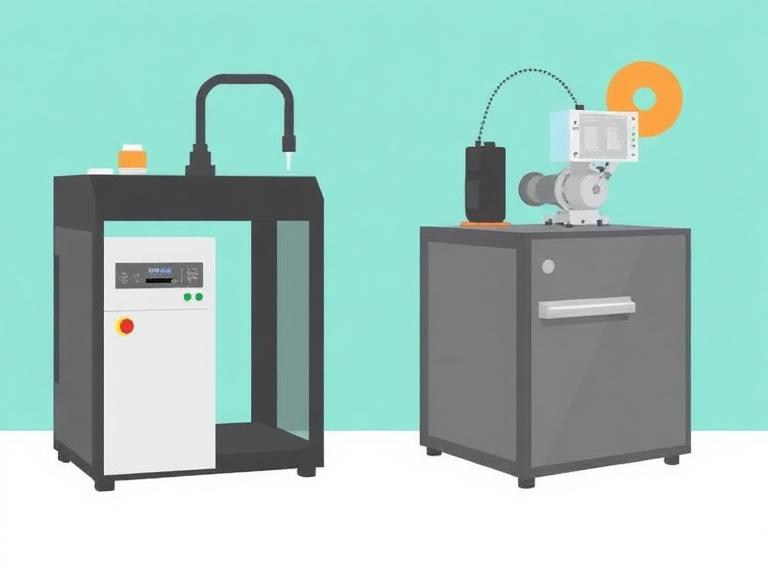
The most frequent problems with Extruder Machines are surging (unstable output), melt overheating, feed bridging in the hopper, unmelted particles (gels) in the extrudate, die drool, melt fracture (sharkskin), excessive screw/barrel wear, and motor overloads. The fundamental solution for most of these issues involves stabilizing the thermal profile across the barrel zones, matching the correct screw geometry to your specific polymer, and strictly adhering to preventative maintenance schedules. In most professional situations, we recommend conducting a thorough screw and barrel clearance check before modifying temperature profiles. If tolerances exceed OEM specifications by more than 0.5mm, it is often more cost-effective to replace the wear components or upgrade your Plastic Extruder entirely rather than fighting an unwinnable battle against mechanical degradation.
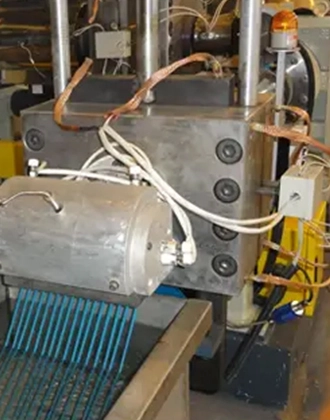
Before you can fix a problem, you must understand the environment. An extruder machine is essentially a high-pressure, heated Archimedes screw pump. Its primary function is to accept solid polymer pellets or powders, melt them through a combination of conducted heat (from barrel heaters) and generated shear heat (from the mechanical friction of the turning screw), and then force that homogeneous melt through a die to form a continuous shape.
The process is divided into three distinct zones inside the barrel: the feed zone, the transition (or compression) zone, and the metering zone. Problems with Extruder Machines generally isolate themselves into one of these three zones. If the feed zone is too hot, the plastic melts prematurely and blocks the throat. If the transition zone lacks proper compression, air becomes trapped, causing voids in the final product. If the metering zone is worn down, the melt is not pumped at a consistent pressure, leading to dimensional variations. Understanding this journey is the absolute foundation of diagnosing operational failures.
Surging is the erratic, pulsing flow of the polymer melt exiting the die. It causes unacceptable variations in product thickness and weight. From our experience, surging is almost always rooted in the feed zone. If the feed throat is not adequately cooled with a water jacket, the polymer pellets will soften and stick to the screw root rather than being pushed forward. This creates a "slip-stick" phenomenon.
The Solution: Verify that the cooling water flow to the feed throat housing is active and cold to the touch. Reduce the temperature of the first barrel zone slightly to prevent premature melting. If you are operating an SJ Single Screw Extruder, ensure your screw design has the correct flight depth for the bulk density of your specific resin.
When the polymer exits the die smoking, bubbling, or discolored, you are experiencing thermal degradation. Novice operators immediately turn down the barrel heater bands, only to find the problem persists. Why? Because the majority of the heat in an extruder is generated by mechanical shear, not the external heaters.
The Solution: If turning down the heaters does not lower the melt temperature, you must reduce the screw RPM to lower the shear friction. If the problem is chronic, your screw design is likely too aggressive (the compression ratio is too high) for your current resin. You may need to change to a lower-shear screw profile.
Seeing small, un-plasticized bumps in your final film, pipe, or profile means the polymer is not achieving a homogenous melt state before it exits the machine. This is one of the most frustrating problems with Extruder Machines because it directly impacts product aesthetics and structural integrity.
The Solution: Increase the back pressure. You can achieve this by adding a finer mesh screen pack behind the breaker plate. Higher back pressure forces the polymer to remain in the barrel slightly longer (increasing residence time) and increases mechanical mixing. Additionally, incrementally raise the temperatures in the transition zone.
If your machine is losing output capacity at the same RPM it used to run effortlessly, and your melt temperature is steadily rising, you are experiencing mechanical wear. For heavy-duty applications processing abrasive materials—such as those seen on a PA66 GF25 Polyamide Profile Thermal Break Strip Extrusion Line—glass fibers act like sandpaper against the steel.
The Solution: You must pull the screw and measure the flight outer diameter against the barrel inner diameter. Standard clearance is typically 0.001 inches per inch of barrel diameter. If the gap exceeds safety margins, the polymer will flow backward over the flights (leakage flow). You must either rebuild the screw flights or invest in a bimetallic, tungsten-carbide lined barrel for future abrasive runs.
Die drool is the accumulation of degraded polymer on the die face, which eventually breaks off and ruins the surface of the extruded product. It is often caused by low molecular weight fractions of the polymer separating under high shear stress at the die exit.
The Solution: Lower the melt temperature slightly. Ensure the die itself is properly heated; a cold die face causes the outer layer of the melt to drag and stick. In some cases, adding a fluoroelastomer Polymer Processing Aid (PPA) to the resin blend can coat the die wall and eliminate drool entirely.
If the extruder suddenly stops pumping material but the screw is still turning, look at the hopper. Feed bridging occurs when pellets melt and clump together directly above the feed screw, forming an arch or "bridge" that prevents new material from falling in.
The Solution: The feed throat cooling jacket has failed, or the ambient temperature in your facility is too high. Flush the cooling channels to remove scale and mineral buildup. If you are processing light, fluffy materials (like regrind), you may need to add a crammer feeder or force-feeding mechanism to mechanically push the material into the screw.
Melt fracture appears as a rough, matte, or "sharkskin" texture on the surface of the extrudate. It occurs when the shear stress at the die wall exceeds the critical shear strength of the polymer, causing the outer layer to tear as it exits the die.
The Solution: You must reduce the viscosity of the polymer or reduce the shear rate. Increase the die temperature by 5 to 10 degrees Celsius to help the polymer flow more smoothly. If you cannot increase the temperature due to degradation limits, you must slow down the line speed to reduce the sheer stress, or slightly open the die gap.
A motor drawing excessive current will eventually trip the safety breakers or burn out the drive entirely. This is a severe mechanical warning sign.
The Solution: Never force an extruder to start if it hasn't properly soaked in heat. The most common cause of motor overload is a "cold start," where solid plastic remaining in the barrel acts like concrete against the screw. Always allow the machine to heat soak for at least 30-45 minutes after reaching set temperatures. If the machine is fully heated and still overloading, check for a completely blinded screen pack or a bent screw causing metal-on-metal binding.
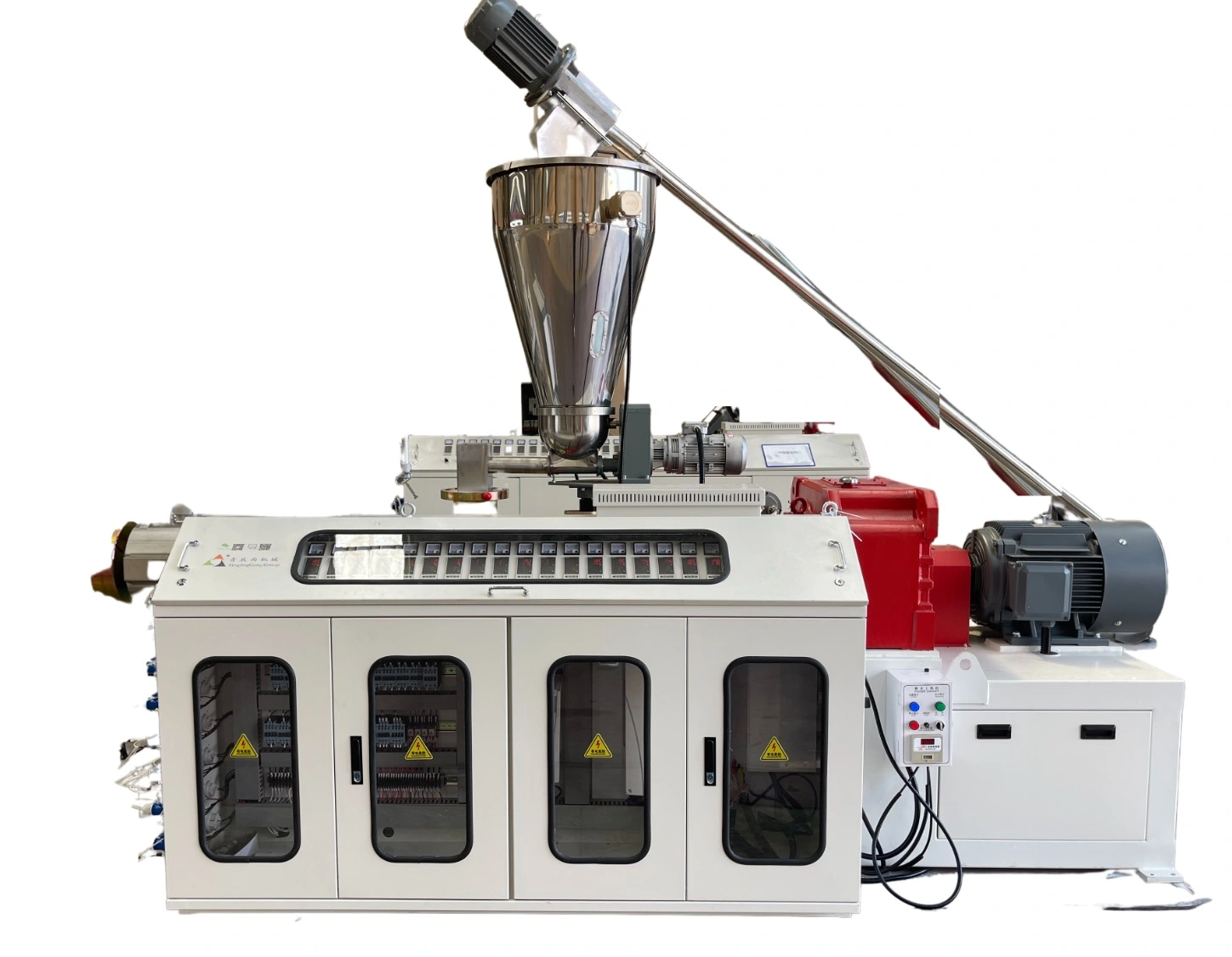
The benefit of aggressively diagnosing and fixing these problems with Extruder Machines is maximizing your Return on Investment (ROI). Extending the life of an existing barrel through proper thermal management saves tens of thousands of dollars in capital expenditures. However, there are limitations. You cannot out-troubleshoot bad metallurgy or obsolete technology. If you are trying to run highly complex, temperature-sensitive PVC on an old, worn single-screw machine, no amount of parameter adjusting will yield a perfect product. In those cases, upgrading to an SJSZ Conical Twin Screw Extruder, which offers superior positive displacement and lower shear heat generation, is the only commercially viable decision.
For beginners and small-scale operations: Focus heavily on preventative maintenance. Cleaning your die daily, tracking motor amperage, and replacing screen packs regularly will keep a basic machine running for years. Repairing is almost always the right choice.
For commercial users and high-volume plants: Downtime is exponentially more expensive than capital equipment. If your machine suffers from chronic surging due to a worn barrel, the cost of scrapped material over a three-month period will often exceed the cost of a brand new machine. If your equipment is older than 10 years and cannot maintain dimensional tolerances within 1%, you do not need to keep repairing it; you need to replace it.
In our testing and observation across hundreds of factory floors, the most devastating mistake is "dial-twisting." When a problem occurs, untrained operators will arbitrarily change temperatures, speeds, and pressures all at once. This destroys any ability to isolate the root cause. You must change only one parameter at a time and wait for the machine to reach a new steady-state (typically 15 to 20 minutes) before evaluating the result.
If your machine is beyond economical repair, purchasing a new unit requires commercial foresight. Look at the L/D (Length to Diameter) ratio. Modern resins often require longer L/D ratios (e.g., 30:1 or 33:1) to ensure adequate residence time for melting without excessive heat. Evaluate the gearbox—helical gearboxes offer far superior torque transmission and longevity compared to older designs. If you are processing rubber, ensure you are looking specifically at a dedicated Rubber Extrusion Line equipped with vented barrels to extract trapped volatiles.
Xjgmachine offer a comprehensive range of Plastic Processing Equipment that includes cutting-edge technology and high-quality machines. Our equipment is suitable for various plastic processing applications, from compounding to thermoforming, and we prioritize durability, efficiency, and user-friendliness. Our products are designed and manufactured to meet the demands of modern plastic production and to help our customers achieve their production goals with ease.
We recommend that before you spend thousands of dollars on replacement screws for obsolete technology, you consult with an OEM provider. Upgrading your end-of-life equipment to a modern, PLC-controlled extrusion line from Xjgmachine provides immediate benefits in energy efficiency, output stability, and reduced scrap rates. Furthermore, if you are looking to integrate circular economy practices, pairing a new extruder with our Plastic Recycling Machine creates a closed-loop system that drastically reduces raw material costs.
| Problem | Primary Symptom | Immediate Quick Fix Action |
|---|---|---|
| Surging | Pulsing output, thickness variations | Check feed throat cooling water flow. |
| Overheating | Smoking, degraded, discolored melt | Reduce screw RPM to lower shear heat. |
| Unmelted Particles | Gels, bumps in the final product | Increase back pressure (finer screen pack). |
| Feed Bridging | Screw turns but no material feeds | Clear hopper, lower zone 1 temperature. |
| Motor Overload | High amperage, breaker tripping | Ensure machine has fully heat-soaked before starting. |
| Feature | Single Screw Extruders | Twin Screw Extruders (Conical/Parallel) |
|---|---|---|
| Pumping Mechanism | Relies on drag flow (friction). Highly sensitive to pressure changes. | Positive displacement. Pumps consistently regardless of die pressure. |
| Heat Generation | High mechanical shear heat. Prone to overheating with sensitive resins. | Low shear heat. Ideal for heat-sensitive materials like PVC. |
| Wear Tolerance | Can tolerate slight barrel wear with minimal output loss. | Highly sensitive to wear. Slight gaps cause massive leakage flow. |
| Mixing Capability | Moderate. Requires special mixing sections (Maddock, Pineapple). | Exceptional dispersive and distributive mixing. |
| Decision | Pros | Cons |
|---|---|---|
| In-House Repair (Fixing Old Machine) | Lower immediate capital expenditure; no retraining operators. | Downtime during repair; older machines remain energy inefficient. |
| Buying New (Upgrading Equipment) | Latest PLC automation; massive energy savings; higher output yields. | High initial capital cost; requires lead time for manufacturing and installation. |
| Your Production Need | What to Look For in a New Machine | Xjgmachine Solution |
|---|---|---|
| Standard Polyolefins (PE, PP) | L/D Ratio of 30:1 or 33:1, barrier screw design. | SJ Single Screw Extruder |
| Heat-Sensitive PVC Profiles | Low shear, high torque, positive displacement. | SJSZ Conical Twin Screw Extruder |
| Automotive Sealing Strips | Vented barrel, high-precision temperature control. | EPDM Rubber Seal Strip Extrusion Line |
Understanding and resolving problems with Extruder Machines separates profitable manufacturing plants from failing ones. Do not let mechanical wear or poor thermal management dictate your production quality. By systematically diagnosing surging, overheating, and dimensional instability, you can optimize your current line to its maximum potential. However, apply commercial judgment: when an extruder's mechanical clearances are exhausted and scrap rates begin to eat into your margins, repairing is a sunk cost. We strongly recommend upgrading to modern, high-efficiency equipment from a trusted OEM like Xjgmachine to secure your competitive advantage in the plastics processing industry.
High motor amperage is typically caused by pushing cold, un-plasticized material. If the machine hasn't been allowed to "heat soak" for a sufficient time, the solid plastic creates massive mechanical resistance against the screw. Other causes include a blinded (clogged) screen pack causing high back pressure, or severe metal-on-metal binding due to a bent screw or failed thrust bearing.
The primary symptom of a worn barrel is a steady decrease in output (kg/hr) at a specific screw RPM, accompanied by an unexplained rise in melt temperature. To confirm, you must pull the screw and use a bore gauge to measure the inner diameter of the barrel and a micrometer to measure the outer diameter of the screw flights. If the total clearance exceeds the OEM specifications (typically greater than 0.5mm to 1.0mm depending on machine size), the components are worn out and causing severe leakage flow.
Sharkskin is a surface defect caused when the shear stress at the die wall exceeds the physical limitations of the polymer melt. As the plastic exits the die, the outer layer tears. You can resolve this by increasing the die temperature to lower the local viscosity, decreasing the line speed to reduce shear rate, or utilizing a polymer processing aid (PPA) to lubricate the die walls.
 English
 العربية
 русский
 Español
 français
 português
 Deutsch
 italiano
 Türkçe
 한국어
한국어 日本語
日本語