We see countless infrastructure projects fail prematurely due to substandard materials. When evaluating municipal water grids, agricultural irrigation systems, or residential plumbing, the physical integrity of the conduit is absolutely non-negotiable. From our experience, project managers often scrutinize the final installation but remain completely ignorant of the industrial processes occurring on the factory floor. Understanding exactly how every inch of pvc pipe manufactured today is formed from raw chemical compounds into a rigid, hydrostatic-pressure-resistant structure is the only way to effectively source and specify materials for your projects.
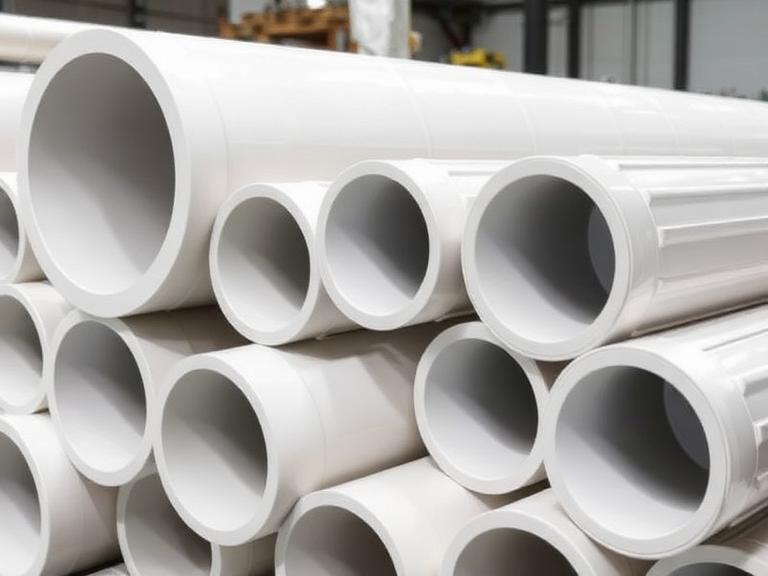
We refuse to sugarcoat the reality of the plastic extrusion industry. There is a massive disparity in quality across the global market. A pvc pipe manufactured on outdated, poorly calibrated single-screw extruders utilizing cheap calcium carbonate fillers will inevitably suffer from brittle failure, inconsistent wall thickness, and catastrophic bursting under pressure. Conversely, a pvc pipe manufactured utilizing precision conical twin-screw technology and strict thermodynamic control will easily outlast its fifty-year structural design life.
In this rigorously opinionated, comprehensive guide, Xjgmachine details the brutal thermo-mechanical realities of modern polymer extrusion. We will walk you through the entire continuous production cycle, exposing the critical engineering tolerances required at every stage, and why investing in high-grade processing equipment is the only path to producing flawless infrastructure materials.
Every quality pvc pipe manufactured begins as a powdery, chemical recipe. Polyvinyl Chloride (PVC) in its natural state is rigid, thermally unstable, and incredibly difficult to process. If you simply dump raw PVC resin into a heated barrel, it will immediately burn, releasing hazardous hydrochloric acid gas and destroying the machinery. Therefore, the raw resin must be compounded with a highly specific blend of additives.
From our experience, the formulation stage is where budget manufacturers cut dangerous corners. A standard formulation requires thermal stabilizers (to prevent degradation during melting), lubricants (to reduce friction against the metal screws), impact modifiers, and pigments. We heavily recommend scrutinizing the filler content. Cheap producers overload their mixtures with excessive calcium carbonate to artificially lower their raw material costs. While a low percentage of filler improves pipe stiffness, excessive amounts create a heavily compromised pvc pipe manufactured with brittle, chalky walls that shatter upon impact. The mixture is heavily agitated in a high-speed hot mixer, causing the additives to fuse with the PVC resin grains, before being dumped into a cooling mixer to prevent premature agglomeration.
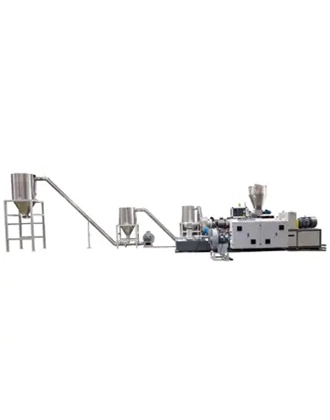
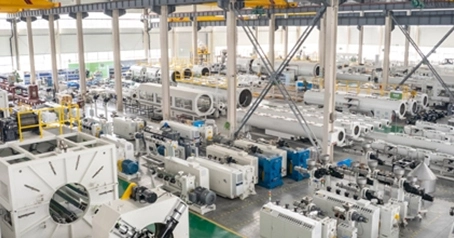
This is the heart of the operation. The compounded PVC powder is fed through a hopper into the extruder. We are emphatically opinionated on this matter: producing rigid PVC pipe requires a conical twin-screw extruder. Single-screw extruders lack the necessary shear force to properly plasticize unplasticized PVC (UPVC) powder. When evaluating a high-capacity PVC Pipe Production Line, the twin-screw design is mandatory.
Inside the heated barrel, the two interlocking screws rotate in opposite directions. The powder is subjected to immense thermomechanical shear. The friction generated by the screws physically grinds and kneads the polymer, generating internal heat that, combined with the electrical barrel heaters, melts the PVC into a highly viscous, molten dough. The temperature control here must be surgical. If the barrel is too cold, the pvc pipe manufactured will contain un-melted resin particles, creating weak spots. If the barrel is too hot, the PVC will degrade, losing its hydrostatic strength.
For operations aiming to maximize factory floor efficiency without compromising this thermomechanical balance, utilizing a specialized PVC Double Pipe Production Line allows manufacturers to extrude two separate pipes simultaneously from a single master extruder, doubling output while maintaining strict dimensional tolerances.
As the molten PVC reaches the end of the extruder barrel, it is forced through a breaker plate and into the extrusion die head. The die head is a massive block of precision-machined steel that shapes the solid mass of plastic into a hollow tube. The inner mandrel creates the inner diameter of the pipe, while the outer die ring defines the outer diameter.
We absolutely insist on using high-quality spider dies or spiral mandrel dies. The molten plastic must flow seamlessly around the internal supports of the die head. If the die design is poor, the plastic will suffer from flow lines or "weld lines"—invisible seams along the length of the pipe where the polymer flow separated and failed to knit back together properly under pressure. A pvc pipe manufactured with severe weld lines will inevitably split open during hydrostatic testing.
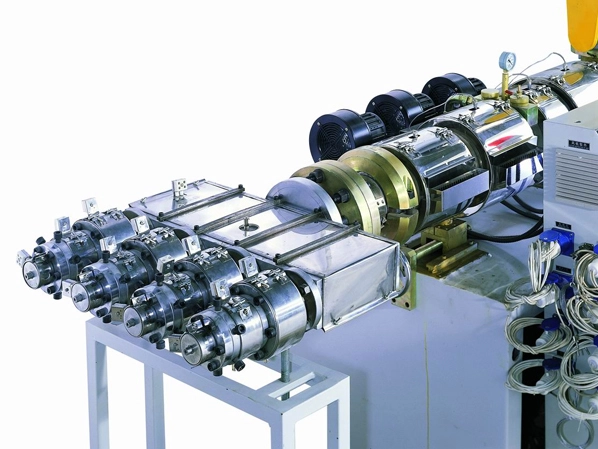
For manufacturers producing smaller diameter conduits, such as electrical PVC piping, a PVC Pipe (4-output) Production Line utilizes a highly complex multi-strand die head that perfectly balances polymer pressure across four simultaneous extrusion paths.
When the pipe exits the die head, it is completely molten, soft, and formless. Gravity alone would cause it to collapse into a useless puddle of plastic. To instantly freeze the geometry of the pipe, it is pulled into a vacuum calibration sleeve housed inside a massive stainless steel water cooling tank.
Inside the calibration sleeve, a powerful vacuum is applied to the outside of the pipe. This vacuum physically sucks the soft, molten plastic against the chilled inner walls of the brass or bronze sizing sleeve, forcing the pipe to adopt its exact, final outer diameter. Simultaneously, high-pressure water jets blast the exterior of the pipe, rapidly quenching the polymer chains and locking them into a rigid state. From our experience, the length and chilling capacity of the vacuum tank dictate your maximum line speed. If you attempt to pull the pipe too fast through an inadequate cooling setup, the core of the plastic wall will remain soft, resulting in an oval-shaped, out-of-tolerance pvc pipe manufactured unfit for commercial sale.
To ensure a continuous, unbroken manufacturing process, the pipe must be pulled through the cooling tanks at a perfectly consistent speed. This is achieved using a caterpillar haul-off machine equipped with multiple rubber tracks or belts. The pulling speed must perfectly synchronize with the extrusion speed. If the haul-off pulls too quickly, the pipe wall will thin out dangerously. If it pulls too slowly, the molten plastic will bunch up at the die head.
Once the rigid pipe passes the haul-off, it enters the cutting unit. For standard rigid PVC, planetary cutters are deployed. The cutting saw revolves around the circumference of the pipe while moving forward at the exact same speed as the extrusion line, ensuring a perfectly square, 90-degree cut without interrupting production. Premium cutting units also feature a chamfering tool, which slightly bevels the outer edge of the cut pipe, allowing it to slide effortlessly into rubber-gasketed fittings in the field.
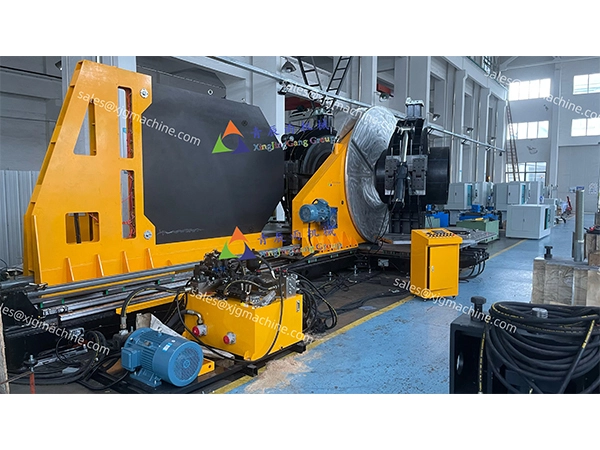
A straight piece of pipe is useless without a method to connect it to the next segment. The final stage in the lifecycle of a pvc pipe manufactured for plumbing or drainage is the belling (or socketing) machine. The end of the cut pipe is fed into a localized heating oven, softening the final few inches. A mechanical mandrel is then rammed inside the softened end, expanding it to form a socket.
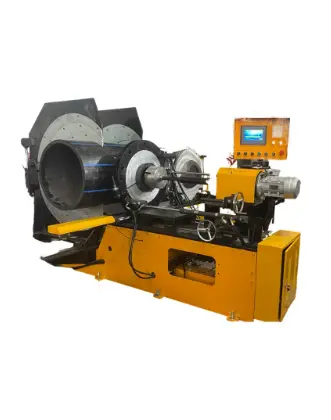
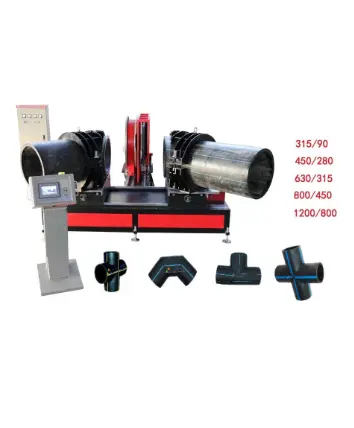
Depending on the application, this socket can be smooth (for solvent cement welding) or molded with an internal groove to house a rubber O-ring seal. Downstream processing also heavily relies on specialized jointing equipment. For complex angle creation, fabricators deploy machinery like the RHJ Multi-Angle Fitting Elbow Welding Machine and the Socket Fusion Welding Machine to seamlessly bond smaller segments into watertight directional fittings.
While the methodology of how pvc pipe manufactured remains standard for rigid applications, the demands of the modern construction sector frequently require alternative polymers, specifically high-density polyethylene (HDPE) and polypropylene random copolymer (PPR).
Unlike PVC, which is highly sensitive to shear and requires twin-screw extruders, polyolefins like HDPE and PPR are thermally stable and are predominantly processed using high L/D ratio single-screw extruders. We recommend investing in a dedicated HDPE Pipe Production Line for municipal water mains, as HDPE offers unmatched flexibility and seismic resistance. Similarly, hot and cold indoor plumbing requires the thermal resilience provided by a PPR Pipe Production Line. Furthermore, HDPE infrastructure relies heavily on thermal butt-fusion and saddle welding, necessitating precision field equipment like the HDPE Pipe Saddle Fusion Machine to tap into active water mains without compromising the line pressure.
Xjgmachine offers a comprehensive range of Plastic Processing Equipment that includes cutting-edge technology and high-quality machines. Our equipment is suitable for various plastic processing applications, from compounding to thermoforming, and we prioritize durability, efficiency, and user-friendliness. Our products are designed and manufactured to meet the demands of modern plastic production and to help our customers achieve their production goals with ease.
We do not compromise on structural engineering. By sourcing extrusion lines and downstream processing equipment directly through our manufacturing hubs, you guarantee that every piece of pvc pipe manufactured in your facility meets the brutal ISO and ASTM tolerance standards required by elite municipal contractors.
To assist facility managers in diagnosing processing errors, we have compiled the critical operational phases into this quick-reference matrix.
| Manufacturing Phase | Core Machinery Utilized | Critical Quality Control Metric |
|---|---|---|
| Compounding | High-Speed Hot/Cold Mixer | Precise dispersion of stabilizers; avoiding excessive calcium filler. |
| Extrusion | Conical Twin-Screw Extruder | Melt temperature and thermomechanical shear balance. |
| Shaping | Spider / Spiral Die Head | Elimination of weld lines; uniform polymer flow distribution. |
| Cooling & Sizing | Vacuum Calibration Tank | Absolute dimensional accuracy; preventing ovality via vacuum pressure. |
| Haul-Off | Caterpillar Puller | Speed synchronization to maintain exact wall thickness. |
| Socketing | Inline Belling Machine | Mandrel expansion accuracy for leak-proof gasket seating. |
From our experience, PVC is highly sensitive to thermal degradation. Every time you melt PVC, it loses some of its structural integrity. If you melt the raw PVC to create a pellet, and then melt that pellet again to create a pipe, you are subjecting the polymer to unnecessary heat history. Therefore, the highest quality pvc pipe manufactured utilizes direct dry-blend powder extrusion on twin-screw machines.
Wall thickness is controlled by a delicate mechanical balance between the extruder screw RPM (how much plastic is pushed out) and the haul-off speed (how fast the plastic is pulled away). Advanced extrusion lines utilize ultrasonic wall thickness scanners located immediately after the vacuum cooling tank. These scanners provide real-time feedback to the central computer, which automatically micro-adjusts the haul-off speed to keep the pvc pipe manufactured within strict tolerances.
UPVC (Unplasticized PVC) is the standard rigid pipe used for cold water and drainage. It cannot withstand hot water under pressure. CPVC (Chlorinated PVC) undergoes a secondary chemical process where extra chlorine is added to the polymer chain. This dramatically raises the temperature threshold, allowing CPVC to be safely utilized in residential hot water distribution systems without softening or bursting.
To ensure your production facility remains compliant with global infrastructure standards, we strongly recommend consulting the following authoritative engineering resources:
Plastics Pipe Institute (PPI). "Technical Engineering Reports and Standards for Polyvinyl Chloride (PVC) Pressure Pipe." (Comprehensive data regarding the long-term hydrostatic design basis and extrusion quality testing).
ASTM International. "ASTM D1785 - Standard Specification for Poly(Vinyl Chloride) (PVC) Plastic Pipe, Schedules 40, 80, and 120." (The definitive regulatory standard for dimensional tolerances and material testing requirements).
 English
 العربية
 русский
 Español
 français
 português
 Deutsch
 italiano
 Türkçe
 한국어
한국어 日本語
日本語