Navigating the industrial machinery market requires more than just reading spec sheets; it requires raw commercial and practical judgment. From our experience auditing manufacturing facilities worldwide, one of the most catastrophic financial mistakes a production manager can make is investing capital in the wrong extrusion technology. The manufacturing landscape is ruthless, and utilizing subpar or incorrectly specified equipment will immediately destroy your throughput yields, inflate your energy costs, and compromise your final product quality.
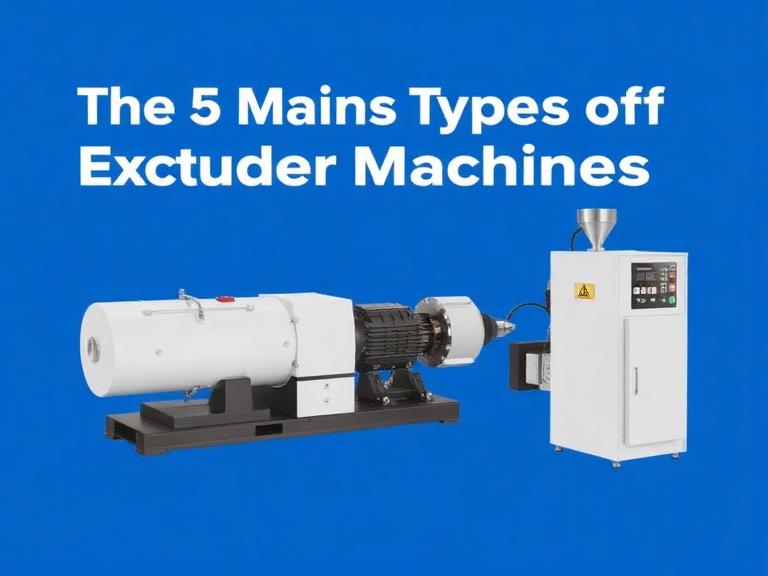
In most professional situations, understanding the distinct types of extruder machines is the boundary line between a highly profitable production line and a constant maintenance nightmare. We are not here to give you a textbook definition of plastic melting. We are here to explain exactly what these machines are, how they operate under heavy-duty conditions, and whether they are actually worth buying for your specific polymer or rubber applications.
If you are setting up a new production line, you will primarily choose from these 5 main types of extruder machines:
Single Screw Extruders: Best for basic, continuous profile extrusion using pre-compounded pellets (e.g., HDPE, PP).
Conical Twin Screw Extruders: Mandatory for processing heat-sensitive materials like PVC powder, offering low shear and high pressure.
Parallel Twin Screw Extruders: The gold standard for compounding, masterbatch creation, and high-shear mixing.
Rubber Extruders (Cold/Hot Feed): Specifically engineered with modified barrels and screws to handle the cross-linking and high viscosity of elastomers.
Specialized Profile & Co-Extrusion Systems: Multi-extruder setups designed for complex, multi-material geometries like thermal break strips or multi-layer pipes.
An extruder is the beating heart of the polymer and rubber processing industry. It is a massive industrial machine designed to melt, mix, and force raw thermoplastic or elastomeric materials through a shaped die to create continuous profiles. Whether you are manufacturing PVC pipes, window weather stripping, or nylon thermal breaks, you are relying on an extruder. A high-quality Plastic Extruder operates as a high-pressure, high-temperature pump that must maintain absolute consistency over 24/7 operating cycles.
In our testing and daily operations, we view the extruder as a complex thermodynamic system. Raw material (pellets or powder) drops from a hopper into a heated barrel. Inside the barrel, a precisely engineered rotating screw pushes the material forward. The combination of external heat from barrel heaters and internal friction (shear heat) generated by the screw turning melts the polymer.
By the time the material reaches the front of the barrel, it is a homogenous melt. The machine then forces this melt through a custom die, which gives the plastic its final shape. The profile is immediately pulled through a water calibration and cooling tank to solidify its dimensions before being cut to length.
When you are evaluating capital equipment, you must match the machine geometry to the polymer chemistry. Here are the 5 types of extruder machines you will encounter.
The single screw extruder is the workhorse of the industry. It relies on a single rotating screw to convey, melt, and pump the material. For commercial users processing stable, pre-compounded pellets like PE, PP, or ABS, this is your go-to machine. It is reliable, relatively inexpensive, and easy to maintain. We highly recommend exploring a robust SJ Single Screw Extruder for standard pipe and simple profile manufacturing where intense mixing is not required.
If you are processing UPVC or CPVC powder, a single screw will fail you. PVC is highly heat-sensitive and will degrade (burn) if subjected to high friction for too long. Conical twin screw extruders feature two interlocking screws that taper toward the die. This design provides massive thrust and pressure at lower RPMs, ensuring the PVC melts gently without degrading. This is mandatory for rigid PVC pipes and window profiles.
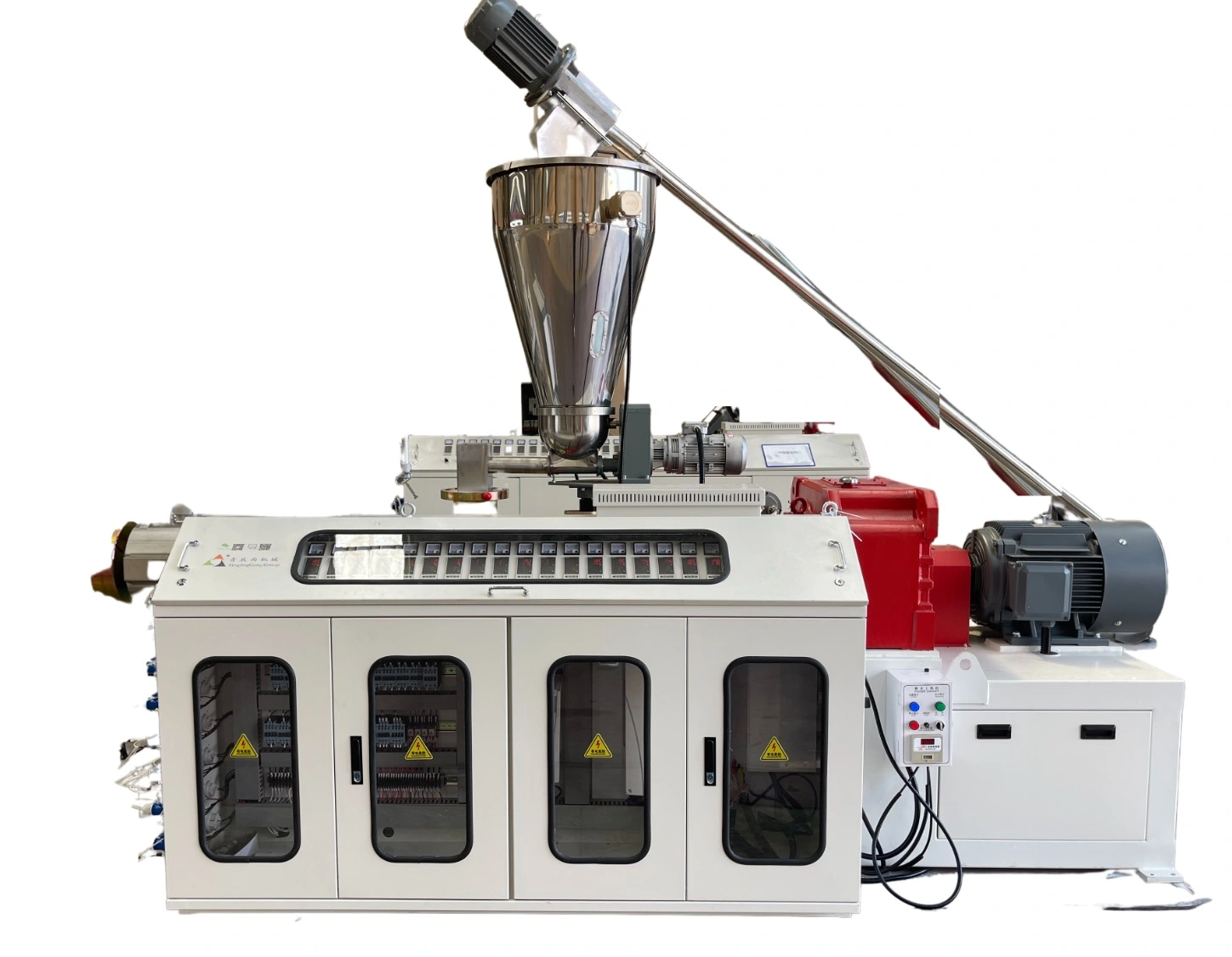
From our experience, the SJSZ series represents the pinnacle of PVC processing technology. Engineered for high-calcium carbonate filling and pure PVC powder extrusion, this machine guarantees superior plasticization and melt uniformity.
Screw diameter: 45/90 mm
Rotation speed: 45 rpm
Main motor power: 15 kW / 80 kW configurations
Center height: 1000 mm
Net weight: 2500 kg
Dimensions: 3.3m x 1.2m x 2.1m
If you are running PVC profiles, upgrading to this conical twin-screw architecture is an immediate necessity for product quality.
Unlike conical machines, parallel twin screws rotate in the same direction and feature modular screw elements. They are essentially massive industrial mixers. You do not typically use these to make a final product like a pipe; you use them for compounding. If you are adding colorants, glass fibers, or chemical additives to raw polymers to create masterbatch pellets, the parallel twin screw provides the aggressive shear required for perfect dispersion.
Elastomers behave fundamentally differently than thermoplastics. Rubber extruders require shorter Length-to-Diameter (L/D) ratios and specialized cooling jackets on the barrel to prevent premature vulcanization (curing) inside the machine. For heavy-duty applications like automotive weather stripping or industrial hoses, a dedicated Rubber Extrusion Line is strictly required. For instance, creating dense, weather-resistant seals demands a highly calibrated EPDM Rubber Seal Strip/Profile Extrusion Line.
Modern manufacturing rarely relies on a single material. The fifth type encompasses highly specialized extrusion lines that combine multiple extruders feeding into a single die (co-extrusion) or lines optimized for niche engineering plastics. For example, producing thermal barriers for aluminum windows requires a PA66 GF25 Polyamide Profile Thermal Break Strip Extrusion Line, which is engineered specifically to handle the abrasive nature of 25% glass fiber mixed with nylon. Similarly, double-glazing window suppliers rely heavily on customized PE/PP/PVC Warm Edge Spacer Bar Extrusion Line architectures.
Why choose extrusion over other manufacturing methods? For continuous, high-volume production, extrusion has no equal. Once the line is calibrated, an extruder can run 24 hours a day, generating kilometers of product with minimal labor overhead. It offers incredible versatility; changing a die allows the same machine to produce a flat sheet, a hollow pipe, or a complex architectural profile. Furthermore, scrap material can often be reground and fed back into the hopper, minimizing material waste and maximizing your profit margins.
Extrusion is not a magic solution. The primary limitation is that it can only produce continuous linear shapes. You cannot extrude a complex 3D object like a bottle or a gear. Additionally, die swell—the tendency of the plastic to expand once it exits the high-pressure die—makes exact dimensioning difficult without highly precise downstream calibration tooling. Finally, the setup and teardown times for changing materials or colors can be extensive, resulting in costly downtime if you run small, varied batches.
For commercial users: If your business model involves producing pipes, tubing, wire insulation, window profiles, or rubber seals in volumes exceeding thousands of meters per week, an extrusion line is mandatory. It is the only way to scale effectively.
Who does not need it: For beginners or businesses focused on producing standalone, discrete parts (like toy figurines, automotive dashboard panels, or threaded caps), extrusion is the wrong technology. You require Injection Molding machinery instead. Do not buy an extruder expecting to chop the output into complex individual parts without extensive secondary machining.
In our experience, the most devastating mistake buyers make is prioritizing the initial purchase price over the gearbox quality and screw geometry. Buying a cheap extruder with an inadequate gearbox will result in shattered gears under heavy torque loads. Furthermore, attempting to use a generic single screw to process powder PVC will result in burned material and ruined production runs. You must buy the machine specifically engineered for your primary polymer.
| Extruder Type | Primary Function | Best Suited Materials | Commercial Cost Tier |
|---|---|---|---|
| Single Screw | General melting & pumping | PE, PP, ABS, PS (Pellets) | Low to Medium |
| Conical Twin Screw | High pressure, low shear melting | PVC Powder, WPC | Medium to High |
| Parallel Twin Screw | Compounding & aggressive mixing | Masterbatch, Master alloys | High |
| Rubber / Cold Feed | Pumping without curing | EPDM, NBR, Silicone | Medium |
| Specialized Profile/Co-Ex | Multi-layer or niche engineering | PA66 GF25, Composite PE/PP | High to Premium |
| Feature | Single Screw Extruder | Conical Twin Screw Extruder |
|---|---|---|
| Mixing Capability | Low (Relies on pre-mixed pellets) | High (Intermeshing screws force mixing) |
| Material Handling | Cannot handle powder efficiently | Ideal for dry blends and powders |
| Shear Heat Generation | High (Can burn sensitive plastics) | Low (Controlled, gentle plasticization) |
| Maintenance Complexity | Simple, lower cost to replace screw | Complex, requires precise screw alignment |
| Pros (Advantages) | Cons (Disadvantages) |
|---|---|
| High production volumes with continuous output. | Limited to 2D continuous cross-sectional shapes. |
| Low cost per meter once the line is running. | Die swell requires complex downstream calibration. |
| High flexibility to change shapes by swapping dies. | High energy consumption for barrel heating and motors. |
| Ability to co-extrude multiple layers simultaneously. | Long setup, heating, and purging times between runs. |
| Your Target Product | Required Polymer | The Machine We Recommend |
|---|---|---|
| Water / Gas Pipes | HDPE / PPR Pellets | SJ Single Screw Extruder (L/D 30:1 or 33:1) |
| Window Profiles / Drain Pipes | PVC Powder / UPVC | SJSZ Conical Twin Screw Extruder |
| Automotive Weather Seals | EPDM Rubber | Cold Feed Rubber Extruder with Vulcanization line |
| Window Thermal Breaks | Polyamide (PA66 + 25% GF) | Specialized PA66 Profile Extrusion Line with wear-resistant screw |
From our deep experience outfitting factories globally, we strongly advise against purchasing "one-size-fits-all" machinery. If you are serious about industrial production, you must buy the machine explicitly engineered for your material's thermal properties.
At Xjgmachine, we do not just sell iron; we engineer solutions. If you are processing heavy PVC powders, we definitively recommend upgrading to our SJSZ Conical Twin Screw Extruder series. The superior gearbox architecture and customized screw flight geometries ensure maximum throughput without material degradation. Conversely, for high-speed polyethylene or polypropylene pipe production, our heavy-duty SJ Single Screw Extruders provide the relentless, 24/7 reliability commercial users demand. Do not compromise on your core processing equipment—your entire downstream profitability depends on the quality of your melt.
To further validate your understanding of extrusion mechanics and polymer material standards, we advise consulting the following globally recognized engineering authorities:
Society of Plastics Engineers (SPE) - The premier global organization for plastics professionals, offering extensive technical papers on extrusion dynamics and twin-screw compounding.
ASTM International - Provides the globally recognized standards for testing the mechanical and thermal properties of extruded plastic pipes and profiles.
British Plastics Federation (BPF) - Features highly detailed industrial guides on the commercial processing and machinery requirements for both thermoplastic and rubber extrusion.
 English
 العربية
 русский
 Español
 français
 português
 Deutsch
 italiano
 Türkçe
 한국어
한국어 日本語
日本語