About XjgMachine: Your Partner in Precision
XjgMachine offer a comprehensive range of Plastic Processing Equipment that includes cutting-edge technology and high-quality machines. Our equipment is suitable for various plastic processing applications, from compounding to thermoforming, and we prioritize durability, efficiency, and user-friendliness. Our products are designed and manufactured to meet the demands of modern plastic production and to help our customers achieve their production goals with ease. When you invest in our machinery, you are securing the future of your manufacturing plant.
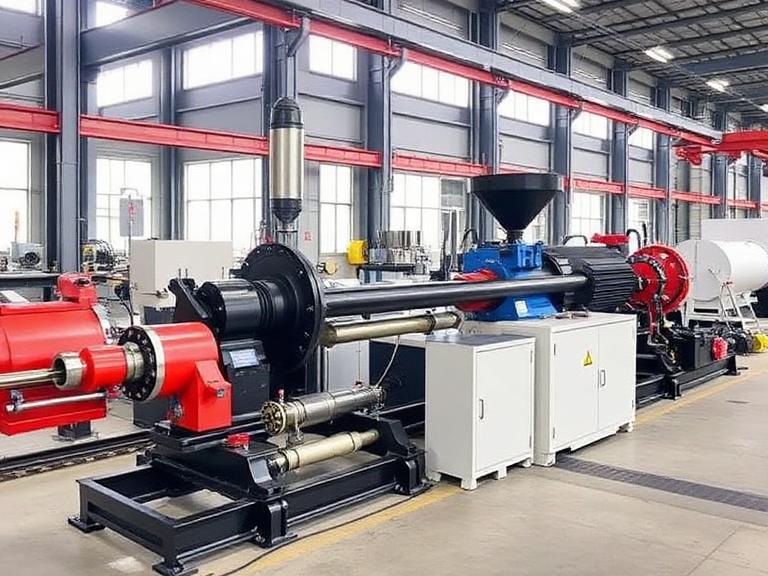
If you are planning to upgrade your manufacturing facility or launch a new infrastructure production line this year, the most pressing question on your financial ledger is likely: what is the true pipe extruder cost in 2026? In the rapidly modernizing world of industrial plastics, finding a straightforward answer is notoriously difficult. Prices are not fixed; they are dynamic, dictated by global supply chains, automation tiers, metallurgical quality, and specific polymer requirements.
From our experience engineering advanced industrial systems, buyers often make the fatal mistake of looking only at the initial sticker price of the main drive unit. They ignore downstream requirements, energy consumption, and the inevitable maintenance associated with subpar gearboxes. A machine that appears to be a bargain on paper can quickly become a financial black hole on the factory floor. We recommend approaching your procurement strategy with total cost of ownership (TCO) in mind. This authoritative guide breaks down every factor that influences pipe extruder cost, providing you with the exact numbers, practical insights, and engineering truths you need to make a profitable investment.
To set immediate expectations, the table below outlines the general pricing spectrum for complete production setups. Please note that "pipe extruder cost" in this context refers to the primary machine unit, though high-end figures often begin to bundle essential downstream equipment.
| Equipment Tier | Average Price Range (USD) | Key Characteristics & Output | Ideal Application |
|---|---|---|---|
| Entry-Level / Basic | $20,000 - $65,000 | Standard AC motors, relay controls, low output (50-150 kg/hr), generic steel barrels. | Startups, low-volume agricultural pipe, R&D testing. |
| Mid-Range / Industrial Standard | $85,000 - $250,000 | PLC automation, bimetallic screws, high efficiency (250-600 kg/hr), branded electrical components. | Mid-to-large manufacturers, municipal water pipes, continuous 24/7 operations. |
| High-Performance / Custom | $300,000 - $850,000+ | SCADA integration, permanent magnet motors, extreme output (800-1500+ kg/hr), fully automated lines. | Enterprise infrastructure, large diameter HDPE mains, high-stress specialized polymers. |
The global push for modernized water management and electrical conduit systems has drastically driven up the demand for high-quality plastic pipes. Consequently, the technology behind a standard Plastic Extruder has advanced rapidly. In 2026, you are not merely buying a motor attached to a heated steel barrel; you are purchasing a highly calibrated thermal management system.
When analyzing pipe extruder cost, you must look at the origin and quality of the internal components. A machine utilizing German-engineered gearboxes (such as Flender or Zambello), Japanese Omron PLCs, and Swedish SKF bearings will inherently sit in the mid-to-high price tiers. Conversely, ultra-cheap machines use unbranded components with terrible tolerance ratings. We state unequivocally: buying the cheapest machine on the market is an engineering gamble you will lose. When a cheap gearbox shatters at 3:00 AM during a heavy HDPE run, the cost of emergency repairs and missed shipping deadlines will instantly eclipse whatever money you "saved" on the purchase price.
The geometry of the extrusion screw is the heart of the operation, and it serves as the primary dividing line for pipe extruder cost. The type of plastic resin you intend to process dictates the screw you must buy.
If you are melting polyethylene (PE), polypropylene (PP), or high-density polyethylene (HDPE), you require an SJ Single Screw Extruder. These materials have wide processing temperature windows and require high friction to melt uniformly. Single screw machines are generally more affordable to manufacture. A robust, mid-range single screw extruder capable of 400 kg/hr will cost between $70,000 and $120,000. The cost scales linearly with the L/D (Length to Diameter) ratio. Modern machines boast 33:1 or even 38:1 L/D ratios to ensure excellent melt homogeneity, which slightly increases the upfront pipe extruder cost but drastically reduces un-melted resin waste.
Polyvinyl chloride (PVC) is heat-sensitive and highly shear-sensitive. If you attempt to run dry PVC powder through a high-speed single screw, the friction will burn the material, releasing corrosive hydrochloric acid gas into your factory. Therefore, PVC mandates an SJSZ Conical Twin Screw Extruder. Because these machines feature two interlocking screws that gently push the powder forward at lower RPMs, the engineering complexity is doubled. The gearboxes must synchronize massive torque loads. Consequently, the pipe extruder cost for a twin-screw system is typically 30% to 50% higher than a single screw of equivalent output, usually ranging from $110,000 to over $200,000 for industrial-grade models.
An extruder alone does not make a pipe. To accurately forecast your capital expenditure, you must price out the entire Plastic Pipe Production Line. A bare extruder represents only about 40% of the total equipment cost for a functioning factory floor.
Once the molten plastic exits the die head, it enters the vacuum calibration tank. These stainless-steel tanks size the pipe and cool it rapidly using high-pressure water spray. Depending on the diameter of the pipe, cooling tanks can stretch for 10 to 30 meters. A high-quality vacuum tank with independent water temperature controls adds $15,000 to $40,000 to your budget. Following the cooling phase, haul-off machines (caterpillar tractors) pull the pipe at a synchronized speed, and planetary cutters slice it to exact lengths. If you cheap out on the haul-off unit, the speed will fluctuate, resulting in uneven pipe wall thickness and failing quality control tests.
Successful pipe manufacturing requires a surrounding ecosystem of specialized machinery. For instance, colorants and UV stabilizers are critical for outdoor infrastructure pipes. Sourcing high-quality additives from a reputable Masterbatch Manufacturer requires precise gravimetric dosing units to ensure you don't waste expensive pigment. These dosing systems add several thousand dollars to your pipe extruder cost, but they guarantee color consistency.
Once the pipe is extruded and cut, traceability is a legal requirement in most markets. Integrating an inline Fiber Laser Printer ensures permanent, high-contrast marking of production dates, pressure ratings, and barcodes directly onto the pipe surface without the recurring cost of ink consumables.
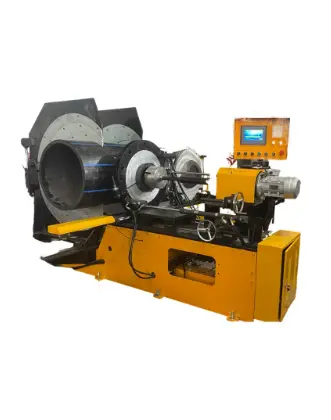
Furthermore, in the infrastructure and municipal sectors, long HDPE pipes must be joined in the field. Offering complete solutions, including a heavy-duty HDPE Pipe Butt Welding Machine, allows manufacturers to provide end-to-end value to contractors, though this represents a separate capital investment outside the core extrusion line.
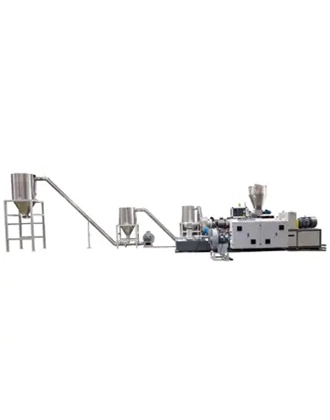
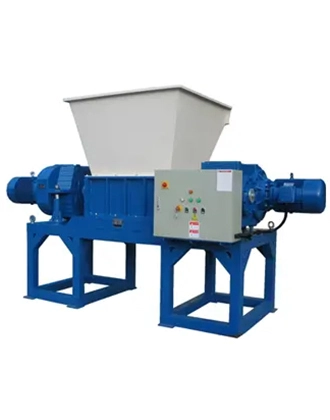
Finally, how you handle scrap is vital to your profit margins. Extrusion startups inevitably produce off-spec pipe during calibration. Instead of paying for waste removal, investing in a heavy-duty Plastic Recycling Machine allows you to shred, grind, and pelletize your scrap to feed right back into the hopper. While this pushes your initial facility setup cost higher, it drastically lowers your material expenditures over time.
When we consult with factory managers regarding pipe extruder cost, we always emphasize the "hidden" electrical bill. Extruders are massive consumers of power. A legacy AC motor with outdated ceramic band heaters will bleed your profit margin through sheer inefficiency.
In 2026, we recommend investing in machines equipped with Permanent Magnet Synchronous Motors (PMSM) and infrared barrel heating. While this bumps up the initial pipe extruder cost by roughly $15,000 to $25,000, it reduces electrical consumption by up to 30%. Over a 10-year lifespan running 24/7, the energy savings alone will pay for the entire machine.
Similarly, automation is no longer a luxury. Advanced PLC systems with touchscreen interfaces monitor melt pressure, adjust screw speeds automatically to maintain wall thickness, and alert operators to filter clogs before a blowout occurs. This level of automation prevents catastrophic material waste. Finally, securing your expensive, custom-made dies and calibration sleeves during transit requires heavy-duty Protective Shipping Packaging Materials. Never let your $500,000 machinery line arrive damaged because you skimped on industrial crating and moisture barriers.
Understanding pipe extruder cost is an exercise in risk management. A cheap machine gives you a short-term cash flow advantage, but it saddles you with long-term operational instability. An idle factory floor costs you more in a single week than the premium you would have paid for a top-tier gearbox.
From our experience, the sweet spot for most growing manufacturers lies in the Mid-Range tier. By partnering with established, quality-focused manufacturers like XjgMachine, you secure reliable, high-output production lines engineered with branded global components. You receive the perfect balance of reasonable capital expenditure and guaranteed uptime. Calculate your Return on Investment (ROI) based on tons-per-hour output, energy savings, and scrap reduction, not just the invoice price of the metal.
A: Large diameter pipes (e.g., 800mm or 1200mm) require massive extruders with enormous torque capabilities (often exceeding 160 kW to 300 kW motor sizes). Furthermore, the downstream vacuum tanks, powerful haul-offs, and heavy-duty planetary saws must be significantly larger and structurally reinforced, multiplying the total cost of the line.
A: Emphatically, no. We recommend strictly separating these lines. HDPE requires a high-speed single screw, while PVC requires a low-speed, high-torque conical twin screw. Attempting to force the wrong material through an incompatible barrel geometry will destroy the polymer, ruin the screw, and pose a severe safety hazard.
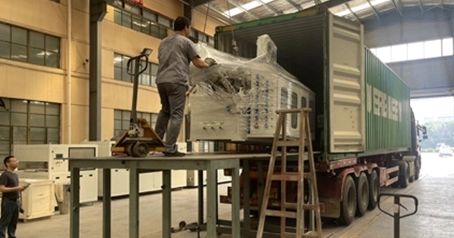
A: This varies wildly by manufacturer. Premium suppliers typically include factory acceptance testing (FAT) and send engineers to your site for commissioning and operator training. Cheaper suppliers will often ship you a container and leave you to figure it out. Always demand a clear contract regarding commissioning costs.
A: Buying used is incredibly risky unless the machine has been fully refurbished by the original manufacturer. A used extruder may look clean on the outside, but if the screw is worn down or the gearbox bearings are failing, your repair bill will immediately erase your discount. Only buy used if you have in-house mechanics capable of rebuilding the drivetrain.
To further understand the macroeconomic and engineering factors influencing global pipe extruder costs, we recommend consulting the following authoritative resources:
IndexBox Market Intelligence - Comprehensive data on the global pipe screw extruder market forecast toward 2035 and infrastructure investment trends.
Plastics News - Real-time industry reporting on global polymer pricing, machinery cost indexes, and manufacturing supply chain shifts.
ISO/TC 138 - The International Organization for Standardization's technical committee for plastics pipes, fittings, and valves for the transport of fluids. Adherence to these standards dictates machinery calibration costs.
 English
 العربية
 русский
 Español
 français
 português
 Deutsch
 italiano
 Türkçe
 한국어
한국어 日本語
日本語