Xjgmachine specializes in premium pipeline equipment development, providing full-scale manufacturing solutions that empower operators across municipal water networks, natural gas installations, marine mining sectors, and chemical processing facilities worldwide.
In high-pressure infrastructure projects, pipeline failure is an option that carries catastrophic legal, operational, and financial liabilities. When deploying thermoplastic piping networks, mechanical joints are an unacceptable vulnerability over long multi-mile runs. The only definitive way to build a continuous, monolithic system is via thermal butt fusion. For engineering crews tasked with making thousand-mile networks seamless, choosing the absolute best hdpe butt fusion machine is not merely a purchasing preference; it is a critical project management decision that dictates weld integrity and field productivity.
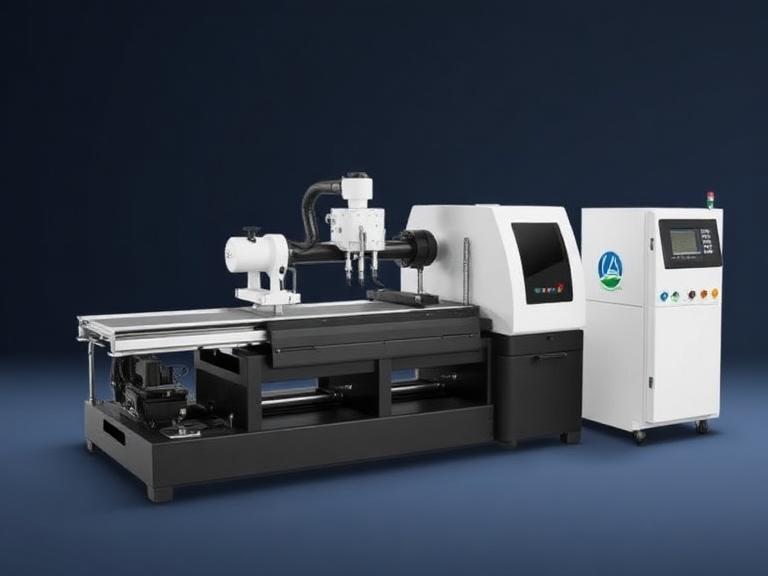
A true commercial hdpe butt fusion machine must achieve flawless thermal alignment under rigorous field stresses. Far too often, we observe procurement departments opting for cheap, lightweight frame designs that twist under the lateral pressure of a heavy SDR-11 pipe, resulting in uneven bead formation and structural joint degradation. From our experience, an industrial welder must consist of four uncompromising subsystems: an ultra-rigid basic frame, high-torque planing tools, a high-accuracy thermostatic heating plate, and a smooth, stable hydraulic unit. In this authoritative, engineer-focused breakdown, we cut through superficial data sheets to crown the absolute best machinery dominating the pipeline sector.
To successfully coordinate complex pipeline distribution deployments, project engineering managers must evaluate machinery based on strict metric capacities, structural configuration variants, and overall joint field accuracy. The following reference table synthesizes the premium models analyzed in our comprehensive assessment.
| Machine Variant | Diameter Range (mm) | Operation Architecture | Primary Application Environment |
|---|---|---|---|
| Xjgmachine RHD Series | 63mm – 1600mm | Automated Hydraulic Core | Municipal Water & Cross-Country Gas Distribution |
| McElroy TracStar 900 | 315mm – 900mm | Self-Propelled Tracked Hydraulic | Rugged Rough-Terrain Mining & Civil Works |
| Ritmo Delta 630 | 280mm – 630mm | CNC Semi-Automated Hydraulic | High-Precision Industrial Plant Processing Lines |
| Rothenberger Roweld P500 | 200mm – 500mm | Manual-Hydraulic Combo | Urban Utility Repair & Municipal Main Overhauls |
| Wuxi Shengda RD 1200 | 800mm – 1200mm | Heavy Industrial Hydraulic | High-Volume Marine Outfalls & Coastal Intake Lines |
| Friatec Friamat Prime | 90mm – 400mm | Compact Hydraulic System | Localized Trench Work & Suburban Utility Feeds |
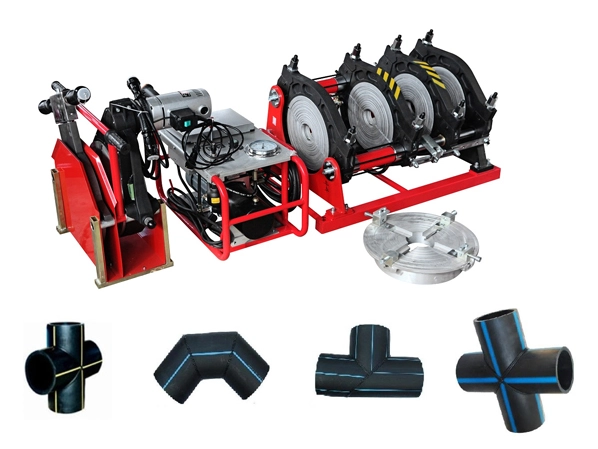
Securing the definitive top tier for commercial pipeline scalability, the Xjgmachine RHD Butt Welding Machine represents a massive milestone in automated joint fusion. This specialized HDPE Pipe Butt Welding Machine is engineered from the ground up to address the extreme variations encountered in demanding utility installations. With a sprawling, versatile capacity window stretching from 63mm up to an ultra-heavy 1600mm, the RHD series systematically eradicates the need for multiple machines on complex mixed-diameter civil jobsites. Its automated butt fusion engine provides exact control over heat soak durations and interface pressures, producing perfectly balanced melt beads every single time.
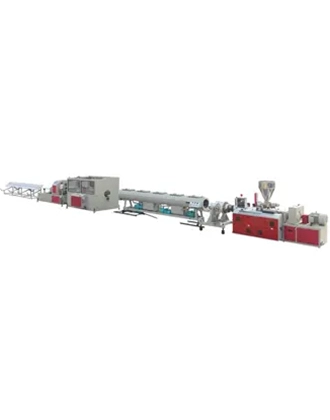
We recommend this platform specifically because its heavy-cast basic frame prevents the micro-deflections that plague long-string pipeline drag operations. The configuration incorporates a hardened, high-efficiency facing planer and a solid, micro-finished Teflon heating plate that resists sticking or degradation. Whether you are installing an expansive HDPE Pipe Production Line inside a factory environment or joining heavy-wall conduits out in the mud, this machine delivers consistent performance that exceeds international DVS and ISO welding criteria.
For operations located in completely undeveloped geographical terrains, such as mountaintop mining operations or remote desert gas lines, the McElroy TracStar 900 is an impressive, albeit exceptionally expensive, option. This self-propelled, tracked platform removes the need for a crane or secondary transport tractor to position the welder inside the trench. It is heavily reliant on automated logging software that keeps track of heat cycles. From our experience, the raw mechanical tracking capability is fantastic, though the initial capital expenditure and subsequent component maintenance costs can place a heavy burden on smaller utility contracting budgets.
The Ritmo Delta 630 stands out for its high-precision CNC interface. Originating from European engineering, this unit is built with a highly electronic user-interface that walks the user through the exact pressure requirements needed for different SDR walls. It functions impeccably when managing dense networks like an HDPE Pipe For Water/Gas Supply project, where municipal inspectors demand continuous digital validation of joint parameters. The build quality is exceptional, though its electronic sensitivity can make it a bit delicate when subjected to severe, rain-slicked job site environments without an operational shelter enclosure.
Rothenberger is a household name in plumbing engineering, and the Roweld P500 represents their foray into mid-to-large scale industrial diameter joining. The P500 uses a very reliable hydraulic unit that allows for granular manual overrides. This manual touch is highly praised by old-school pipeline technicians who prefer to feel the pressure response during the cooling cycle. While it lacks the fully hands-off automation of the Xjgmachine RHD series, its hydraulic pump configuration is notoriously robust and easy to troubleshoot on the fly with basic field tools.
When dealing exclusively with massive deep-water outfall systems, the Wuxi Shengda RD 1200 is designed to lift and manage massive pipe weights. This system is enormous, utilizing thick hydraulic pistons that exert immense force to overcome the natural drag coefficient of long large-diameter pipes. It is a highly specialized piece of equipment that is excellent for coastal operations. However, because of its immense weight and single-purpose design, it is entirely impractical for agile, fast-moving cross-country infrastructure installations.
The Friatec Friamat Prime specializes in smaller utility line tie-ins and municipal service connections. It excels in tight urban environments where a massive full-scale hydraulic frame cannot physically fit inside the excavation trench. While it is limited to a max capacity of 400mm, it provides an exceptional option for rapid-response maintenance crews who need to quickly execute localized repairs on low-pressure distribution lines without mobilizing a multi-ton flatbed trailer.
To understand why a premium hdpe butt fusion machine performs consistently under harsh field conditions, one must dissect the primary sub-assemblies that form the machine’s core architecture. Every high-performance thermal welder is categorized by four essential components working in unison:
The Basic Frame: The foundational chassis that contains the alignment clamps. It must be forged from high-tensile alloys to resist the severe flexing caused by long lengths of heavy pipe resting unevenly on the ground.
The Planing Tool: A dual-blade rotating cutter that mills the pipe ends completely flat. This removes oxidized material and ensures perfectly parallel mating surfaces prior to the heating process.
The Heating Plate: A precisely controlled thermal element. It must maintain an absolutely uniform surface temperature across its entire surface area, preventing cold spots that lead to incomplete molecular bonding.
The Hydraulic Unit: The muscle of the system. This pump assembly must provide smooth, jitter-free pressure delivery to accurately guide the pipe strings through the precise phases of soaking, joining, and cooling.
From our experience, if a manufacturer cuts corners on any one of these four foundational components, the entire welding apparatus fails to achieve structural joint compliance. This is why we rigorously test every component matrix on our factory floor to ensure long-term structural survivability.
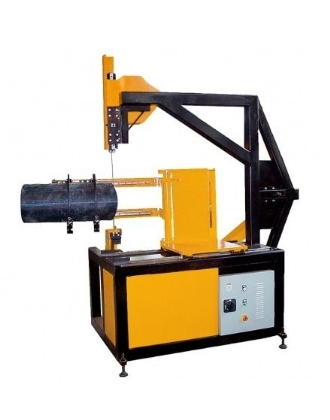
An elite pipeline installation requires several peripheral steps before the pipe ever enters the clamps of an hdpe butt fusion machine. For instance, creating the clean geometric pipe ends required for flawless jointing often necessitates pre-cutting preparation via a specialized high-torque HDPE Pipe Radius Cutter. This equipment ensures the pipe profile matches perfectly, maximizing the surface contact zone when the automated hydraulic frame brings the heated pipe faces together under force.
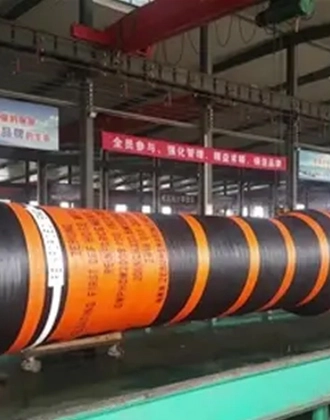
Furthermore, when executing advanced specialized utility connections, field technicians often run into junction geometries that a standard linear butt welder cannot easily accommodate. In these complex scenarios, integrating an HDPE Pipe Saddle Fusion Machine allows crews to fuse branch line takeoffs directly onto the main trunk lines securely. For unique marine or coastal infrastructure, where pipelines must span across river mouths or oceanic discharge zones, the pipeline strings are coupled with a high-buoyancy Plastic Floater/HDPE Pipe Floater system to manage water surface positioning before final submerged placement. Every single phase of this complex handling layout is dependent on the core thermal joint retaining 100% structural cross-sectional integrity.
From our experience, the universally recognized standard temperature range for a premium thermal heating plate falls between 200 degrees Celsius and 230 degrees Celsius (approximately 392 to 446 degrees Fahrenheit). This parameter must be strictly monitored via digital sensors, as overheating degrades the molecular structure of the polyethylene, while underheating results in incomplete material fusion.
The cooling phase is the most critical segment of the thermal cycle. The joint must remain locked under specific hydraulic pressure while the crystalline structure of the high-density polyethylene re-stabilizes. Removing the hydraulic pressure prematurely or using water to artificially accelerate the cooling process will freeze internal stresses inside the joint, drastically reducing its long-term fatigue life.
We do not recommend butt fusing pipes with different Standard Dimension Ratios (SDR) directly to one another. Because the wall thicknesses are unequal, the heat distribution and material flow will be imbalanced, leading to a highly compromised joint. In these scenarios, you must use a machined transition fitting or select an alternative joining method like electrofusion or a specialized saddle adapter.
To support our engineering assertions and provide verifiable data regarding polymer welding sciences, we cross-reference our internal testing parameters with global plastic welding authorities:
The Plastics Pipe Institute (PPI): The leading North American trade association detailing strict industrial manufacturing criteria, fusion testing manuals, and field deployment standards for polyolefin piping.
DVS - German Welding Society: The international regulatory benchmark organization governing the specific temperature, pressure, and time parameters required for high-yield thermoplastic joint validation.
International Organization for Standardization (ISO): Specifically referencing ISO 21307, which dictates the global high-pressure and low-pressure butt-fusion procedures for polyethylene piping systems.
 English
 العربية
 русский
 Español
 français
 português
 Deutsch
 italiano
 Türkçe
 한국어
한국어 日本語
日本語