In modern industrial manufacturing, few systems are as heavily relied upon, yet as frequently misunderstood, as the Plastic extrusion machine process. Billions of feet of pipes, window profiles, and packaging films are produced globally every single year. Yet, we routinely walk into manufacturing plants where production lines are running terribly below their optimal efficiency limits. At XjgMachine, we refuse to accept mediocrity in processing. We offer a comprehensive range of Plastic Processing Equipment that includes cutting-edge technology and high-quality machines. Our equipment is suitable for various plastic processing applications, from compounding to thermoforming, and we prioritize durability, efficiency, and user-friendliness. Our products are designed and manufactured to meet the demands of modern plastic production and to help our customers achieve their production goals with ease.
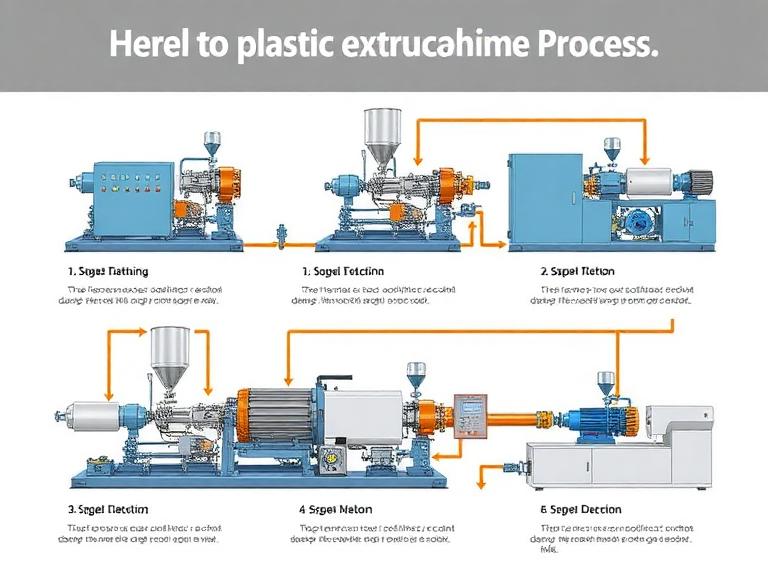
From our experience, operators who simply push buttons without understanding the thermodynamic and mechanical realities inside the barrel are setting themselves up for excessive scrap rates, material degradation, and catastrophic equipment failure. The Plastic extrusion machine process is not just a matter of melting plastic and pushing it out of a hole; it is a highly controlled sequence of material conveying, intense shear heating, pressurization, and thermal stabilization. We wrote this authoritative guide to dissect the five critical steps of this operation. Whether you are upgrading your facility or troubleshooting a persistent defect, mastering these five steps is completely non-negotiable.
To provide immediate clarity, we have summarized the complete Plastic extrusion machine process in the table below. This serves as a quick reference guide before we dive into the deep technical mechanics of each individual stage.
| Extrusion Step | Primary Function | Critical Parameters to Monitor | Common Pitfalls |
|---|---|---|---|
| 1. Feeding & Preparation | Introduce raw polymer resin and additives into the system. | Moisture content, feed rate, bulk density. | Bridging in the hopper; excessive moisture causing bubbles. |
| 2. Melting & Conveying | Transition solid resin into a homogenous molten state via shear and heat. | Barrel temperature zones, screw RPM, motor amperage. | Resin degradation from excessive shear; unmelted particles. |
| 3. Filtration | Remove physical impurities and build necessary backpressure. | Screen pack mesh size, breaker plate pressure drop. | Clogged screens leading to dangerous pressure spikes. |
| 4. Die Head Shaping | Force the molten plastic through a specific tooling profile. | Die temperature, melt flow index (MFI), pressure distribution. | Die swell; uneven wall thickness; weld line weaknesses. |
| 5. Cooling & Cutting | Solidify the shaped plastic and cut it to the required length. | Water bath temperature, vacuum calibration, haul-off speed. | Warping from rapid cooling; length discrepancies. |
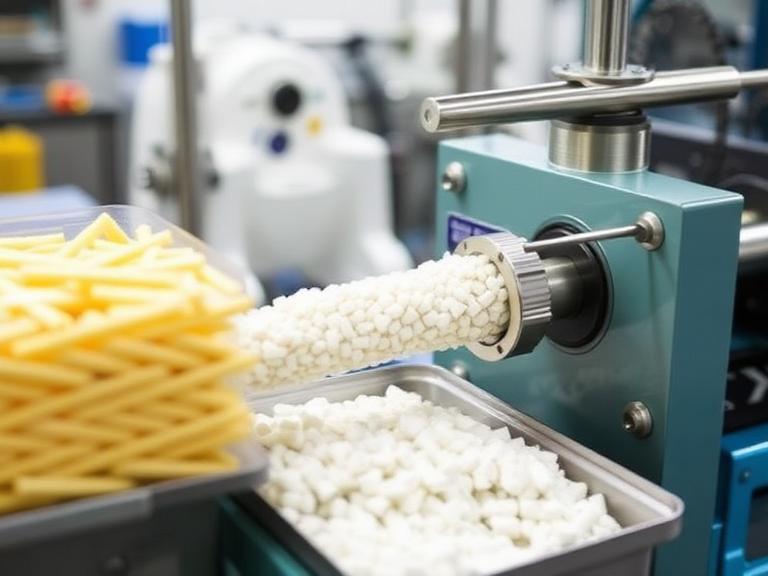
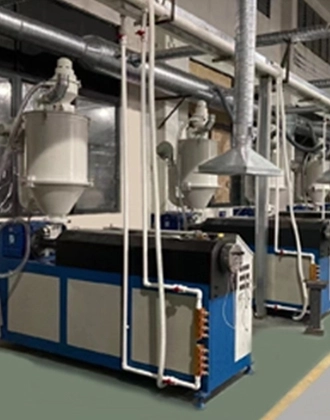
The first step in the Plastic extrusion machine process begins long before the plastic ever touches a heated barrel. Raw thermoplastic resin, typically in the form of small pellets or granules, is loaded into a hopper mounted at the rear of the extruder. We cannot overstate how important this preparation phase is. From our experience, approximately thirty percent of all final product defects originate right here in the hopper.
Certain plastics, such as PET and Nylon, are hygroscopic, meaning they absorb moisture directly from the ambient air. If this moisture is not removed via a dedicated hopper dryer prior to extrusion, the trapped water turns to steam inside the barrel, causing surface voids, structural weakness, and a loss of mechanical properties in the final product. Furthermore, the feeding stage is where critical additives are introduced. UV stabilizers, flame retardants, and colorants are blended with the base resin. To achieve vibrant, consistent coloration without degrading the base polymer, we recommend sourcing high-quality colorants from a reputable Masterbatch Manufacturer. Precision gravimetric blenders should be used to ensure the exact ratio of masterbatch to virgin resin is maintained throughout the entire production run. If the feed rate is inconsistent, the extruder will experience surging, leading to variations in the final product dimensions.
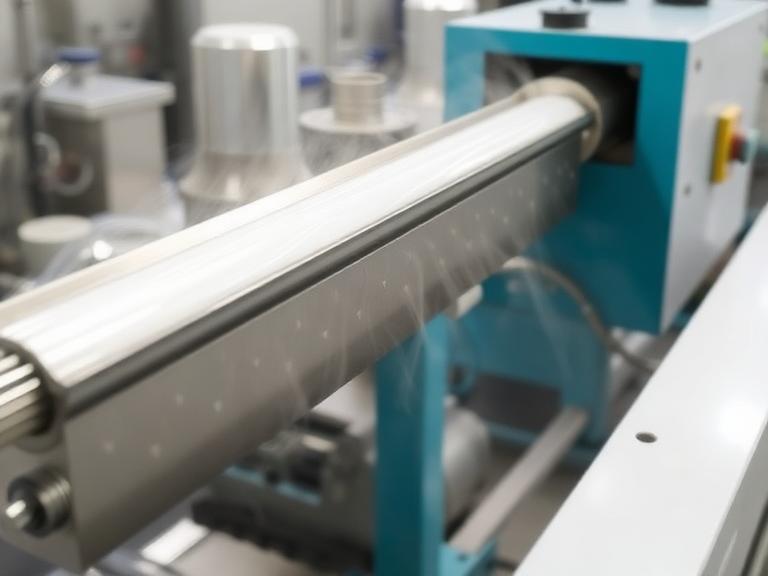
Once the material drops from the feed throat into the barrel, the most mechanically complex phase of the Plastic extrusion machine process begins. This is where your choice of equipment makes or breaks your operation. The material is caught by a rotating screw. You might assume that the electric heater bands wrapped around the outside of the barrel are solely responsible for melting the plastic. This is a dangerous misconception. In a properly optimized system, the vast majority of the thermal energy—often up to eighty percent—is generated internally through mechanical friction, known as shear heat, created by the rotating screw crushing the pellets against the barrel wall.
Selecting the correct Plastic Extruder geometry is critical here. For standard polyolefins like PE and PP, a robust SJ Single Screw Extruder is typically the most efficient choice, offering high output rates with a relatively simple mechanical footprint. The screw is divided into three zones: the feed zone (deep flights to move solid material), the transition zone (flights become shallower to compress and melt the plastic), and the metering zone (shallow flights to pump the homogenous melt forward at a steady pressure).
However, if you are processing heat-sensitive materials like PVC, we strictly advise against using standard single screws. PVC degrades rapidly if subjected to intense, localized shear heat. For these applications, we recommend utilizing an SJSZ Conical Twin Screw Extruder. Twin screws intermesh, providing superior positive displacement, gentle mixing, and strict control over the material's residence time inside the heated barrel, ensuring the PVC does not scorch and ruin your entire production run.
As the molten polymer leaves the metering zone of the screw, it is subjected to the third step of the Plastic extrusion machine process: filtration. At the end of the barrel sits a thick metal disc drilled with dozens of holes, known as the breaker plate. Attached to the front of this plate is a screen pack, which is a series of woven wire meshes of varying micron sizes.
The primary function of the screen pack is to filter out any unmelted resin, degraded burnt plastic, or foreign metallic contaminants before they can enter the sensitive die head and cause a blockage. However, the secondary function of the breaker plate assembly is equally critical: it creates massive backpressure within the barrel. This backpressure forces the polymer melt to mix more thoroughly in the metering zone, ensuring a uniform temperature and viscosity profile. Without this backpressure, the melt flow would be erratic, causing surging at the die exit. Operators must rigorously monitor the melt pressure transducers in this zone; a sudden spike in pressure indicates a clogged screen pack that requires an immediate screen change to prevent a catastrophic blowout.
Step four is where the formless, molten plastic is finally given its geometric identity. The pressurized melt is forced through a custom-machined steel die. The internal flow channels of the die must be meticulously engineered to ensure that the plastic travels at the exact same velocity across the entire cross-section of the profile. If the plastic flows faster in the center than at the edges, you will suffer from severe internal stresses and warping.
Different products require vastly different die structures. If you are operating a HDPE Pipe Production Line, the die will feature a central mandrel held in place by spider legs to create the hollow core of the pipe. The flow lines where the plastic separates around these spider legs and knits back together are called weld lines. If the die temperature is too low, these weld lines will become structural weak points, causing the pipe to fail under pressure testing.
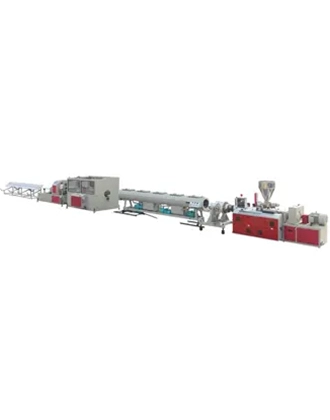
Similarly, when running a PVC Pipe Production Line, managing die swell—the tendency of the polymer to expand as it exits the restrictive pressure of the die—is a constant challenge. The die must often be machined slightly smaller than the target final dimensions to account for this natural polymer behavior. Precision is paramount here, and maintaining tight thermal tolerances across the die zones is the only way to guarantee a consistent wall thickness.
The final stage of the Plastic extrusion machine process is solidifying the shape and cutting it for transport. As the hot, pliable plastic exits the die, it is immediately pulled into a vacuum calibration and cooling tank. For pipes and complex profiles, the vacuum sizing sleeve holds the outer diameter of the plastic tightly against a chilled metal calibrator while high-pressure water sprays cool the material rapidly. To ensure uninterrupted, turbulent water flow that maximizes heat transfer in these crucial cooling tanks, manufacturing lines must rely on incredibly durable pumping hardware; we often see top-tier facilities integrating Precision Ceramic Pumps into their central water systems to handle the abrasive nature of unfiltered factory coolant without wearing down.
Downstream from the cooling tanks is the haul-off unit (or puller). From our experience, cheap haul-off units destroy profit margins. The speed of the puller must be perfectly synchronized with the output speed of the extruder. If the puller pulls too fast, the pipe wall becomes too thin; if it pulls too slow, the pipe wall becomes too thick and you waste expensive resin. When running a PPR Pipe Production Line intended for high-pressure hot water plumbing, these wall thickness tolerances are strictly governed by international building codes.
For high-capacity manufacturers utilizing a PVC Double Pipe Production Line, you have two strands of pipe being pulled simultaneously. The haul-off and the automated planetary saws at the end of the line must operate with absolute precision to cut both pipes cleanly and chamfer the edges without slowing down the upstream extrusion rate. Once cut, the pipes are automatically tipped into stacking racks, completing the manufacturing cycle.
To ensure the technical accuracy and engineering standards discussed in our breakdown of the Plastic extrusion machine process, we align our manufacturing methodologies with the following authoritative academic and governmental resources:
U.S. Department of Energy (DOE) - Advanced Manufacturing Office: Guidelines on energy efficiency in polymer processing and industrial heating.
National Institute of Standards and Technology (NIST): Standards for dimensional tolerances and mechanical property testing in manufactured polymer pipes.
Environmental Protection Agency (EPA): National Emission Standards for Polymer and Resin Manufacturing facilities.
 English
 العربية
 русский
 Español
 français
 português
 Deutsch
 italiano
 Türkçe
 한국어
한국어 日本語
日本語