Navigating the industrial machinery market can feel like walking through a minefield of hidden costs and opaque pricing models. If you are budgeting for a manufacturing facility, understanding the realistic plastic extrusion machine cost in 2026 is critical to your return on investment. From our experience working with processors globally, generic price lists rarely tell the full story. A standalone machine might look affordable on paper, but turning resin into a finished, sellable product requires a coordinated production line.
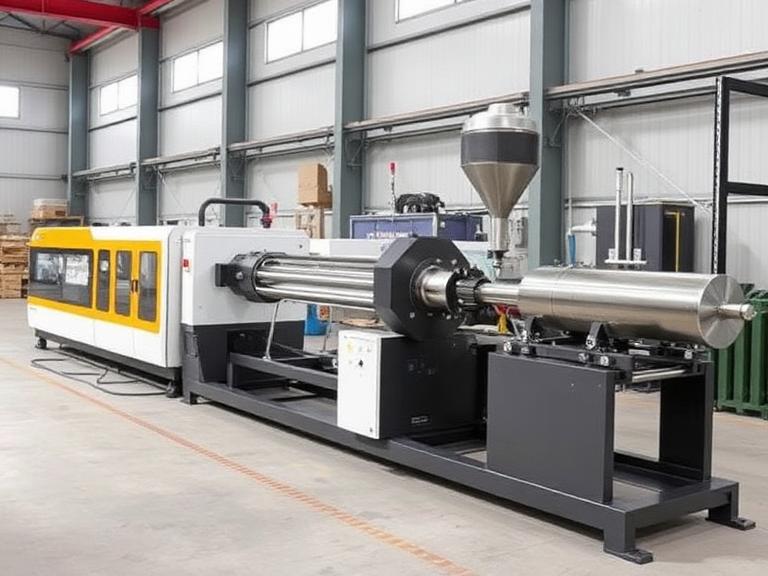
Xjgmachine offer a comprehensive range of Plastic Processing Equipment that includes cutting-edge technology and high-quality machines. Our equipment is suitable for various plastic processing applications, from compounding to thermoforming, and we prioritize durability, efficiency, and user-friendliness. Our products are designed and manufactured to meet the demands of modern plastic production and to help our customers achieve their production goals with ease.
In 2026, the cost of a plastic extrusion machine ranges significantly based on capacity, screw configuration, and automation [1].
Entry-level single screw extruders start around $15,000 to $30,000.
Mid-range production lines for pipes or profiles typically run $60,000 to $150,000.
Heavy-duty industrial twin-screw compounding lines or large-diameter pipe lines range from $150,000 to over $500,000.
Buyers must also budget an additional 15% to 30% for shipping, installation, downstream equipment, and facility integration.
In most professional situations, plastic extrusion is the backbone of continuous profile manufacturing. A plastic extrusion machine is a highly engineered mechanical device designed to melt raw plastic polymer—usually delivered as pellets or flakes—and force it through a custom-shaped die. This continuous process creates items with a fixed cross-sectional profile, such as pipes, weatherstripping, fencing, deck railings, window frames, plastic films, and thermoplastic coatings.
The process works by feeding raw thermoplastic material from a hopper into a heated barrel. Inside the barrel, a precisely machined rotating screw pushes the material forward. The combination of mechanical friction (shear) generated by the screw and external heat from the barrel bands melts the plastic into a uniform, viscous fluid. The molten plastic is then forced through a die, which gives it its final shape, before entering a cooling tank where water or air solidifies the profile.
We recommend buyers focus heavily on the L/D (Length to Diameter) ratio of the screw, as this dictates the machine's ability to thoroughly mix and melt specific resins. A machine optimized for PVC will fail to process HDPE efficiently without significant modifications.
To accurately assess the plastic extrusion machine cost, you must separate the core unit from the complete production line. In our testing and market analysis, pricing is strictly dictated by the screw configuration and downstream complexity .
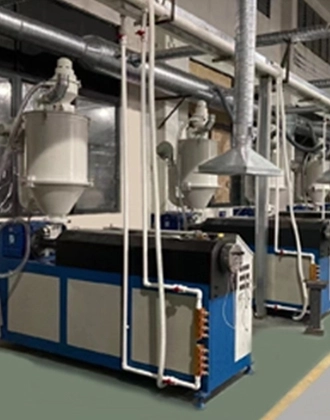
Single screw configurations are the workhorses of the industry. They are highly efficient for pumping and melting virgin materials where intense mixing is not required. If you are looking at a standalone Plastic Extruder, expect to pay between $20,000 and $80,000 depending on the motor size and output capacity (measured in kilograms per hour). These are ideal for basic PE, PP, and ABS applications.
Twin screw extruders feature two intermeshing screws inside the barrel. They are mandatory for compounding (mixing base resins with colorants, fillers, or flame retardants) and for processing heat-sensitive materials like rigid PVC. Because of the complex gearbox and precision machining required to prevent the screws from colliding under immense pressure, twin screw machines are significantly more expensive. A reliable twin screw machine will cost between $80,000 and $250,000 for the main unit alone [1, 4].
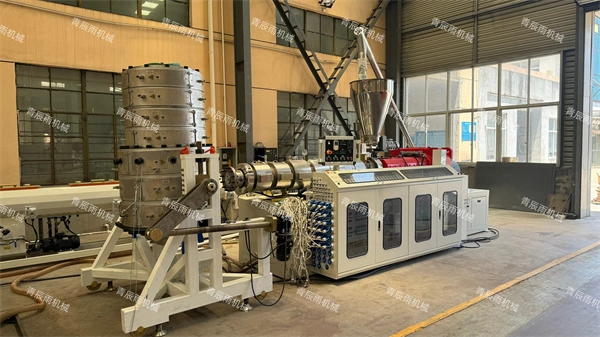
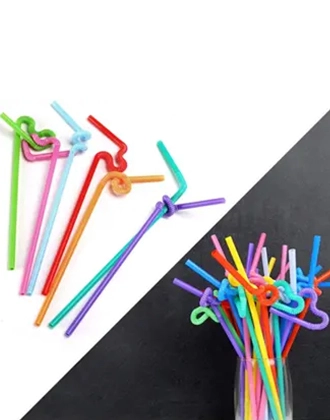
For commercial users, purchasing a bare extruder is useless without downstream equipment. When you purchase a complete Plastic Pipe Production Line, the cost includes the extruder, the vacuum calibration tank, cooling baths, haul-off tractors, cutting saws, and the stacking table. A mid-sized line for residential plumbing pipes ranges from $120,000 to $250,000. Conversely, a highly specialized, high-speed Plastic Straw Making Machine line might cost between $35,000 and $70,000 because of its smaller footprint and lower material volume requirements.
From our experience, facility managers often make the critical error of budgeting only for the primary extrusion line, ignoring upstream material preparation and downstream finishing. These ancillary systems are mandatory for operating a profitable facility.
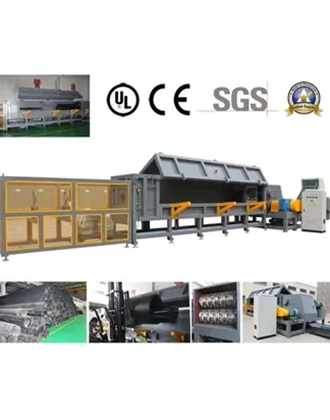
For upstream material handling, especially if you plan to utilize post-industrial or post-consumer scrap to lower resin costs, you will need size reduction equipment. Integrating a heavy-duty Plastic Crusher (typically $15,000 to $40,000) allows you to reclaim failed extrusions. For fine-powder applications like PVC profile manufacturing, a Plastic Pulverizer Machine ($20,000 to $60,000) is required to mill the material into the exact micron size necessary for the extruder to process it smoothly.
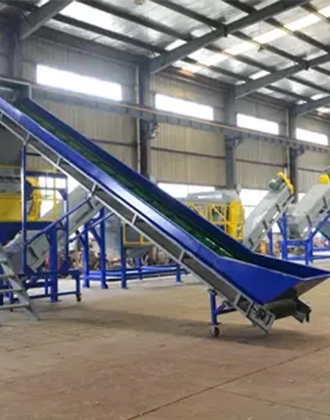
If you are establishing a sustainable, closed-loop facility, investing in a comprehensive Plastic Recycling Machine system—which includes washing, drying, and pelletizing stages—can add $150,000 to over $400,000 to your capital expenditure, though the long-term ROI in raw material savings is immense [2, 3].
Downstream finishing is equally important. Regulatory standards require traceability, meaning an in-line Plastic Pipe Laser Printer (adding $8,000 to $15,000) is necessary to print batch numbers and specifications directly onto the pipe without consumable ink costs. Furthermore, if you are manufacturing infrastructure products like a Plastic Floater/HDPE Pipe Floater, specialized blow-molding or rotational molding attachments might be required alongside the primary extrusion feed, altering the standard cost structure entirely.
Before committing six figures to machinery, you must understand whether the investment justifies the operational overhead. Plastic extrusion is high-volume manufacturing. If your product line does not support continuous, 24-hour operation, you may struggle to achieve an acceptable return on investment.
| Pros of Owning an Extrusion Line | Cons & Operational Limitations |
|---|---|
| Unmatched production volume and speed for continuous profiles. | High initial capital expenditure and rigid facility electrical requirements. |
| Low cost per part once the machine is calibrated and running steadily. | Considerable material waste during startup, purging, and color changeovers. |
| Ability to re-grind and recycle scrap material directly back into the hopper. | Not suitable for complex, 3D-shaped products (requires injection molding). |
| High degree of automation requiring minimal manual labor during stable runs. | Requires highly skilled technicians to troubleshoot die swell and thermal degradation. |
In our experience, matching the machine class to the business model is the single most important decision a buyer makes.
For Beginners and Small Startups: If you are testing a new product market fit (e.g., custom 3D printer filament or specialty medical tubing), a lab-scale single screw extruder is sufficient. These machines cost under $30,000, take up minimal floor space, and allow you to prototype without burning through thousands of pounds of resin an hour.
For Commercial Users: Mid-sized manufacturing operations focused on construction materials (PVC window profiles, PEX plumbing, siding) require a dedicated twin-screw setup with a robust cooling system. These companies need to prioritize machine uptime and should not cheap out on the gearbox quality. Expect to invest $150,000 to $300,000 fully installed.
For Heavy-Duty Applications: Municipal infrastructure suppliers producing large diameter HDPE gas or water mains require massive single-screw machines with oversized motors and cooling tanks up to 40 feet long. These installations are multimillion-dollar facility upgrades requiring specialized cranes just to change the die.
Who Does Not Need It: If your product has variable cross-sections, closed ends, or complex internal geometry (like a bottle, a toy, or an automotive dashboard component), extrusion is the wrong process. You need injection molding, blow molding, or rotational molding equipment instead.
| System Tier | Typical Cost Range | Best Suited For | Throughput (Capacity) | Footprint & Infrastructure |
|---|---|---|---|---|
| Entry-Level (Lab/Small Batch) | $20,000 - $50,000 | Prototyping, filament, small medical tubes | 10 - 50 kg/hr | Small; standard industrial power |
| Mid-Range (Standard Production) | $80,000 - $250,000 | PVC profiles, standard water pipes, straws | 100 - 400 kg/hr | Medium; requires dedicated cooling water loop |
| Heavy-Duty (Infrastructure) | $300,000 - $800,000+ | Large HDPE mains, thick sheet extrusion | 500 - 1500+ kg/hr | Massive; requires high voltage substations & chillers |
The most devastating mistake buyers make is ignoring the facility infrastructure. Extrusion machines consume massive amounts of electricity to heat the barrel and turn the screw. However, you also need to remove all that heat rapidly downstream to freeze the plastic into its shape. This requires expensive industrial water chillers and cooling towers. If your building cannot support a 480V, 3-phase power supply or lacks proper water drainage, your installation costs could easily double.
Another common error is purchasing a machine based strictly on maximum output claims. An extruder rated for 500 kg/hr might only run a high-quality rigid PVC profile at 250 kg/hr due to the risk of material burning (degradation) at higher shear rates. Always request a trial run with your specific resin grade before finalizing payment.
To help you make a commercial purchasing decision, we have compiled the ultimate buying checklist. Do not issue a purchase order until you have verified the following parameters with the manufacturer.
| Component | What to Verify | Why it Matters for ROI |
|---|---|---|
| Screw & Barrel Material | Are they bimetallic or nitrided? | Standard steel wears out rapidly if you process abrasive materials like glass-filled polymers or recycled resins. Bimetallic barrels last 3x longer. |
| Motor and Drive System | Is it an AC vector drive or servo motor? | Energy costs will eat your margins. Modern servo motors consume 20-30% less electricity than older DC drives. |
| Control System (PLC) | Is it an open-source platform (e.g., Siemens, Allen-Bradley)? | Proprietary control boards lock you into the manufacturer for expensive repairs. Open-source PLCs can be serviced by local electricians. |
| Downstream Sizing | Does the vacuum tank match the maximum extruder output? | A fast extruder is useless if the cooling tank is too short. The line can only run as fast as the cooling system allows. |
From our experience, if you are entering the market to produce high-demand construction materials like PVC pipes or decking profiles, we recommend completely bypassing entry-level single screw machines. You must invest in a mid-range conical twin-screw production line. While the initial capital expenditure is higher (around $120,000 to $180,000), the twin-screw design allows you to process dry-blend PVC powder directly without the expensive intermediate step of buying pre-compounded pellets. This saves up to 20% on raw material costs, which pays for the machine upgrade within the first eight months of full production.
Furthermore, ensure you purchase your upstream granulators and downstream haul-offs from the same vendor or system integrator. Mixing and matching components from different manufacturers to save a few thousand dollars inevitably leads to synchronization issues, where the puller tugs the material faster than the extruder pushes it, resulting in off-spec, unsellable products.
Unlike injection molding machines, extrusion lines require significant linear floor space. A standard pipe or profile line requires between 60 to 100 feet (18 to 30 meters) in length to accommodate the extruder, cooling tanks, haul-off, and cutting stations. You also need ample space around the machine for forklift access to move resin gaylords and finished product pallets.
Under normal operating conditions processing virgin PE or PVC, a high-quality nitrided screw and barrel can last 5 to 7 years (20,000 to 30,000 operating hours). However, if you are processing highly abrasive recycled materials or glass-fiber reinforced plastics, wear can require screw replacement in as little as 12 to 18 months.
Typically, no. The machine price covers the extruder mechanism. The extrusion die—the custom-machined steel block that gives the plastic its shape—is priced separately. Simple pipe dies cost $2,000 to $5,000, while complex multi-chamber window profile dies can cost between $15,000 and $40,000 each.
Plastics Industry Association (PLASTICS) - Economic and machinery data for the polymer processing sector.
Society of Plastics Engineers (SPE) - Technical standards on extrusion technology, L/D ratios, and thermal material handling.
Plastics Technology Magazine - Industry market research regarding machinery cost benchmarks and total cost of ownership models.
 English
 العربية
 русский
 Español
 français
 português
 Deutsch
 italiano
 Türkçe
 한국어
한국어 日本語
日本語