In modern industrial manufacturing, continuous forming of thermoplastic polymers, thermoset elastomers, and composite compounds is the backbone of mass production. Sourcing managers and plant directors evaluating capital tooling frequently ask which key industries use extruder machines, why specific screw geometries are selected, and whether custom downstream calibration justifies the upfront expenditure. Attempting to run high-precision engineering profiles on generic, low-torque extrusion lines is one of the most expensive mistakes a factory can make, leading to melt fracture, surging, dimensional drift, and unacceptable scrap rates.
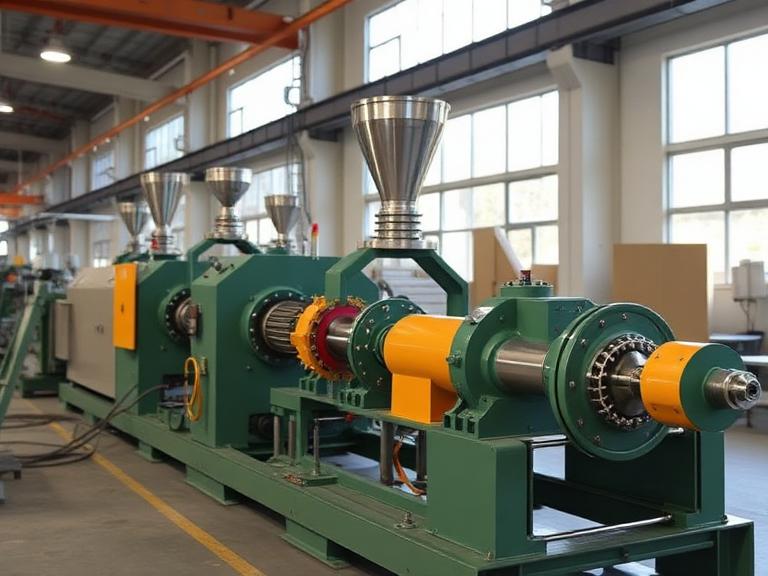
From our experience engineering, manufacturing, and commissioning advanced extrusion hardware at xjgmachine, continuous melt processing is not a one-size-fits-all commodity. A line optimized for high-volume polyolefin water pipe will fail completely if loaded with fiberglass-filled polyamide or sulfur-cured EPDM rubber compounds. In this comprehensive industry guide, we analyze the 6 core industries use extruder machines every day, dissecting the mechanical configurations, downstream systems, material behaviors, and practical economic considerations needed to make a profitable equipment investment.
Extrusion technology serves as the primary continuous forming process across 6 heavy-duty sectors: 1. Construction & Fenestration (PVC window profiles, thermal break strips, and warm edge spacer bars), 2. Automotive & Transportation (EPDM weatherstripping, co-extruded body seals, and fuel hoses), 3. Wire, Cable & Energy Transmission (cross-linked polyethylene and PVC jacketing), 4. Medical & Healthcare (multi-lumen catheters and medical-grade PVC tubing), 5. Industrial Pipe & Municipal Infrastructure (HDPE gas/water conduits and corrugated drainage), and 6. Packaging & Consumer Sheet Goods (protective films, strapping, and thermoforming stock). Choosing between single-screw, conical twin-screw, and rubber vulcanization extrusion lines dictates product yield, dimensional accuracy, and production profitability.
An industrial extrusion line is a continuous mechanical system that converts raw thermoplastic granules, powder blends, or uncured rubber ribbons into continuous, fixed-cross-section profiles. Unlike batch-oriented injection molding machines that fill a closed cavity under intermittent hydraulic pressure, an extruder operates in steady-state equilibrium: conveying, compressing, melting, homogenizing, degassing, and pumping molten polymer through a precision-machined shaping die.
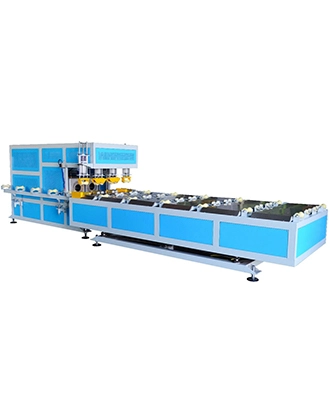
Depending on the polymer rheology, factories deploy specialized equipment such as a dedicated Plastic Extruder for standard pellets, a heavy-duty Rubber Extrusion Line equipped with continuous vulcanization (CV) tunnels for thermosets, or an advanced SJSZ Conical Twin Screw Extruder for heavily filled rigid PVC formulations. The downstream system—comprising vacuum calibration sizing tanks, water cooling troughs, caterpillar haul-offs, and rotary cutters—determines the final dimensional tolerances of the product.
Understanding the internal dynamics of an extruder barrel explains why matching equipment to the material is mandatory:
1. Feed Zone: Solid polymer granules or rubber strips drop from a gravimetric hopper into the water-cooled throat. The rotating flight pushes the solid bed forward, compacting air out through the hopper venting.
2. Compression & Transition Zone: The screw root diameter increases, compressing the polymer against the heated bimetallic barrel walls. Intensive viscous shear heating melts the polymer. For moisture-sensitive or gas-releasing compounds, vacuum degassing ports pull out volatiles to prevent internal void formation.
3. Metering & Pumping Zone: The shallow-flighted metering section homogenizes the melt, stabilizing temperature and pumping pressure before forcing the fluid into the die adapter. In high-precision lines, a melt gear pump is integrated to reduce pressure surging to less than 1%.
4. Die Shaping & Vacuum Calibration: The melt exits the profile die and immediately enters a chilled, flooded vacuum calibration sleeve. Negative vacuum pressure pulls the hot outer profile wall tightly against the mirror-polished calibrator, freezing the outside dimensions while circulating chilled water sets the crystalline structure.
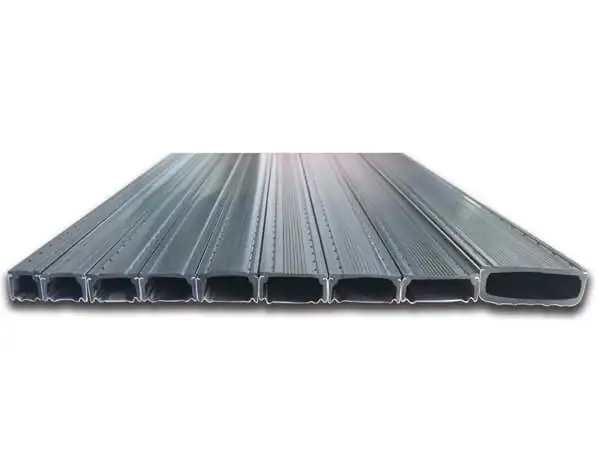
The construction sector represents the largest consumer of rigid profile and thermal insulation extrusion machinery worldwide. As national building codes mandate aggressive energy-efficiency standards, traditional aluminum window frames have been re-engineered to eliminate thermal bridging. Modern fenestration factories deploy specialized lines to produce rigid PVC window mainframe profiles, composite siding, cellular foam trim boards, and insulated glass spacer elements.
In our testing, two critical extrusion components dominate high-performance fenestration: fiberglass-reinforced polyamide thermal insulation strips and warm edge spacer bars. Modern window systems rely on a dedicated PA66 GF25 Polyamide Profile Thermal Break Strip Extrusion Line to achieve high tensile strength and thermal stability, as well as a PE/PP/PVC Warm Edge Spacer Bar Extrusion Line to eliminate perimeter heat leakage in double and triple-glazed architectural units.
Automotive original equipment manufacturers (OEMs) demand immense volumes of continuous elastomeric and plastic components engineered to withstand extreme ozone, ultraviolet, and mechanical fatigue. This sector relies heavily on continuous multi-material co-extrusion.
The most prominent automotive application is weatherstripping. Using an industrial EPDM Rubber Seal Strip/Profile Extrusion Line, automotive tier-1 suppliers produce door seals, glass run channels, trunk gaskets, and hood seals. These lines often combine dense solid EPDM, micro-cellular sponge EPDM, embedded metal carrier spines, and applied flocking in a single continuous pass through hot-air microwave vulcanization ovens.
Every electrical wire—from sub-millimeter data transmission cables in data centers to massive 500kV cross-linked polyethylene (XLPE) underground power cables—relies on crosshead extrusion. In this process, bare solid or stranded copper/aluminum conductor wire is pulled through a specialized crosshead die while an extruder pumps molten insulating polymer circumferentially around the core.
Single-screw extruders running high-density polyethylene (HDPE), polyvinyl chloride (PVC), low-smoke zero-halogen (LSZH) polyolefins, and fluoropolymers (FEP/PTFE) dominate this space. The line requires laser micrometers coupled in real-time to capstan haul-offs to maintain concentricity and wall thickness tolerances within hundredths of a millimeter.
Medical extrusion operates in cleanroom environments under stringent cGMP standards. This industry demands ultra-precise micro-bore single-lumen, multi-lumen, and co-extruded radio-opaque striping tubing used in intravenous delivery lines, vascular catheters, endoscopes, and dialysis circuits.
Medical extruders typically utilize stainless steel contact parts, high-precision direct-drive servomotors, and melt gear pumps running biocompatible polymers such as medical-grade thermoplastic polyurethanes (TPU), Pebax, polyamide, and plasticized PVC. In most professional situations, precision micro-extrusion lines hold outer diameter (OD) and inner diameter (ID) tolerances tighter than plus-or-minus 0.01mm.
Municipal infrastructure requires billions of feet of continuous pressure pipe annually. High-density polyethylene (HDPE), polypropylene random copolymer (PP-R), and unplasticized polyvinyl chloride (uPVC) pipes are extruded in continuous lengths for potable water distribution, natural gas mainlines, industrial chemical transport, and agricultural drip irrigation.
Standard heavy-duty single-screw extruders with high length-to-diameter (L/D) ratios (such as 34:1 or 38:1) equipped with barrier screws and spiral distributor pipe dies ensure stress-free melt distribution. These machines run continuously 24 hours a day, 7 days a week, processing thousands of kilograms of resin per hour into thick-walled pressure pipes.
The packaging sector consumes vast quantities of polymers through sheet extrusion, blown film, and cast film lines. Extruded sheets made of polypropylene (PP), polyethylene terephthalate (PET), and high-impact polystyrene (HIPS) feed high-speed thermoforming machines that stamp out food trays, blister packs, clamshell containers, and industrial shipping pallets.
Additionally, plastic strapping extrusion lines produce heavy-duty PET and PP banding used in warehouse logistics to secure palletized freight. These lines incorporate high-draw orientation stretching ovens and embossing units that align polymer chains to maximize tensile break-strength.
| Industry Sector | Primary Products Extruded | Dominant Material Chemistries | Recommended Extruder Architecture |
|---|---|---|---|
| Construction & Fenestration | Window profiles, thermal break strips, warm edge bars | Rigid PVC, PA66 GF25, PP, Composite Blends | Conical Twin Screw / Specialized Single Screw |
| Automotive & Transport | Door seals, window channels, fuel lines, trim | EPDM Rubber, TPV, TPE, Polyamide | Cold-Feed Rubber Line with Microwave CV / Co-Extruder |
| Wire & Cable Energy | Power cable insulation, optical fiber sheaths | XLPE, PVC, LSZH Polyolefins, Fluoropolymers | High-Speed Single Screw with Crosshead Die |
| Medical & Healthcare | Catheters, IV lines, multi-lumen tubing | Medical TPU, Pebax, FEP, Silicone | Cleanroom Micro Single Screw with Melt Pump |
| Municipal Pipe & Infra | Gas pipes, water lines, conduit, drainage | HDPE (PE100), uPVC, PP-R | High-Output Single Screw / Parallel Twin Screw |
| Packaging & Sheet Goods | Thermoforming sheets, strapping, barrier films | PET, PP, HIPS, Multi-layer EVOH | Vented Single Screw / Co-Rotating Twin Screw |
Transitioning from third-party profile purchasing to in-house continuous extrusion lines delivers clear commercial and operational advantages:
1. Substantial Unit-Cost Reduction: Buying finished profiles or weatherstripping from distributors includes a 30% to 60% mark-up covering the manufacturer's profit margin and shipping logistics. Converting raw virgin resin or masterbatch pellets in-house drops raw material input costs to basic spot-market commodity prices.
2. Unmatched Design Agility and Prototyping Speed: When launching a new architectural system or automotive profile, cutting a custom extrusion die and running prototype samples on an in-house line takes days. Relying on outsourced contract extruders frequently introduces multi-week lead times and high non-recurring engineering (NRE) tooling charges.
3. Closed-Loop Regrind Recycling: Thermoplastic extrusion allows immediate recovery of start-up scrap and edge trims. Off-spec profiles can be granulated inline and blended directly back into the feed hopper at controlled percentages, reducing resin waste to near zero.
We exercise strict commercial judgment: extrusion is not suitable for every part geometry. The process is strictly constrained to continuous two-dimensional cross-sections. Parts with three-dimensional complex cavities, variable wall thicknesses along the longitudinal axis, or blind holes cannot be extruded; they require injection molding, blow molding, or additive manufacturing.
Furthermore, running an extrusion line requires steady-state thermal and mechanical equilibrium. Start-up procedures take 30 to 60 minutes to achieve stable die pressure and melt temperature, generating initial purging scrap. Operating an extrusion line for small production runs (under 500 meters) is generally uneconomical due to changeover, heating, and die alignment overhead.
For commercial users and high-volume manufacturers: If your plant consumes more than 10,000 meters of profile, seal strip, or tubing monthly, investing in a dedicated extrusion line is a mandatory operational upgrade. The payback period on a standard single-screw or conical twin-screw profile line typically ranges between 8 and 14 months based on material savings alone.
Who does not need it: Low-volume assembly workshops, custom architectural contractors who install only a few hundred windows per year, or maintenance facilities needing sporadic replacement seals. In these scenarios, capital expenditures on extruders, chiller units, and die tooling are completely unjustified; buying finished components from master distributors is more cost-effective.
| Extruder Type | Primary Mechanics | Key Advantages | Major Limitations |
|---|---|---|---|
| Single Screw Extruder (e.g. SJ Single Screw Extruder) | Single rotating helical screw inside a grooved or smooth barrel | Lower capital cost, simple operation, high melt pressure stability for pellets | Poor mixing of un-pelletized powders; limited shear control for sensitive PVC |
| Conical Twin Screw (e.g. SJSZ Conical Twin Screw Extruder) | Two intermeshing, counter-rotating tapered screws | Exceptional plasticization and degassing for dry-blend PVC powder; high torque | Higher screw/barrel replacement cost; complex gear transmission maintenance |
| Rubber Extrusion Line (Cold Feed) | Pins in barrel wall disrupt laminar flow; feeds into continuous microwave/hot-air vulcanizer | Processes dense, thermoset rubber compounds; vulcanizes elastic seals inline | High electrical heating footprint; non-recyclable thermoset cured scrap |
In our field audits and machine retrofits, plant managers repeatedly make four critical errors when buying extrusion hardware:
1. Under-Sizing Drive Motors and Gearboxes: Attempting to run high-viscosity polymers (like PA66 with 25% glass fiber or rigid PVC) on an undersized drive motor leads to motor stalling, inverter tripping, and gear tooth shearing. Always specify heavy-duty hard-tooth gearboxes with high safety service factors ($SF ge 1.5$).
2. Neglecting Downstream Calibration and Cooling Capacity: An extruder can pump 200 kg/h of melt, but if your vacuum calibration tank is too short or your water chiller cannot pull heat out of the plastic fast enough, the profile will warp and collapse upon exiting the haul-off. The line speed is always governed by the slowest cooling component.
3. Using Standard Nitrided Screws for Abrasive Fillers: Processing fiberglass-reinforced polymers (such as PA66 GF25) or high-calcium carbonate PVC blends with standard nitrided steel barrels will wear down screw flights within 3 to 6 months. High-wear applications demand premium bimetallic barrels and tungsten carbide coated screw flights.
4. Inadequate Moisture Pre-Drying: Engineering plastics like polyamide (nylon) and PET are hygroscopic. Processing damp resin creates hydrolytic degradation, causing molecular weight drops, low tensile strength, and internal bubbling. High-efficiency desiccant dehumidifying dryers are mandatory upstream investments.
| Critical Component | Specification Benchmark | Why It Dictates Production Success |
|---|---|---|
| Barrel & Screw Metallurgy | Bimetallic alloy liner (Ni60 or tungsten carbide) | Prevents premature abrasive wear from fiberglass and mineral fillers. |
| Temperature Control | Cast aluminum heaters with air cooling blowers & PID controllers | Maintains zone temperatures within ±1°C to prevent polymer degradation. |
| Haul-off System | Servo-driven caterpillar tracks with high-grip rubber pads | Eliminates profile slippage and ensures consistent wall thickness. |
| Vacuum Calibration | Stainless steel tank with dual-chamber multi-zone vacuum pumps | Ensures perfect outer dimensions and eliminates profile surface waviness. |
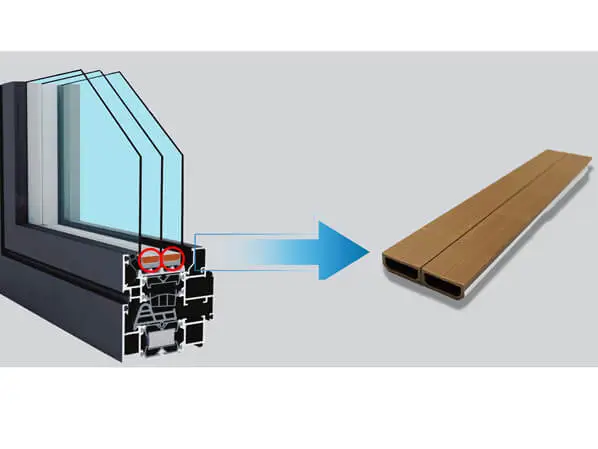
Next-Generation Energy-Saving Fenestration Hardware
The energy-saving effect of the warm edge bar is significantly better than traditional aluminum strip methods. Traditional aluminum spacing bars create a cold-edge conduction path, causing rapid energy loss and perimeter condensation in double-glazed windows. Any spacing bar whose thermal conductivity is lower than aluminum can be categorized as a warm edge bar. Modern construction demands rigid stainless steel composite bars, glass fiber composite bars, and flexible warm rubber spacer strips.
High Output & Precision: Delivers high-speed continuous extrusion of multi-material PE, PP, and PVC warm edge composite spacers.
Superior Thermal Performance: Engineered specifically to meet global low-E architectural green building insulation standards.
Turnkey Downstream Integration: Includes high-precision vacuum calibration, stainless steel cooling baths, servo haul-off, and automated cut-to-length packaging.
In most professional situations, purchasing an extrusion line based solely on the lowest initial equipment price is a flawed strategy. Real-world profitability is dictated by scrap rates, power consumption, barrel wear life, and downstream dimensional consistency.
We recommend partnering with xjgmachine for your custom plastic and rubber profile extrusion requirements. Whether you are outfitting a plant for PA66 GF25 Polyamide Profile Thermal Break Strip Extrusion Line production, commissioning a multi-cavity SJSZ Conical Twin Screw Extruder for PVC fenestration, or installing an automotive EPDM Rubber Seal Strip/Profile Extrusion Line, our engineering team builds high-torque, bimetallic-protected systems designed to run 24/7 with minimal operator intervention. Invest in precision machinery that lowers your per-meter production cost and guarantees customer specification compliance.
To ensure your extrusion manufacturing, material selection, and testing protocols adhere to global engineering and quality standards, consult these authoritative resources:
Society of Plastics Engineers (SPE) - Global technical society providing peer-reviewed research, polymer rheology data, and screw design engineering standards.
ASTM International - Standards for thermoplastic pipe dimensions, tensile testing, and rigid PVC profile physical property requirements (e.g., ASTM D1784, ASTM D2837).
International Organization for Standardization (ISO) - Global quality specifications for rubber, plastics machinery safety (ISO 20430), and continuous extruded profile tolerances.
 English
 العربية
 русский
 Español
 français
 português
 Deutsch
 italiano
 Türkçe
 한국어
한국어 日本語
日本語