The additive manufacturing and plastic extrusion industries are facing a massive waste crisis. Commercial 3D print farms, filament manufacturers, and packaging producers routinely generate up to 30% scrap material in the form of failed prints, support structures, transition purges, and floor sweepings. Dumping Polylactic Acid (PLA) into a landfill is not only an ecological failure, but it is also a staggering financial loss. If you are operating at an industrial scale, treating your scrap as garbage destroys your profit margins.
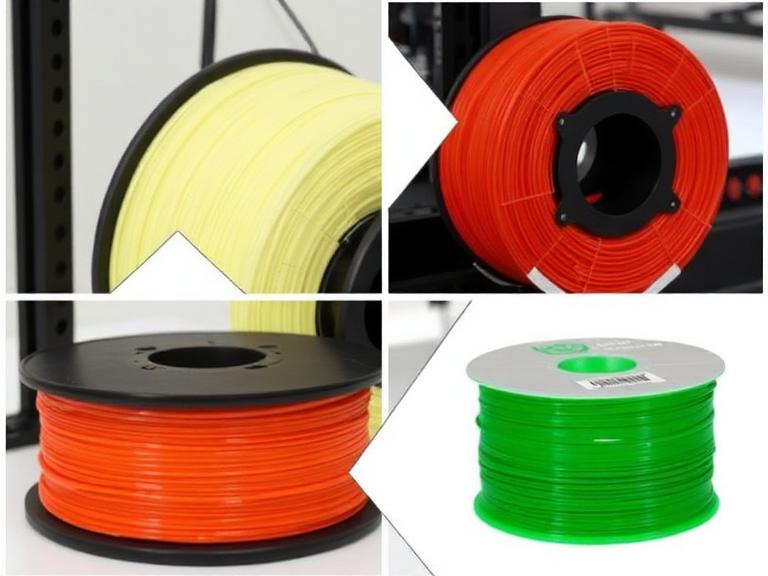
From our experience engineering advanced volume reduction systems at Xjgmachine, we routinely see facility managers attempting to process rock-hard PLA purges with light-duty equipment, resulting in shattered rotor shafts and motor burnouts. PLA is uniquely brittle, yet highly susceptible to thermal degradation from friction. You cannot just throw it into any generic grinder. You need a purpose-built machine that can recycle PLA filament efficiently without degrading its molecular structure. In this comprehensive practitioner's guide, we will break down the exact four types of industrial machines required to process PLA waste, evaluate their commercial viability, and help you make a definitive buying decision.
A single piece of equipment rarely handles the entire PLA recycling lifecycle. To effectively process rigid waste back into usable material, you must utilize the correct machine that can recycle PLA filament at each stage. The four essential types are: 1. Single/Double Shaft Shredders (for breaking down massive, dense PLA transition purges and large failed prints), 2. Plastic Crushers/Granulators (for reducing shredded chunks into uniform 8mm-12mm flakes), 3. Plastic Pulverizers (for grinding flakes into a fine powder for specialized compounding), and 4. Pelletizing Lines (for melting the flakes or powder and extruding them back into uniform virgin-like pellets). For commercial users, integrating a Shredder-to-Crusher pipeline is the absolute minimum requirement.
A machine that can recycle PLA filament is an industrial mechanical system designed to physically reduce the volume of solid Polylactic Acid waste and prepare it for thermal re-extrusion. PLA presents a unique challenge in plastics processing: it is highly crystalline and rigid at room temperature, making it prone to shattering, but it possesses a very low glass transition temperature (approximately 60°C). This means that if a machine generates too much friction, the PLA will soften, gum up the cutting chamber, and cause a catastrophic jam.
Therefore, any machine tasked with recycling PLA must prioritize high-torque cutting with strict thermal management. The equipment must transform bulky, irregular waste—such as tangled bird-nests of filament, dense extruder purges, or heavy 3D printed prototypes—into uniform particles that can be consistently fed into the hopper of an extruder.
In most professional situations, recycling PLA is not a one-step process. It requires a sequence of size reduction. Here is how the four critical types of machines operate:
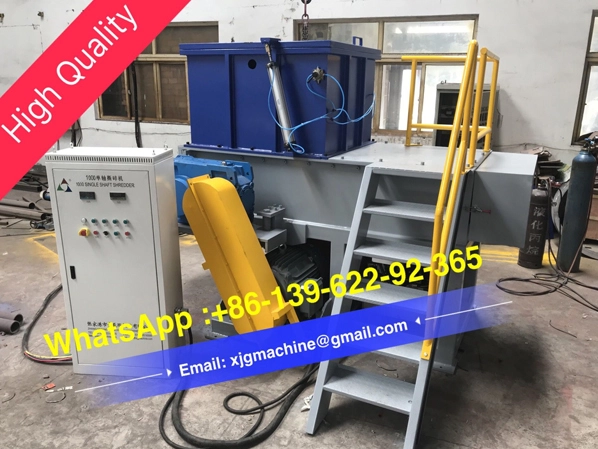
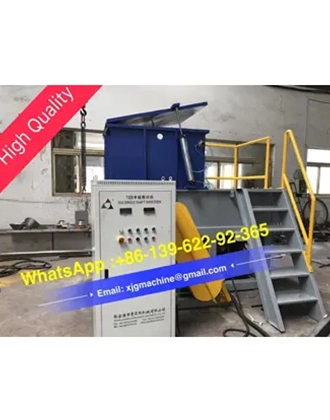
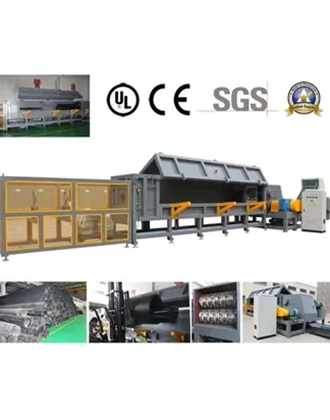
When you have a 10-pound solid block of purged PLA from an extruder cleanout, you cannot put it into a high-speed crusher. You will destroy the blades. You must use a Single Shaft Shredder or a Double Shaft Shredder. These machines operate at very low speeds (usually 15-30 RPM) but generate massive torque. They use large, hardened steel hooks to bite into dense blocks and tear them into manageable 2-inch to 4-inch chunks. They generate almost no heat, which is perfect for temperature-sensitive PLA.
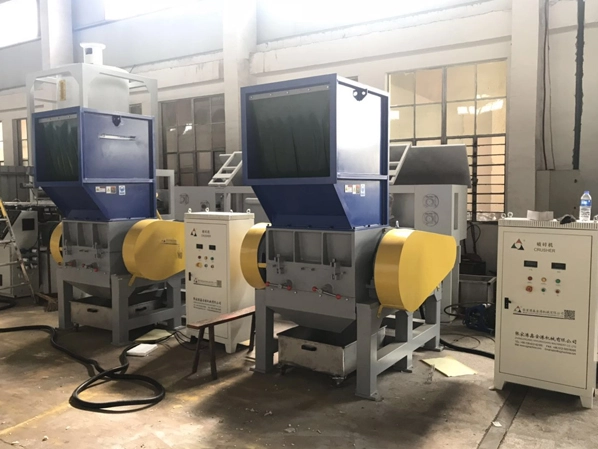
Once the material is shredded (or if you are dealing with lighter failed 3D prints and loose filament), it moves to a Plastic Crusher. Unlike shredders, crushers operate at high speeds. They utilize a spinning open-rotor design with angled knives that shear the PLA against stationary bed knives. The material bounces around the cutting chamber until it is small enough to fall through a sizing screen (typically 8mm or 10mm). Because of the high speed, sharp blades are mandatory to prevent friction-induced melting.
For advanced recycling, particularly when you need to dry-blend recycled PLA with color pigments or additives before re-extrusion, flakes are not small enough. A Plastic Pulverizer Machine uses high-speed grinding discs to mill the PLA flakes into a fine powder (typically 20 to 30 mesh). Pulverizers for PLA must be equipped with water-cooling jackets around the grinding chamber to absorb the intense frictional heat and prevent the powder from fusing together.
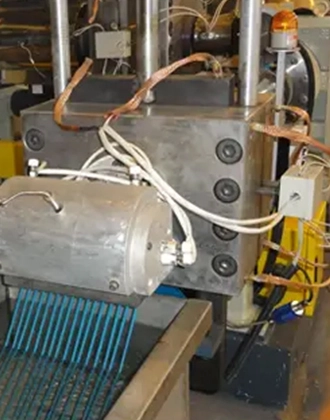
The final step is converting the flakes or powder back into raw material. A PE PP Pelletizing/Granulating Line (which can be engineered for PLA temperature profiles) melts the regrind, passes it through a screen changer to filter out impurities, and extrudes it into strands. These strands are cooled in a water bath and chopped into uniform pellets, ready to be fed back into a filament extruder or an injection molding machine.
| Machine Type | Primary Function | Input Material | Output Size |
|---|---|---|---|
| Shredder (Single/Double Shaft) | Primary volume reduction of dense, massive blocks. | Large purges, thick failed prints, bulk filament spools. | 2 to 4 inch coarse chunks. |
| Plastic Crusher | Secondary volume reduction and granulation. | Shredded chunks, loose filament, thin-walled prints. | 8mm to 12mm uniform flakes. |
| Pulverizer | Fine milling for advanced compounding and blending. | 8mm to 12mm flakes. | 20 to 30 mesh fine powder. |
| Pelletizing Line | Thermal re-extrusion into virgin-like raw material. | Flakes or Powder. | 3mm uniform cylindrical pellets. |
We recommend internal recycling systems for one simple reason: supply chain independence. By recovering your scrap, you effectively reduce your raw material procurement costs by up to 25%. If you are manufacturing products on a PP/PLA Drinking Straw Making Machine, the skeleton trim and start-up waste can be immediately granulated and fed back into the hopper. Furthermore, establishing a closed-loop recycling system satisfies corporate sustainability mandates and allows you to market your products as environmentally responsible.
You must exercise commercial and practical judgment: PLA degrades every time it is subjected to a heat cycle. The limitation of recycling PLA is that the polymer chains break down, resulting in a lower Intrinsic Viscosity (IV) and a more brittle final product. In our testing, you cannot use 100% recycled PLA for structurally demanding applications. You must blend the recycled regrind (typically 20% to 30%) with virgin PLA pellets to restore mechanical strength. Additionally, PLA is highly hygroscopic. It absorbs moisture from the air, which causes severe hydrolysis (bubbling and snapping) during re-extrusion if the regrind is not thoroughly dried in a desiccant hopper prior to melting.
For commercial users: Any facility generating more than 50 kilograms of PLA scrap per day must invest in industrial volume reduction. Filament extrusion factories, large-scale 3D print farms, and packaging manufacturers require a heavy-duty machine that can recycle PLA filament. The ROI on a high-quality crusher or shredder is typically realized within 8 to 12 months through material savings.
Who does not need it: For beginners or desktop hobbyists generating 2 kilograms of waste a month, spending thousands of dollars on a commercial granulator is an absurd misallocation of capital. Do not buy desktop "micro-shredders"—they lack the torque to process dense parts and frequently jam. Hobbyists should utilize mail-in recycling services instead.
| Feature | Double Shaft Shredder | Plastic Crusher (Granulator) |
|---|---|---|
| Cutting Mechanism | Low-speed tearing and shearing (High Torque). | High-speed slicing against bed knives. |
| Heat Generation | Very Low (Ideal for heat-sensitive PLA). | Moderate to High (Requires sharp blades). |
| Best Use Case | Destroying thick, dense, heavy blocks of solid plastic. | Creating uniform flakes ready for an extruder hopper. |
| Verdict | Buy if your scrap consists of massive, solid purges. | Buy if your scrap is mostly loose filament and thin prints. |
The most catastrophic mistake operators make is failing to separate polymers. If you accidentally throw a handful of PETG or ABS filament into a bin of PLA scrap, you will ruin the entire batch of regrind. Because these plastics have different melting points, the contaminant plastic will not melt in the extruder, causing severe nozzle clogs and weak layer adhesion in the final product.
Another profound error is ignoring blade maintenance. For heavy-duty applications, processing brittle PLA dulls standard steel blades quickly. Dull blades do not cut; they smash and rub. This friction melts the PLA inside the cutting chamber, wrapping the rotor in a solid, impenetrable cocoon of plastic that takes hours to chisel out. You must maintain razor-sharp clearances between your rotor and stator knives.
When procuring a machine that can recycle PLA filament, prioritize the rotor design and cooling capabilities. Look for crushers with a "V-cut" or staggered rotor design, which concentrates the cutting force and reduces energy consumption. If you are purchasing a pulverizer, water-cooling is an absolute, non-negotiable necessity. Without a chilled grinding chamber, PLA will simply melt into a useless paste instead of forming a fine powder.
| The Pros (Advantages) | The Cons (Challenges) |
|---|---|
| Recoups up to 25% of raw material costs. | Requires upfront capital investment in machinery. |
| Provides total control over the purity of your regrind. | Recycled PLA loses some mechanical tensile strength. |
| Reduces corporate waste disposal and landfill fees. | Requires strict pre-drying protocols to prevent hydrolysis. |
| Solves the bottleneck of stockpiling unusable scrap inventory. | Demands regular blade sharpening and machine maintenance. |
In most professional situations, bridging the gap between raw scrap and usable extruder feedstock requires precise milling. If your production relies on blending recycled PLA with specific colorants or additives, standard flakes will not homogenize properly in the extruder barrel. You require fine, uniform powder.
We highly recommend integrating the Xjgmachine Plastic Pulverizer Machine into your recycling pipeline.
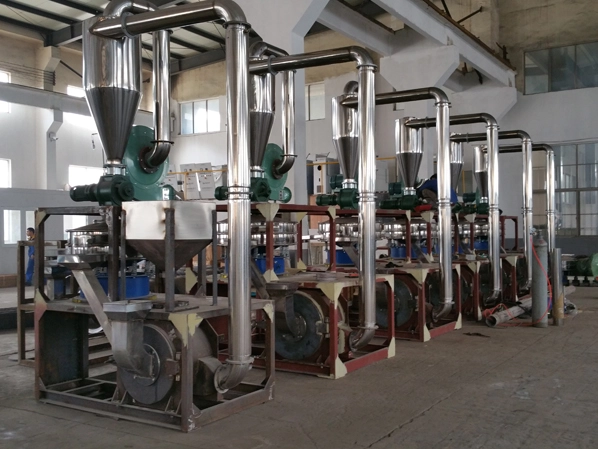
Engineered for high-efficiency milling of heat-sensitive polymers like PLA, this unit features a robust water-cooling system to ensure the friction generated by the grinding discs does not exceed the material's glass transition temperature. It is the definitive solution for converting PLA flakes into premium, blend-ready powder.
Main Motor Power: 30 kW (Delivering immense, continuous grinding torque).
Max Output: 120 kg/h (Perfect for mid-to-large scale commercial recovery).
Feeder & Vibrator Power: Ensures steady, automated material intake without choking.
Dimensions & Weight: 2200x1500x1600 mm / 1100 kg (Heavy-duty industrial chassis dampens vibration).
Do not compromise your material integrity with inadequate grinding. Explore the Plastic Pulverizer Machine specifications here to upgrade your PLA recycling capabilities.
To ensure your recycling protocols align with global manufacturing standards, we advise consulting the following engineering authorities:
ASTM International - For standardized testing methods regarding the melt flow index (MFI) and intrinsic viscosity of recycled polymers.
International Organization for Standardization (ISO) - Specifically ISO 15270:2008, which provides comprehensive guidelines for the recovery and recycling of plastics.
Society of Plastics Engineers (SPE) - The premier technical society providing peer-reviewed literature on the thermal degradation of biopolymers like PLA during mechanical recycling.
 English
 العربية
 русский
 Español
 français
 português
 Deutsch
 italiano
 Türkçe
 한국어
한국어 日本語
日本語