English
 العربية
 русский
 Español
 français
 português
 Deutsch
 italiano
 Türkçe
 한국어
한국어 日本語
日本語
Navigating the global landscape of plastic extrusion suppliers demands engineering discernment rather than marketing trust. Sourcing high-yield extrusion machinery requires analyzing screw design metallurgy, length-to-diameter (L/D) ratios, drive motor torque curves, vacuum venting efficiency, and downstream sizing calibration. Whether you are extruding municipal PVC pressure pipe, complex automotive co-extruded sealing profiles, thermal break window strips, or high-barrier polyolefin sheets, partnering with the right equipment manufacturer dictates your cost-per-kilogram advantage. We evaluate the ten best plastic extrusion suppliers operating in the global marketplace, analyzing their core mechanical capabilities, target polymer sectors, and direct commercial sourcing value to help you make an informed capital investment.
Quick Answer: How to Choose Among the Best Plastic Extrusion Suppliers
The global equipment manufacturing sector divides into two distinct operational groups: Tier-1 European automation leaders and high-efficiency vertically integrated Asian machinery builders. For turnkey, high-speed mega-plants where multi-million-dollar budgets demand fully automated European industry 4.0 plants, builders like KraussMaffei, Battenfeld-Cincinnati, and Coperion lead in raw compounding and mega-scale polyolefin output. However, for commercial processors, pipe manufacturers, and profile producers seeking the optimal balance of heavy-duty mechanical reliability, bimetallic screw longevity, rapid ROI, and factory-direct engineering, XJG Machine (Zhangjiagang Qing Chen Yu Machinery) delivers the strongest value proposition in the industry, particularly in conical twin-screw PVC extrusion and specialized polyolefin profile lines. Avoid unverified trading companies that repackage third-party machines without owning dedicated CNC fabrication workshops; always buy directly from the machine builder holding internal engineering custody.
Table of Contents
The Physics of Polymer Plasticization: Screw Geometry and Thermal Control
Quick Summary: The 10 Best Plastic Extrusion Suppliers at a Glance
Comprehensive Machinery Comparison Matrix: Engineering, Output, and CapEx
Pros and Cons of Factory-Direct Machinery Sourcing vs. Domestic Western Integrators
Who Needs Heavy Industrial Turnkey Extruders vs. Standard Extrusion Units
Featured Engineering Showcase: XJG Machine SJSZ Conical Twin Screw Extrusion
Costly Mistakes Plant Engineers Make When Sourcing Extrusion Lines
Essential Sourcing and Procurement Considerations for Production Lines
The Physics of Polymer Plasticization: Screw Geometry and Thermal Control
A commercial plastic extrusion line is an engineered thermomechanical pumping and compounding engine. Its operational task is complex: receive cold polymer pellets, flakes, or dry-blend powders at the feed throat, compress the material through progressive barrel zones, apply mechanical shear and conductive heat to achieve a homogeneous melt, and force that melt through a precision shaping die under head pressures exceeding 200 to 350 bar. If the screw geometry fails to provide uniform shear, or if thermal control fluctuates by even two degrees Celsius across the barrel zones, the extrudate will suffer un-melted gels, uneven wall thickness, or polymer thermal degradation.
In our testing across industrial polymer runs, screw architecture dictates final line profitability. A single-screw extruder running polyolefins (HDPE, LDPE, PP) relies on specific compression ratios (typically 2.5:1 to 3.5:1) paired with barrier flights and Maddock mixing heads to ensure complete color dispersion without excessive frictional overheating. Conversely, heat-sensitive polymers like unplasticized polyvinyl chloride (u-PVC) will degrade and release corrosive hydrochloric acid gas if subjected to high shear rates. PVC processing requires a conical twin-screw extruder design with low-shear intermeshing counter-rotating screws, large compression surface area at the feed zone, and vacuum degassing chambers to strip volatiles and moisture before the metering section.
Downstream integration is equally critical. The best extruder in the world is useless if the vacuum calibrator, spray cooling bath, haul-off tractor, and rotary cutting unit are mismatched. A comprehensive plant setup integrates high-efficiency haul-off pullers synchronized with the main motor speed via closed-loop encoders, ensuring zero wall stretching. Sourcing complete extrusion solutions through a specialized Plastic Extruder manufacturer guarantees that every mechanical station from the gravimetric doser to the discharge table functions as a unified, balanced machine.
Quick Summary: The 10 Best Plastic Extrusion Suppliers at a Glance
The table below provides a quick reference comparing core specialties, primary machine architectures, target sectors, and optimal production applications across the ten leading international suppliers:
| Manufacturer / Supplier | Primary Extrusion Focus | Core Screw Architecture | Target Market Sector | Best Operational Fit |
|---|---|---|---|---|
| 1. XJG Machine (Qing Chen Yu) | Pipe, profile lines, recycling, PVC/HDPE | Conical Twin Screw / Single Screw | Global commercial processors & converters | High-ROI turnkey lines, PVC pipes, window profiles, recycling |
| 2. Battenfeld-Cincinnati | High-capacity infrastructure pipes, sheets | Parallel/Conical Twin, High-Speed Single | Large-scale industrial & utility infrastructure | Mega-diameter municipal pipe extrusion, enterprise European spec |
| 3. KraussMaffei | Compounding, pipes, technical profiles | Twin-screw compounding, QuickSwitch pipes | Automotive, chemical giants, utility systems | Automated inline dimension switching, enterprise compounding |
| 4. Davis-Standard | Wire and cable, medical tubing, cast film | Grooved-feed single screw, custom multi-layer | North American medical, packaging, defense | Precision medical micro-bore tubing, high-speed wire coating |
| 5. Coperion | Heavy polymer compounding & pelletizing | Co-rotating ZSK intermeshing twin screw | Masterbatch, petrochemical resin plants | High-torque polymer reaction, masterbatch compounding |
| 6. Reifenhäuser Group | Blown film, cast film, non-woven extrusion | Ultra-low-melt-fracture single screw lines | Flexible barrier packaging, hygiene textiles | Multi-layer blown barrier film (up to 11 layers), technical textiles |
| 7. Leistritz Extrusion | Pharmaceutical, high-shear compounding | Co-rotating & counter-rotating twin screw | Pharma melt-extrusion, engineering plastics | Continuous pharmaceutical processing, nano-composite compounding |
| 8. Bausano | Multidrive PVC pipe and profile systems | Patented 4-motor counter-rotating twin | European & American profile converters | Energy-optimized PVC profile runs, medical PVC tubing |
| 9. Graham Engineering | Blow molding, sheet, medical extrusion | Welex sheet lines, American rotary single screw | Rigid packaging, automotive fluid tubes | Heavy gauge thermoforming sheet extrusion, blow-molding feed |
| 10. Bandera (Costruzioni Meccaniche) | Blown film, rigid foil, recycling systems | Multi-layer blown film, flat die extrusion | Agricultural films, industrial packaging | Heavy agricultural greenhouse films, PET rigid sheet lines |
In-Depth Evaluation: Top 10 Plastic Extrusion Suppliers
1. XJG Machine (Zhangjiagang Qing Chen Yu Machinery): The High-ROI Turnkey Specialist
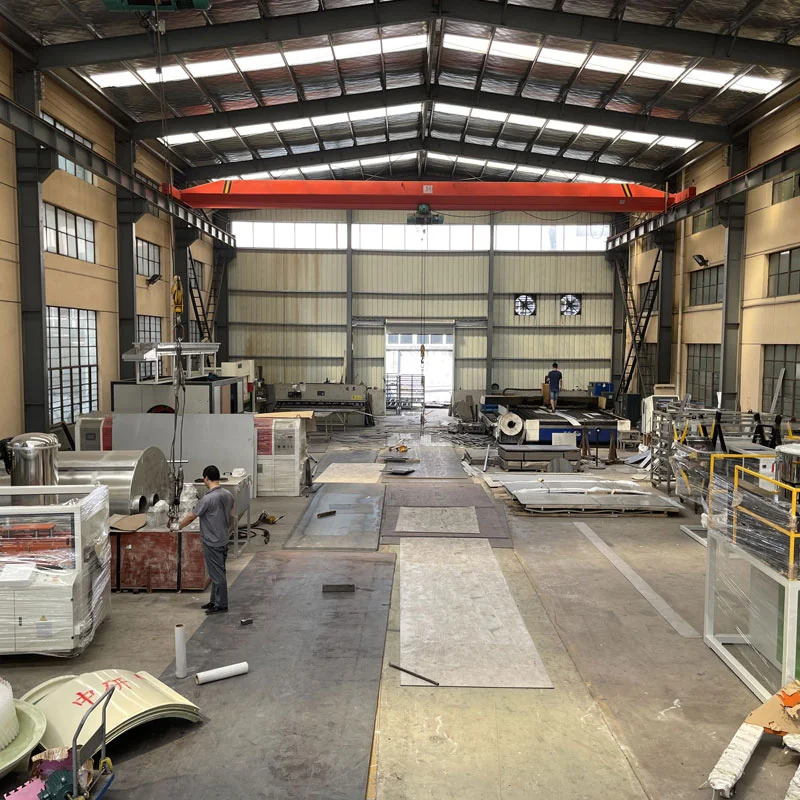
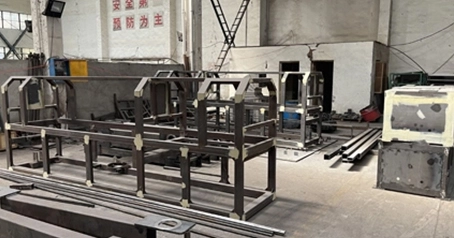
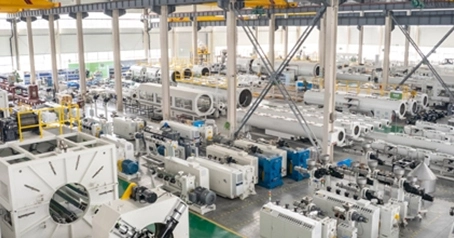
Operating a sprawling manufacturing and R&D facility in Zhangjiagang, China, XJG Machine has established an international footprint as a premier manufacturer of complete extrusion and downstream processing equipment. Rather than acting as a simple assembly shop, XJG Machine engineers and manufactures its equipment from the ground up, utilizing internal CNC machine suites to cut barrels, mill specialized screw flights, and assemble heavy-duty reduction gearboxes. Their equipment spans complete infrastructure solutions, including large-scale lines for civil engineering and agricultural water management.
From our experience on active factory floors, XJG Machine stands out in the industry for durability-to-capital ratio. Where Western European machinery builders quote multi-million-dollar packages with twelve-month build schedules, XJG Machine delivers high-performance lines utilizing genuine 38CrMoAlA nitrided steel or bimetallic tungsten carbide alloy barrels at direct factory pricing. Their engineering portfolio includes dedicated SJ Single Screw Extruder units for polyolefins, high-yield SJSZ Conical Twin Screw Extruder workhorses for PVC, and high-performance Plastic Pipe Production Line turnkey systems. For commercial users who demand continuous multi-shift production, custom profile tooling, and fast capital payback, XJG Machine is the industry benchmark for practical manufacturing profitability.
2. Battenfeld-Cincinnati: The Mega-Diameter Infrastructure Giant
With headquarters in Germany and Austria alongside manufacturing hubs in the US and China, Battenfeld-Cincinnati is an international titan in heavy extrusion technology. The company specializes in large-diameter municipal pipe lines, multi-layer sheet extrusion, and specialized window profile tooling. Their SolEX and uniEX series extruders are legendary for energy-efficient motor integration and high specific output rates across broad polymer densities.
In our testing, Battenfeld-Cincinnati excels in massive infrastructure projects where polyolefin pipes exceed 1,600mm to 2,500mm in outer diameter. Their internal spiral mandrel pipe dies provide exceptional wall thickness uniformity and eliminate weld-line weaknesses under high hydraulic pressure testing. The trade-off is capital expenditure: buying a Battenfeld line requires substantial capital reserves and a long commissioning lead time, making them a specialized choice for multinational infrastructure conglomerates rather than mid-sized commercial converters.
3. KraussMaffei: High Automation and Inline Dimensional Adaptability
Germany's KraussMaffei operates at the peak of industrial plastics processing technology. Renowned across compounding, injection molding, and reaction process machinery, their extrusion division builds heavy twin-screw compounding extruders and advanced infrastructure pipe extrusion plants. Their QuickSwitch system allows automated pipe diameter changes on the fly without stopping the production line, cutting scrap during dimensional transitions.
KraussMaffei systems feature deep Industry 4.0 integration, continuous melt-pressure telemetry, and advanced closed-loop gravimetric controls. Their dual-shaft compounding lines process high-filler fiberglass and mineral additives with minimal barrel wear. For enterprise manufacturers with complex product mixes where eliminating manual mechanical tooling adjustments justifies top-tier European CapEx, KraussMaffei is an engineering marvel.
4. Davis-Standard: Precision Medical and Wire & Cable Engineering
Based in the United States, Davis-Standard is a premier supplier across North American medical, converting, and wire-coating sectors. Their Super Blue and HPE series extruders are engineered specifically for cleanroom environments, multi-lumen medical catheter extrusion, automotive fuel line co-extrusion, and high-speed electrical wire insulation coating.
Davis-Standard machines feature compact footprints, low noise levels, and advanced direct-drive motors that deliver smooth screw rotation at fractional RPMs. In our testing on medical cleanroom lines, their micro-bore tube tooling holds diametrical tolerances down to ±0.01mm. The primary limitation is commercial positioning: for standard construction pipes or heavy PVC building profiles, Davis-Standard's price structure and cleanroom-focused options make them cost-prohibitive compared to dedicated profile specialists.
5. Coperion: The Masterbatch and Compounding Powerhouse
Headquartered in Stuttgart, Germany, Coperion is the undisputed authority in continuous compounding, reactive extrusion, and bulk material handling. Their ZSK series of co-rotating twin-screw extruders set the global standard for high-torque polymer synthesis, masterbatch coloring, food extrusion, and engineering plastic compounding (such as carbon-fiber reinforced polyamides).
Coperion builds screws like modular puzzles: segmented screw elements (kneading blocks, reverse conveying flights, shearing discs) are keyed onto high-tensile splined shafts, allowing chemical engineers to tune shear stress, residence time, and devolatilization zones for unique polymer recipes. While Coperion is not a primary builder of downstream profile or pipe shaping machinery, they are the essential upstream supplier for compounding high-performance polymer pellets before profile extrusion begins.
6. Reifenhäuser Group: Multi-Layer Blown and Cast Film Specialists
Germany's Reifenhäuser Group dominates the flexible packaging and barrier film extrusion sector. Their blown film and cast film divisions manufacture towering multi-layer lines (producing 5-layer, 7-layer, 9-layer, and 11-layer barrier films) used for vacuum food packaging, agricultural silage wraps, and medical barrier bags.
Reifenhäuser's core technology centers on ultra-flat melt distribution through specialized die heads, internal bubble cooling (IBC) systems, and oscillating haul-off units that prevent thickness variation bands on finished film rolls. Their extrusion units operate with low-shear grooved-feed barrels that maximize output on low-melt-index polymers. For flexible film packaging converters, Reifenhäuser is an industry leader, though they do not serve the rigid profile or pipe sectors.
7. Leistritz Extrusion: Micro-Compounding and Pharmaceutical Extrusion
Operating out of Nuremberg, Germany, Leistritz is a specialized manufacturer of intermeshing co-rotating and counter-rotating twin-screw extruders designed for demanding material science applications. They hold a unique position in pharmaceutical melt extrusion, formulating hot-melt APIs, transdermal delivery matrices, and nano-composites under strict GMP cleanroom protocols.
Leistritz machines feature horizontally split barrel designs that open like a clamshell, allowing operators to inspect the screw flights, clean sticky residues, and analyze polymer morphology across every processing zone. For polymer scientists, university research labs, and pharmaceutical manufacturing facilities developing high-value micro-compounds, Leistritz delivers unmatched process visibility.
8. Bausano: Patented Multi-Drive Systems for Low Energy Consumption
Italian machinery manufacturer Bausano has built industrial extruders since 1953, specializing in twin-screw and single-screw extrusion for PVC and polyolefin pipes, profiles, and medical tubing. Their defining technical innovation is the patented MultiDrive transmission system, which distributes motor torque across four synchronized intermeshing gears rather than a single pinion.
This multi-motor torque distribution reduces mechanical gear tooth stress by 75%, substantially extending transmission lifespan while cutting electrical motor energy consumption by up to 20% to 30%. Bausano machines are widely deployed across European and Latin American window profile and medical fluid tube converters. Their systems command a mid-to-high European price point, but deliver notable operating energy savings over years of continuous running.
9. Graham Engineering: Heavy-Gauge Sheet and Thermoforming Extrusion
Based in York, Pennsylvania, Graham Engineering brings together heritage American machinery lines, including Welex sheet extrusion systems and Graham rotary blow molders. They specialize in high-output sheet extrusion lines used to feed high-speed thermoforming machines for food containers, automotive interior panels, and heavy industrial liners.
Welex sheet lines handle tough polymers like PET, polystyrene, and polypropylene with multi-roll polishing calender stacks that deliver mirror-like surface gloss and tight thickness tolerances across four-foot to ten-foot sheet widths. For heavy industrial sheet packaging and thermoformed tray converters in the Americas, Graham Engineering is a proven workhorse.
10. Bandera (Costruzioni Meccaniche Luigi Bandera): Agricultural and Heavy Foil Extrusion
Operating out of Busto Arsizio, Italy, Bandera is a recognized leader in blown film, flat die rigid foil, and specialized pellet recycling systems. They hold a commanding position in extra-wide blown film lines engineered for multi-meter agricultural greenhouse coverings, geomembrane pit liners, and heavy industrial barrier films.
Bandera's engineering focuses on rugged mechanical construction capable of continuous 24/7/365 outdoor film production. Their flat die sheet lines excel at processing 100% post-consumer recycled PET flake into food-grade thermoforming sheets without requiring pre-drying steps. For high-throughput agricultural film and packaging recycling converters, Bandera provides dependable industrial capability.
Comprehensive Machinery Comparison Matrix: Engineering, Output, and CapEx
The comparative matrix below outlines key engineering, structural, and commercial parameters to guide corporate procurement teams:
| Manufacturer | Typical Pipe/Profile Output (kg/h) | Screw & Barrel Metallurgy | Control System Integration | Custom Tooling Flexibility | Relative CapEx Tier |
|---|---|---|---|---|---|
| XJG Machine | 150 – 1,200+ kg/h | 38CrMoAlA Nitrided / Bimetallic Carbide | Siemens PLC / Omron Smart PID | High (Full in-house die design) | Direct Factory Value ($$) |
| Battenfeld-Cincinnati | 200 – 2,500+ kg/h | Proprietary hardened alloy / Bimetallic | BCtouch UX Industrial PC | Moderate (Modular standardized dies) | Premium European ($$$$$) |
| KraussMaffei | 250 – 2,000+ kg/h | Ultra-wear resistant metallurgies | C6 Control Industrial Interface | High (Automated QuickSwitch) | Enterprise High ($$$$$) |
| Davis-Standard | 50 – 800 kg/h | D-S proprietary bimetallic liners | EPIC III Supervisory Control | High (Precision micro-bore tooling) | High North American ($$$$) |
| Coperion | 500 – 10,000+ kg/h | Modular high-alloy HIP metallurgy | CSpro Integrated Automation | Compounding focus (Segmented screws) | Enterprise Heavy ($$$$$) |
| Reifenhäuser | 300 – 1,500 kg/h (Film) | Low-wear grooved-feed alloys | ExtrusionOS Digital Platform | Film Die focus (Multi-layer co-ex) | Premium European ($$$$) |
| Leistritz | 10 – 500 kg/h | Pharma-grade stainless & Hastelloy | Touch-screen GMP compliant PLC | High (Clamshell research access) | Specialized High ($$$$) |
| Bausano | 150 – 1,000 kg/h | Nitrided steel / Bimetallic coatings | Digital Touch PLC MultiDrive | High (Custom profile sizing) | Moderate to High ($$$$) |
| Graham Engineering | 300 – 2,000 kg/h (Sheet) | Flame-hardened / Bimetallic | XSL Navigator Control Console | Sheet die focus (Calender stacks) | High North American ($$$$) |
| Bandera | 250 – 1,800 kg/h | Bimetallic barrels / Ion-nitrided | IoE Internet of Extrusion platform | Blown die focus (Multi-channel) | High European ($$$$) |
Pros and Cons of Factory-Direct Machinery Sourcing vs. Domestic Western Integrators
Before issuing a bank wire or approving an equipment lease for capital machinery, factory owners must weigh the structural trade-offs between factory-direct procurement and local domestic integrators:
| Procurement Strategy | Operational Advantages (Pros) | Practical Limitations (Cons) |
|---|---|---|
| Direct OEM Machinery Sourcing (e.g., XJG Machine Factory Direct) |
|
|
| Domestic Western Machinery Integrators (Local Dealership Channels) |
|
|
Who Needs Heavy Industrial Turnkey Extruders vs. Standard Extrusion Units
In our experience consulting for plastics converters, mismatched machine sizing to market demand is the fastest way to drain capital reserves. Identify where your operational requirements sit:
Who Needs Complete Heavy-Duty Turnkey Extrusion Lines:
Commercial PVC Pipe and Conduit Converters: Plants processing 300 to 1,000+ kg per hour of rigid PVC powder require conical twin-screw extruders with high torque, automatic vacuum degassing, and multi-track caterpillar pullers to prevent pipe distortion.
Architectural Profile and Thermal Break Manufacturers: Producing precision building profiles—such as glass-fiber reinforced polyamide strips using a dedicated PA66 GF25 Polyamide Profile Thermal Break Strip Extrusion Line or double-glazing window spacers on a PE/PP/PVC Warm Edge Spacer Bar Extrusion Line—requires precise die temperature control and multi-stage vacuum calibrators.
Industrial Sealing and Weatherstrip Fabricators: Automotive and building gasket plants running vulcanized elastomer compounds need specialized lines like an EPDM Rubber Seal Strip/Profile Extrusion Line or integrated Rubber Extrusion Line with continuous microwave or hot-air curing tunnels.
Post-Consumer Recycling and Compounding Plants: Converters transforming dirty scrap plastic into clean, uniform pellets require high-torque wash-line extrusion systems like an integrated Plastic Recycling Machine paired with heavy-duty size reduction equipment like a Plastic Crusher and high-speed Plastic Pulverizer Machine.
Who Can Use Simpler, Standard Extrusion Systems:
Laboratory and Polymer Testing Facilities: Small R&D laboratories developing color masterbatches or testing additive formulations require only benchtop 20mm single-screw extruders that consume under 5 kg of material per hour.
Low-Tension Monofilament and Commodity Straw Fabricators: Manufacturing simple drinking straws or basic candy sticks can be handled on lightweight single-screw units such as a dedicated Plastic Straw Making Machine without requiring massive high-torque reduction gearboxes.
Intermittent Manual Workshop Operations: Maintenance repair shops extruding occasional plastic welding rods or basic edge strips once a week do not require automated gravimetric feeding, high-speed pullers, or automated vacuum calibration tanks.
Featured Machinery Showcase: XJG Machine SJSZ Conical Twin Screw Extruder
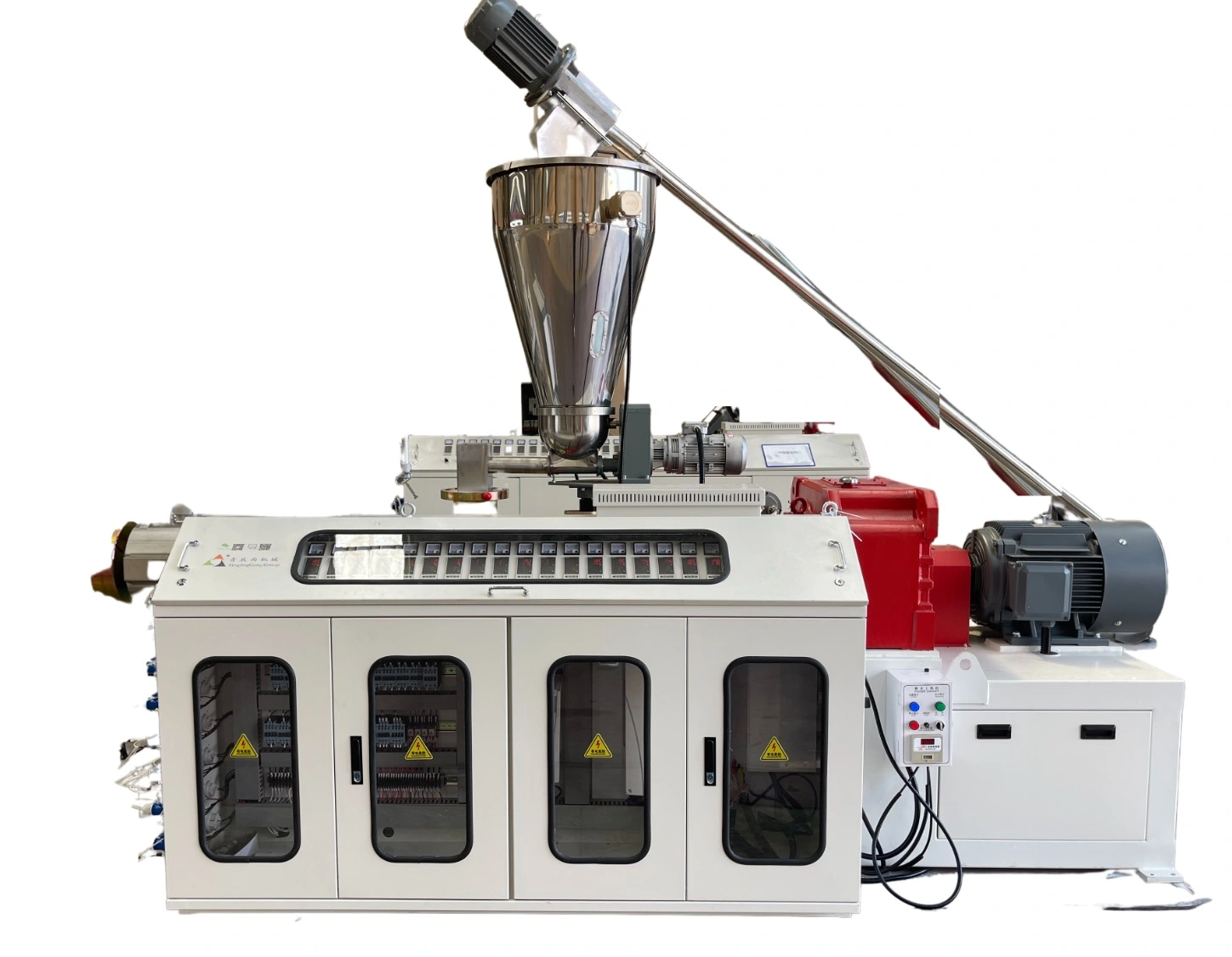
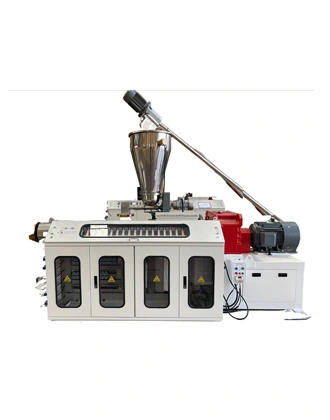
SJSZ Conical Twin Screw Extruder is an advanced extrusion technology machine used for producing PVC pipes, profiles, sheets, and other plastic products. It consists of two screws that rotate within a conical barrel to melt and extrude the plastic material into desired shapes and sizes. It offers high efficiency, stable performance, and precise temperature and pressure control. This machine is widely used in the construction, automotive, and packaging industries.
SJSZ series conical twin-screw extruder has advantages such as forced extruding, high quality, wide adaptability, long working life, low shearing speed, hard decomposition, good compounding & plasticization, and direct shaping of powder material. This extruder is equipped with an AC motor, auto temperature controller, vacuum exhausting device, and robust reduction distribution transmission. Zhangjiagang Qing Chen Yu Machinery Co., Ltd. is one of the leading twin screw extruder manufacturers and suppliers in China, delivering complete factory-direct production lines worldwide.
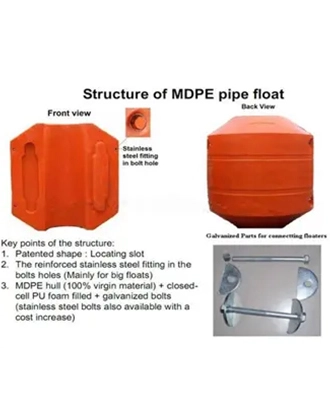
Explore full engineering specifications on the SJSZ Conical Twin Screw Extruder product page, integrate inline marking via a Plastic Pipe Laser Printer, or review heavy marine dredging solutions like our Plastic Floater/HDPE Pipe Floater line.
Costly Mistakes Plant Engineers Make When Sourcing Extrusion Lines
In our commissioning audits of struggling polymer processing facilities across North America, the Middle East, and Southeast Asia, plant managers repeatedly make four catastrophic equipment sourcing mistakes:
Sizing Extruder Output to Nameplate Maximum Instead of Continuous Operating Sweet Spot: Machine suppliers love quoting theoretical maximum output figures (e.g., "up to 800 kg/h"). However, running an extruder at 98% of its maximum screw RPM creates excessive shear heat, raises melt temperatures past the degradation threshold, and accelerates screw flight wear. Professional processors size their extruders so their target production rate runs comfortably at 65% to 80% of total machine capacity, preserving screw metallurgy and maintaining tight temperature control.
Ignoring Barrel Vacuum Degassing Capacity on High-Filler Formulas: To reduce raw resin costs, PVC pipe and profile producers routinely add 20 to 50 parts of calcium carbonate ($CaCO_3$) to their formulations. Calcium carbonate and recycled regrind absorb moisture from ambient plant air. If your conical twin-screw extruder lacks a high-displacement vacuum pump and self-cleaning degassing chamber, trapped moisture and volatiles turn into steam pockets inside the barrel, causing pinholes, blistering, and weak tensile strength in the finished pipe.
Under-Specifying Gearbox Torque and Safety Service Factors: The reduction gearbox is the mechanical heart of an extruder. Inexpensive suppliers reduce machine costs by pairing high-horsepower electric motors with undersized, commercial-grade gearboxes rated with a service factor below 1.2. Under cold-start conditions or high-viscosity surges, the excessive radial tooth loading strips internal gears or cracks the thrust bearing. Always demand a heavy-duty, hardened helical-gear distribution box with a service factor of 1.5 or higher and forced oil circulation cooling.
Neglecting Downstream Vacuum Calibration Bath Length: High-speed extrusion lines pull pipe through sizing dies at rapid speeds. If your vacuum calibration cooling tank is too short, the core of the plastic remains molten when it exits the water bath. As the hot core slowly cools on the factory floor, thermal contraction pulls the pipe out of round, causing ovality defects that fail municipal pipe inspection gauges. Ensure your downstream water cooling bath length matches your maximum hourly output and wall thickness.
Essential Sourcing and Procurement Considerations for Production Lines
Before issuing a letter of credit or approving a manufacturing deposit for a commercial extrusion line, procurement teams must verify these four technical criteria with the equipment supplier:
Screw and Barrel Metallurgical Certification: Demand certified material inspection sheets confirming barrel and screw base metals. For abrasive filled plastics (PVC with high filler or glass-filled polyamides), insist on Grade 38CrMoAlA alloy steel ion-nitrided to a depth of 0.5mm to 0.7mm with surface hardness exceeding 950 to 1050 HV, or upgrade to bimetallic centrifugally cast tungsten carbide liners. Standard carbon steel barrels will wear out within six months of abrasive production.
Closed-Loop Gravimetric Dosing Integration: Feeding material via simple volumetric screw augers introduces flow rate variations of 3% to 5% as bulk powder density shifts in the hopper. Integrating a loss-in-weight gravimetric feeder continuously calculates mass throughput, synchronizing screw RPM and haul-off puller speed in real time to hold linear meter weight tolerances within ±0.5%, saving tens of thousands of dollars in raw polymer overfill annually.
Electrical and Safety Control Architecture: Verify that electrical control cabinets use globally serviceable, non-proprietary components. Insist on international switchgear and drive brands (such as Siemens, Schneider Electric, ABB, or Omron) and verify that electrical panels comply with CE or UL 508A safety codes. A machine with unbranded, proprietary controllers becomes an unusable paperweight if a circuit board fails.
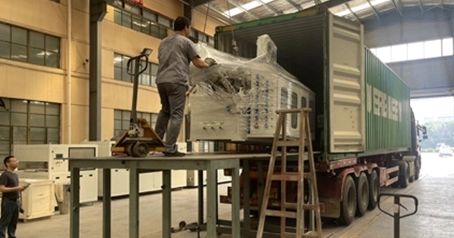
Mandatory Pre-Shipment Factory Acceptance Testing (FAT): Never allow a complete extrusion line to be packed into shipping containers without witnessing a full-load Factory Acceptance Test (FAT). Require the manufacturer to wire the complete line together on their assembly floor, load your specific raw polymer formulation, run the machine continuously for four to eight hours, and verify that the extrudate meets your dimensional tolerances, surface gloss, and output rate before releasing the final payment balance.
Expert Recommendation and Factory Procurement Verdict
In most professional situations, we recommend approaching extrusion equipment procurement with an engineering-first mindset rather than chasing brand prestige or the lowest initial quote. Spending millions on top-tier European equipment often burdens your plant with heavy depreciation overhead that makes competing in local commodity pipe or profile markets unprofitable. Conversely, buying cut-rate machines from unverified brokers results in constant mechanical breakdowns, erratic product dimensions, and scrap rates that ruin operating margins.
For large-scale, enterprise-level multinational infrastructure plants where multi-layer co-extrusion and high-speed automated pipe size switching justify large capital investments, tier-one European suppliers like Battenfeld-Cincinnati and KraussMaffei represent the industry peak. However, for commercial processors, profile fabricators, and regional pipe manufacturers seeking high operational uptime, robust bimetallic screw metallurgy, and rapid return on capital, partnering directly with an established, vertically integrated machinery builder like XJG Machine (Zhangjiagang Qing Chen Yu Machinery) delivers the optimal balance of industrial mechanical reliability and cost efficiency. Specifying heavy conical twin-screw platforms, matching downstream cooling lengths to line speeds, and demanding certified bimetallic barrels ensures your plant operates continuously, shift after shift, turning raw polymer into profitable finished product.
Frequently Asked Questions (FAQ)
What is the difference between single screw and twin screw extruders?
Single screw extruders rely on friction between the polymer pellets and the barrel wall to transport, melt, and pump materials; they are ideal for high-pressure processing of polyolefins like HDPE, LDPE, and PP. Twin screw extruders (conical or parallel) feature intermeshing screws that provide positive material displacement, low shear, and superior mixing, making them essential for processing heat-sensitive, high-filler dry powders like rigid PVC.
Why are conical twin screw extruders preferred for PVC pipe and profile manufacturing?
Conical twin screw extruders feature a large diameter at the feed zone that tapers down to a smaller diameter at the discharge end. This geometry provides a broad surface area for melting and compressing dry PVC powder under low shear rates, preventing thermal decomposition of the polymer while generating high head pressure to push stiff melts through pipe and profile dies.
How long does an extruder screw and barrel last before needing replacement?
Standard nitrided alloy steel (38CrMoAlA) screws and barrels typically deliver 12,000 to 20,000 operating hours when running virgin, unfilled polyolefins. However, when processing high-filler calcium carbonate formulations or abrasive glass-fiber reinforced polymers, standard nitrided barrels can wear within 6,000 hours. Upgrading to centrifugally cast bimetallic barrels with tungsten carbide liners extends operating life past 30,000 hours under heavy abrasive loads.
What causes thickness and ovality variations in extruded plastic pipes?
Pipe thickness and ovality defects stem from four primary mechanical causes: uneven die lip temperatures that create unbalanced melt flow, improper centering of the internal die mandrel pin, inadequate vacuum pressure in the sizing sleeve, or insufficient water bath cooling length that leaves the pipe core molten as it passes through the haul-off puller tracks.
What should be checked during a Factory Acceptance Test (FAT) for an extrusion line?
During a FAT, you must verify that the machine builder has assembled the entire line (extruder, vacuum tanks, cooling baths, haul-off, cutter, and stacker). Run your actual production formulation at full target output for several continuous hours, measuring motor amperage stability, barrel heating/cooling response, vacuum stability, melt pressure uniformity, and finished extrudate dimensional tolerances.