English
 العربية
 русский
 Español
 français
 português
 Deutsch
 italiano
 Türkçe
 한국어
 日本語

Every manufacturing plant manager, signage fabricator, and product engineer faces the same material dilemma when reviewing technical plastic drawings: should you specify cast sheet, or is an acrylic extruded profile the smarter commercial and mechanical choice? The market is crowded with vague descriptions that treat all polymethyl methacrylate (PMMA) as interchangeable. In high-volume production, they are fundamentally different materials. Choosing the wrong form leads to crazed edges under chemical cleaning, warped optical diffusers in LED luminaires, or costly rejected thermoforming batches.
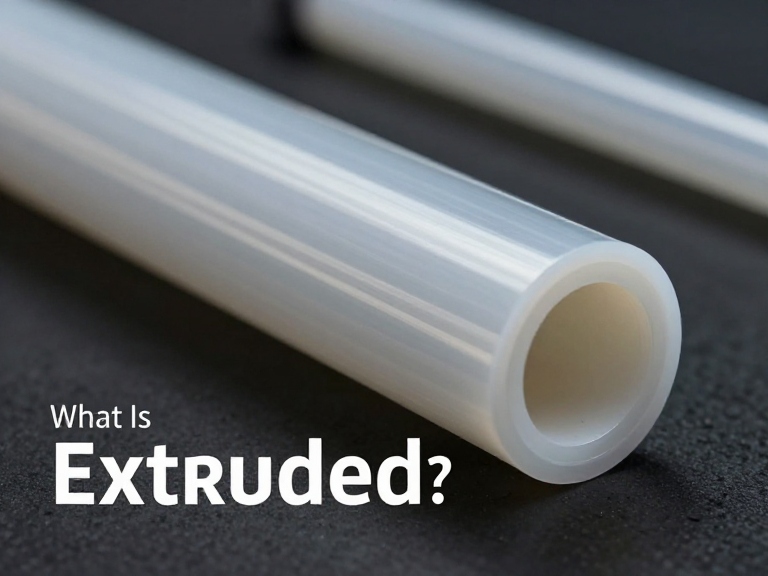
An acrylic extruded product is a thermoplastic profile, rod, tube, or sheet produced by melting PMMA resin pellets and forcing them under high hydraulic and shear pressure through a precision die using an industrial screw extrusion line. From our experience on factory floors, when buyers ask what makes acrylic extruded unique, the answer is simple: precision caliper consistency, exceptional cost efficiency for volume runs, and unmatched predictability during automated thermoforming cycles. As an equipment manufacturer that builds complete plastic processing systems at Xjgmachine, we believe in stripping away sales spin. Here is our direct practitioner guide to what acrylic extruded is, how it performs under stress, and when you should invest in it.
Quick Answer: What Is Acrylic Extruded?
Acrylic extruded (extruded PMMA) is a continuous-process thermoplastic manufactured by melting polymer granules inside a heated barrel and forcing the molten plastic through a profile or flat sheet die via a single or twin screw extruder. Unlike cell cast acrylic, which is poured as a liquid monomer between glass plates in batches, extruded acrylic features a lower molecular weight, superior gauge tolerance (typically within +/-5%), high optical clarity (up to 92% light transmission), and a lower glass transition temperature. It is the premier choice for high-volume signage, point-of-purchase displays, lighting diffusers, and deep-draw thermoforming where uniform thickness and unit economy dictate production success.
What It Is: Chemical Composition and Extrusion Physics
At its molecular foundation, acrylic extruded belongs to the poly(methyl methacrylate) family, commonly designated as PMMA. It is a synthetic polymer derived from the polymerization of methyl methacrylate (MMA) esters. In its extruded form, chemical manufacturers supply the raw material as spherical or cylindrical granulate pellets rather than a raw liquid syrup.
The defining structural distinction of acrylic extruded lies in its molecular weight distribution. During synthesis, the polymer chains are terminated earlier than in cast acrylic. While cell-cast PMMA boasts molecular weights ranging from 1,000,000 to over 3,000,000 g/mol, an acrylic extruded grade operates in the range of 100,000 to 250,000 g/mol. In our testing, this lower chain length is not an accidental defect; it is a calculated rheological necessity. Without this controlled molecular weight, the molten resin would exhibit excessive melt viscosity, making it impossible to pump uniformly through a wide profile die without inducing severe shear heating and thermal polymer degradation.
Because the material is continuously pushed through polished steel rollers and calendar stacks, an acrylic extruded sheet delivers near-perfect caliper uniformity. Where cast sheets can vary in thickness by up to fifteen percent across a single four-by-eight-foot panel, extruded sheets routinely hold tolerances within five percent. For automated CNC assembly, tight-tolerance display slots, and profile extrusion, this dimensional consistency is non-negotiable.
Quick Summary Table: Core Technical Specifications
| Engineering Metric | Acrylic Extruded (PMMA) | Test Method Standard | Practical Significance |
|---|---|---|---|
| Density | 1.18 to 1.19 g/cm³ | ISO 1183 | Half the weight of glass; lightweight shipping |
| Light Transmission (Clear) | 92% | ASTM D1003 | Matches glass clarity; exceptional optical transmission |
| Refractive Index ($n_D$) | 1.49 | ISO 489 | High light-piping efficiency in edge-lit panels |
| Tensile Strength | 70 to 75 MPa | ISO 527-2 | Rigid, self-supporting structural performance |
| Vicat Softening Temperature | 98°C to 105°C | ISO 306 (B50) | Softer thermoforming window than cast grades |
| Linear Thermal Expansion | 0.07 mm/(m·°C) | DIN 53752 | Requires thermal expansion allowances in frame mounting |
| Thickness Tolerance | ±5% to ±10% | ISO 7823-2 | Superior gauge control compared to cast acrylic |
How It Works: Inside the Industrial Acrylic Extrusion Line
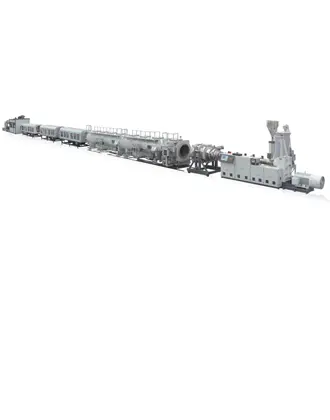
Understanding the performance of acrylic extruded parts requires examining how an industrial extrusion line processes the raw material. The journey from raw polymer pellet to finished optical-grade sheet or profile follows a strict sequence of thermal, mechanical, and pressure-controlled zones.
The manufacturing process operates through five distinct stages:
Desiccant Drying & Feed Conditioning: PMMA is inherently hygroscopic, absorbing up to two percent atmospheric moisture by weight. If moisture enters the barrel, it flashes into superheated steam at processing temperatures, resulting in splay marks, bubbles, and compromised optical transparency. Raw pellets must be dried in a desiccant dryer at 80°C for at least four hours before entering the hopper.
Plasticizing via Single Screw Extruder: The dried pellets enter the feed throat of an industrial Plastic Extruder. A dedicated SJ Single Screw Extruder with an optimized Length-to-Diameter (L/D) ratio—typically 30:1 to 36:1—melts and homogenizes the resin. The barrel features progressive heating zones stepping from 180°C at the feed zone up to 230°C at the metering zone. A barrier screw geometry ensures gentle shear to prevent molecular chain degradation.
Filtration and Melt Pumping: The molten PMMA passes through a continuous hydraulic screen changer to capture any un-melted gels or foreign contaminants. A high-precision gear pump (melt pump) stabilizes volumetric flow, eliminating pressure surges to maintain uniform wall thickness down to fractions of a millimeter.
Die Shaping (Coat-Hanger or Profile Die): For sheets, the melt enters a coat-hanger flat die engineered with an internal restrictor bar and flexible lips. The die distributes the viscous fluid evenly across widths reaching 1,500mm to 2,050mm. For architectural sections, hollow tubes, or co-extruded window trims, specialized tooling shapes the melt before exit.
Three-Roll Calendering and Inline Lamination: The hot acrylic web feeds directly into a vertical or inclined three-roll calendar stack. These chrome-plated rolls are mirror-polished or textured with anti-glare micro-prisms. Internally heated with circulating oil or pressurized water, the rolls compress the sheet to exact caliper dimensions, freeze the optical surface, and cool the polymer below its glass transition temperature. Downstream pullers, protective masking applicators (PE or paper film), and automated transversal traveling saws cut the continuous sheet into commercial lengths.
For processors managing edge trims, skeleton scrap, or start-up purgings, integrating a closed-loop reclaim system using a Single Shaft Shredder or a heavy-duty Double Shaft Shredder allows clean regrind to be re-introduced into utility-grade runs without wasting valuable resin.
Direct Technical Comparison: Extruded Acrylic vs. Cast Acrylic vs. Polycarbonate
| Performance Characteristic | Acrylic Extruded (PMMA) | Cell Cast Acrylic (PMMA) | Polycarbonate (PC) |
|---|---|---|---|
| Manufacturing Method | Continuous melt extrusion | Batch cell casting (Glass molds) | Continuous melt extrusion |
| Molecular Weight | Medium (~100k – 250k g/mol) | Very High (>1,000,000 g/mol) | Medium (~30k – 80k g/mol) |
| Impact Resistance | Moderate (10× standard glass) | Moderate (10× standard glass) | Extreme (250× standard glass) |
| Optical Clarity | 92% (High clarity) | 92% (Exceptional clarity) | 88% – 89% (Slightly gray haze) |
| Thickness Uniformity | Precise (±5%) | Broad variance (±15%) | Precise (±5%) |
| Laser Cutting Response | Flame-polished look, slight burr | Pristine, smooth flame-polished edge | Discolors, yellows, and burns |
| Solvent / Chemical Resistance | Sensitive; prone to stress crazing | Superior resistance to solvents | Sensitive to aromatic solvents |
| Thermoforming Behavior | Rapid cycle times, low forming temp | Requires higher heat, longer hold | Requires extensive pre-drying |
| Relative Material Cost | Economical baseline ($) | 20% to 35% higher ($$) | 60% to 100% higher ($$$) |
The Commercial and Physical Benefits of Acrylic Extruded
When specified correctly, acrylic extruded materials offer major structural and financial advantages over glass, cast PMMA, and polycarbonate.
1. Exceptional Thickness Tolerance for Automated Fabrication
If you manufacture retail display cases, slot-together point-of-sale fixtures, or architectural glazing frames, sheet thickness consistency dictates assembly speed. Cell cast acrylic sheets are notoriously inconsistent across a single master panel due to gravity-induced resin settlement between glass plates. If your CNC router cuts a slot for a 6.0mm sheet, and the cast panel arrives at 6.7mm on one side and 5.3mm on the other, your assembly line halts. An acrylic extruded sheet holds rigid tolerances (typically within +/-0.2mm on a 6mm sheet), allowing tight, friction-fit interlocking joints without secondary manual scraping or calibration passes.
2. Superior Thermoforming and Vacuum-Forming Productivity
In our testing, acrylic extruded stock softens at temperatures roughly 10°C to 15°C lower than cast acrylic (typically within the 140°C to 160°C window). Because the polymer chains are shorter, the material exhibits lower elastic memory when heated. It flows into intricate mold cavities with lower pneumatic vacuum requirements and solidifies faster, cutting overall mold cycle times by 15% to 25%. For commercial users producing thermoformed bathtubs, illuminated signage letters, and skylight domes, this cycle time contraction directly boosts factory margin.
3. Flawless Light Transmission and Optical Distribution
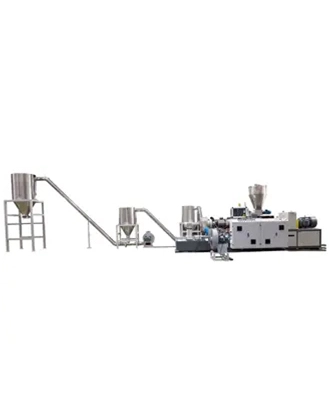
With an optical transmission rate of 92%, clear acrylic extruded matches glass in light purity while weighing less than half. More importantly, extruded formulations are easily compounded with light-diffusing microscopic siloxane beads or titanium dioxide concentrates. When processed on a high-precision SJSZ Conical Twin Screw Extruder or specialized compounding line, the resulting sheets and profiles hide bright LED hotspots completely while maintaining luminous efficiencies above 85%.
4. Favorable Unit Economics on High-Volume Sourcing
Extrusion is an automated continuous process. Once a sheet extrusion line reaches thermal equilibrium, it runs continuously for weeks with minimal manual intervention. This production speed translates to direct purchasing savings: extruded PMMA sheets generally cost 20% to 35% less than equivalent cast sheets. When supplying commercial glazing contracts or large-scale display runs, choosing acrylic extruded protects your margin without sacrificing finished visual quality.
Known Limitations and Technical Trade-Offs
An honest engineering assessment requires confronting material weaknesses. While acrylic extruded is an outstanding commercial material, it is not universally applicable.
Stress Crazing and Chemical Susceptibility
Because the extrusion process involves drawing and pulling molten polymer in the machine direction, extruded sheets carry higher residual internal frozen stresses than cast sheets. When exposed to harsh solvents—such as alcohol, acetone, window cleaners containing ammonia, or certain cyanoacrylate adhesives—these frozen stresses release violently. The result is stress crazing: a web of microscopic cracks that clouds the surface and compromises structural integrity. If your component will be subjected to daily aggressive hospital disinfectant wipes or industrial degreasers, extruded PMMA is the wrong choice.
Laser Cutting Edge Characteristics
When cutting acrylic on an industrial CO2 laser, cast acrylic vaporizes cleanly into monomer gas, leaving an immaculate, flame-polished edge ready for showroom display. Acrylic extruded, because of its lower melting point, melts alongside the kerf before vaporizing. This often leaves a small raised bead or burr along the bottom edge, and the localized thermal shock introduces high internal stresses. If you apply solvent-based cement to a fresh, un-annealed laser-cut extruded edge, it will craze almost immediately. Annealing at 70°C to 80°C for several hours is required to relieve stress if edge cementing is planned.
Thickness Ceiling
While cast acrylic can be manufactured in massive blocks measuring up to 100mm to 300mm thick (for aquarium viewing panels and structural pressure vessels), acrylic extruded tops out at roughly 12mm to 15mm for standard sheet lines, with specialized lines reaching 20mm. Attempting to extrude thicker PMMA profiles results in internal vacuum voids, center-line shrinkage bubbles, and severe roll-cooling cycle bottlenecks.
Pros and Cons: The Practitioner Ledger
| Category | Definitive Advantages (Pros) | Critical Liabilities (Cons) |
|---|---|---|
| Manufacturing & Cost |
|
|
| Fabrication & Machining |
|
|
| Environmental & Optical |
|
|
Who Should Use It vs. Who Does Not Need It
Every commercial plastic specification should align strictly with operating environments and volume economics. Deciding whether to integrate acrylic extruded into your Bill of Materials requires honest qualification:
Who Should Use Acrylic Extruded:
High-Volume Signage and Display Fabricators: If you produce thousands of retail shelving dividers, cosmetic display risers, or poster snap-frames, the tight thickness tolerance ensures your components slide effortlessly into aluminum extrusions without jamming.
LED Lighting Fixture Manufacturers: Extruded PMMA lenses, frosted diffusers, and flat guide plates provide superior optical clarity and beam uniformity without high raw material overhead.
Industrial Window and Door Manufacturers: For insulated glazing spacer systems, acrylic extruded profiles and hybrid thermal strips deliver exceptional dimensional stability. Many modern glazing plants pair these with specialized profile equipment like our PE/PP/PVC Warm Edge Spacer Bar Extrusion Line and PA66 GF25 Polyamide Profile Thermal Break Strip Extrusion Line.
Thermoforming and Vacuum-Molding Shops: Operations pulling shallow-to-medium draw parts at volume benefit directly from lower processing temperatures and shorter cycle times.
Who Does Not Need Acrylic Extruded:
Custom Artisanal Fabricators and Model Makers: If your workshop fabricates low-volume bespoke display cases with complex solvent-cemented joints, stay with cast acrylic. Cast PMMA cuts cleaner on budget lasers, polishes faster, and will not craze when hit with methylene chloride bonding agents.
Public Transit and High-Impact Glazing: If the application involves high-velocity projectile hazards, prison security, or public transit windscreens, do not use acrylic. Upgrade immediately to polycarbonate, which offers 25 times the impact strength of PMMA.
High-Stress Structural Marine Aquariums: For massive public aquarium windows or structural submarine viewports, thick monolithic cast acrylic blocks certified to ASME PVHO-1 standards are mandatory; extruded acrylic cannot meet these thickness or creep limits.
Common Processing Mistakes and How to Avoid Them
Factory Floor Advisory: The Solvent Crazing Disaster
The most common failure we see in contract fabrication occurs when an operator cuts an extruded acrylic panel on a CNC router or laser, peels back the protective film, and immediately wipes down the edge with isopropanol or denatured alcohol to remove swarf. Within sixty seconds, the entire perimeter shatters with thousands of micro-fractures. Never clean raw or cut extruded PMMA with alcohol or harsh solvents. Use warm water with mild detergent or specialized antistatic plastic cleaners.
Machining with Incorrect Tool Geometry: Using standard wood-cutting router bits with positive, aggressive rake angles. High rake angles grab the brittle acrylic sheet, causing chipping, chatter, and micro-cracking. We recommend using solid carbide, single-flute "O-flute" spiral bits with polished flutes and neutral-to-slight negative rake angles designed specifically for plastics.
Insufficient Chip Clearance: Running a router or circular saw at high RPM while moving the tool too slowly. Friction melts the lower-molecular-weight extruded chips, causing the swarf to fuse back into the cut behind the blade. Maintain high feed rates to ensure the cutting tooth removes a crisp, cool chip that carries away frictional heat.
Skipping Pre-Drying Before Thermoforming: If extruded sheet stock is stored in a humid warehouse and placed directly under forming radiant heaters, internal moisture vaporizes, forming tiny moisture bubbles (foaming) within the core. Always verify moisture levels or pre-dry sheets in a ventilated circulating air oven at 75°C to 80°C.
Forgetting Thermal Expansion in Outdoor Installations: Installing acrylic extruded sheets into rigid, unyielding aluminum perimeter frames with zero thermal expansion gaps. PMMA expands roughly 0.7mm per meter for every 10°C temperature swing. An unyielding frame will buckle the sheet during hot summer afternoons or crack around screw holes during winter freezes. Always use slotted mounting holes and compliant EPDM gaskets.
B2B Sourcing and Extrusion Machinery Considerations
For manufacturers evaluating whether to purchase finished sheet inventory or invest in in-house extrusion capacity, the decision hinges on continuous throughput and resin control.
When selecting manufacturing equipment or auditing an extrusion supplier, verify these four engineering checkpoints:
Melt Flow Index (MFI) Consistency: Standard extruded sheet grades typically require an MFI of 1.0 to 3.0 g/10 min (at 230°C / 3.8 kg according to ISO 1133). Injection-molding PMMA resins feature higher MFIs (above 8.0), which exhibit poor melt strength and sag off the die lips during sheet production.
Screw Geometry and Degassing Vents: An extrusion line processing optical PMMA must feature an effective L/D ratio (typically 32:1 to 36:1) equipped with a dual-stage vacuum degassing zone to pull volatile monomer vapors and trace moisture out of the melt before reaching the die.
Chrome Roll Runout Tolerances: In a three-roll calendar stack, roll concentricity runout must stay within 0.005mm. Any microscopic eccentricity in the calendar rolls imprints periodic optical distortion waves ("chatter lines") directly across the sheet face, ruining display clarity.
Closed-Loop Scrap Processing: Production edge-trim and start-up purges represent 5% to 15% of material throughput. Implementing on-line granulators or secondary processing using a dedicated Plastic Pulverizer Machine allows your facility to recycle clean PMMA regrind back into black-sheet or utility-grade core layers, maximizing operational margin.
Enterprise Solution: Xjgmachine Plastic Processing Equipment
Xjgmachine offer a comprehensive range of Plastic Processing Equipment that includes cutting-edge technology and high-quality machines. Our equipment is suitable for various plastic processing applications, from compounding to thermoforming, and we prioritize durability, efficiency, and user-friendliness. Our products are designed and manufactured to meet the demands of modern plastic production and to help our customers achieve their production goals with ease.
| Core Processing Capabilities | Single and twin screw extrusion, profile calibration, sheet calendering, and downstream automation |
| Applicable Polymers | PMMA (Extruded Acrylic), PVC, PE, PP, PA66, and composite engineering thermoplastics |
| Recycling Integration | Single shaft, double shaft, and horizontal shredders paired with pulverizers for closed-loop zero-waste processing |
| Engineering Standard | Heavy-duty bimetallic barrels, precision gearboxes, and PLC touch-screen automation compliant with CE safety directives |
Machinery Procurement Advice: Whether scaling profile production or integrating film scrap lines with our LDPE BOPP Film Recycling and Washing Line, selecting the right screw profile and barrel metallization ensures stable output, lower energy draw per kilogram, and predictable product quality.
Expert Sourcing Recommendation
In our professional assessment across decades of polymer extrusion and fabrication engineering, acrylic extruded is the undisputed industrial workhorse of the transparent plastics world. It is not an inferior version of cast acrylic; it is a high-precision, high-speed material engineered specifically for modern automated manufacturing.
Here is our practical recommendation for your production roadmap:
For High-Volume Signage, Point-of-Sale, and Display Framing: Specify acrylic extruded without hesitation. The tight caliper tolerance (+/-5%) will save your assembly team dozens of hours in manual fitment, and the lower purchase price will protect your gross margin.
For Vacuum-Forming and Thermoformed Parts: Use extruded stock. The lower glass transition temperature and consistent sheet thickness deliver predictable cycle times, less thermal blistering, and uniform wall thickness in finished parts.
When Bonding or Laser-Cutting: Exercise strict operational discipline. Use sharp carbide spiral tools, avoid alcohol-based surface cleaners, and if solvent welding or laser cutting is required, budget for an annealing cycle to relieve frozen internal stresses before chemical exposure.
For Machine Operators and Processors: Match your extrusion hardware to PMMA's unique rheological profile. Ensure your line utilizes a desiccant drying hopper, an optimized single-screw geometry with vacuum venting, and mirror-finished calendar rolls to guarantee optical-grade clarity from pellet to pallet.
Frequently Asked Questions
Acrylic extruded is a thermoplastic sheet, rod, or profile made from poly(methyl methacrylate) (PMMA) resin pellets melted and pushed continuously through a die using a screw extruder. It offers uniform thickness tolerance, 92 percent light transmission, and superior thermoforming speed compared to cell cast acrylic.
Extruded acrylic is manufactured continuously with lower molecular weight polymer granules, yielding tight thickness tolerances (+/-5%) and a lower melting point ideal for vacuum forming. Cast acrylic is batch-produced between glass plates from liquid monomer, yielding higher molecular weight, superior solvent resistance, and cleaner laser-cut edges without gumming.
Yes, but it requires careful tuning of laser frequency, air assist, and cutting speed. Because acrylic extruded has a lower softening point (around 95°C to 105°C), excess heat can leave a slightly raised, melted burr along the edge. Polishing or mechanical routing is often preferred for crisp architectural finishes.
Because of its lower molecular weight, extruded PMMA softens uniformly at lower temperatures and exhibits more pliable elongation during vacuum and pressure forming. This prevents uneven wall thinning and reduces cycle times in automated production lines.