English
 العربية
 русский
 Español
 français
 português
 Deutsch
 italiano
 Türkçe
 한국어
 日本語

For plastic manufacturers, the objective should be to establish procedures that protect operators without unnecessarily interrupting production. The six most important safety precautions for plastic extrusion are proper operator training, appropriate personal protective equipment, machine guarding, temperature and pressure control, safe material handling, and strict maintenance and emergency procedures.
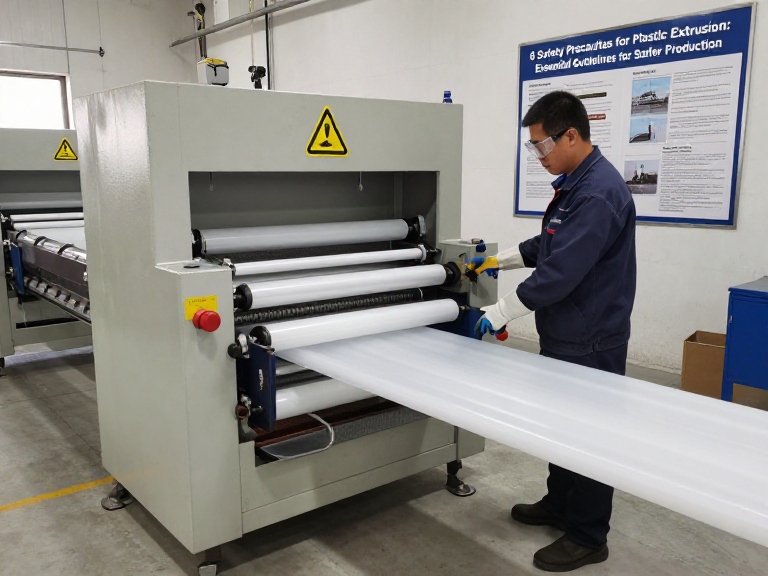
Quick Answer: What Are the 6 Safety Precautions for Plastic Extrusion?
Every plastic extrusion facility should implement these six essential precautions:
Train operators and establish clear operating procedures.
Wear appropriate personal protective equipment (PPE).
Keep guards and safety interlocks installed and functional.
Control high temperatures, molten plastic, and extrusion pressure.
Handle raw materials and additives safely.
Follow lockout/tagout, maintenance, and emergency response procedures.
Our recommendation: Treat these precautions as one integrated safety system. PPE cannot compensate for missing machine guards, and operator training cannot replace proper isolation of hazardous energy during maintenance.
What Is Plastic Extrusion and Why Is Safety Important?
Plastic extrusion is a continuous manufacturing process in which thermoplastic raw material is fed into an extruder, heated, melted, and pushed through a shaped die to produce a continuous plastic profile. Depending on the production line, the output may be plastic pipes, sheets, films, tubes, profiles, or other customized products.
The main equipment typically includes a hopper, screw and barrel, heating and cooling systems, drive motor, gearbox, extrusion die, control cabinet, and downstream equipment such as calibrators, cooling tanks, haul-off units, and cutters.
Different products require different extrusion configurations. A single screw extruder is commonly used for many standard thermoplastic processing applications, while a conical twin screw extruder is frequently selected for PVC processing and applications requiring specific mixing and conveying characteristics.
Although these machines differ in configuration, their major safety risks are similar.
Why Is Plastic Extrusion Safety So Important?
Plastic extrusion combines several hazardous operating conditions in one production environment:
High-temperature barrels, heaters, dies, and molten polymers.
Rotating screws, couplings, motors, and other moving machinery.
Pressure generated inside the screw and die assembly.
Electrical power supplied to heating elements, motors, and control systems.
Dust, fumes, and chemical exposure from certain polymers and additives.
Cutting, pulling, and conveying equipment operating continuously.
For commercial users, an accident can cause more than personal injury. It may damage expensive equipment, contaminate production, delay customer orders, and create regulatory or insurance consequences.
We recommend evaluating safety during equipment selection and factory layout planning rather than waiting until production starts. A safer production line is generally easier to operate consistently and maintain over its service life.
Quick Summary Table: Six Essential Safety Precautions for Plastic Extrusion
| Safety Precaution | Main Hazard | Recommended Action | Priority |
|---|---|---|---|
| Operator training | Incorrect operation and unsafe intervention | Provide equipment-specific training and documented procedures | Very High |
| Personal protective equipment | Burns, eye injuries, noise, and material exposure | Select PPE according to task-specific risk assessments | Very High |
| Machine guarding | Entanglement, crushing, and contact with moving parts | Install guards, interlocks, and accessible emergency stops | Very High |
| Temperature and pressure control | Hot polymer, burns, and unexpected material release | Monitor process conditions and use approved operating procedures | Very High |
| Material handling | Dust, fumes, spills, and chemical exposure | Follow safety data sheets and provide appropriate ventilation | High |
| Maintenance and emergency procedures | Unexpected startup and stored energy | Apply lockout/tagout and verified energy isolation | Very High |
1. Provide Proper Operator Training and Standard Operating Procedures
Operator training is the first line of defense against avoidable plastic extrusion accidents. Even a well-designed extrusion machine can become dangerous when operators do not understand its operating limits, startup sequence, safety devices, and emergency procedures.
We recommend that every operator receive equipment-specific training before independently operating a production line. General factory safety awareness is not sufficient for machinery involving heated polymer, rotating screws, and pressurized material.
What Should Plastic Extrusion Operators Learn?
A practical training program should cover:
Machine structure and the function of major components.
Correct startup and shutdown procedures.
Temperature settings and approved operating ranges.
Material feeding and hopper safety.
Recognizing abnormal pressure, vibration, noise, and temperature conditions.
Emergency stop locations and emergency response procedures.
Safe procedures for clearing blockages and changing dies.
Lockout/tagout requirements during maintenance.
Establish Clear Operating Procedures
Standard operating procedures should explain each stage of production in a way operators can follow consistently. Instructions should be available near the equipment and written in languages understood by the workforce.
For example, a startup procedure should identify which systems must be inspected before energizing the machine, how heaters are activated, how temperature stabilization is verified, and who authorizes material feeding.
Operators should also know when they are required to stop production and contact a supervisor or maintenance technician. An unusual pressure reading or unexpected material leakage should never be treated as a minor inconvenience that can be ignored.
Why Refresher Training Matters
Training should not be limited to new employees. Changes in materials, machine configurations, tooling, operating parameters, and production procedures can introduce new risks.
For commercial users, we recommend refresher training after major equipment modifications, safety incidents, significant process changes, or when an operator has not used a particular machine for an extended period.
2. Wear Appropriate Personal Protective Equipment (PPE)
Plastic extrusion involves heat, moving equipment, noise, and potential exposure to polymer dust or process fumes. Personal protective equipment provides an additional layer of protection when engineering controls and safe work procedures cannot eliminate all risks.
However, PPE must be selected according to the actual task. Wearing the wrong protective equipment can create additional hazards, especially around rotating machinery.
Essential PPE for Plastic Extrusion Operators
| PPE | Purpose | Important Considerations |
|---|---|---|
| Safety glasses | Protect eyes from flying particles and splashes | Select suitable impact-rated eye protection |
| Face shield | Additional facial protection during specific high-risk tasks | Use with appropriate primary eye protection |
| Heat-resistant gloves | Protect hands during approved hot-surface handling tasks | Choose gloves with suitable thermal protection and fit |
| Safety footwear | Protect feet from falling objects and hot material spills | Use suitable protective footwear for the work environment |
| Hearing protection | Reduce exposure to excessive machine noise | Select according to measured noise exposure |
| Protective clothing | Reduce exposure to heat and workplace contaminants | Avoid loose clothing near rotating equipment |
| Respiratory protection | Protect against identified airborne hazards | Use only with appropriate hazard assessment and fit testing where required |
Prevent Burns During Hot Material Handling
Molten plastic can cause severe thermal burns. Operators working near extrusion dies, purge material, or hot barrel surfaces should use suitable protective equipment and approved handling tools.
Heat-resistant gloves should never be treated as permission to touch exposed molten polymer. The correct approach is to avoid direct contact, use suitable tools, and follow the manufacturer's procedures.
Avoid Loose Clothing Around Rotating Machinery
One frequently overlooked risk is entanglement. Loose sleeves, jewelry, lanyards, and unsecured long hair can become caught in rotating components.
Before starting production, operators should secure their clothing and hair. Gloves should not be worn near exposed rotating equipment when they could create an entanglement hazard. The machine-specific risk assessment must determine the appropriate hand protection for each task.
Use Respiratory Protection Based on Actual Exposure
Different polymers and additives can produce different airborne contaminants during processing. Ventilation and local exhaust extraction should be the primary controls where fumes or dust are generated.
Respirators should be selected based on the identified hazard, exposure level, applicable regulations, and a suitable respiratory protection program. A generic dust mask is not a universal solution for plastic processing fumes.
3. Maintain Machine Guards, Safety Interlocks, and Emergency Stops
Machine guarding is one of the most important engineering controls in plastic extrusion. It prevents operators from reaching dangerous moving components during normal production and reduces the risk of accidental contact.
Rotating screws, couplings, belts, gears, haul-off rollers, and cutting systems can cause serious entanglement or crushing injuries.
Protect Dangerous Moving Parts
All accessible hazardous moving parts should have appropriate guards or other engineered safeguards. Depending on the machine design, these may include:
Fixed guards around drive systems and rotating couplings.
Interlocked guards around accessible mechanical hazard zones.
Protection around belts, pulleys, and gear assemblies.
Guards around downstream cutting and trimming equipment.
Suitable barriers around automatic handling mechanisms.
Guards should be designed to prevent access without creating unnecessary operating difficulties. If a guard regularly interferes with production, operators may be tempted to remove it. That is a design and management problem that should be corrected rather than accepted.
Check Safety Interlocks Regularly
Interlocked guards are designed to prevent hazardous machine operation when a protected access point is open. Their function should be verified according to the manufacturer's instructions and the facility's safety inspection schedule.
Never bypass, defeat, or permanently disable a safety interlock to save production time. If an interlock repeatedly causes interruptions, qualified personnel should investigate the underlying issue.
Install Accessible Emergency Stop Devices
Emergency stops should be positioned so operators can reach them quickly from relevant operating positions. Their location should be clearly identified and included in operator training.
Emergency stops are supplementary protective devices. They do not replace fixed guards, interlocks, safe operating procedures, or energy isolation during maintenance.
For a complete plastic pipe production system, safety planning should cover the extruder as well as downstream equipment such as haul-off units, pipe cutters, and handling systems.
When evaluating a plastic pipe production line, buyers should ask how the individual machines and integrated production system address guarding, emergency stops, and safe operator access.
4. Control High Temperatures, Molten Plastic, and Extrusion Pressure
Temperature and pressure control are central to both extrusion quality and workplace safety. The extrusion process requires polymers to reach suitable processing conditions, but overheating, unstable pressure, or incorrect material handling can create serious hazards.
Monitor Barrel and Die Temperatures
Plastic extruders use heating zones along the barrel and often include independently controlled die heating. Temperature settings vary according to polymer type, formulation, screw design, and production conditions.
Operators should use approved processing parameters rather than guessing temperatures or copying settings from a different material.
Excessive temperature may cause polymer degradation, unwanted fumes, material discoloration, or unstable extrusion. Insufficient temperature can increase resistance to flow and contribute to abnormal pressure or poor product quality.
Temperature monitoring should include:
Verifying the operation of temperature sensors.
Checking heater and controller performance.
Monitoring temperature differences between zones.
Following material supplier processing recommendations.
Investigating abnormal temperature fluctuations.
Never Ignore Abnormal Extrusion Pressure
Pressure can increase when the die is obstructed, the material is unsuitable, processing conditions are incorrect, or the downstream system creates excessive resistance.
Unexpected pressure increases should be treated as a warning condition. Operators must follow the machine's approved response procedure rather than loosening connections or attempting to open a pressurized die.
Hot polymer may be released suddenly when a pressurized connection is disturbed. This can cause severe burns and other injuries.
Follow Safe Purging and Die-Cleaning Procedures
Purging is sometimes necessary when changing materials, changing colors, or removing degraded polymer. It can involve hot material being discharged from the die or other designated outlet.
Only trained personnel should perform purging, following the machine manufacturer's instructions and the material supplier's recommendations.
Before any die removal, cleaning, or mechanical intervention, operators must confirm that the equipment has been placed in the required safe state. Temperature, pressure, electrical energy, and stored mechanical energy must be addressed through the approved isolation procedure.
Provide Appropriate Local Exhaust Ventilation
Some polymers and additives may release hazardous decomposition products or processing emissions under certain conditions. Adequate ventilation should be designed according to the materials being processed and the workplace exposure assessment.
For heavy-duty applications involving continuous production, we recommend reviewing ventilation performance whenever material formulations, throughput, or process temperatures change.
5. Handle Plastic Raw Materials and Additives Safely
Raw material handling is another important part of plastic extrusion safety. Plastic pellets may appear harmless, but powders, additives, colorants, and cleaning chemicals can introduce hazards that are not obvious during routine production.
Review Safety Data Sheets Before Processing Materials
Manufacturers should maintain current safety data sheets (SDS) for relevant polymers, additives, colorants, processing aids, and cleaning products.
Operators should understand the material's handling requirements, storage conditions, exposure hazards, spill procedures, and emergency measures.
Particular attention should be paid to powders and additives that can create airborne dust. Some combustible dusts can present fire or explosion risks when the material and workplace conditions support such hazards.
Control Dust During Material Feeding
Dust can be generated when handling powdered additives, transferring materials, cleaning equipment, or using certain recycled feedstocks.
Practical controls include:
Using suitable enclosed material transfer systems.
Providing local exhaust ventilation where needed.
Maintaining good housekeeping practices.
Using appropriate industrial vacuum equipment.
Preventing unnecessary material spills.
Following material-specific dust hazard assessments.
Compressed air should not be used to disperse combustible or hazardous dust. Cleaning methods should be selected according to the material and workplace risk assessment.
Store Materials Correctly
Raw materials should be stored in designated areas with appropriate labeling and protection from contamination, moisture, and incompatible substances.
Material containers should remain closed when not in use. Spillages should be cleaned promptly using approved procedures.
Pay Attention to Recycled Plastic Materials
Recycled plastic can introduce additional variability because its composition, contamination level, and processing history may differ from virgin resin.
Before feeding recycled material into an extrusion line, manufacturers should establish suitable incoming-material checks and processing requirements. Unknown contaminants or incompatible polymers may create processing problems and increase the risk of fumes or equipment blockage.
Facilities operating a plastic recycling machine should coordinate recycling, sorting, material preparation, and extrusion safety procedures rather than treating each production stage as an isolated operation.
6. Follow Maintenance, Lockout/Tagout, and Emergency Procedures
Maintenance is one of the highest-risk activities in plastic extrusion facilities. Operators and technicians may need to access areas that are normally protected by guards, creating exposure to electrical, mechanical, thermal, and stored-energy hazards.
The most important principle is simple: a machine that has stopped moving is not necessarily safe to work on.
Implement Lockout/Tagout Procedures
Lockout/tagout (LOTO) is used to prevent unexpected startup or release of hazardous energy during servicing and maintenance.
A suitable procedure should identify all relevant energy sources, including:
Electrical supply to motors, heaters, and auxiliary equipment.
Mechanical energy stored in rotating or tensioned components.
Hydraulic or pneumatic pressure.
Thermal energy retained in the barrel, die, and molten polymer.
Other stored energy specific to the equipment design.
Authorized personnel should isolate the relevant energy sources, apply appropriate locks and tags, and verify the safe state before starting work. The method must follow applicable regulations and the machine manufacturer's instructions.
Simply pressing an emergency stop button or switching off the main operating control is not a substitute for proper energy isolation.
Inspect Equipment Before and During Production
Regular maintenance helps identify developing problems before they cause an accident or production failure.
Inspection tasks should include:
Checking guards, fasteners, and safety interlocks.
Inspecting electrical cables and control cabinets.
Checking heater connections and temperature sensors.
Monitoring abnormal noise and vibration.
Inspecting hydraulic and pneumatic connections.
Checking cooling systems and ventilation.
Verifying emergency stop functionality according to the maintenance plan.
Prepare for Emergencies
Every plastic extrusion workshop should have clear emergency procedures covering burns, fires, electrical incidents, chemical exposure, and mechanical injuries.
Employees should know how to raise an alarm, contact emergency responders, access first-aid resources, and evacuate safely.
First-aid supplies should be suitable for the hazards present. Personnel should receive appropriate training, including how to respond to thermal burns without attempting unsafe treatment.
Do Not Restart Equipment Until the Cause Is Resolved
After a safety-related shutdown, the equipment should not return to operation simply because the immediate symptom has disappeared.
Qualified personnel should identify the cause, complete necessary repairs, verify that guards and safety systems are restored, and authorize restart under the approved procedure.
Plastic Extrusion Hazards and Recommended Prevention Measures
Different extrusion machine components create different hazards. A useful safety program identifies the hazard at each production stage and selects the correct engineering or administrative control.
| Production Area | Potential Hazard | Recommended Prevention |
|---|---|---|
| Material hopper | Dust exposure, spills, and unsafe access | Use suitable material handling systems and housekeeping procedures |
| Barrel and heaters | Burns and overheating | Use guarding, insulation, temperature monitoring, and appropriate PPE |
| Screw and drive system | Entanglement and crushing | Install suitable fixed guards and interlocks |
| Die and melt outlet | Hot polymer release and pressure hazards | Monitor pressure and follow approved purging and isolation procedures |
| Cooling system | Water leaks, electrical exposure, and slip hazards | Inspect hoses, drainage, electrical protection, and floor conditions |
| Haul-off equipment | Pinching and entanglement | Provide guarding and safe access controls |
| Cutting equipment | Blade contact and flying fragments | Use enclosed cutting zones and interlocked access where appropriate |
| Electrical cabinet | Electric shock and arc-related hazards | Restrict access to qualified personnel and follow electrical isolation procedures |
| Maintenance area | Unexpected startup and stored energy | Apply verified lockout/tagout procedures |
Engineering Controls Should Come Before PPE
Professional safety management generally follows the hierarchy of controls: elimination, substitution, engineering controls, administrative controls, and PPE.
For example, enclosing a dangerous rotating component is generally more reliable than relying on workers to avoid touching it. Improving local exhaust ventilation is preferable to relying exclusively on respirators.
We recommend using PPE as an important final layer of protection, not as the primary solution to poorly designed equipment or unsafe operating procedures.
Preventive Safety Management in Plastic Extrusion: Pros and Cons
Investing in safety procedures, machine safeguards, and operator training requires time and money. However, the commercial consequences of inadequate safety management can be much greater.
| Advantages | Implementation Challenges |
|---|---|
| Reduces exposure to common machinery and thermal hazards | Requires initial investment in guards, ventilation, and safety equipment |
| Improves operator confidence and production discipline | Requires regular training and supervision |
| Helps prevent unplanned equipment damage and interruptions | Safety inspections consume maintenance resources |
| Supports regulatory compliance and documented procedures | Documentation must be maintained and updated |
| Improves the long-term reliability of production operations | Some modifications require engineering assessment and downtime |
| Can reduce the financial impact of workplace incidents | Requires management commitment and consistent enforcement |
Our position is that preventive safety management is worth the investment. For manufacturers running multiple shifts or continuous production, the cost of properly designed safeguards is usually easier to manage than the consequences of a serious workplace incident.
Safety Considerations When Choosing Plastic Extrusion Equipment
Equipment selection directly influences how safely a factory can operate. Buyers should evaluate safety features alongside output capacity, product specifications, energy consumption, and production efficiency.
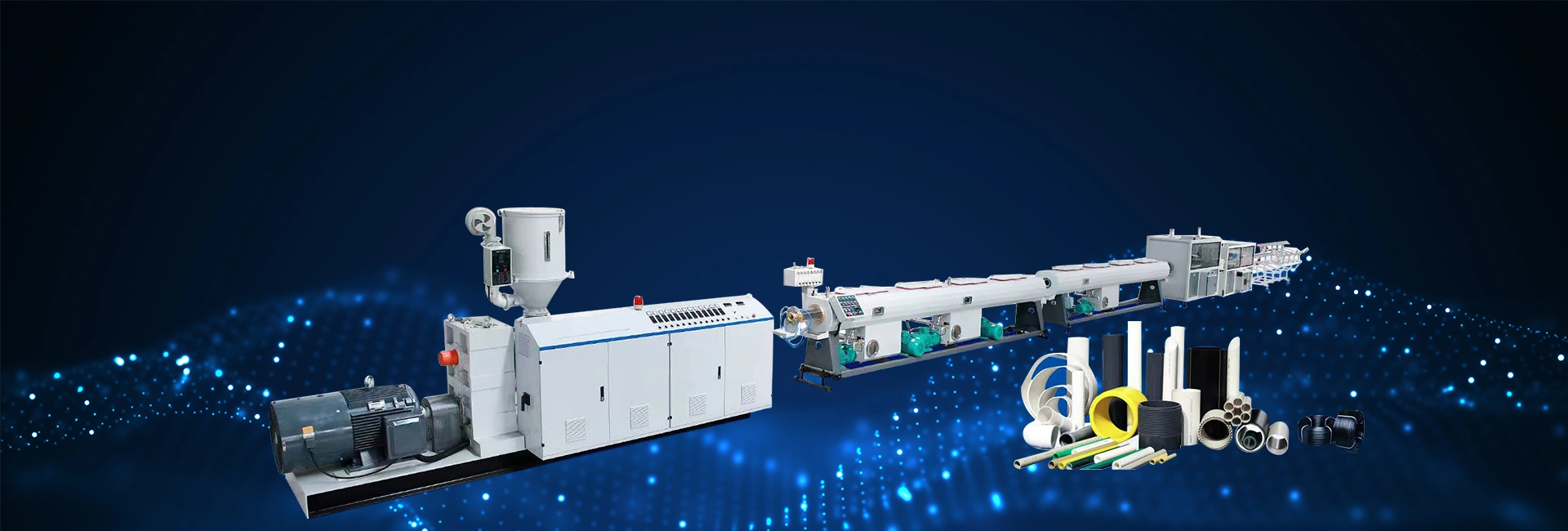
Xjgmachine offers a range of plastic processing equipment for industrial production, including extrusion machinery and complete plastic pipe production solutions. Its equipment portfolio supports applications ranging from material processing to downstream product manufacturing, with a focus on durability, efficiency, and practical operation.
1. Evaluate the Extruder's Protective Design
Check the guarding around the screw drive, motor, gearbox, and other accessible moving parts. Ask how emergency stops and interlocks are integrated into the machine.
For a new project, review whether operators can perform routine inspections without reaching into hazardous areas.
Explore the plastic extruder equipment range when comparing machine configurations for your production requirements.
2. Match the Screw Configuration to the Material
Single screw and twin screw extruders have different conveying, mixing, and processing characteristics. Selecting the right machine reduces the likelihood of operating outside the intended processing conditions.
For general thermoplastic processing, a SJ single screw extruder may be suitable. For relevant PVC processing requirements, a SJSZ conical twin screw extruder may provide a more appropriate configuration.
3. Consider the Entire Production Line
Safety must extend beyond the main extruder. Pipe calibration, cooling, hauling, cutting, and material handling all create potential hazards.
For plastic pipe manufacturers, a complete production line should be evaluated as an integrated system. Pay attention to operator access, equipment spacing, emergency stop coverage, and safe material movement.
4. Check the Control System and Operating Interface
Ask how temperature, motor status, pressure monitoring, alarms, and emergency stops are managed. The control interface should make abnormal operating conditions easy to identify.
However, an automated control system does not eliminate the need for physical guards or energy isolation. Buyers should distinguish between process automation and safety-rated protective functions.
5. Request Documentation and Technical Support
Before purchasing equipment, request the operating manual, maintenance instructions, electrical documentation, safety information, and recommended inspection schedule.
Clarify which safety devices are included in the standard machine configuration and which require additional options or site-specific engineering.
6. Consider Downstream Machinery Compatibility
Auxiliary equipment must be integrated safely. For example, pipe cutting machinery should be coordinated with the haul-off system, guarding, and emergency stop arrangement.
Manufacturers producing HDPE pipe should also review the safe operation of downstream equipment such as the DJQ Series HDPE pipe band saw cutter.
Common Plastic Extrusion Safety Mistakes to Avoid
1. Removing Machine Guards to Improve Production Speed
Removing guards to make material access or cleaning easier exposes operators to hazards. If a guard interferes with routine work, the correct response is to review the machine design and approved access procedure.
2. Wearing Gloves Near Rotating Machinery Without Risk Assessment
Heat-resistant gloves are useful for certain hot-material tasks, but gloves can become entangled in rotating equipment. PPE must be selected for the specific operation.
3. Opening a Die While It Is Still Pressurized
Residual pressure and hot polymer can cause sudden material release. Follow the approved shutdown, depressurization, cooling, and isolation procedure before maintenance.
4. Ignoring Unusual Temperature or Pressure Readings
Abnormal readings may indicate blocked material flow, sensor failure, heater malfunction, or unsuitable processing conditions. Operators should follow established response procedures instead of continuing production without investigation.
5. Treating the Emergency Stop as a Maintenance Isolation Device
An emergency stop does not necessarily isolate all energy sources. Maintenance must follow the applicable lockout/tagout procedure.
6. Ignoring Dust and Fume Hazards
Plastic pellets, additives, powders, and heated polymers can create different exposure risks. Review material safety information and ensure appropriate ventilation and handling systems are installed.
7. Failing to Train Temporary and Night-Shift Operators
Safety standards must apply to every shift and every authorized worker. Temporary workers should not operate machinery until they have received appropriate equipment-specific training.
8. Restarting Equipment Without Checking Safety Devices
After maintenance, all guards, interlocks, covers, and protective systems must be restored and verified before the equipment is returned to service.
Daily Plastic Extrusion Safety Checklist
A practical inspection checklist helps operators identify visible problems before production starts. The following list can be adapted to the machine manufacturer's manual and the factory's documented risk assessment.
| Inspection Item | What to Verify | Action if a Problem Is Found |
|---|---|---|
| Machine guards | All required guards are installed and secure | Do not operate affected equipment until corrected |
| Emergency stops | Devices are accessible and inspection requirements are met | Report faults and follow the safety shutdown procedure |
| Electrical systems | No visible cable damage or unsafe access | Refer the issue to qualified electrical personnel |
| Heating system | Controllers and temperature sensors operate as specified | Investigate abnormal readings before production |
| Pressure monitoring | Indicators and alarms function correctly | Follow approved abnormal-pressure procedures |
| Ventilation | Extraction and ventilation systems operate as required | Correct the issue before exposing workers to the hazard |
| Material handling | Materials are correctly identified and safely stored | Isolate unknown or improperly stored materials |
| Work area | Floors, access routes, and emergency exits are clear | Remove obstructions and clean spills safely |
| PPE | Required protective equipment is available and suitable | Replace unsuitable or damaged PPE |
| Maintenance status | No unresolved safety-related maintenance issues | Keep affected equipment out of service |
Daily checks should be supported by periodic inspections, preventive maintenance, and formal safety reviews. A checklist is not a substitute for equipment-specific procedures or competent safety supervision.
Expert Recommendations: How to Build a Safer Plastic Extrusion Workshop
For manufacturers planning a new extrusion workshop or upgrading existing machinery, we recommend taking a systematic approach rather than purchasing individual safety devices without considering the complete production process.
For Beginners Setting Up a Plastic Extrusion Factory
Select machinery with appropriate guarding and accessible emergency stops.
Plan safe access routes around the production line.
Establish material storage and handling procedures.
Provide equipment-specific operator training before production begins.
Prepare maintenance and emergency response procedures.
For Established Plastic Manufacturers
Conduct regular machinery risk assessments.
Review machine guarding and safety interlocks.
Improve local exhaust ventilation where exposure risks exist.
Standardize lockout/tagout procedures across shifts.
Record safety inspections, maintenance work, and corrective actions.
For Buyers Upgrading Plastic Extrusion Equipment
Compare machine safety configurations, not just production capacity.
Ask whether safety functions are integrated into the control architecture.
Confirm compatibility with existing downstream equipment.
Request technical manuals and maintenance documentation.
Include operator training and commissioning support in the purchasing discussion.
We believe the best extrusion equipment is not simply the machine that produces the most kilograms per hour. It is the machine that achieves the required production performance while allowing operators to work safely, maintenance personnel to access components appropriately, and managers to maintain consistent production standards.
For manufacturers planning a new plastic pipe production project, Xjgmachine's plastic pipe production line is a relevant starting point for discussing equipment configurations and production requirements.
Ultimately, the six safety precautions for plastic extrusion should be implemented together. Training, PPE, machine guarding, process control, material handling, and maintenance procedures form a complete safety framework. Neglecting one area can undermine the protection provided by all the others.
Frequently Asked Questions About Safety Precautions for Plastic Extrusion
1. What are the six main safety precautions for plastic extrusion?
The six main precautions are operator training, appropriate PPE, machine guarding and safety interlocks, temperature and pressure control, safe raw material handling, and proper maintenance and emergency procedures. Together, these measures reduce exposure to the most common extrusion-related hazards.
2. What PPE is required for plastic extrusion operators?
Depending on the task and risk assessment, operators may need safety glasses, face protection, heat-resistant gloves, protective footwear, hearing protection, suitable clothing, and respiratory protection. PPE selection should reflect the actual hazards and must not replace engineering safeguards.
3. Why is machine guarding important in plastic extrusion?
Machine guarding helps prevent contact with rotating screws, belts, couplings, rollers, cutting equipment, and other hazardous moving components. Fixed guards and suitable interlocked guards reduce the risk of entanglement, crushing, and serious mechanical injuries.
4. What are the main temperature-related hazards in plastic extrusion?
High-temperature barrel surfaces, dies, heaters, and molten polymer can cause severe burns. Excessive processing temperatures can also degrade polymers and generate hazardous emissions. Operators should follow approved temperature settings, monitor process conditions, and use suitable protective controls.
5. How can operators prevent accidents during plastic extrusion maintenance?
Operators and maintenance personnel should follow documented lockout/tagout procedures, isolate all relevant energy sources, address stored pressure and thermal energy, and verify the safe state before starting work. Pressing an emergency stop button alone is not sufficient for maintenance isolation.
6. Is plastic extrusion dangerous for workers?
Plastic extrusion involves potential thermal, mechanical, electrical, chemical, and ergonomic hazards. However, appropriate equipment design, machine guarding, ventilation, training, PPE, and maintenance procedures can substantially reduce workplace risks.
7. How often should plastic extrusion machines be inspected?
Operators should perform pre-start checks and routine inspections according to the equipment manufacturer's instructions and the facility's risk assessment. More detailed inspections and preventive maintenance should follow a documented schedule based on machine design, operating hours, and production conditions.
8. What should manufacturers check before buying a plastic extruder?
Manufacturers should review machine guarding, emergency stop accessibility, electrical safety, temperature monitoring, pressure protection, ventilation requirements, maintenance access, operating documentation, and training support. Production capacity and energy efficiency should be evaluated alongside these safety considerations.
9. What standards apply to plastic extrusion machine safety?
Relevant requirements depend on the country, machine configuration, and workplace. Important references include ISO 12100 for machinery risk assessment and risk reduction, IEC 60204-1 for electrical equipment of machines, and applicable national workplace safety regulations. Manufacturers and buyers should verify the current editions and local legal requirements.
10. How can a plastic extrusion production line improve workplace safety?
A production line can improve safety through appropriate machine guarding, accessible emergency stops, suitable ventilation, well-designed material handling, clear operator access, documented procedures, and coordinated safety controls across the extruder and downstream equipment. The complete integrated system should be assessed rather than inspecting the main extruder alone.
References and Industrial Safety Standards
The following authoritative sources provide additional information for developing plastic extrusion safety procedures and evaluating machinery risks. Always check the applicable edition and local legal requirements before using a standard as a compliance specification.
ISO 12100 – Safety of Machinery: General Principles for Design, Risk Assessment and Risk Reduction. Provides a framework for identifying machinery hazards and selecting appropriate risk-reduction measures.
U.S. Occupational Safety and Health Administration (OSHA) – Control of Hazardous Energy (Lockout/Tagout). Explains requirements and principles for preventing unexpected equipment startup and hazardous energy release during servicing and maintenance.
National Institute for Occupational Safety and Health (NIOSH). Provides occupational health and safety research, including resources on workplace exposure, industrial ventilation, and worker protection.