English
 العربية
 русский
 Español
 français
 português
 Deutsch
 italiano
 Türkçe
 한국어
한국어 日本語
日本語
Managing capital expenditures and operational budgets for civil infrastructure, landfill containment, aquaculture farming, and industrial tank fabrication demands transparent numbers. Contractors and project managers preparing procurement tenders frequently get blindsided by unexpected costs because they look solely at the sticker price of a handheld extrusion gun while ignoring consumables, weld seam preparation machinery, preheating power loads, and specialized operator certification. Evaluating the extrusion welding HDPE price requires assessing the entire industrial workflow, from equipment acquisition to final joint testing under strict DVS 2207-4 parameters. Cheap extrusion guns sourced from unverified channels often deliver erratic barrel temperatures, underpowered drive motors, and inconsistent extrusion output, resulting in brittle cold welds, seam delamination, and failed hydrostatic pressure inspections. As experienced plastic processing machinery specialists who design, test, and commission industrial thermoplastic equipment daily, we deliver an unvarnished breakdown of what extrusion welding high-density polyethylene genuinely costs in 2026.
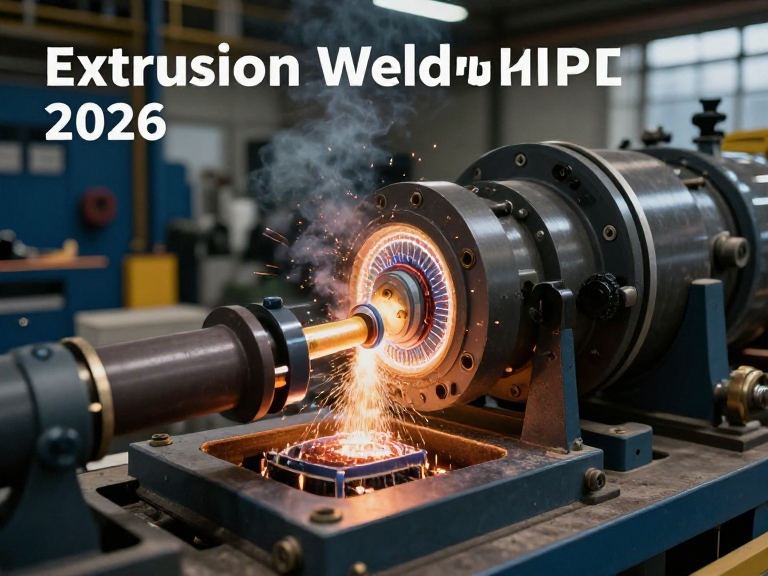
Quick Answer: 2026 Extrusion Welding HDPE Price Benchmarks
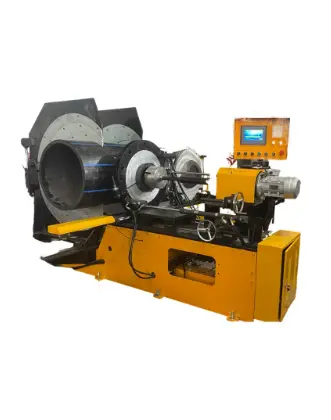
The total extrusion welding HDPE price splits into equipment capital costs and operational field expenses. For machinery, expect to invest $1,200 to $2,800 for compact, light-duty handheld extrusion welders (outputting 1.0 to 2.0 kg/h for thin sheet repairs); $3,500 to $6,500 for professional industrial handheld extrusion guns (delivering 2.5 to 4.0 kg/h with independent digital preheat and barrel temperature controls); and $7,500 to $14,000+ for heavy-duty high-output production welders (outputting 4.5 to 6.5+ kg/h for continuous tank and manhole structural fabrication). On the operational side, turnkey contract welding services in 2026 range from $65 to $145 per hour or $9 to $28 per linear meter, with premium PE100 welding rod costing $3.80 to $7.50 per kilogram. In most professional situations, if you are connecting standard continuous pipe runs, investing in an automated HDPE Pipe Butt Welding Machine from Xjgmachine offers far lower per-joint costs, while extrusion welding remains indispensable for complex geometry, tanks, and custom fabrications.
Article Directory
Understanding HDPE Extrusion Welding: Process & Mechanical Principles
The 4 Primary Equipment Tiers That Dictate Extrusion Welding HDPE Price
Major Technical Drivers Influencing Extrusion Welding HDPE Price
Manufacturer Solution Spotlight: Xjgmachine Complete Fabrication Machinery
Direct Technical Comparison Table: Extrusion vs. Butt Fusion vs. Electrofusion
Essential Sourcing Checklist for Extrusion Welding Equipment
Understanding HDPE Extrusion Welding: Process & Mechanical Principles
To analyze the extrusion welding HDPE price with engineering precision, one must grasp how this specialized thermal joining process functions at the polymer chain level. Unlike standard hot gas welding, which relies on a narrow stream of heated air to melt a thin filler rod manually pressed into a seam, extrusion welding is an active, miniature mechanical extrusion system integrated into a portable housing.
The system operates through three synchronized, thermomechanical mechanisms:
Continuous Plastification: Solid PE80 or PE100 welding rod (typically 3mm, 4mm, or 5mm diameter) is drawn into the machine by an internal feed drive. It enters an electrically heated barrel containing a rotating screw that shears, compresses, and melts the polymer into a homogeneous, bubble-free melt.
Substrate Preheating: An integrated hot air blower blows heated air (between 210°C and 230°C for HDPE) through an adjustable preheat nozzle directly onto the beveled edges of the base HDPE components, softening the base material ahead of the weld shoe.
Pressurized Deposition and Molecular Consolidation: The molten extrudate is forced out of the barrel through a custom-machined polytetrafluoroethylene (PTFE) welding shoe. The shoe shapes the bead while the operator exerts mechanical downward pressure, forcing the molten extrudate against the preheated base material. This pressure forces the entangled polyethylene molecular chains to interdiffuse across the interface before cooling under compression.
From our experience on tank and pipeline job sites, the strength of an extrusion-welded joint can easily achieve 85% to 90% of the parent material's tensile strength, provided temperature and drive speeds adhere to DVS 2207-4 specifications. However, when operators cut corners on machine power or purchase under-engineered guns that suffer thermal drop, the weld bead cools before molecular entanglement occurs, producing a cosmetic joint that shears under hydrostatic pressure.
Quick Summary Table: 2026 Equipment & Service Price Ranges
| Category / Capacity Tier | 2026 Price Range (USD) | Extrusion Output Rate | Typical Power Rating | Primary Industrial Application |
|---|---|---|---|---|
| Entry-Level / Portable Extruder | $1,200 – $2,800 | 0.8 – 1.8 kg/h | 1,500W – 2,200W | Thin liner repairs, prototyping, tight pipe interiors |
| Mid-Range Industrial Handheld Gun | $3,500 – $6,500 | 2.2 – 3.8 kg/h | 3,000W – 3,800W | HDPE tank walls (6-15mm), manhole branch joints |
| Heavy-Duty High-Output Extruder | $7,500 – $14,000 | 4.2 – 6.5+ kg/h | 4,200W – 5,500W | Thick structural tanks (20-40mm), mining launders |
| Turnkey Contract Welding Labor | $65 – $145 / hour | Site dependent | Field service crew | On-site lining, field joint fabrication, emergency repairs |
| Linear Seam Fabrication Rate | $9 – $28 / linear meter | Material dependent | Single or dual pass | Geomembrane boots, flat sheet containment seams |
| Raw PE100 Welding Rod | $3.80 – $7.50 / kg | 3mm / 4mm coil spool | Virgin resin coil | Standard filler material for all extrusion welds |
The 4 Primary Equipment Tiers That Dictate Extrusion Welding HDPE Price
When evaluating prospective suppliers and equipment models, the capital extrusion welding HDPE price falls into four distinct machinery classifications based on motor architecture, thermal output, and duty cycle:
1. Light-Duty & Compact Portable Extruders ($1,200 – $2,800)
For beginners and technicians performing spot repairs on geomembranes, fish farming cages, or small fittings, a compact handheld unit is standard. These machines weigh between 4.5 and 6.0 kg and deliver output rates of 0.8 to 1.8 kg/h. Most use a modified commercial power drill drive motor coupled to a small screw and single-barrel heating cartridge.
In our testing, these units work well for vertical or overhead seams where heavy machines cause operator fatigue. However, their lower thermal output makes them unsuitable for continuous multi-hour shifts on thick plate; pushing them beyond a 30% duty cycle on 12mm plate causes thermal trip-outs and accelerated drive motor burnout.
2. Commercial Industrial Handheld Extrusion Guns ($3,500 – $6,500)
This is the workhorse category for custom plastic fabrication shops and environmental lining contractors. Delivering between 2.2 and 3.8 kg/h, these welders weigh roughly 6.5 to 8.5 kg and feature independent dual-channel digital temperature controllers: one regulating the preheat hot-air blower and another governing the barrel heating band.
In most professional situations, we recommend this tier. Units in this class feature cold-start motor protection (preventing the motor from running until the barrel reaches plastification temperature) and brushless drive motors that survive dusty landfill and quarry conditions. When quoting projects for structural chemical tanks, water sumps, and large custom pipe branches, this equipment tier offers the most reliable balance between initial investment and daily productivity.
3. Heavy-Duty High-Output Production Extruders ($7,500 – $14,000)
When fabricating thick-walled structural scrubbers, bulk chemical storage vessels, or deep marine aquaculture pontoons using heavy sheets (20mm to 40mm thick), mid-range extruders become a production bottleneck. High-output production welders deliver between 4.2 and 6.5+ kg/h of molten PE100.
For heavy-duty applications, these machines integrate heavy-duty planetary gearboxes, high-wattage ceramic band heaters, and multi-stage screws capable of processing 4mm and 5mm rod continuously. They require 400V 3-phase or dedicated high-amp 230V circuits. While the capital investment is substantial, the ability to fill a 25mm double-V weld seam in two passes instead of six slashes skilled labor hours by more than 50%.
4. Automated Track & Beam Extrusion Systems ($18,000 – $45,000+)
At the apex of the market are automated tractor-mounted or gantry-driven extrusion welders used in automated pipe wrapping and high-volume cylindrical tank manufacturing. These systems mount the extrusion head on a motorized track, coordinating travel speed, preheat angle, and extrudate feed rate with programmable logic controllers (PLCs). They eliminate human operator variance, delivering identical weld root penetration and bead geometry over 20-meter seams.
Major Technical Drivers Influencing Extrusion Welding HDPE Price
Why do two extrusion welders with seemingly identical appearances differ in price by $3,000? In our technical evaluations, five internal engineering factors drive the total extrusion welding HDPE price:
1. Drive Motor Technology and Transmission Metallurgy
The primary point of mechanical failure in cheap extrusion welders is the drive motor gearbox. Melting high-density polyethylene generates high shear resistance inside the barrel. Budget guns utilize standard brushed universal motors with nylon or sintered bronze gears that strip under cold-start torque. High-end machines utilize brushless industrial motors with hardened, ground steel planetary gears that operate continuously under heavy load without brush changes or gear wear.
2. Dual-Channel Closed-Loop Temperature Regulation
HDPE has a narrow processing window. If preheat air drops below 200°C, the base sheet will not fuse; if barrel temperatures exceed 240°C, the polyethylene oxidizes and degrades, leaving weak, brittle seams. Premium extruders feature dual closed-loop PID microcontrollers with digital displays that monitor both zones in real time, automatically compensating for ambient wind and cold jobsite temperatures.
3. Extruder Screw Geometry and L/D Ratio
The length-to-diameter (L/D) ratio of the internal feed screw determines melt homogeneity. Low-cost extruders use short L/D screws (10:1 or 12:1) that simply push partially melted pellets forward. Professional systems use specialized 15:1 or 18:1 barrier flight screws that shear, degas, and homogenize the polymer melt, eliminating air pockets and internal voids in the weld seam.
4. PTFE Welding Shoe Customization and Wear Part Durability
The shape of the PTFE (Teflon) welding shoe controls bead geometry, root penetration, and cooling rate. Standard flat fillet shoes cost between $80 and $150, while complex corner shoes, overlap shoes, and custom-angled bevel shoes cost $250 to $450 each. High-temperature virgin PTFE shoes resist thermal warping and deliver smooth, glossy bead surfaces that require minimal grinding.
Integrated Manufacturing Partner: Xjgmachine Complete HDPE Processing
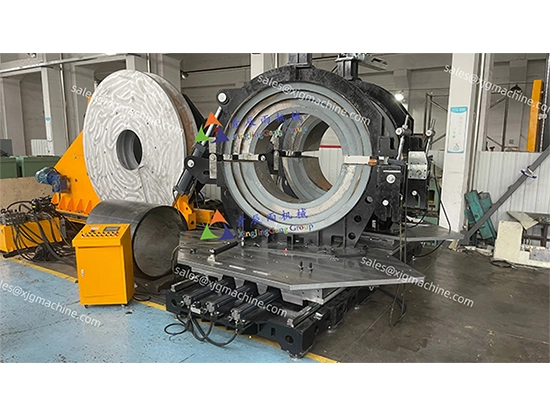
While extrusion welding excels at custom fittings, tank ports, and structural repair, full pipeline installations demand automated fusion for cost efficiency. Xjgmachine (Qing Chen Yu) is an industry-leading manufacturer of high-precision thermoplastic processing and pipe fabrication machinery.
| Pipeline Fusion Platforms | Full hydraulic series including the HDPE Pipe Butt Welding Machine and heavy-duty RHD Butt Welding Machine |
| Fitting & Branch Systems | Engineered solutions via the RHJ Multi-Angle Fitting Elbow Welding Machine and HDPE Pipe Saddle Fusion Machine |
| Precision Pipe Preparation | High-accuracy cutting using the DJQ Series HDPE Pipe Band Saw Cutter and HDPE Pipe Radius Cutter |
| Infrastructure Manufacturing | Complete industrial lines including the HDPE Pipe Production Line for global municipal projects |
Procurement Verdict: Combine extrusion welders for detail fittings with factory-direct hydraulic butt welders from Xjgmachine to minimize joint cycle times and project installation costs.
Direct Technical Comparison Table: Extrusion vs. Butt Fusion vs. Electrofusion
| Welding Technology | Capital Equipment Price (2026) | Cycle Time per Joint | Joint Strength vs. Parent Material | Consumable Cost per Joint | Best Industrial Use Case |
|---|---|---|---|---|---|
| Handheld Extrusion Welding | $3,500 – $7,500 (Mid-Tier Gun) | Moderate (Continuous linear seam) | 85% – 90% (DVS 2207-4 standard) | Moderate ($3.80–$7.50/kg welding rod) | Tanks, geomembrane boots, manholes, custom repairs |
| Hydraulic Butt Fusion (e.g., Xjgmachine Series) | $2,500 – $22,000+ (Size dependent) | Fast (Automated heat & soak cycle) | 100% (Full monolithic joint strength) | Zero (No rod, wire, or fittings required) | Long-distance continuous water and gas pipelines |
| Electrofusion Coupling | $1,800 – $4,200 (Control box) | Very Fast (Barcode scan & fusion) | 95% – 100% (High joint integrity) | High ($15 – $350+ per molded fitting) | Trench tie-ins, confined spaces, live gas repairs |
| Manual Hot Gas Welding | $400 – $1,200 (Hot air tool) | Slow (Multiple light passes) | 60% – 75% (Operator dependent) | Low (Thin 3mm welding rod) | Thin sheet detailing (<4mm), non-critical ducting |
Pros and Cons of Extrusion Welding for HDPE Structures
| Aspect | Commercial & Technical Advantages (Pros) | Operational Limitations & Drawbacks (Cons) |
|---|---|---|
| Fabrication Versatility |
|
|
| Economics & Maintenance |
|
|
Who Needs Extrusion Welding vs. Who Should Use Butt Fusion
Every dollar allocated to plastic welding equipment should align with your joint geometry, project volume, and site constraints. Misallocating machinery creates expensive jobsite delays.
Who Must Invest in Extrusion Welding Equipment:
Chemical Tank & Vessel Fabricators: If you build square or cylindrical thermoplastic tanks, scrubbers, acid baths, or aquaculture containment, extrusion welding is mandatory. It is the only reliable method for welding internal fillets, corner gussets, and nozzle reinforcing pads.
Geomembrane & Landfill Lining Contractors: While primary flat sheet runs are joined using dual-track hot wedge welders, all detail work—including pipe boots, sump penetrations, patch repairs, and perimeter anchor trench tie-ins—requires handheld extrusion guns.
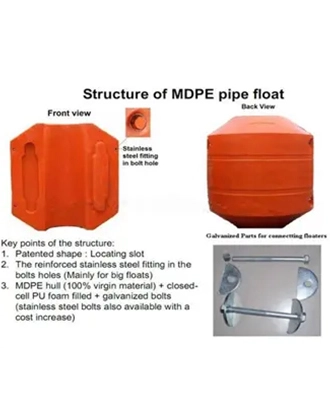
Marine Aquaculture & Floating Infrastructure Builders: Constructing pontoon brackets and securing floaters, such as those made with Plastic Floater/HDPE Pipe Floater components, requires the adaptable joint deposition of extrusion welding.
Who Should Choose Hydraulic Butt Fusion Instead:
Municipal Water & Gas Utility Contractors: If your project involves laying hundreds of meters of HDPE Pipe For Water/Gas Supply in trenches, extrusion welding is completely unsuitable. You must deploy hydraulic butt fusion. An automated butt welder squares the pipe ends, applies calibrated hydraulic pressure, and produces a 100% full-bore monolithic joint in minutes with zero consumable filler rod cost.
High-Volume Pipe Fitting Manufacturers: Fabricating standard segmented miter elbows, tees, and crosses in a workshop is far faster and more repeatable using a dedicated RHJ Multi-Angle Fitting Elbow Welding Machine rather than hand-welding with an extrusion gun.
Costly Field Mistakes That Drive Up Project Expenses
Jobsite Warning: The most expensive mistake in HDPE extrusion welding is failing to scrape the oxidation layer off the base plastic immediately before welding. HDPE oxidizes rapidly under atmospheric exposure, forming a thin chemical barrier. If you weld over un-scraped HDPE, the joint will fail non-destructive peel and spark testing, forcing complete joint excavation and costly rework.
Using Welding Rod from a Different Resin Grade: Extruding PE80 rod onto PE100 pipe (or blending high-melt-flow injection molding rod with low-melt-flow extrusion sheet) ruins weld integrity. Mismatched Melt Flow Rates (MFR) prevent the molecular chains from interdiffusing, creating a brittle joint interface that fractures under stress. Always match your filler rod to the base substrate resin certification.
Cold-Starting the Drive Motor: Inexperienced operators often try to start the motor before the barrel reaches set temperature, shearing internal gear pins and stripping motor splines. Ensure your equipment includes an electronic cold-start lockout that prevents motor activation until barrel heaters maintain operating temperature for at least 15 continuous minutes.
Improper Preheat Air Distance and Angle: The preheat air nozzle must track precisely 5mm to 10mm ahead of the PTFE shoe at a 45-degree angle. If the nozzle aims too far ahead, the base material cools before the extrudate arrives; if it aims directly into the shoe, it chars the PTFE and degrades the molten bead.
Welding with Moist or Dirty Welding Rod: Storing PE welding rod spools uncovered in dusty, humid environments causes internal weld voids. Polyethylene picks up surface moisture that vaporizes inside the heated barrel, producing a porous, foamy extrudate with poor tensile strength. Always store rod coils in sealed plastic bags with desiccants.
Essential Sourcing Checklist for Extrusion Welding Equipment
Before issuing a purchase order or signing off on machinery procurement, verify these critical technical specifications with your supplier:
1. Verified Extrusion Output (kg/h) Under Real Operating Conditions
Inquire about output ratings using actual HDPE rod, not soft polypropylene (PP). Some manufacturers advertise 3.5 kg/h ratings measured with low-viscosity materials, but the output drops to 2.1 kg/h when processing tough, high-molecular-weight PE100. Require documented extrusion charts across both 3mm and 4mm rod sizes.
2. Dual Independent Digital PID Controls
Ensure the machine does not use a single combined dial for both preheat and barrel heating. The preheat temperature must be independently adjustable to compensate for wind and cold ambient conditions without overheating the polymer inside the barrel.
3. Wear Part Availability and Interchangeable Shoes
Verify that replacement PTFE shoes, band heaters, thermocouples, and preheat nozzles are standard stock items with short delivery times. A project that sits idle for two weeks waiting for a $90 replacement Teflon shoe quickly erodes equipment cost savings.
4. Machine Weight and Balance Ergonomics
If your operators weld for eight-hour shifts, balance matters. A top-heavy 9 kg machine strains wrists and leads to inconsistent weld angles. Test the center of gravity; a balanced welder with 360-degree rotating side handles and an adjustable suspension eyelet helps maintain consistent weld quality across long shifts.
Expert Sourcing Recommendation & Procurement Verdict
In our professional assessment, calculating the extrusion welding HDPE price requires looking beyond the initial equipment invoice to analyze total lifecycle costs. Squeezing your equipment budget by purchasing an underpowered, unbranded $800 extrusion gun will cost you thousands in sheared gearboxes, porous seams, and failed site inspections.
For custom tank builders, lining contractors, and fabrication facilities, we recommend investing in an industrial-tier, dual-temperature handheld extrusion gun ($3,500 to $6,500) paired with an inventory of high-density PE100 rod and specialized PTFE shoes. This class delivers the thermal stability, drive torque, and barrel output required to produce code-compliant DVS 2207-4 welds across multi-shift fabrication schedules.
However, if your business primarily installs continuous cross-country water, mining, or natural gas transmission lines, extrusion welding should remain a secondary tool for detail connections. For main pipeline runs, partner with established machinery builders like Xjgmachine to secure dedicated HDPE Pipe Butt Welding Machine hardware. Pairing butt fusion for straight pipeline segments with extrusion guns for complex structures keeps project timelines tight and overall fabrication costs firmly under control.
Frequently Asked Questions
In 2026, the extrusion welding HDPE price for handheld industrial equipment ranges from $1,200 for light-duty portable units (up to 1.8 kg/h output) to $4,500 - $8,500 for commercial, brushless dual-heating machines delivering 3.0 to 6.0 kg/h. Contract fabrication services average between $65 and $145 per hour or $9 to $28 per linear meter, depending on wall thickness, joint beveling, and site accessibility.
Hot gas welding deposits plastic wire slowly and creates weak bonds on materials thicker than 5mm due to inadequate heat transfer and lack of weld pressure. Extrusion welding melts both the base HDPE and the filler rod simultaneously in a plastification barrel, applying forced mechanical pressure through a shaped PTFE shoe to achieve high molecular fusion up to 90% of base tensile strength in a single pass.
Thicker HDPE panels (over 10mm) require deeper V or double-V beveling, wider root gaps, higher preheat energy, and multiple weld passes. This significantly increases welding rod consumption and machine run time, raising both labor expenses and tooling wear compared to thin geomembrane seams.
For continuous, straight-line HDPE pipeline installations, butt fusion welding is technically superior, faster, and more cost-effective per joint. Extrusion welding should be reserved for tank fabrication, non-standard segmented fittings, manhole branch connections, remedial pipe repairs, and geomembrane liner overlaps.