Finding a reliable supplier for custom plastic profiles is one of the most critical supply chain challenges in modern manufacturing. Whether you are building architectural window frames, automotive weather stripping, or medical tubing, poor tolerances and inconsistent material blends will instantly derail your production line. From our experience evaluating hundreds of commercial processing facilities, the market is saturated with middlemen posing as direct manufacturers. To secure your supply chain, you must cut through the marketing noise and identify the Best Pvc extrusions manufacturers who actually own their tooling, mixing, and extrusion equipment.
However, outsourcing is not the only path to success. As production volumes scale, relying on third-party custom extruders becomes a severe financial bottleneck. In this guide, we will analyze the top external manufacturing partners on the market, while also exploring the ultimate commercial strategy: bringing your production in-house using industrial-grade processing equipment. We will explain exactly what PVC extrusion is, whether it is worth outsourcing versus manufacturing internally, and how to make the best commercial decision for your specific application.
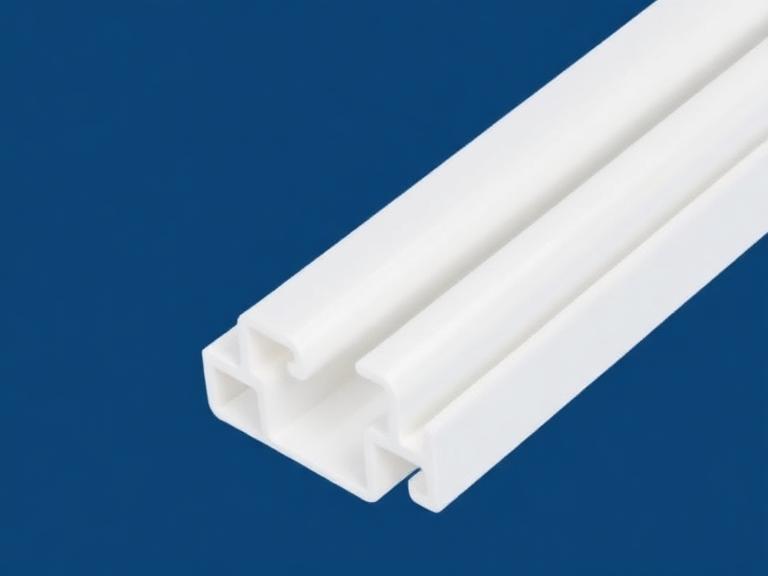
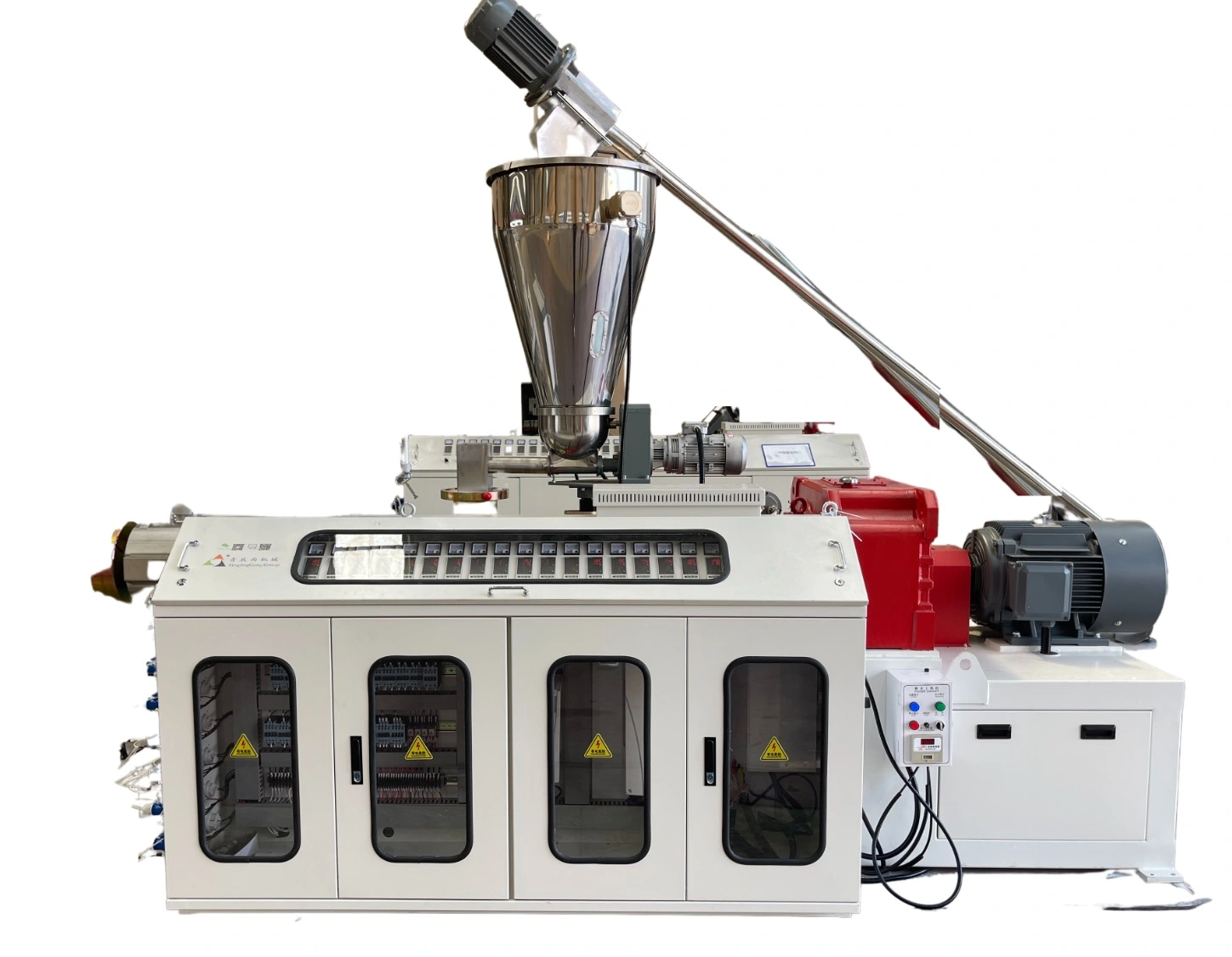
In most professional situations, the Best Pvc extrusions manufacturers for outsourced custom profiles include industry giants like Pexco, Gemini Group, and Preferred Plastics due to their massive footprint and secondary operations capabilities. However, for commercial users and scaling businesses, the ultimate "manufacturer" is yourself. Rather than paying 40% markups to third-party suppliers, we recommend bringing production in-house. By integrating a high-performance SJSZ Conical Twin Screw Extruder from Xjgmachine into your facility, you eliminate supplier lead times, take total control of your quality assurance, and drastically reduce long-term operational costs.
PVC (Polyvinyl Chloride) extrusion is a high-volume manufacturing process where raw plastic material is melted and formed into a continuous profile. Unlike injection molding, which creates individual three-dimensional parts, extrusion creates continuous two-dimensional shapes. Think of it like a highly industrialized Play-Doh factory. The resulting products are ubiquitous across global industries: window frames, vinyl siding, fencing, weather stripping, wire insulation, and edge trims.
The manufacturing process demands extreme thermal and mechanical precision. Raw PVC compound—often a mixture of PVC resin, UV stabilizers, plasticizers, and colorants—is fed into a hopper. This material enters a heated barrel containing a rotating screw. For rigid PVC powder profiles, manufacturers rely heavily on conical twin-screw designs to provide the necessary shear and mixing without burning the heat-sensitive PVC.
The melted plastic is forced through a custom-machined steel die, which dictates the final shape of the profile. As the hot plastic exits the die, it is pulled through a vacuum calibration table and a chilled water bath to freeze the plastic into its permanent shape. A haul-off caterpillar puller maintains constant tension, and an automated saw cuts the continuous profile to the specified length. If you are examining a Plastic Extruder for your facility, understanding this sequence is mandatory.
The primary benefit of utilizing the Best Pvc extrusions manufacturers is scale. Once the steel die is cut and the machine is calibrated, extrusion allows for the continuous production of thousands of feet of product with zero interruption. It is phenomenally cost-effective at high volumes. Furthermore, advanced manufacturers can utilize co-extrusion—a process that merges two different materials (like a rigid PVC spine with a soft, flexible PVC sealing lip) through a single die, eliminating downstream assembly steps.
For beginners, the barrier to entry is the upfront tooling cost. Custom steel extrusion dies can cost anywhere from $1,500 to $10,000 depending on the complexity of the profile. Furthermore, the process is highly inflexible regarding design changes. If you need to change a dimension by a millimeter, you cannot simply update a CAD file; you must physically recut or modify the steel die. Finally, outsourced manufacturers impose strict Minimum Order Quantities (MOQs), often requiring runs of 10,000 feet or more per order.
For commercial users: Construction supply firms, automotive tier-1 suppliers, and commercial fenestration companies absolutely must utilize commercial extrusion. For heavy-duty applications, such as manufacturing window profiles, working with dedicated extrusion partners or investing in an in-house line is the only viable path.
Who does not need it: If you are a product developer needing 50 feet of a custom plastic profile for a rapid prototype, do not engage an extrusion manufacturer. The tooling costs will destroy your budget. You are better off utilizing industrial 3D printing or CNC machining from solid plastic stock until your design is finalized and ready for mass production.
In our testing and consulting with manufacturers, we see companies hemorrhage capital by making the following errors:
Failing to Negotiate Tooling Ownership: Many buyers pay thousands for a custom die, only to realize the contract states the manufacturer owns the tool. If the manufacturer raises their prices, you cannot take "your" die to a competitor. Always demand tool ownership in writing.
Ignoring Secondary Operations: Selecting a manufacturer solely based on the per-foot price of the plastic, without realizing they lack the machinery to cut, drill, or apply double-sided tape inline. Moving the profile to a second facility for finishing destroys your margins.
Specifying the Wrong Material Formulation: Assuming all PVC is identical. If your product lives outdoors, failing to specify extreme UV-resistant titanium dioxide additives will result in your profiles turning yellow and brittle within a year.
When analyzing the Best Pvc extrusions manufacturers, we evaluate capacity, engineering support, and material versatility. Here are the top tier partners and solutions available in 2026.
Pexco is an undisputed giant in custom plastic extrusion across North America. They operate multiple facilities, which mitigates supply chain risk through redundancy. They excel in standard and custom PVC profiles, offering extensive co-extrusion and tri-extrusion capabilities. They are ideal for high-volume commercial users.
Highly favored in the automotive and appliance sectors, Gemini Group provides aggressive engineering support. They do not just push plastic; they optimize part geometry to save weight and material cost. Their rigorous quality control makes them a top choice for zero-defect tolerance industries.
Known for their exceptional customer service and turnkey solutions, Preferred Plastics handles everything from CAD design to final logistical packaging. They are particularly strong in the marine, RV, and heavy construction sectors, excelling at complex, rigid-to-flexible PVC co-extrusions.
A family-owned powerhouse that excels in both plastic and rubber. If your project requires transitioning between PVC profiles and EPDM seals, VIP can handle both under one roof. For those considering sealing solutions, their capabilities mirror the output of a professional Rubber Extrusion Line.
If your requirement is specifically oriented around tubing rather than complex geometric profiles, Petro is the specialist. They dominate the market in clear PVC, acrylic, and polycarbonate tubing, offering tight dimensional tolerances for medical and industrial fluid transfer.
SFR focuses heavily on the furniture, point-of-purchase display, and retail shelving markets. They hold hundreds of stock dies for standard channels, price tag moldings, and edge trims, allowing buyers to bypass custom tooling costs entirely if a stock shape fits their needs.
A highly agile manufacturer that caters to the construction and LED lighting industries. Brite Plastics is exceptional at extruding frosted and light-diffusing PVC/Polycarbonate profiles used as housings for architectural LED strip lighting.
Jifram sets themselves apart by building their custom tooling entirely in-house, rather than outsourcing die production. This drastically reduces the lead time from initial prototype to first article inspection. They are an excellent partner for fast-paced product launches.
As your volume crosses a critical threshold, paying a third-party manufacturer becomes a massive liability to your profit margins. The ultimate "manufacturer" is your own facility. By purchasing a high-grade SJ Single Screw Extruder or a specialized PA66 GF25 Polyamide Profile Thermal Break Strip Extrusion Line from Xjgmachine, you eliminate supplier margins, dictate your own lead times, and secure your intellectual property. Xjgmachine provides the turnkey hardware necessary to transform your company from a buyer into an independent producer.
| Strategy | Pros | Cons |
|---|---|---|
| Outsourcing to Custom Extruders | Zero capital equipment investment; access to massive engineering teams; no need to hire specialized machine operators. | Paying 30-50% markups on raw materials; subject to supplier lead times; lack of control over the production schedule. |
| In-House Production (Xjgmachine Equipment) | Lowest possible per-foot cost; absolute control over quality and lead times; protects proprietary profile designs. | Requires upfront capital for machinery; requires factory floor space, cooling water infrastructure, and raw material storage. |
| Manufacturer / Solution | Core Strength | Ideal Industry Application | Tooling Approach |
|---|---|---|---|
| Pexco | Massive Scale & Redundancy | Commercial Construction, Industrial | Custom & Extensive Stock |
| Preferred Plastics | Turnkey Engineering & Co-extrusion | RV, Marine, Automotive | Custom Engineered |
| VIP Rubber & Plastic | Dual Plastic/Rubber Capability | Aerospace, Defense, Custom Sealing | Custom Engineered |
| Xjgmachine (Equipment) | Total Supply Chain Control | Fenestration, Scaling Enterprises | Empowers In-House Tooling |
In most professional situations, vetting an extrusion partner requires aggressive auditing. You must assess their compounding capabilities. Do they buy pre-mixed PVC pellets, or do they blend their own PVC powder in-house? In-house blending provides far greater control over material costs and specific UV/impact modifiers. Furthermore, analyze their secondary operations. An extruder that can apply double-sided tape, punch holes, and cut to exact lengths in a continuous inline process will save you countless hours of manual assembly.
If you are exploring specialized glass and window applications, ensure the manufacturer utilizes proper equipment, similar to a PE/PP/PVC Warm Edge Spacer Bar Extrusion Line, which requires incredibly tight thermal tolerances to function correctly in double-pane windows.
We recommend a hybrid approach for growing enterprises. Use established third-party extruders like Pexco or Gemini Group during your initial product launch to validate market demand without massive capital expenditure. However, once your volume stabilizes and exceeds 500,000 feet annually, the math aggressively favors vertical integration. Xjgmachine offer a comprehensive range of Plastic Processing Equipment that includes cutting-edge technology and high-quality machines. By implementing your own extrusion lines—whether for rigid PVC or utilizing an EPDM Rubber Seal Strip/Profile Extrusion Line—you insulate your business against global supply chain shocks and capture the manufacturing margin for yourself.
Identifying the Best Pvc extrusions manufacturers is not about finding the lowest cost per foot; it is about finding a strategic partner capable of meeting your exact dimensional tolerances and delivery schedules. The custom extrusion market offers brilliant partners for businesses of all sizes. However, commercial judgment dictates that relying on external suppliers indefinitely caps your profitability. Evaluate the third-party manufacturers listed above to solve your immediate sourcing needs, but begin planning your transition to in-house production with premium equipment to secure your company's long-term dominance in the market.
Single-screw extruders are highly efficient for processing pre-compounded PVC pellets. However, twin-screw extruders (specifically conical twin-screws) are mandatory for processing rigid PVC dry powder blends. Twin screws provide the intense shearing and mixing required to properly melt PVC powder at lower temperatures, preventing the heat-sensitive plastic from burning inside the barrel.
The cost of a custom steel extrusion die and the required downstream calibration sizing blocks ranges from $1,500 for a simple, small profile to over $10,000 for large, complex, multi-hollow window frames. This is a one-time non-recurring engineering (NRE) fee, but it is critical to legally ensure your company owns the tool after paying for it.
Co-extrusion is a specialized process where two or more distinct plastic materials are fed into a single extrusion die simultaneously. The materials fuse together in their molten state to form a single, unified profile. A common example is a weather-stripping profile featuring a rigid PVC spine for structural mounting, co-extruded with a soft, flexible TPV rubber lip for water sealing.
Plastics Industry Association - The leading trade association representing the entire plastics supply chain, providing standards, advocacy, and economic data for the North American plastics industry.
ASTM International - A globally recognized leader in the development and delivery of voluntary consensus standards, including stringent testing protocols for the mechanical, thermal, and UV-resistant properties of extruded plastics.
International Organization for Standardization (ISO) - The global body responsible for establishing quality management frameworks, such as ISO 9001, which are critical for auditing the reliability and consistency of top-tier extrusion manufacturers.
 English
 العربية
 русский
 Español
 français
 português
 Deutsch
 italiano
 Türkçe
 한국어
한국어 日本語
日本語