English
 العربية
 русский
 Español
 français
 português
 Deutsch
 italiano
 Türkçe
 한국어
 日本語

Plastic pipe extrusion is a continuous manufacturing process that melts or softens plastic resin, pushes it through a shaped die, and cools the emerging tube into a pipe with a controlled diameter and wall thickness. It is the standard production approach for many PVC, PE and PP pipes because it supports continuous output, repeatable dimensions and automated downstream handling.
For manufacturers, the important question is not simply what plastic pipe extrusion means. It is which extruder, die, calibration system and cooling arrangement can consistently produce the pipe specification your customers need. An inexpensive line that cannot maintain wall thickness, output stability or material compatibility can cost more in scrap and downtime than a properly matched system.
Quick Answer: What Is Plastic Pipe Extrusion?
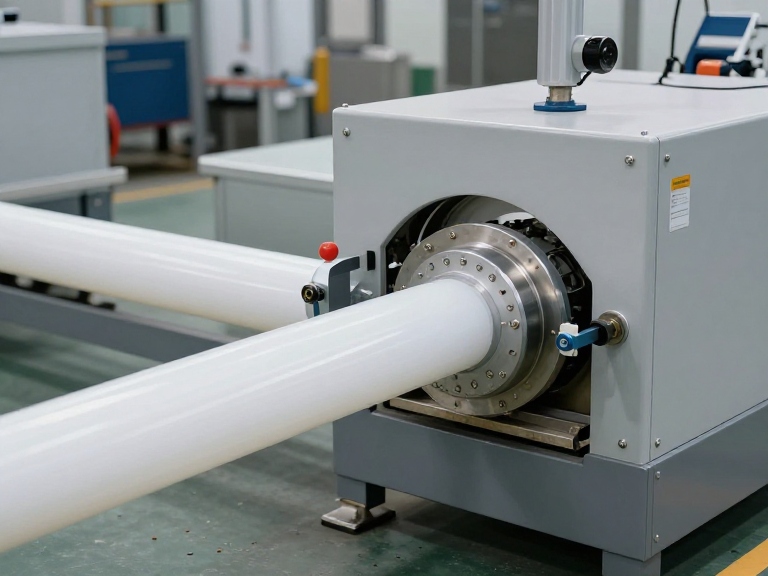
Plastic pipe extrusion is a continuous process in which plastic pellets or a suitable compound are fed into an extruder, heated and mixed by rotating screws, forced through an annular pipe die, sized and cooled, then hauled off and cut or coiled.
What it makes: PVC water and conduit pipes, PE pressure and drainage pipes, PP pipes and other tubular plastic products.
How it works: Feeding, plasticizing, extrusion through a die, calibration, cooling, haul-off and cutting.
Main benefits: Continuous production, repeatable geometry, automation and scalability.
Main limitations: Tooling and setup costs, material-specific process requirements, energy consumption and the need for disciplined quality control.
Who should use it: Manufacturers with recurring pipe demand and defined material, diameter, wall-thickness and performance requirements.
Who may not need it: Businesses with occasional low-volume demand that can obtain compliant finished pipe more economically from an established supplier.
Our recommendation is to choose a complete pipe production line around the intended resin, pipe dimensions, applicable product standards and required saleable output—not around extruder motor power or advertised maximum speed alone.
Plastic Pipe Extrusion at a Glance: Quick Summary Table
| Production Factor | What It Means | Practical Recommendation |
|---|---|---|
| Raw material | PVC, PE, PP or another suitable thermoplastic formulation | Confirm the exact grade, additives and formulation before selecting the screw and barrel. |
| Extruder | Melts, mixes and conveys material under controlled conditions | Match screw design and configuration to the resin and output target. |
| Pipe die | Forms the molten material into a tubular shape | Specify the required diameter range, wall thickness and changeover frequency. |
| Calibration and cooling | Stabilize pipe dimensions and solidify the extrudate | Size the vacuum calibration and cooling capacity to the pipe and line speed. |
| Haul-off and cutting | Pull the pipe at a controlled speed and cut it to length or coil it | Check speed synchronization, grip, cut quality and finished length tolerance. |
| Quality control | Verifies dimensions and required performance | Define inspection criteria and relevant test standards before commissioning. |
1. What Is Plastic Pipe Extrusion and How Does It Work?
Plastic pipe extrusion is a manufacturing method that turns thermoplastic raw material into a continuous hollow profile. The extruder's rotating screw conveys and plasticizes the material, while heat from the barrel and mechanical energy help bring it to a processable state. The material then passes through a pipe die, which shapes it into a continuous tube.
Unlike injection molding, which fills a closed mold to create separate parts, pipe extrusion continuously produces a profile. The pipe is calibrated and cooled as it moves downstream, then pulled at a controlled speed. Depending on the product, it is cut into fixed lengths or wound into coils.
The main components of a pipe extrusion line
Feeding system: Delivers resin, compound and any specified additives to the extruder.
Extruder and screw: Convey, melt or plasticize, mix and pressurize the material.
Pipe die: Forms the molten material into the required tubular geometry.
Calibration unit: Helps establish and maintain the pipe's outside dimensions during initial cooling.
Cooling tank or tanks: Remove heat so the pipe can retain its shape during handling.
Haul-off unit: Pulls the pipe through the line at a controlled speed.
Cutting or coiling equipment: Produces the required shipping or installation length.
Control and inspection systems: Monitor process settings and help verify finished-product dimensions.
In practical production, these components operate as one coordinated system. If the haul-off speed changes without the extruder output being adjusted appropriately, wall thickness can shift. If cooling is insufficient for the pipe size and production rate, the pipe may deform after leaving the sizing section. A stable line depends on coordinated settings, not just a capable extruder.
What does the extruder actually do?
The extruder is the heart of the line, but it is not the entire production solution. The screw design, barrel temperature profile, screw speed, feed rate and die resistance influence how the resin is processed. The machine must deliver a stable melt or plasticized compound at the rate the downstream equipment can handle.
For manufacturers focused on pipe production, a dedicated plastic pipe production line is generally a more useful investment than buying an extruder without confirming the die, calibration, cooling and haul-off requirements. The complete configuration determines whether the plant can reliably meet the finished-pipe specification.
2. The Plastic Pipe Extrusion Process Step by Step
Step 1: Material preparation and feeding
Production begins with a specified resin or compound. Depending on the material and product requirements, preparation may include blending, dosing colorants or additives, and controlling moisture where the resin requires it. PVC pipe compounds are often prepared as formulated blends, while PE and PP processes commonly use resin grades and additives selected for the intended application.
Do not assume every plastic needs the same drying or feeding procedure. Follow the material supplier's processing guidance. Incorrect blending, contamination or inconsistent dosing can produce color variation, weak spots, poor surface finish or unstable extrusion.
Step 2: Melting, plasticizing and conveying
The rotating screw moves the material through heated barrel zones. Shear and controlled heat help plasticize the resin or compound, while the screw geometry determines how material is conveyed, mixed and pressurized. Different polymers behave differently, so temperature profiles and screw configurations must be matched to the material.
PVC deserves particular attention because excessive heat or residence time can cause degradation. PE and PP also require suitable thermal and shear conditions; higher temperature is not automatically better. A stable process window is more valuable than operating at the highest possible screw speed.
Step 3: Shaping through the pipe die
The plasticized material passes through an annular die that forms the pipe wall. Die design, centering, melt distribution and the relationship between output and haul-off speed all influence wall thickness and concentricity. If the die is poorly aligned or the flow is uneven, one side of the pipe may be thicker than the other.
For a plant producing several diameters, ask the equipment supplier how die changes are handled, what tooling is included and how much time is typically needed for a changeover under the specified operating conditions.
Step 4: Calibration and cooling
After leaving the die, the pipe must be sized and cooled without losing its intended shape. Vacuum calibration is commonly used in relevant pipe configurations to help control outside diameter, while cooling tanks remove heat from the pipe wall. The exact arrangement depends on the material, diameter, wall thickness and line design.
Cooling capacity must match production demand. Insufficient or uneven cooling can cause ovality, dimensional drift or deformation during later handling. Adding more cooling capacity may help some lines, but first identify whether the real issue is water temperature, flow distribution, line speed, calibration or upstream instability.
Step 5: Haul-off and cutting
The haul-off pulls the pipe through the production line at a controlled speed. Its grip must be sufficient without marking or deforming the product. The cutter then produces fixed lengths, while certain smaller or flexible pipes may be coiled instead.
Synchronization is essential. If the haul-off pulls too quickly relative to material output, the pipe wall may become thinner. If the pulling speed is too low for the output, wall thickness can increase or the process may become unstable. The best line setup is one in which extrusion, cooling and downstream movement remain coordinated at the target output.
Step 6: Inspection and final handling
Finished pipes should be checked against the specification agreed for the product. Typical checks may include outside diameter, wall thickness, ovality, length, appearance and application-specific performance tests. Pressure pipes and other regulated products may require additional verification based on the relevant product standard and market.
Quality checks should be planned before production begins. If the factory only inspects a few finished pipes after a long run, it may discover a process problem after significant material and energy have already been wasted.
3. Common Materials Used in Plastic Pipe Extrusion
The material choice determines much of the machine configuration, processing window and end-use suitability. The right question is not which resin is universally best, but which material satisfies the required mechanical, chemical, temperature, pressure and installation conditions.
| Material | Common Pipe Applications | Production Considerations | Practical Guidance |
|---|---|---|---|
| PVC and PVC compounds | Building drainage, conduit and specified water or industrial pipe systems | Formulation, thermal stability, screw design and temperature control are important. | Confirm whether the compound is rigid PVC or another formulation and choose a suitable extruder configuration. |
| HDPE and other PE grades | Water distribution, gas distribution where approved, drainage and industrial piping | Output stability, cooling, sizing and dimensional control are critical. | Specify the exact grade, pipe standard, diameter range and pressure requirements. |
| PP | Selected drainage, chemical handling and hot or cold fluid piping systems | Material grade, thermal processing window and application requirements must be considered. | Confirm the service temperature, chemical exposure and product specification before selecting the line. |
| Other engineering thermoplastics | Specialized industrial, automotive or technical tubing | Processing and dimensional requirements vary substantially by polymer. | Request a material-specific technical review rather than assuming a standard pipe line will suit every resin. |
Material and product standards matter. A pipe intended for a pressure application cannot be selected on appearance alone. The resin grade, wall thickness, dimensional series, joining method and applicable approvals all influence whether the finished product is suitable for service.
For plants that also process post-industrial or approved post-consumer plastic, recycling equipment may be part of the wider production strategy. A plastic recycling machine can support a recycling workflow, but recycled material should only be introduced where the product specification, customer requirements and applicable rules permit it. Material traceability and contamination control remain essential.
4. Which Plastic Pipe Extrusion Machine Do You Need?
There is no single extruder design that is optimal for every plastic pipe. Material behavior, product dimensions, required output, formulation and production flexibility should guide the selection. The machine's advertised maximum capacity is not enough to determine whether it will meet your actual production target.
Single screw extruder
A single screw extruder is commonly used for many thermoplastic extrusion processes, including suitable PE and PP pipe applications. It can be a practical choice when the material and formulation are compatible with the screw design and when the production target is clearly defined.
For buyers comparing equipment, review the screw diameter, length-to-diameter ratio, motor and gearbox, heating and cooling zones, control system, screw material and expected output for the actual resin. A stated output figure without a defined material, product and operating condition is difficult to compare reliably.
See the SJ single screw extruder as one equipment category to evaluate against your material and output requirements.
Conical twin screw extruder
Conical twin screw extruders are commonly associated with PVC processing and can be suitable for PVC pipes, profiles and other products when correctly configured. The screw geometry, feeding behavior, plasticizing performance and thermal control must suit the formulation. PVC processing needs a disciplined operating window because excessive heat or residence time can damage the material.
A conical twin screw system may be attractive when the factory's primary work involves PVC compounds, but it should not be chosen simply because two screws sound more powerful. Compare the actual formulation, output range, screw design, die configuration and finished-product quality.
Complete production line versus standalone extruder
A standalone extruder can be appropriate for a plant that already owns compatible downstream equipment and has the technical ability to integrate it. For a new facility, purchasing a coordinated line often reduces the risk of mismatched components and unclear commissioning responsibilities.
Before accepting a quotation, confirm whether the offer includes the die, calibration system, cooling tanks, haul-off, cutter, control cabinet, installation support, training, spare parts and the tooling required for your planned pipe range. Equipment packages that appear similar on paper may have very different levels of completeness.
5. Plastic Pipe Extrusion Machine Comparison Table
| Equipment Option | Typical Fit | Advantages | Potential Limitations | Best Buying Approach |
|---|---|---|---|---|
| Single screw extruder | Suitable PE, PP and other compatible thermoplastic processes | Established design, straightforward configuration for many applications | Performance depends on resin, screw design and formulation; not ideal for every compound | Compare material-specific output and melt stability. |
| Conical twin screw extruder | Commonly used for PVC compounds and suitable profiles | Can support formulated PVC processing and a range of PVC products | Requires correct formulation, screw geometry and temperature control | Request trials or reference data for the intended PVC compound. |
| Standalone extruder | Factories with existing downstream equipment | Can be economical when compatible equipment is already available | Integration and synchronization become the buyer's responsibility | Audit compatibility, controls and line-speed requirements first. |
| Complete pipe production line | New plants or factories adding a defined pipe range | Coordinated equipment, clearer scope and potentially simpler commissioning | Higher initial package cost and less flexibility if the specification is vague | Define the complete product range and acceptance criteria in the contract. |
For most new pipe manufacturing projects, we recommend comparing complete line proposals on a like-for-like basis. Ask each supplier to quote against the same resin, diameter range, wall thickness, target output and quality requirements. That approach is more reliable than comparing machines by screw diameter or motor power alone.
6. Benefits and Limitations of Plastic Pipe Extrusion
Key benefits
Continuous production: The process is well suited to recurring demand and long production runs.
Dimensional repeatability: A properly designed and controlled line can maintain consistent pipe geometry.
Automation potential: Feeding, sizing, cooling, pulling and cutting can be coordinated to reduce manual handling.
Flexible product range: Suitable tooling and line configuration can support multiple diameters and specifications.
Scalable output: Capacity can be planned around demand, shifts, tooling and downstream constraints.
Material efficiency opportunities: Process control and suitable scrap-management systems can help reduce avoidable waste.
Limitations to consider
Initial investment: A production line requires machinery, dies, auxiliary equipment, utilities, space and commissioning.
Material-specific setup: Different polymers and formulations require appropriate processing conditions.
Tooling and changeovers: A wider product range can mean more dies, calibration components and setup time.
Energy and cooling demand: Heating, drive systems, water circulation and downstream equipment affect operating cost.
Quality risk: Unstable output, poor cooling or incorrect settings can produce scrap and dimensional defects.
Technical staffing: Operators need training in process settings, inspection, troubleshooting and safe maintenance.
Pros and cons table: Is pipe extrusion worth investing in?
| Pros | Cons |
|---|---|
| Efficient for regular, repeatable production volumes | May be uneconomical for occasional, very low-volume demand |
| Can automate much of the continuous manufacturing process | Requires trained operators and process monitoring |
| Supports multiple pipe sizes with suitable tooling and setup | Changeovers can consume time and require additional tooling |
| Can deliver consistent dimensions with a suitable process window | Consistency is not guaranteed without maintenance and quality control |
| Creates opportunities to control manufacturing cost at scale | Capital, energy, maintenance and scrap must be included in the cost model |
Our judgment: Plastic pipe extrusion is usually worth considering when you have stable demand, a defined product specification and the ability to operate the line consistently. It is not automatically the right investment for a business that only needs occasional small batches. In that situation, sourcing finished pipe from a qualified manufacturer may preserve cash and reduce operating complexity.
7. Pipe Quality, Standards and Process Control
A pipe that looks smooth is not necessarily a compliant pipe. Quality depends on the required dimensions, material properties, workmanship and performance for the intended application. The applicable standard varies by polymer, pipe type, service conditions and destination market, so there is no single standard that covers every plastic pipe product.
What should a factory measure?
Outside diameter: Confirm that the finished pipe stays within the specified dimensional limits.
Wall thickness: Check the required minimum and variation around the circumference.
Ovality and concentricity: Evaluate whether the pipe maintains the intended shape and wall distribution.
Surface appearance: Inspect for roughness, lines, discoloration, bubbles, contamination or other visible defects.
Length and cut quality: Verify the required length, end condition and suitability for joining.
Performance tests: Conduct the tests required for the application, such as pressure or other mechanical testing where applicable.
Relevant standards and compliance
Depending on the product, relevant references may include ISO 4427 for PE piping systems for water supply, ISO 1452 for PVC-U piping systems for water supply and pressure applications, or ASTM standards applicable to specific plastic pipe materials and uses. These are examples, not universal requirements. Always verify the current edition, scope and local regulatory requirements for the product being manufactured.
For pressure pipe, gas distribution, potable water or other regulated applications, the material grade, design dimensions, joining method and product certification may be as important as the extrusion machine. Do not assume that a machine supplier's general capability statement establishes that your finished pipe will comply. Compliance depends on the entire production process, materials, testing and applicable approval requirements.
Process control is a cost-control tool
Regular inspection helps detect drift before it turns into a large quantity of nonconforming pipe. A disciplined plant records important settings, material batches, output, downtime, scrap and inspection results. When a defect appears, operators can compare current conditions with a known stable run instead of changing several settings at once.
For commercial users, a small improvement in yield can matter more than a modest increase in nominal speed. Faster production is not an advantage if it causes dimensional variation, rejected product or excessive maintenance.
8. How to Choose a Plastic Pipe Production Line
The safest equipment purchase begins with a written product specification. Before contacting suppliers, identify what you will manufacture, how much saleable output you need, what quality standards apply and how often you expect to change products. These decisions determine the line configuration more reliably than starting with a machine model.
Step 1: Define the product range
List the material, outside diameters, wall thicknesses, pipe lengths, tolerance requirements and expected production mix. If you plan to make several pipe types, identify the most demanding product and the products that will run most frequently. A line optimized for one narrow specification may not be the best choice for a highly varied product range.
Step 2: Specify realistic output
Ask for output data tied to your intended resin and pipe specification. Clarify whether the quoted capacity is a maximum theoretical figure, a tested operating figure or a guaranteed saleable production rate. The distinction matters because actual output can be limited by cooling, haul-off, wall-thickness requirements or downstream handling.
Step 3: Review the full equipment scope
Check the extruder, die, calibration and cooling equipment, haul-off, cutter, control system and required auxiliaries. Confirm what is included and what must be purchased separately. Also check the factory's electrical supply, cooling-water needs, compressed air requirements, installation space and material handling arrangements.
Step 4: Ask for application-specific evidence
Request references, production videos or a material-specific trial when appropriate. Ask the supplier to explain the operating conditions behind any claimed output. For a new project, a documented acceptance test is more valuable than a general promise that the machine can produce many types of pipe.
Step 5: Evaluate service and spare parts
Confirm installation support, operator training, troubleshooting procedures, spare-parts availability and response times. A machine with an attractive initial price may become expensive if a critical component is difficult to obtain or the supplier cannot help resolve production problems.
Step 6: Compare the total cost of ownership
Include purchase price, freight, installation, commissioning, tooling, energy, labor, maintenance, spare parts, scrap and downtime. Request a written quotation that clearly identifies the equipment scope and payment terms. If the machine is intended for a regulated product, include testing and compliance-related costs in the investment plan.
Where a plant needs more than one type of extrusion process, compare specialized equipment separately. For example, a rubber extrusion line is designed for a different material-processing task and should not be treated as interchangeable with a thermoplastic pipe line.
9. Cost-Benefit Analysis: When Should You Buy or Upgrade?
The right investment is the one that improves the economics of saleable production, not simply the one with the highest rated output. A line that runs faster but generates more scrap may deliver a worse result than a slower line with stable dimensions and fewer interruptions.
Build a realistic operating-cost model
Calculate the expected cost per saleable meter or kilogram of pipe. Include raw material, electricity, labor, cooling and auxiliary equipment, maintenance, tooling amortization, packaging, quality inspection and downtime. Separate saleable output from gross output so that rejected material does not make the machine appear more productive than it is.
A simple model is:
Cost per saleable unit = Total production cost during the period ÷ Saleable output during the same period.
For a new line, use conservative assumptions for utilization and yield. For an existing line, use actual production records rather than relying only on the supplier's nominal figures.
When an upgrade is worth considering
Persistent dimensional variation: Review the die, calibration, cooling, haul-off and control systems before replacing the entire line.
Output bottlenecks: Determine whether the extruder, cooling tanks, haul-off or cutting equipment is limiting production.
Frequent breakdowns: Compare repair costs and downtime against the cost and expected performance of replacement equipment.
New material or product requirements: Confirm whether existing screws, dies and downstream systems can safely and reliably support the new specification.
High scrap rate: Identify root causes through production data before assuming a faster or larger machine will solve the problem.
For beginners, a properly sized line with straightforward maintenance and reliable supplier support is often a better choice than a complex high-capacity system that exceeds current demand. For heavy-duty commercial production, prioritize demonstrated stability, maintainability and output under the actual product conditions.
10. Common Plastic Pipe Extrusion Mistakes to Avoid
Choosing by maximum output alone
Maximum output is meaningful only when the material, pipe size, wall thickness and operating conditions are known. Ask for data that reflects your product and define how saleable output will be measured during acceptance.
Using one process setup for different materials
PVC, PE and PP do not share identical processing requirements. Reusing the same temperature profile or screw configuration without checking material guidance can lead to degradation, unstable melt behavior or poor product quality.
Ignoring cooling capacity
Increasing extrusion output without checking downstream cooling can create dimensional problems. Evaluate the full line and make sure the cooling arrangement can support the target pipe size and production rate.
Changing several settings at once
When a defect appears, changing temperatures, screw speed, haul-off speed and cooling conditions simultaneously makes the cause difficult to identify. Record the baseline, change one variable at a time where safe and appropriate, and document the result.
Buying equipment without confirming tooling
The machine may be capable of extrusion, but the required die, calibration sleeve or sizing components may not be included. Confirm the complete tooling list and the product range each component supports before placing the order.
Underestimating after-sales support
Commissioning, operator training, spare parts and troubleshooting affect the line's real operating value. Confirm responsibilities in writing, particularly if the machine will be installed in a different country or run by a team new to extrusion.
11. XJG Machinery: Selecting Extrusion Equipment for PVC Pipe Production
XJG Machinery, associated with Zhang Jia Gang Qing Chen Yu Machinery Co., Ltd., offers extrusion equipment for industrial plastic processing. For a manufacturer considering PVC pipe production, the SJSZ conical twin screw extruder is one equipment option worth evaluating when its configuration matches the compound, pipe range and output target.
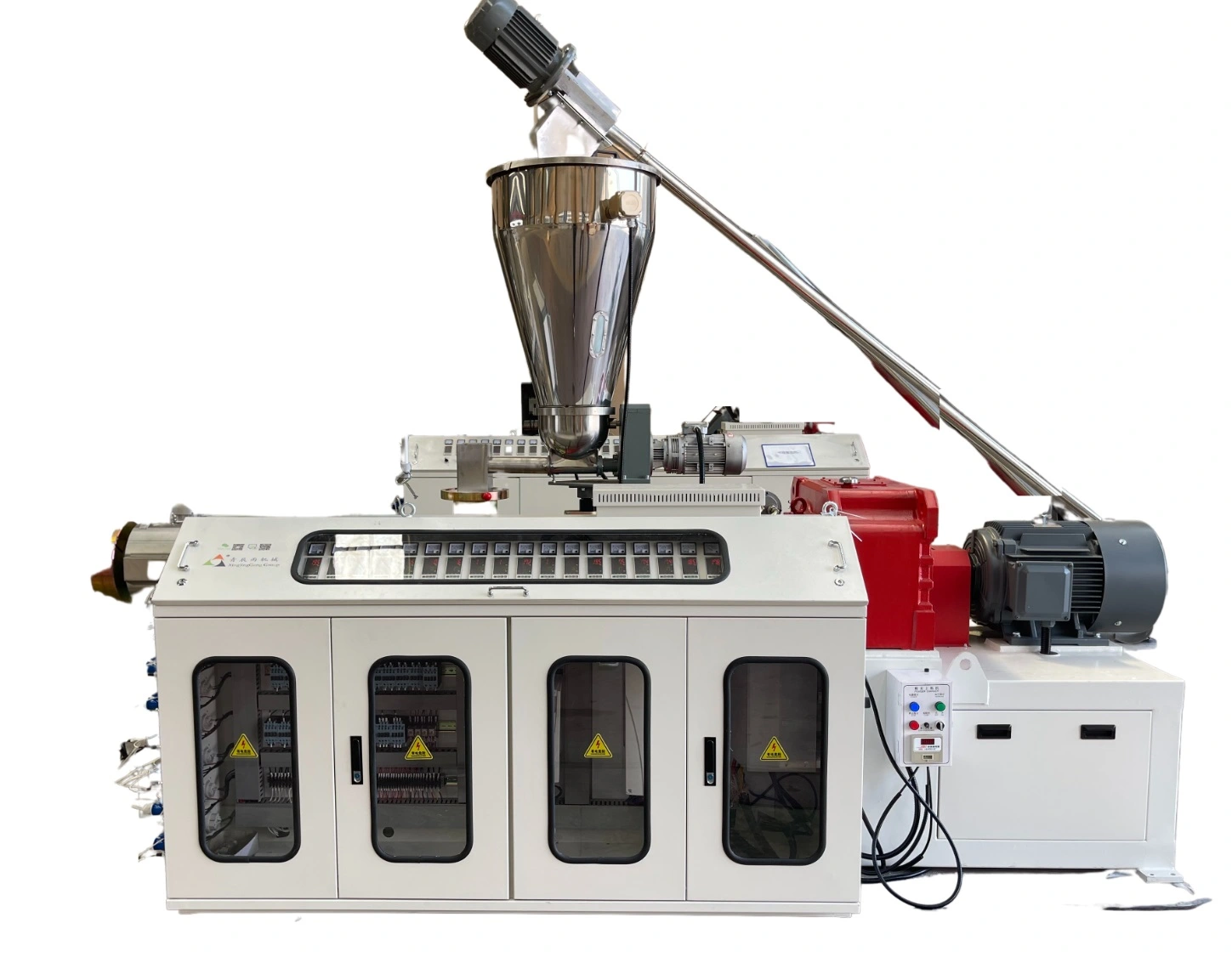
SJSZ Conical Twin Screw Extruder
The SJSZ series is designed for processing suitable PVC compounds and can be used in the production of PVC pipes, profiles, sheets and other compatible products. Its configuration includes two screws rotating within a conical barrel, with temperature control and other equipment features intended to support controlled plasticizing and extrusion.
Potential advantages include forced conveying, compound mixing and plasticizing, and the ability to process suitable powder-based formulations. Actual performance depends on the model, screw and barrel design, formulation, operating conditions and the complete downstream line.
View the SJSZ conical twin screw extruder and request technical details for your intended application.
What to confirm before requesting a quotation
Whether the proposed model is suitable for your exact PVC compound.
The pipe diameter and wall-thickness range supported by the complete line.
Expected output under the specified product and material conditions.
Whether the die, calibration equipment, cooling tanks, haul-off and cutter are included.
Electrical, water, installation and operating requirements.
Tooling availability, spare parts, operator training and after-sales support.
How the supplier will demonstrate and verify the agreed acceptance criteria.
We recommend sending suppliers the same product specification and asking each to respond against it. This makes it easier to compare machine configuration, capacity, scope, delivery terms and support. The most suitable supplier is the one that can demonstrate a credible fit for your production requirements—not simply the one offering the lowest price or broadest claims.
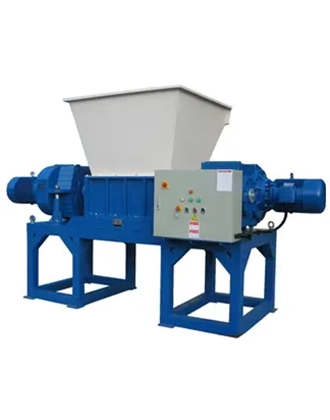
For plants that also need size reduction in a broader plastics workflow, related equipment may include a plastic crusher for suitable scrap and a plastic pulverizer machine for applications requiring finer particle sizes. These are separate processing stages, not substitutes for an extrusion line. Any recovered material must be assessed against the final pipe's formulation and performance requirements before reuse.
12. Frequently Asked Questions About Plastic Pipe Extrusion
What is plastic pipe extrusion?
Plastic pipe extrusion is a continuous process that feeds thermoplastic material into an extruder, plasticizes it and forces it through a pipe die. The tube is then calibrated, cooled, pulled through the line and cut to length or coiled, depending on the product.
How does a plastic pipe extrusion machine work?
The extruder conveys and plasticizes the material, and the die shapes it into a hollow tube. Calibration and cooling stabilize the dimensions, while haul-off equipment controls movement through the line. Cutting or coiling completes the process.
Which plastics are used for pipe extrusion?
Common materials include PVC, PE and PP, although specialized applications may use other thermoplastics. The material must be suitable for the pipe's intended service, and the screw design, die, temperature settings and downstream equipment must match the material and product specification.
What is the difference between a single screw and a conical twin screw extruder?
A single screw extruder is used for many compatible thermoplastic processes, including many PE and PP applications. A conical twin screw extruder is commonly used for suitable PVC compounds and profiles. The better choice depends on the formulation, product range, required output and machine configuration.
What equipment is included in a plastic pipe production line?
A typical line may include a feeding system, extruder, pipe die, calibration unit, cooling tanks, haul-off, cutter or coiler and control system. The exact scope varies by material, pipe dimensions and supplier, so buyers should request an itemized equipment list.
How can manufacturers improve pipe extrusion quality?
Use the correct material and process settings, maintain die alignment, coordinate extrusion output with haul-off speed, provide adequate cooling and inspect dimensions throughout production. Record settings and results so operators can identify process drift before large quantities of pipe become nonconforming.
Is plastic pipe extrusion suitable for small businesses?
It can be suitable if demand is sufficiently consistent and the business can justify the equipment, utilities, tooling, labor and quality-control costs. For occasional or low-volume demand, buying finished pipe may be more economical. A basic cost model should compare both options before investment.
How much does a plastic pipe extrusion line cost?
Cost depends on the material, pipe diameter range, output target, extruder configuration, dies, calibration and cooling equipment, automation, and installation requirements. Request comparable quotations based on the same product specification instead of relying on a generic price or a machine's maximum rated output.
Which standards apply to plastic pipe extrusion?
Applicable standards depend on the pipe material, intended use, dimensions and market. Examples include ISO 4427 for PE water-supply piping systems and ISO 1452 for PVC-U water-supply piping systems. Verify the current edition and the requirements relevant to the exact product and jurisdiction.
Can recycled plastic be used in pipe extrusion?
That depends on the pipe type, material specification, intended service and applicable regulations. Recycled material may be suitable for some products when controlled and permitted, but it should not be introduced into a critical pipe application without confirming material compatibility, traceability and performance requirements.
References
International Organization for Standardization (ISO) — ISO 4427-1, Plastics piping systems for water supply and for drainage and sewerage under pressure, polyethylene (PE). Consult the ISO catalog to verify the current edition and scope relevant to the intended application.
International Organization for Standardization (ISO). Use the official standards catalog to identify applicable standards for the specific plastic pipe material, service and market.
ASTM International. Official standards catalog for identifying applicable test methods and product specifications for plastic piping materials and systems.