English
 العربية
 русский
 Español
 français
 português
 Deutsch
 italiano
 Türkçe
 한국어
 日本語

Choosing among the popular brands of extruders is a major decision for any plastics manufacturer planning a new production line or upgrading existing equipment. However, the most recognized manufacturer is not necessarily the right choice for your application. A company specializing in polymer compounding may not be the best fit for a standard PVC pipe line, while a supplier experienced in profile extrusion may offer a more practical solution for a factory producing thermal break strips.
From our experience in the plastic processing equipment industry, the correct purchasing decision starts with the material, finished product and production target. Brand reputation matters, but machine configuration, process stability, energy consumption, technical support and total ownership cost matter more.
Quick Answer: What Are the 9 Popular Brands of Extruders?
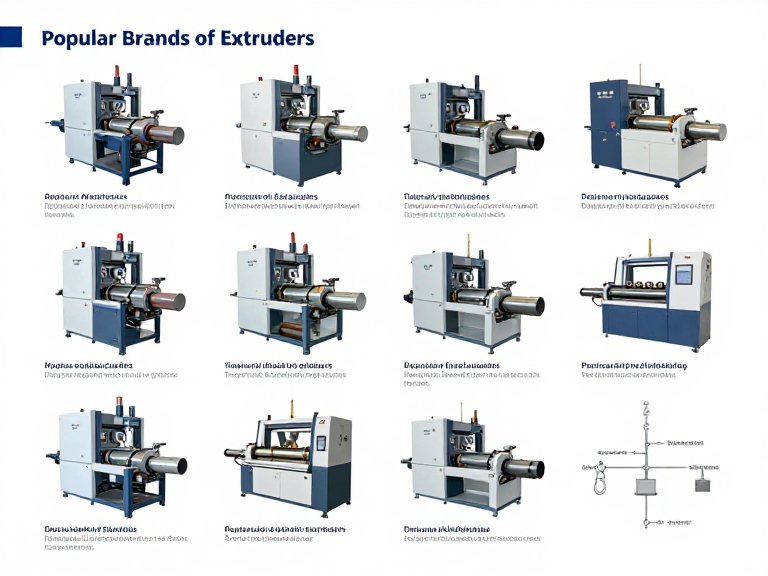
Nine established manufacturers worth researching are Coperion, KraussMaffei, Leistritz, Reifenhäuser, Davis-Standard, Milacron, battenfeld-cincinnati, JSW and Shibaura Machine. They serve different segments of the plastics machinery market, including compounding, pipe, profile, film, sheet and general plastics processing.
For twin-screw compounding, investigate Coperion and Leistritz. For film and specialized extrusion systems, compare Reifenhäuser and Davis-Standard. For pipe and profile production, evaluate suppliers with proven complete-line experience, including battenfeld-cincinnati and other application-specific manufacturers. Do not choose a machine based on its brand name alone. Verify performance with your material and product specifications.
What Is an Industrial Extruder and How Does It Work?
An industrial extruder is a machine that continuously processes material and forces it through a shaped die to manufacture a product with a consistent cross-section. In plastics manufacturing, the raw material is usually supplied as pellets, powder or a prepared compound. The extruder melts, conveys and pressurizes the material before it enters the die.
Extrusion technology is used to manufacture plastic pipes, window profiles, films, sheets, rubber seals, insulation components, pellets and numerous industrial products. The machine configuration must match the material's processing characteristics and the required product geometry.
How Does a Plastic Extruder Work?
Material feeding: Plastic pellets or powder enter the machine through a hopper or controlled feeding system.
Conveying: A rotating screw transports the material through the heated barrel.
Melting and plasticizing: Barrel heaters and mechanical energy soften and melt the material.
Mixing and pressurization: The screw helps produce a uniform melt and develops pressure for continuous extrusion.
Die forming: Molten material passes through a die that determines the product's cross-sectional shape.
Cooling and calibration: Downstream equipment stabilizes the product dimensions and cools the material.
Haul-off and cutting: The finished product is pulled, cut, wound or otherwise processed for packaging.
A common misconception is that the extruder alone determines production quality. In reality, the die, cooling system, calibration equipment, haul-off and control system all contribute to the finished product. A high-output extruder connected to an undersized cooling system will not deliver its full production potential.
Who Should Invest in an Industrial Extruder?
Plastic product manufacturers: Companies producing pipes, profiles, sheets, films and other continuous products.
Polymer compounders: Businesses blending resins, fillers, colorants and additives.
Rubber product manufacturers: Factories producing seals, gaskets and continuous rubber profiles.
Recycling companies: Businesses processing recovered plastic into reusable material or products.
Growing factories: Manufacturers replacing outdated equipment to improve production stability or expand capacity.
Companies producing small quantities of simple products may not need a large industrial extrusion line. For these businesses, outsourcing production or buying a smaller, application-specific machine may be more economical.
9 Popular Brands of Extruders in the Global Plastics Industry
The following nine companies are established names in plastics machinery and extrusion-related technologies. This is a practical industry shortlist, not a ranking based on verified global market share. Their product ranges are different, and buyers should confirm current models, application capabilities and regional service arrangements directly with each manufacturer.
1. Coperion
Main application: Polymer compounding, twin-screw extrusion and material processing.
Coperion is a recognized supplier of compounding and material-handling technologies. Its extrusion systems are particularly relevant to manufacturers processing engineered polymers, masterbatch, additives and complex formulations.
Compounding requires more than simply melting plastic. The machine must distribute additives, manage shear, control temperature and produce a repeatable material structure. Twin-screw technology is often considered when mixing and formulation control are central to production.
Our recommendation: Consider Coperion when material formulation, mixing performance and process integration are critical. Before purchasing, request a material-specific trial and examine the resulting dispersion, throughput, energy consumption and process stability.
2. KraussMaffei
Main application: Plastics processing machinery and industrial extrusion solutions.
KraussMaffei is an established machinery manufacturer serving several plastics processing markets. Buyers evaluating its extrusion technologies should identify the specific product family and machine configuration relevant to their application.
For a manufacturer investing in a new production line, the key question is whether the equipment can consistently manufacture the required finished product. Rated output alone does not prove that a machine can maintain dimensional tolerances or handle frequent product changes.
Our recommendation: Evaluate the complete production solution, including tooling, downstream equipment and controls. Request operating data for the material and product dimensions you actually intend to manufacture.
3. Leistritz
Main application: Twin-screw extrusion, polymer compounding and specialized processing.
Leistritz is associated with twin-screw extrusion technology and applications involving mixing, compounding and specialized material processing.
For compounders, screw configuration is particularly important. Screw elements, processing length, temperature control and material residence time influence the final compound. A machine suitable for one formulation may require substantial adjustment for another.
Our recommendation: Put Leistritz on your shortlist when formulation flexibility and mixing performance are important. Ask for evidence from comparable materials and verify wear protection if your formulation contains abrasive fillers.
4. Reifenhäuser
Main application: Film extrusion, nonwovens and related plastics processing.
Reifenhäuser is a recognized supplier in film and nonwoven production technologies. Its equipment is relevant to manufacturers seeking specialized systems for continuous web production.
Film production requires consistent melt quality, thickness control, cooling and winding. A line that reaches a high theoretical output but produces inconsistent film thickness can create substantial material waste and customer quality problems.
Our recommendation: For film applications, assess the complete line rather than focusing on the extruder alone. Confirm die performance, thickness range, cooling capacity, winding quality and changeover requirements.
5. Davis-Standard
Main application: Industrial extrusion systems and customized plastics processing lines.
Davis-Standard is an established manufacturer of extrusion equipment serving different industrial markets. Its relevance depends on the specific process, equipment configuration and support available for the buyer's region.
One important consideration is system integration. The extruder, die, temperature control, auxiliary equipment and production monitoring must work together. Poor integration can reduce line efficiency even when the individual machines are technically capable.
Our recommendation: Ask for a complete technical proposal that identifies the included equipment, expected output conditions, installation responsibilities and service arrangements. Compare saleable production rather than brochure capacity.
6. Milacron
Main application: Plastics processing machinery and industrial manufacturing solutions.
Milacron is a long-established name in the plastics machinery sector. Buyers considering the company for an extrusion project should confirm the current product range and the availability of the required machine configuration.
It is important not to confuse general experience in plastics machinery with specialization in every extrusion process. Injection molding, compounding, pipe extrusion and profile production involve different machine designs and process requirements.
Our recommendation: Consider Milacron when its current equipment offering and regional support match your application. Request references for comparable extrusion projects rather than relying on its wider plastics machinery reputation.
7. battenfeld-cincinnati
Main application: Plastic pipe, profile and other continuous extrusion systems.
battenfeld-cincinnati is a specialist manufacturer associated with pipe and profile extrusion technologies. These production processes require close coordination between the extruder, die, calibration equipment, cooling system and haul-off.
For pipe manufacturers, stable dimensions are essential. An extruder that produces sufficient material but cannot maintain consistent wall thickness or dimensional accuracy will create downstream quality problems.
Our recommendation: If pipe or profile production is your primary business, prioritize suppliers with relevant line references. Ask for performance information using comparable resin grades, pipe diameters and wall thicknesses.
8. JSW
Main application: Industrial machinery and plastics processing equipment.
JSW is a Japanese industrial machinery manufacturer with a presence in plastics processing. Its suitability for a particular extrusion project depends on the specific machine range and technical support available in the target market.
For industrial buyers, repeatability and maintenance are important considerations. Screw and barrel specifications, drive systems, control architecture and replacement-part availability should all be included in the technical review.
Our recommendation: Evaluate JSW where its current equipment offering matches your process. Confirm the machine's performance using the intended polymer and production conditions before making a purchase decision.
9. Shibaura Machine
Main application: Industrial machinery and plastics processing technology.
Shibaura Machine is another established Japanese machinery manufacturer. Buyers should verify the relevant extrusion product range and identify the technical team responsible for application engineering, commissioning and after-sales support.
For a factory purchasing equipment from an international supplier, the quality of project execution matters. Even a technically capable machine can become difficult to operate if installation, operator training and troubleshooting arrangements are unclear.
Our recommendation: Compare Shibaura Machine against other suppliers using a written technical specification, documented production references and a clear service agreement.
Quick Summary Table: 9 Popular Extruder Manufacturers
| Brand | Relevant technology area | Suitable buying priority | What to verify |
|---|---|---|---|
| Coperion | Compounding and material processing | Complex polymer formulations | Mixing performance and process integration |
| KraussMaffei | Plastics processing and extrusion | Integrated production solutions | Application-specific configuration |
| Leistritz | Twin-screw extrusion | Specialized compounding | Screw design and formulation results |
| Reifenhäuser | Film and nonwoven systems | Film and web production | Thickness control and winding |
| Davis-Standard | Industrial extrusion systems | Customized production lines | Integration and service support |
| Milacron | Plastics machinery | Verified equipment fit | Current extrusion offering |
| battenfeld-cincinnati | Pipe and profile extrusion | Continuous pipe and profile production | Output and dimensional consistency |
| JSW | Industrial plastics machinery | Repeatable manufacturing | Technical support and maintenance |
| Shibaura Machine | Industrial machinery | Project-specific equipment selection | Machine availability and commissioning |
This table should be used to build an initial shortlist, not to make a final purchasing decision. A manufacturer may have several machine series with different capabilities. Always compare actual models and configurations.
Extruder Comparison: Single-Screw vs Twin-Screw vs Complete Extrusion Lines
One of the most common purchasing mistakes is comparing machines that are designed for different purposes. Before selecting among popular brands of extruders, decide which machine architecture is appropriate for your production process.
| Equipment type | Typical applications | Main advantages | Limitations | Our recommendation |
|---|---|---|---|---|
| Single-screw extruder | Plastic pipes, profiles, sheets and many standard thermoplastic products | Relatively straightforward operation and broad application range | May not provide the mixing performance required for complex formulations | Choose for stable, defined production processes where intensive compounding is not the priority. |
| Twin-screw extruder | Compounding, blending, additive dispersion and selected PVC applications | More specialized mixing and formulation-processing capabilities | Higher process complexity and potentially higher investment | Choose when mixing quality and formulation control justify the added complexity. |
| Complete extrusion line | Pipe, profile, rubber seal and other continuous production systems | Coordinated equipment and a process designed around the finished product | Higher total investment and greater installation requirements | Choose when establishing a new production process or when downstream integration is critical. |
| Specialized profile line | Thermal break strips, seals and custom plastic profiles | Tooling and downstream equipment can be matched to product geometry | Less suitable for unrelated product families without additional tooling or modifications | Choose when product dimensions and profile consistency are commercially important. |
When Is a Single-Screw Extruder Worth Buying?
A single-screw machine is often a practical option for manufacturers producing standard thermoplastic products with relatively consistent raw materials. If your factory mainly manufactures pipe or straightforward profiles, a correctly designed single-screw extruder may provide the required output without the additional complexity of a twin-screw system.
For this type of application, review the SJ single screw extruder and compare its screw configuration, output range and compatibility with your material.
When Is a Twin-Screw Extruder Worth Buying?
Twin-screw technology is worth considering when the process requires more intensive mixing, compounding or controlled incorporation of additives. It is not automatically a better machine for every application. A factory producing a standard pipe product may gain little from purchasing a more complex compounding system.
For PVC-related processing, review the SJSZ conical twin screw extruder as an example of a specialized configuration.
Pros and Cons of Buying from Major Extruder Brands
Established machinery brands can offer substantial benefits, but the decision should still be based on your factory's requirements. A premium machine is only a good investment when its technical and service advantages produce measurable value.
| Potential advantages | Potential disadvantages |
|---|---|
| Established engineering experience in particular extrusion sectors | Initial investment may be higher than alternative configurations |
| Potential access to proven machine platforms and application references | Standard machine configurations may not fit specialized products |
| More developed automation and production monitoring options may be available | Advanced controls can require additional operator training |
| Technical documentation and structured service procedures may be available | Spare parts and specialist service may involve longer lead times in some regions |
| Potential access to integrated production systems | Brand reputation does not guarantee a successful process or high return on investment |
Our position: Pay a premium when the manufacturer can demonstrate better process reliability, product quality, production efficiency or service support. Do not pay extra simply because a company is internationally recognized.
How to Choose the Right Extruder Manufacturer
A reliable equipment purchase begins with a technical specification. If you send suppliers only a short message asking for the price of a plastic extruder, the quotations you receive may describe completely different machines. The result is a misleading price comparison.
1. Identify Your Raw Material
Specify the exact polymer, grade and formulation. Include additives, fillers, recycled content and any material characteristics that affect processing. PE, PP, PVC, ABS, PA and rubber compounds have different processing requirements.
Ask the manufacturer to explain how its screw and barrel design suit your material. Avoid accepting vague claims that a standard machine can process every type of plastic without adjustment.
2. Define the Finished Product
Provide product drawings, dimensions, cross-sections, tolerances, weight per meter and surface requirements. For pipe production, specify diameter and wall thickness. For profiles, provide a detailed cross-sectional drawing.
If your factory manufactures thermal insulation components, a dedicated PA66 GF25 polyamide thermal break strip extrusion line may be more appropriate than a general-purpose plastic extruder.
3. Verify Actual Production Capacity
Do not compare manufacturers using maximum output figures without checking the assumptions. Ask whether the quoted capacity refers to theoretical extruder output or actual finished-product output under normal operating conditions.
Confirm the material grade, product dimensions, screw speed, temperature settings and downstream equipment used to establish the production figure. For commercial users, stable saleable output is more important than an impressive peak number.
4. Examine Screw and Barrel Specifications
Important parameters include screw diameter, L/D ratio, compression ratio, screw material, barrel construction, surface treatment and wear protection. These factors affect plasticizing performance, output stability and maintenance requirements.
For heavy-duty applications involving abrasive fillers or demanding formulations, ask specifically about wear-resistant components and expected maintenance intervals. Do not assume all screws and barrels have the same service life.
5. Evaluate Automation and Energy Consumption
Review the motor and drive system, temperature controls, pressure monitoring, alarm functions and production data recording. Ask for estimated electricity consumption during normal production.
Automation is worthwhile when it reduces manual adjustment, improves repeatability or makes production easier to monitor. However, a complicated control system without adequate training can create operational difficulties.
6. Compare Installation and After-Sales Services
Confirm whether installation supervision, commissioning and operator training are included. Clarify warranty coverage, spare-parts availability, remote troubleshooting and technician response times.
For international buyers, also confirm shipping responsibilities, installation requirements, voltage and frequency compatibility, documentation language and the availability of local technical assistance.
7. Request a Production Trial
For a significant equipment investment, a production trial can reduce uncertainty. Whenever possible, test the machine using your own raw material or an agreed equivalent. Establish acceptance criteria before the test.
Record output, product dimensions, surface quality, scrap rate, operating stability and energy consumption. A supplier should be able to explain the test conditions and provide measurable results.
Extruder Cost and Return on Investment: Is a More Expensive Machine Worth It?
The purchase price is only one part of an extrusion machine's total cost. A proper investment calculation should include tooling, auxiliary equipment, installation, energy, labor, maintenance, spare parts, downtime and material waste.
Consider two hypothetical production lines. Line A has a lower purchase price but requires frequent manual adjustment and generates more startup scrap. Line B costs more initially but produces more consistent output and requires fewer operator interventions. If the additional investment in Line B is recovered through lower waste and reduced downtime, the more expensive machine may be the better commercial decision.
Calculate the Main Operating Cost Factors
Material waste: Estimate the annual cost of startup scrap, rejected products and process instability.
Energy consumption: Compare actual electricity use per kilogram or per finished product unit.
Labor: Calculate the number of operators and manual adjustments required during normal production.
Maintenance: Include replacement screws, barrels, heaters, motors, sensors and other service components.
Downtime: Estimate the financial effect of production interruptions and delayed customer orders.
Tooling and upgrades: Consider the cost of dies, calibration equipment and future product changes.
Use realistic factory data rather than supplier assumptions. A machine with a higher rated capacity does not automatically create more profit if demand is insufficient or the downstream process cannot handle the additional output.
Xjgmachine: Plastic Extrusion Equipment for Different Production Applications
When comparing popular brands of extruders, buyers should also evaluate manufacturers and suppliers that focus on practical production equipment. Xjgmachine offers a range of plastic processing machinery designed for different industrial applications, from extrusion to other plastic manufacturing processes.
The right equipment depends on the product, raw material, required production capacity and factory configuration. We recommend discussing these requirements before selecting a model rather than choosing a machine based on a general product description.
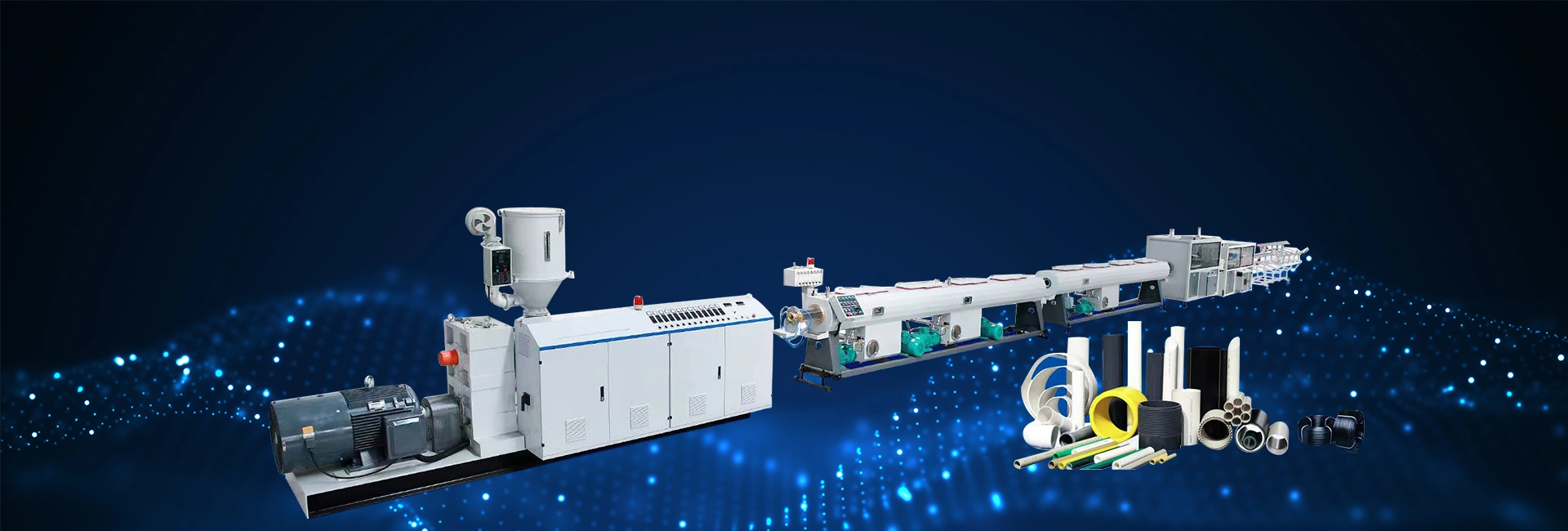
Xjgmachine Plastic Pipe Production Line
Xjgmachine provides plastic processing equipment covering applications from compounding to thermoforming, with an emphasis on durability, efficiency and user-friendly operation. Its plastic pipe production line is relevant to manufacturers evaluating equipment for continuous pipe production.
Before purchasing, confirm the applicable resin, pipe diameter range, wall thickness, target output, downstream configuration and factory power requirements. These specifications determine whether the proposed equipment is suitable for your production plan.
Other Xjgmachine Equipment Categories
Different products require different extrusion technologies. Manufacturers should select equipment according to their production process rather than assume that one general-purpose machine can handle every application.
Plastic extruder: A relevant starting point for manufacturers evaluating plastic extrusion machinery.
Rubber extrusion line: For continuous rubber processing and profile production.
EPDM rubber seal strip extrusion line: For rubber sealing profiles and related applications.
PE/PP/PVC warm edge spacer bar extrusion line: For specialized spacer bar manufacturing.
Plastic recycling machine: For factories developing plastic recovery and reuse operations.
Plastic straw making machine: For manufacturers evaluating dedicated straw production equipment.
For a new production project, prepare your product drawing, material specification and target capacity before contacting a supplier. This makes it easier to identify the correct equipment and receive a meaningful technical quotation.
Common Mistakes When Choosing Popular Brands of Extruders
Choosing a Brand Before Defining the Application
Buyers sometimes start by asking which manufacturer is the best. This is the wrong first question. Define the product and process first, then identify manufacturers with relevant equipment and experience.
Comparing Single-Screw and Twin-Screw Machines by Price Alone
These machines can serve different purposes. A lower-priced single-screw machine is not necessarily a cheaper alternative to a twin-screw compounding system if the process requires intensive mixing.
Ignoring the Downstream Equipment
Cooling tanks, vacuum calibration, haul-off units, cutters and winders all affect production performance. A complete line must be balanced around the required product and output.
Overlooking Spare Parts and Technical Support
A machine that is difficult to maintain can become an expensive liability. Confirm service response times, spare-parts lead times and the availability of technicians before signing the contract.
Accepting Unverified Capacity Claims
Ask how output was measured and under what conditions. Require a clear distinction between theoretical capacity and stable production of acceptable finished products.
Failing to Plan for Future Production Changes
If you expect to manufacture additional product sizes or use different formulations, discuss the necessary tooling, screw changes and line modifications before buying. A machine that cannot accommodate realistic future requirements may need replacing earlier than expected.
Expert Recommendation: Which Extruder Manufacturer Should You Choose?
Our recommendation is to select the manufacturer that can demonstrate the best technical fit for your product, not simply the most famous name. The nine popular brands of extruders discussed in this guide cover different areas of the plastics machinery market. Their suitability depends on the actual machine model, production process and support arrangements.
For polymer compounding: Investigate twin-screw specialists such as Coperion and Leistritz, with material-specific trials.
For film and nonwoven production: Evaluate specialist systems from Reifenhäuser and other suppliers with relevant application references.
For pipe and profile production: Prioritize complete-line engineering, dimensional control and downstream capacity.
For standard thermoplastic production: A correctly specified single-screw extruder may offer the most practical balance of investment and performance.
For specialized rubber profiles: Choose a dedicated rubber extrusion solution instead of adapting an unsuitable plastic machine.
For factory upgrades: Compare the cost of replacing the complete line with the cost and risk of upgrading existing equipment.
For beginners, we recommend a proven configuration with clear installation and training support. For commercial users, focus on total cost of ownership and documented production performance. For heavy-duty applications, examine wear resistance, drive capacity, cooling design and spare-parts availability.
Before placing an order, obtain a written technical specification, a complete equipment list, warranty terms, commissioning responsibilities and a measurable acceptance-test procedure. If a supplier cannot explain how its equipment will meet your product requirements, it should not be your final choice.
Frequently Asked Questions About Popular Brands of Extruders
1. What are the most popular brands of extruders?
Recognized manufacturers include Coperion, KraussMaffei, Leistritz, Reifenhäuser, Davis-Standard, Milacron, battenfeld-cincinnati, JSW and Shibaura Machine. Their equipment serves different plastics processing applications, so buyers should compare manufacturers according to their specific production requirements.
2. Which extruder brand is best for plastic pipe production?
There is no single best manufacturer for every pipe application. Compare suppliers with relevant pipe extrusion experience and evaluate the complete line, including extruder, die, vacuum calibration, cooling, haul-off and cutting systems. Confirm stable output and dimensional accuracy using your intended resin and pipe specifications.
3. Which companies are known for twin-screw extruders?
Coperion and Leistritz are established names associated with twin-screw extrusion and compounding. The right choice depends on formulation, mixing requirements, throughput, screw configuration and technical support.
4. What is the difference between single-screw and twin-screw extruders?
A single-screw extruder uses one rotating screw and is widely used for continuous processing of many thermoplastics. A twin-screw extruder uses two screws and is often selected for compounding, blending and processes requiring more intensive mixing. Neither technology is automatically better for every application.
5. Are expensive extruder brands always better?
No. A higher-priced machine may provide advantages in automation, process engineering or support, but those benefits must translate into measurable production value. Compare energy consumption, scrap rate, stable output, maintenance and total ownership cost.
6. What information should I provide when requesting an extruder quotation?
Provide the raw material and grade, product drawing, dimensions, tolerances, target output, operating hours, factory power supply and required automation. For an existing production line, include the current machine specifications and explain the problems you want the new equipment to solve.
7. How do I check whether an extruder manufacturer is reliable?
Review comparable customer references, manufacturing capabilities, quality-control procedures, technical documentation, warranty conditions, installation support and spare-parts availability. A factory visit or material-specific production trial can provide additional evidence.
8. Should I buy a complete extrusion line or only an extruder?
A complete line can simplify system integration when establishing a new production process. Purchasing only the extruder may be practical when existing downstream equipment is compatible. Confirm mechanical, electrical and process compatibility before choosing either option.
9. How important is after-sales service when purchasing an extruder?
After-sales service is critical because extrusion is often a continuous production process. Confirm technician availability, response times, remote support, replacement-part lead times and warranty coverage before purchasing.
10. Is a customized extrusion line worth the additional investment?
A customized line is worth considering when standard equipment cannot meet your product dimensions, material requirements, output or quality tolerances. However, customization should solve a defined production problem. Request a detailed specification and compare the additional investment with the expected operational benefits.
References
ISO 12100:2010 – Safety of Machinery: Risk Assessment and Risk Reduction. International Organization for Standardization. A relevant framework for identifying machinery hazards and reducing operational risks.
ISO 20430:2020 – Plastics and Rubber Machines: Injection Moulding Machines – Safety Requirements. International Organization for Standardization. This standard concerns injection molding machinery specifically; extrusion equipment requires its own applicable safety assessment.
Plastics Industry Association. Industry resources covering plastics manufacturing, processing and related industrial developments.